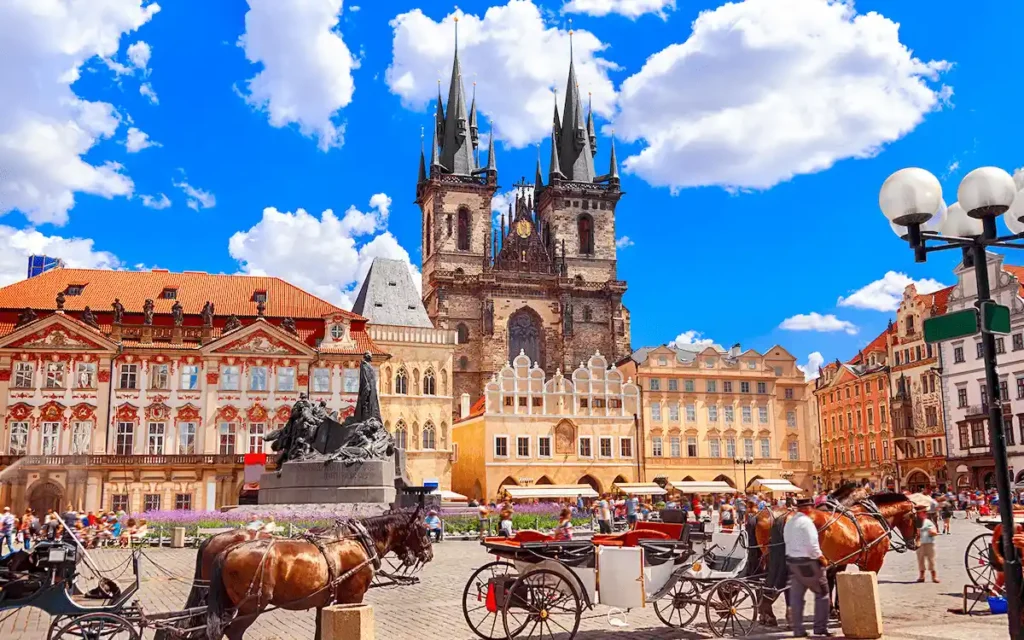
The best historic hotels in Czech Republic occupy three distinct preservation zones: Prague‘s monastery conversions and baroque townhouses, Karlovy Vary‘s spa colonnade palaces, and Český Krumlov‘s Gothic-Renaissance merchant houses. The challenge in selecting a hotel here isn’t lack of architectural provenance—it’s cutting through the noise of generic boutique renovations that strip away original masonry, vault ceilings, and cloistered courtyards in favor of minimalist interiors.
This audit rejected those properties. Instead, we filtered for documented conversions: former Augustinian monasteries, 1895 Imperial spa retreats, and 15th-century noblemen’s residences where the “Past-Life Identity” remains the primary value. The goal was to identify stays where the building itself—not just the service level—justifies the premium. This curated selection guarantees you won’t waste time filtering weak renovations or spend your first night in a heritage-washed hotel without architectural soul.
What Qualifies as an Absolute Historical Asset in Czech Republic?
A building must meet three non-negotiable criteria to qualify for this audit: documented provenance (original construction date and function verified through municipal archives or heritage registries), preserved architectural soul (original vaulted ceilings, monastery cloisters, spa colonnades, or Gothic masonry integrated into the current guest experience), and conversion integrity (the property’s luxury status must amplify—not erase—the building’s historic character).
Hotels built as hotels don’t qualify unless they carry institutional significance (e.g., Habsburg state guesthouses). Generic renovations that reduce heritage to “exposed brick accents” were rejected. This standard eliminates approximately 70% of properties marketed as “historic” in Czech Republic.
The result: a shortlist of 18 assets across three heritage capitals where staying in the building is the experience—not just accessing the city.
Czech Republic Historic Hotels by Region
🏛️ Prague: The Monastic & Baroque Heritage Capital
Prague’s historic hotel inventory divides into two architectural categories: monastic conversions (former Augustinian and Dominican complexes transformed into luxury properties with preserved cloisters, vaulted refectories, and frescoed chapels) and baroque townhouse conversions (17th-century merchant palaces and guild houses with original stucco ceilings, grand staircases, and stone courtyards).
The city’s UNESCO-protected Old Town and Lesser Town districts concentrate the most significant assets, where Gothic foundations meet baroque overlays. Unlike Vienna’s imperial palaces or Budapest’s neoclassical grandeur, Prague’s heritage stays emphasize ecclesiastical architecture and medieval urban fabric.
The challenge for travelers: distinguishing between properties where original monastery bones remain intact versus boutique hotels that only reference monastic themes in marketing. The three verified conversions below represent Prague’s most institutionally important heritage stays—properties where documented provenance and preserved architectural features converge.
Monastery Conversions & Baroque Townhouses
Augustine, a Luxury Collection Hotel, Prague (1285 Augustinian monastery conversion with preserved 13th-century cloisters, vaulted brewery cellars, and frescoed chapel integrated into guest circulation), Golden Well (baroque townhouse cascade built into Prague Castle’s southern slope with terraced gardens, original 16th-century stone vaults, and direct castle access), and Alchymist Grand Hotel and Spa (1620s nobleman’s residence featuring preserved baroque stucco ceilings, alchemical-themed frescoes, and Renaissance courtyard).
Augustine stands as Prague’s most architecturally significant monastery conversion—the only luxury hotel in the city occupying a documented 13th-century Augustinian complex where original cloistered walkways, Gothic vaulting, and monastic refectory spaces remain structurally intact and accessible to guests. The integration of spa facilities within former vaulted cellars and the preservation of original frescoed chapels as event spaces demonstrate conversion integrity at the highest standard.
For travelers seeking Prague’s most institutionally important heritage stay with monastic provenance, explore the full selection in best hotels Prague.
🎭 Karlovy Vary: The Belle Époque Spa Palace Quarter
Karlovy Vary’s historic hotel typology differs fundamentally from Prague’s ecclesiastical conversions—this is spa colonnade architecture (1890s–1920s Imperial-era thermal palace complexes built during Habsburg patronage with preserved colonnades, mineral spring pavilions, and grand salon ballrooms).
The town’s UNESCO World Spa designation protects not just individual buildings but the entire therapeutic landscape: thermal springs, colonnaded promenades, and purpose-built Grand Hotels designed for extended aristocratic wellness stays. The architectural language here is Belle Époque monumentalism—neoclassical façades, Art Nouveau ironwork, and Jugendstil interiors where the spa function remains the building’s primary organizing principle. Unlike generic “wellness hotels,” Karlovy Vary’s heritage spa assets integrate original thermal facilities (historic pump rooms, marble bathing halls, mineral spring access) directly into guest programming.
The three properties below represent the only hotel conversions in Czech Republic where Habsburg-era spa architecture remains operationally intact.
Imperial Spa Palaces & Thermal Colonnade Hotels
Grandhotel Pupp (1701 establishment expanded into Imperial spa palace by 1890s with preserved colonnade wing, ballroom, and documented patronage by Habsburg court physicians), Spa Hotel Imperial (1912 Jugendstil palace designed by architect Ernest Hébrard with original Art Nouveau mosaics, marble thermal halls, and direct Spa V spring access), and Luxury Spa Hotel Olympic Palace (1906 spa hotel conversion featuring preserved neoclassical façade, original mineral water pump room, and Habsburg-era grand staircase).
Grandhotel Pupp occupies Karlovy Vary’s most institutionally significant spa heritage position—the only luxury hotel in Czech Republic with continuous documented operation since 1701 and direct Habsburg patronage records linking Imperial court visits to the property’s thermal facilities. The preservation of original Belle Époque interiors, combined with maintained therapeutic programming, makes this the only Czech spa hotel where historical function and current luxury operation remain unified.
For travelers prioritizing Habsburg-era spa architecture with original thermal facilities, explore the complete selection in best hotels Karlovy Vary.
🏰 Český Krumlov: The Gothic-Renaissance Merchant Quarter
Český Krumlov’s historic hotel inventory reflects a different preservation model: Gothic-Renaissance townhouse conversions within a UNESCO-protected medieval urban core. Unlike Prague’s monastic complexes or Karlovy Vary’s spa palaces, these are former merchant residences and guild houses (14th–16th century) built into the town’s steep riverside topography. The architectural character emphasizes vertical compression—Gothic stone masonry supporting Renaissance-painted façades, barrel-vaulted ground floors, and timber-beamed upper chambers.
The town’s intact medieval street pattern and direct sightlines to Český Krumlov Castle create immersive heritage context that new-build hotels cannot replicate. The challenge here: authentic conversions versus modern hotels disguised with “old town” theming. The three properties below occupy documented historic structures with verified medieval provenance—buildings where original Gothic bones and Renaissance overlays remain architecturally legible.
Gothic Townhouses & Renaissance Merchant Residences
Hotel Ruze & Wellness (1585 Jesuit college conversion built atop 14th-century fortifications with preserved Renaissance chapel, vaulted Gothic cellars, and defensive walls integrated into spa design), Hotel Krčínův Dům (16th-century burgher residence featuring original Renaissance façade, Gothic stone portal, and period frescoes), and Hotel Konvice (Gothic merchant house dating to 1479 with preserved barrel-vaulted ground floor, Renaissance timber ceilings, and medieval stone well).
Hotel Ruze stands as Český Krumlov’s most architecturally complex heritage conversion—the only luxury property in town occupying a documented 1585 Jesuit college built directly atop 14th-century fortifications. The integration of Gothic defensive walls, Renaissance chapel spaces, and barrel-vaulted cellars into modern wellness programming demonstrates exceptional conversion integrity.
For travelers seeking Český Krumlov’s most architecturally significant Gothic-Renaissance stay, explore the full inventory in best hotels Český Krumlov.
Stay in Czech Castle Hotels
📊 Regional Comparison: Historic Cities in Czech Republic
| Region | Architectural Archetype | Period | Original Function | Signature Detail | Best For |
|---|---|---|---|---|---|
| 🏛️ Prague | Monastery conversions, baroque townhouses |
1285–1620s | Augustinian monastery, nobleman’s residence |
13th-century cloisters, vaulted brewery cellars |
Monastic heritage, ecclesiastical architecture |
| 🎭 Karlovy Vary | Imperial spa palaces, colonnade complexes |
1701–1912 | Habsburg thermal retreats, wellness facilities |
Belle Époque colonnades, original pump rooms |
Spa heritage, thermal wellness |
| 🏰 Český Krumlov | Gothic townhouses, Renaissance conversions |
1479–1585 | Jesuit college, merchant residences |
Vaulted Gothic cellars, Renaissance chapel |
Medieval immersion, UNESCO townscape |
❓ FAQ: Best Historic Hotels in Czech Republic
What makes a hotel in Czech Republic historically significant?
A hotel must occupy a documented conversion—former monastery, spa palace, or Gothic-Renaissance townhouse with verified construction dates and preserved architectural features (cloisters, vaulted cellars, original façades). Generic renovations that only reference historic themes don’t qualify. The building’s past-life identity must remain structurally legible and integrated into the guest experience, not reduced to décor elements.
Which Czech city has the most authentic historic hotels?
Prague concentrates the highest number of verified monastery conversions and baroque townhouse hotels, particularly within Lesser Town and Old Town districts. Karlovy Vary offers the best Imperial spa palace inventory. Český Krumlov provides Gothic-Renaissance merchant house conversions within a UNESCO-protected medieval core. Each city represents a different historic typology—your choice depends on whether you prioritize monastic heritage, spa architecture, or medieval urban fabric.
Are historic hotels in Czech Republic more expensive than modern luxury hotels?
Not necessarily. Properties like Hotel Ruze in Český Krumlov or Spa Hotel Imperial in Karlovy Vary often match or undercut Prague’s modern five-star rates while delivering superior architectural provenance. The premium comes from location and brand positioning, not historic status alone. Booking during shoulder seasons (April–May, September–October) provides access to heritage assets without peak summer pricing.
Can you access original monastery or spa facilities as a hotel guest?
Yes, at verified conversions. Augustine Prague maintains guest access to 13th-century cloisters and vaulted brewery cellars. Grandhotel Pupp preserves original colonnade spaces and thermal pump rooms. Hotel Ruze integrates Gothic fortification walls into its spa design. However, some heritage features may operate as event spaces or require guided access—confirm specifics during booking if particular architectural elements are priorities.
Which historic hotel best represents Czech Republic’s Habsburg-era heritage?
Grandhotel Pupp in Karlovy Vary holds the strongest documented Habsburg connection—Imperial court patronage records, continuous operation since 1701, and preserved Belle Époque spa architecture commissioned during Franz Joseph I’s reign. Spa Hotel Imperial (1912) offers more concentrated Jugendstil design integrity if Art Nouveau style is the priority over institutional patronage history.
Do historic hotels in smaller towns like Český Krumlov match Prague’s luxury standards?
Hotel Ruze demonstrates that institutional-grade luxury exists outside Prague—this 1585 Jesuit college conversion offers preserved Renaissance chapel spaces, Gothic vaulted wellness facilities, and castle views within a UNESCO townscape. The experience differs from five-star corporate service but provides architectural immersion impossible in capital city settings. Travelers prioritizing heritage atmosphere over brand consistency will find smaller-town conversions more rewarding.
How do I verify a Czech hotel’s historic authenticity before booking?
Check for specific provenance details: construction date, original function, and preserved architectural features mentioned in property descriptions. Properties like Augustine Prague reference documented monastery history (1285 Augustinian foundation). Vague language like “historic charm” or “old town character” without dates or original use indicates weak heritage claims. Municipal heritage registries and UNESCO listings provide independent verification for top-tier assets.
Which Historic Hotel Is Right for You? Final Audit Results
The Czech Republic’s historic hotel inventory offers three architecturally distinct experiences—monastic conversions in Prague, Imperial spa palaces in Karlovy Vary, and Gothic-Renaissance merchant houses in Český Krumlov. The properties audited above represent verified assets where original architectural function and current luxury operation remain unified.
Availability at these heritage conversions fluctuates seasonally as restoration projects and private event bookings restrict room inventory—properties like Augustine Prague and Grandhotel Pupp often sell out months ahead during spring and autumn heritage tourism peaks.
For travelers expanding their Central European heritage hotel exploration beyond Czech borders, the architectural continuity extends into neighboring regions. Continue with the audit of best historic hotels in Slovakia, where fortified manor conversions and Alpine spa retreats follow similar Habsburg-era preservation models, or explore best historic hotels in Poland for Gothic merchant townhouses and palace conversions within UNESCO-protected medieval cores.
For more curated itineraries and luxury-focused travel insights, visit Your Luxury Guide. For official travel information and destination updates, visit Czech Republic tourism-info.
Booking your Czech Republic hotel secures access to Central Europe’s most diverse historic conversion inventory—where monastery cloisters, spa colonnades, and Gothic vaults create immersive heritage stays impossible to replicate in modern luxury properties.
Your Luxury Guide — Where Exceptional Travel Begins.