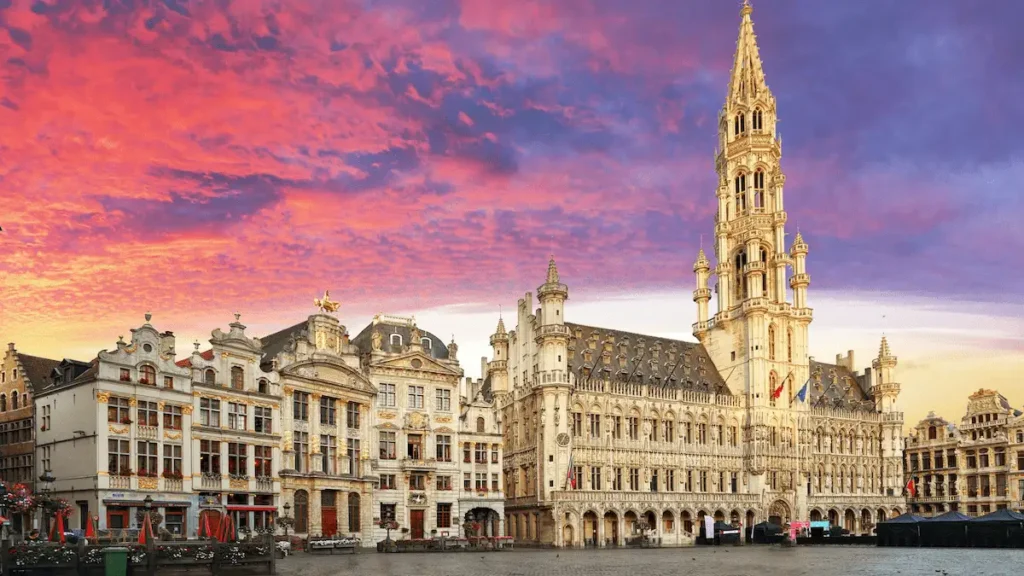
Best historic hotels in Belgium occupy the country’s most architecturally significant conversions—banking palaces where Art Nouveau glass ceilings crown former trading floors, Gothic guildhalls where merchant wealth built vaulted stone chambers, and Cistercian monasteries where cloistered courtyards now frame spa sanctuaries. These aren’t properties that simply reference history; they’re buildings where Belgium’s mercantile power, ecclesiastical austerity, and imperial ambition remain embedded in every corridor, courtyard, and carved stone detail.
Choosing the right historic hotel in Belgium means understanding which conversion type matches your travel intentions—whether you prioritize Bruges’ medieval intimacy, Brussels’ sovereign grandeur, or Ghent’s monastic restraint.
Below are Belgium’s most refined historical conversions, filtered for travelers who value architectural integrity, cultural immersion, and accommodations where the building itself justifies the stay.
What Qualifies as a Historic Hotel in Belgium
Belgium’s historic hotels represent verified historical conversions where the original architectural function—banking hall, merchant guildhall, monastery cloister, or sovereign palace—remains legible through preserved structural elements, spatial hierarchies, and material authenticity.
A legitimate historic property in Belgium retains its architectural DNA: Art Nouveau ironwork and glass canopies in banking conversions, Gothic stone vaulting and timber beams in guildhalls, cloistered courtyards in monastic properties, and neoclassical proportions in sovereign residences. These buildings weren’t constructed as hotels—they were designed as instruments of power, wealth, or spiritual discipline, and that original purpose still defines the guest experience.
What separates Belgium’s historical conversions from standard luxury properties is spatial authenticity: you’re occupying rooms where wool merchants calculated profits, monks observed silence, or diplomats negotiated treaties.
The country’s historic hotel standards prioritize architectural preservation over contemporary uniformity, meaning original stone floors, restored frescoes, and Gothic archways coexist with modern amenities rather than being erased by them.
Belgium’s Historic Hotels by Region
🏰 Brussels: The Sovereign & Imperial Capital
Brussels’ historic hotels occupy the city’s most politically and architecturally significant conversions—sovereign palaces where Belgian monarchy entertained European diplomats, Art Nouveau banking headquarters where glass-domed trading floors crowned financial districts, and Dominican monasteries where Gothic cloisters now frame spa courtyards.
These properties represent Belgium’s dual identity: imperial grandeur expressed through neoclassical proportions and Beaux-Arts detailing, alongside the organic asymmetry of Art Nouveau that defined Brussels’ bourgeois commercial power at the turn of the 20th century.
What separates Brussels’ historic hotels from the country’s other conversions is their scale and political pedigree—these weren’t provincial merchant houses; they were buildings designed to project sovereignty, financial dominance, and ecclesiastical authority at a European level.
Staying in Brussels’ heritage conversions means occupying spaces where architectural language was deliberately deployed as political theater: soaring ceilings that emphasized hierarchical distance, marble-clad lobbies that signaled permanence, and symmetrical facades that communicated order.
Brussels’ Sovereign & Art Nouveau Conversions:
Hotel Amigo (16th-century sovereign guesthouse converted to Rocco Forte luxury property), Corinthia Grand Hotel Astoria Brussels (1909 Art Nouveau palace with original belle époque interiors), and The Dominican (13th-century monastery with Gothic cloister intact).
Hotel Amigo remains Brussels’ most historically layered conversion—a building that served Spanish governors, French occupiers, and Belgian monarchy before becoming the city’s most discreet luxury address, where European diplomats still conduct private meetings in wood-paneled suites overlooking Grand Place.
- Experience Brussels’ sovereign palaces and Art Nouveau banking conversions.
⛪ Bruges: The Medieval Mercantile Power
Bruges’ historic hotels occupy the city’s most intact medieval conversions—guildhalls where Hanseatic merchants stored Flemish wool, canal-front patrician townhouses where banking families consolidated regional trade monopolies, and Burgundian manor houses where Gothic brick and timber construction defined architectural restraint.
These properties represent Bruges’ mercantile golden age, when the city controlled North Sea trade routes and merchant wealth built the Gothic infrastructure that UNESCO now protects.
What distinguishes Bruges’ historic hotels from Belgium’s grander conversions is their scale and intimacy—these weren’t imperial projects; they were private fortunes expressed through proportion, craftsmanship, and strategic canal access rather than monumental excess.
Staying in Bruges’ historical conversions means experiencing the spatial logic of medieval commerce: vaulted brick cellars that stored trade goods, timber-beamed upper floors where merchant families conducted business, and canal-facing facades that signaled prosperity through subtle detailing rather than ostentation.
Bruges’ Gothic Merchant & Patrician Conversions:
Dukes’ Palace Brugge (15th-century Burgundian residence with Gothic courtyard), Hotel De Orangerie (15th-century convent conversion with canal views), and Relais Bourgondisch Cruyce (merchant mansion with timber-beamed interiors intact).
Dukes’ Palace stands as Bruges’ most architecturally significant conversion—a building that housed Burgundian nobility before becoming the city’s most refined address, where Gothic vaulted lounges and candlelit courtyards preserve the spatial austerity that defined medieval merchant power.
- Discover Bruges’ Gothic guildhalls and patrician conversions in our Bruges Medieval Collection.
🏛️ Ghent: The Industrial & Monastic Heartland
Ghent’s historic hotels occupy the city’s most industrially and spiritually significant conversions—Neo-Gothic postal headquarters where iron-and-glass engineering crowned Belgium’s communication networks, Cistercian monastery cloisters where vaulted stone corridors frame modern wellness facilities, and patrician canal houses where Flemish merchant families built Gothic interiors during the textile trade boom.
These properties represent Ghent’s dual historical identity: ecclesiastical restraint expressed through monastic simplicity, and industrial ambition materialized through 19th-century engineering innovations.
What separates Ghent’s historic hotels from Belgium’s more polished conversions is their raw materiality—exposed brick, steel trusses, and whitewashed stone that reference both monastic discipline and factory-era functionality.
Staying in Ghent’s historic conversions means occupying buildings where spiritual and industrial labor shaped spatial design: monastery refectories now serving as breakfast halls, postal sorting floors converted to design-forward lounges, and Gothic chapels preserved as event spaces.
Ghent’s Monastic & Industrial Conversions:
1898 The Post (1898 Neo-Gothic postal headquarters with original iron-and-glass structure), Pillows Grand Boutique Hotel Reylof (18th-century patrician mansion with period interiors), and Hotel Monasterium PoortAckere (13th-century Cistercian monastery with cloister intact).
1898 The Post represents Ghent’s most daring adaptive reuse—Belgium’s grandest postal palace reimagined as a design hotel where original sorting hall architecture frames a glass-roofed atrium bar, preserving the building’s industrial soul while delivering contemporary luxury.
- Explore Ghent’s monastic cloisters and industrial conversions in our Ghent Heritage Collection.
🏦 Antwerp: The Global Port & Banking Hub
Antwerp’s historic hotels occupy the city’s most commercially and culturally significant conversions—Art Deco banking headquarters where marble-clad trading floors crowned Belgium’s diamond district, botanical institutes where Victorian glasshouses now shelter spa gardens, and merchant guildhalls where Flemish Renaissance facades concealed Gothic interiors.
These properties represent Antwerp’s identity as Belgium’s global trade gateway, where banking wealth, botanical science, and mercantile power built the architectural infrastructure that defined the city’s economic dominance.
What distinguishes Antwerp’s historic hotels from Belgium’s ecclesiastical conversions is their commercial pedigree—these weren’t buildings designed for contemplation; they were constructed to facilitate global trade, scientific research, and financial transactions.
Staying in Antwerp’s historical conversions means occupying spaces where Belgium’s international ambitions materialized through architecture: soaring banking halls that emphasized institutional permanence, Victorian conservatories that displayed botanical collections from colonial expeditions, and Renaissance merchant houses where carved stone facades signaled prosperity.
Antwerp’s Banking & Botanical Conversions:
Botanic Sanctuary Antwerp (1870s botanical institute with Victorian glasshouse), august (19th-century Augustinian monastery with cloister courtyard), and Hotel FRANQ (1930s Art Deco bank with original vault and marble interiors).
Botanic Sanctuary remains Antwerp’s most experientially unique conversion—a Victorian botanical institute where original glasshouses shelter spa treatment rooms and tropical plant collections, creating Belgium’s only heritage hotel where scientific architecture defines wellness design.
- Experience Antwerp’s banking palaces and botanical conversions in our Antwerp Historical Collection.
Stay in Belgium’s Castle Hotels
📊 Regional Comparison: Historic Hotels in Belgium
| Region | Architectural Archetype | Period | Original Function | Signature Detail | Best For |
|---|---|---|---|---|---|
| Brussels | Sovereign palaces, Art Nouveau banks |
16th–20th century | Royal guesthouse, Banking headquarters |
Glass-domed trading floors, Beaux-Arts detailing |
Diplomatic privacy, Imperial grandeur |
| Bruges | Gothic guildhalls, Patrician townhouses |
15th–16th century | Merchant residences, Burgundian manors |
Canal-facing brick facades, Timber beam ceilings |
Medieval intimacy, UNESCO preservation |
| Ghent | Cistercian monasteries, Neo-Gothic postal palaces |
13th–19th century | Monastery cloisters, Communication headquarters |
Iron-and-glass engineering, Whitewashed stone |
Industrial heritage, Monastic restraint |
| Antwerp | Art Deco banks, Victorian botanical institutes |
19th–20th century | Diamond district banks, Scientific conservatories |
Marble trading halls, Victorian glasshouses |
Botanical immersion, Commercial heritage |
❓ FAQ: Best Historic Hotels in Belgium
What defines a historic hotel in Belgium?
Belgium’s historic hotels occupy verified historical conversions where original architectural function—banking hall, monastery cloister, merchant guildhall, or sovereign palace—remains preserved through structural elements, spatial hierarchies, and material authenticity. These properties retain legible connections to their past lives, meaning Gothic vaulting, Art Nouveau ironwork, or monastic courtyards coexist with modern amenities rather than being erased by renovation.
Which Belgian city offers the most architecturally significant historic hotels?
Brussels delivers the most politically and architecturally layered conversions, occupying sovereign palaces and Art Nouveau banking headquarters where Belgium’s imperial ambitions materialized through monumental scale and Beaux-Arts detailing. However, Bruges offers the most spatially intimate medieval conversions if you prioritize Gothic merchant architecture over 20th-century grandeur.
Are Belgium’s historic hotels suitable for families?
Most Belgian historic hotels prioritize couples and solo travelers due to spatial constraints inherent in medieval and monastic conversions—narrow staircases, historic room layouts, and preservation standards limit family-friendly configurations. Exceptions include Brussels’ larger Art Nouveau conversions like Corinthia Grand Hotel Astoria, where neoclassical proportions accommodate connecting suites without compromising architectural integrity.
Do best historic hotels in Belgium include modern amenities?
Belgium’s refined historic conversions integrate contemporary wellness, climate control, and connectivity within preserved architectural frameworks, meaning original Gothic stonework, Art Nouveau glass, or monastery cloisters remain intact while delivering spa facilities, updated bathrooms, and digital infrastructure. This approach prioritizes spatial authenticity over standardized luxury uniformity.
Which Belgian heritage hotel offers the most unique past-life experience?
Botanic Sanctuary Antwerp delivers Belgium’s most experientially distinct conversion, occupying an 1870s botanical institute where Victorian glasshouse conservatories now shelter spa treatment rooms and tropical plant collections—creating the country’s only heritage hotel where scientific architecture defines wellness design rather than ecclesiastical or commercial heritage.
When is the best time to book Belgium’s historic hotels?
Spring (April–June) and early autumn (September–October) offer optimal availability before Christmas market season triggers Bruges and Brussels booking surges. Heritage properties maintain higher occupancy year-round than standard luxury hotels due to limited room inventory, making advance reservations essential for accessing architecturally significant conversions during peak cultural periods.
How do Belgium’s heritage hotels compare to France or Netherlands conversions?
Belgium’s heritage hotels occupy a middle position between France’s aristocratic château grandeur and Netherlands’ merchant canal house intimacy, emphasizing commercial and ecclesiastical power through Gothic guildhalls, Art Nouveau banking palaces, and Cistercian monasteries. Belgian conversions prioritize architectural authenticity and material preservation over standardized luxury amenities, delivering heritage experiences where past-life identity remains more legible than in heavily renovated French or Dutch properties.
Belgium’s Most Architecturally Significant Historic Hotels
Booking the right historic hotel in Belgium means matching conversion type to your architectural priorities—whether you value Brussels’ imperial grandeur, Bruges’ medieval intimacy, Ghent’s industrial restraint, or Antwerp’s botanical singularity.
The properties above represent Belgium’s most consistently refined conversions for travelers who prioritize spatial authenticity, material preservation, and accommodations where the building’s past life justifies premium rates over standard luxury alternatives.
Compare Belgium’s conversions to neighboring countries in our best historic hotels France and explore canal-focused Dutch properties in our legendary hotels Netherlands.
For more curated itineraries and luxury-focused travel insights, visit Your Luxury Guide. For official travel information and destination updates, visit Belgium tourism-info.
Booking your historic hotel in Belgium secures access to properties where Gothic merchant wealth, Art Nouveau innovation, and monastic discipline remain embedded in every corridor, courtyard, and converted vault—architectural identities that disappear quickly once seasonal demand fills these limited-inventory conversions.
Your Luxury Guide — Where Exceptional Travel Begins.