Choosing the best hotels in Ghent means prioritizing architectural provenance over lobby aesthetics—this city rewards travelers who understand that Flemish heritage runs deeper than canal views and cobblestones.
After filtering Ghent’s most historically significant properties, we’ve identified three hotels that offer verified conversions rather than generic luxury: a 19th-century post office that still honors its Belle Époque bones, a monastery where Cistercian silence shapes the entire guest experience, and a noble mansion that functions as a living archive of Ghent’s mercantile past. These aren’t hotels that reference history—they occupy it.
Below are the stays that make sense if you value provenance, cultural authenticity, and rooms where the building’s former life remains legible in every detail.
For a broader perspective on Belgium’s finest heritage accommodations, explore our guide to the best authentic historic stays in Belgium.
Ghent’s Finest Historical Conversions: Where Past Lives Shape Present Luxury
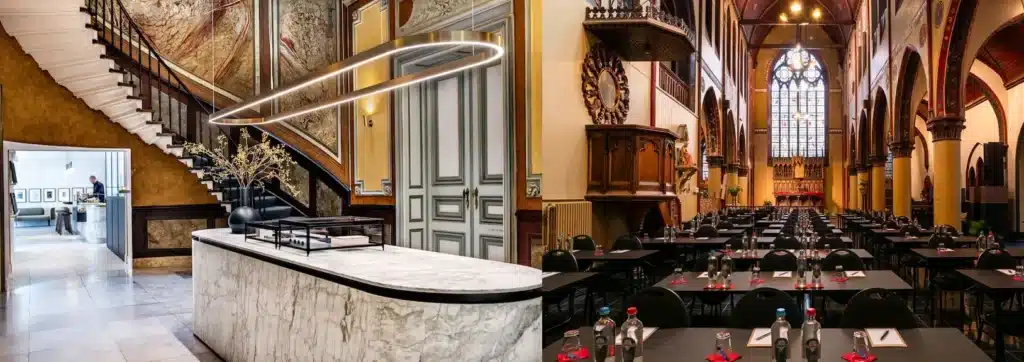
These three properties represent Ghent at its most architecturally honest—no theme park medievalism, no manufactured nostalgia. What unifies them is restraint: each conversion preserved the building’s original function in ways that inform how you move through the space today.
Expect high ceilings that once accommodated sorting tables and prayer, materials chosen for permanence rather than trend cycles, and a quietness that feels earned rather than engineered. This is heritage hospitality for travelers who read plaques.
📮 1898 The Post
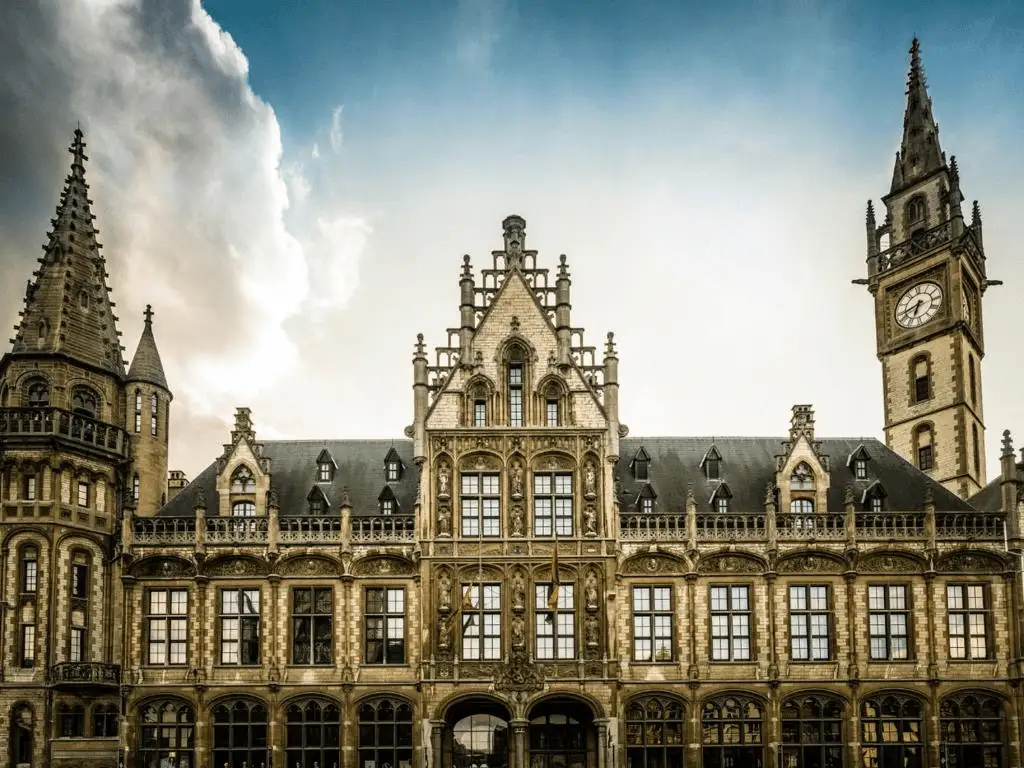
Ghent’s former central post office—a Belle Époque monument built when mail sorting required cathedral-scale volumes—now operates as the city’s most spatially ambitious hotel, where original marble postal counters anchor the lobby and guest rooms occupy what were once administrative wings designed for longevity, not turnover.
The conversion honors the building’s 1898 bones without nostalgia: soaring ceilings remain intact, industrial-scale windows flood interiors with northern light, and period brass fixtures coexist with contemporary Belgian furniture.
This property suits travelers who appreciate that a building’s former civic importance translates directly into modern spatial luxury—rooms feel generously proportioned because they were never designed for intimacy.
Service operates with postal efficiency: discreet, systematic, deeply competent. The rooftop restaurant overlooks Ghent’s three medieval towers, a view that contextualizes the city’s skyline hierarchy better than any guidebook.
Best for: Design-conscious travelers seeking Belle Époque scale with contemporary Belgian restraint, and guests who prefer hotels where architectural honesty trumps boutique styling.
Signature Experience: Original postal sorting hall transformed into reception lounge, rooftop dining with panoramic tower views, rooms with 14-foot ceilings and period brass hardware, restored marble staircases that function as vertical galleries, contemporary Belgian spa in former mail vault.
“Standing in that lobby hall, you finally understand why Belgians built post offices like cathedrals.” — Thomas, BrusselsCheck Availability & Rates →
🏰 Pillows Grand Boutique Hotel Reylof Ghent ★★★★
This 18th-century patrician mansion—built for a Ghent textile merchant when Flemish linen financed entire neighborhoods—operates as the city’s most cohesive example of adaptive reuse, where original oak paneling, heraldic fireplaces, and merchant-class proportions remain intact.
The conversion respected the building’s commercial origins: rooms occupy what were once private family quarters and guest accommodations for visiting trade partners, resulting in layouts that feel residential rather than institutional.
This property attracts travelers who understand that Ghent’s wealth was always mercantile, not royal, and prefer hotels that reflect the city’s actual social history rather than invented grandeur.
The central courtyard, originally designed for carriage access, now functions as a glassed breakfast conservatory.
Service mirrors the building’s merchant-class roots: attentive without performative luxury, efficient without corporate standardization.
Best for: Culture-focused couples and solo travelers seeking authentic Flemish merchant-class heritage, guests who value historical accuracy over boutique embellishment.
Signature Experience: Original 18th-century oak paneling and heraldic fireplaces, courtyard conservatory breakfast in former carriage bay, suites with period ceiling medallions, canal-view rooms overlooking Graslei, artisan Belgian breakfast featuring regional cheeses and charcuterie.
“Breakfast in that glassed courtyard felt like dining in a merchant’s private loggia—utterly unhurried.” — Elena, AntwerpCheck Availability & Rates →
⛪ Hotel Monasterium PoortAckere Ghent ★★★
A functioning 13th-century Cistercian monastery—still home to a contemplative religious community—that allocates a restored wing for guests seeking accommodations where monastic silence remains structural rather than thematic.
This hotel operates within an active spiritual complex where guest rooms occupy former monks’ cells, breakfast happens in the refectory according to monastic schedule, and corridors retain the acoustic quietness.
The experience suits travelers who understand that authentic heritage hospitality sometimes means adapting to a building’s ongoing institutional life rather than expecting the building to adapt to you.
Rooms are intentionally spare—whitewashed walls, simple wooden furniture, narrow windows designed for prayer rather than views—but this austerity feels purposeful, not budget-driven.
The cloister garden, still maintained by the resident community, opens to guests at designated hours, offering access to green space that has functioned as contemplative refuge since the medieval period.
Best for: Solo travelers and mindful couples seeking genuine monastic immersion, guests who prioritize architectural authenticity over modern amenities, travelers comfortable with structured quiet and limited evening services.
Signature Experience: Active 13th-century Cistercian monastery with resident community, former monks’ cells converted to minimalist guest rooms, access to medieval cloister garden during designated hours, refectory breakfast following monastic schedule, evening compline bells that mark liturgical hours.
“That first morning bell at dawn—suddenly you’re not a tourist anymore, you’re a participant.” — Marie, BrugesCheck Availability & Rates →
📊 Comparison: Best Hotels in Ghent
| Hotel | Location | Wellness & Spa | Dining | Unique Perks | Best For |
|---|---|---|---|---|---|
|
📮 1898 The Post | Central Ghent, former post office | Contemporary spa in mail vault | Rooftop restaurant, tower views | Belle Époque architecture Original postal hall | Design purists, provenance seekers |
|
🏰 Pillows Reylof ★★★★ | Canal district, 18th-century mansion | Intimate wellness, limited spa | Courtyard conservatory, Belgian breakfast | Merchant-class heritage Original oak paneling | Culture couples, authenticity focused |
|
⛪ Monasteri PoortAcker ★★★ | Old Town, active monastery | No spa, cloister garden access | Refectory breakfast, monastic schedule | 13th-century Cistercian Working religious community | Mindful travelers, immersive heritage |
- For additional castle-driven historical experiences beyond Ghent’s urban core, explore our guide to luxury castle stays in Belgium’s Ardennes.
❓ FAQ: Best Hotels in Ghent
What makes Ghent’s historic hotels different from standard luxury properties?
Ghent’s best historic hotels occupy verified historical buildings—former post offices, monasteries, and merchant mansions—where original architecture dictates spatial experience rather than contemporary design trends. These properties preserve 13th- to 19th-century structural elements (vaulted ceilings, original oak paneling, cloister gardens) that shape how you inhabit the space, offering immersive heritage rather than themed luxury. Properties like 1898 The Post and Hotel Monasterium PoortAckere maintain their buildings’ former civic and religious functions in ways standard hotels cannot replicate.
Which Ghent hotel offers the most authentic monastic experience?
Hotel Monasterium PoortAckere operates within a functioning 13th-century Cistercian monastery where a resident religious community still follows liturgical hours, meaning guests experience genuine monastic rhythms including dawn bells, refectory dining schedules, and structured quiet periods. Unlike hotels that borrow monastic aesthetics, this property requires adapting to the monastery’s ongoing spiritual life, offering immersive authenticity for travelers who prioritize architectural and institutional integrity over modern amenities.
Are Ghent’s historic hotels suitable for families with children?
Ghent’s curated historic properties—particularly 1898 The Post and Pillows Grand Boutique Hotel Reylof—accommodate families seeking cultural education, but these hotels prioritize architectural preservation and quietness over family-specific programming. Monasterium PoortAckere maintains monastic silence protocols that make it unsuitable for young children. Families valuing heritage immersion over kid-friendly amenities will find these properties rewarding; those seeking pools and play areas should consider conventional luxury hotels.
How do Ghent’s historical hotels compare to similar properties in Bruges and Antwerp?
Ghent’s historical hotels emphasize working institutional buildings (active monasteries, converted civic structures) over residential conversions, offering more immersive architectural experiences than Bruges’ merchant-house hotels or Antwerp’s diamond-district boutiques. While Bruges prioritizes medieval merchant aesthetics and Antwerp leans toward Art Nouveau grandeur, Ghent’s properties maintain their original civic and religious functions, attracting travelers who value operational authenticity over curated nostalgia.
What’s the best season to experience Ghent’s historic hotels?
Autumn through early spring maximizes Ghent’s historic hotel experience—fewer canal-district crowds, lower seasonal rates, and atmospheric fog that enhances medieval architecture’s visual drama. Properties like 1898 The Post and Pillows Grand Boutique Hotel Reylof benefit from softer northern light that highlights period details (carved ceilings, original tilework) more effectively than summer’s harsher illumination. Monasterium PoortAckere’s contemplative atmosphere intensifies during colder months when cloister garden access becomes more meditative.
Do Ghent’s historic hotels require advance booking?
Properties like 1898 The Post and Pillows Grand Boutique Hotel Reylof maintain limited inventory due to historical building constraints, making advance booking essential during Ghent’s cultural calendar peaks (Ghent Festival in July, Christmas markets in December). Monasterium PoortAckere’s active monastery status further restricts availability during religious observances. Booking 6-8 weeks ahead secures preferred room categories; last-minute availability rarely includes architecturally significant units with original features.
Which Ghent historic hotel offers the best Belle Époque architecture?
1898 The Post dominates Ghent’s Belle Époque hotel landscape as the city’s former central post office, built when late-19th-century civic architecture prioritized monumental scale and material permanence. The property retains original marble postal counters, 14-foot ceilings, industrial-scale brass fixtures, and a sorting hall now functioning as reception—architectural elements that document Belgium’s postal-industrial era more comprehensively than any museum. Travelers seeking tangible Belle Époque provenance choose this property over stylistically similar but residentially scaled alternatives.
Choosing Your Ghent Historic Stay
Booking the right hotel in Ghent depends on whether you prioritize Belle Époque civic grandeur, Flemish merchant-class authenticity, or genuine monastic immersion—the three properties above represent distinct architectural lineages that attract fundamentally different travelers. Availability at this level shifts quickly once cultural event schedules firm up, particularly for rooms occupying the buildings’ most historically significant wings.
For travelers exploring Belgium’s broader historical landscape, our guide to the finest hotels in Bruges curates the country’s finest medieval merchant conversions. If you’re drawn to Flemish Gothic architecture, consider our selection of the best hotels in Antwerp.
For more curated itineraries and luxury-focused travel insights, visit Your Luxury Guide. For official travel information and destination updates, visit Belgium tourism-info.
Booking your Ghent heritage hotel secures access to buildings where Belgium’s civic, mercantile, and religious past remains architecturally legible—properties that function as living archives rather than luxury accommodations that merely reference history.
Your Luxury Guide — Where Exceptional Travel Begins.
⏳ THE CONNOISSEUR’S DEBATE
Every landmark featured in this audit holds a distinct chapter of European history. If you have crossed the threshold of these storied properties, we welcome your insights.
📌 Past vs. Present: Did the preservation of the antique interiors live up to your expectations?
📌 The Golden Era: If you could spend a week marooned at just one of these landmarks, which era would you choose to experience?
🔒 Privacy Notice: To protect your discretion, you are welcome to sign using your initials or a pseudonym. Your email address is strictly confidential and will never be published.