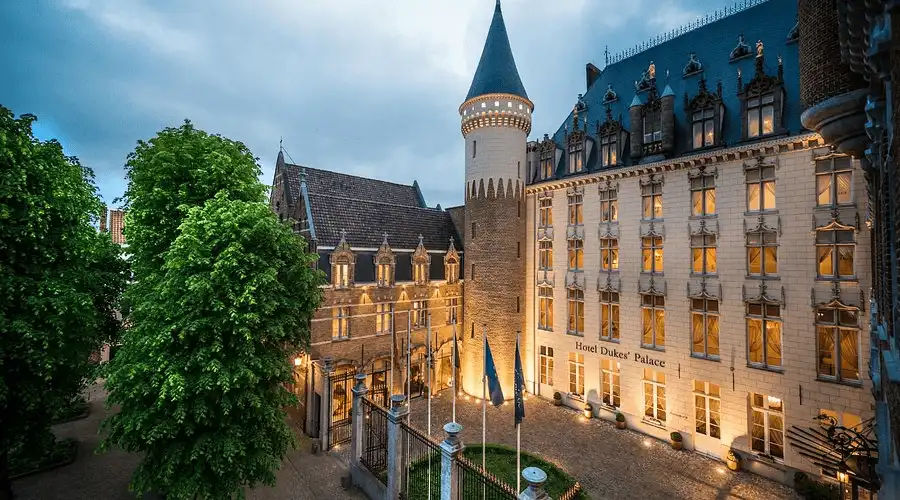
Best hotels in Bruges aren’t about chasing star ratings—they’re about booking properties where the 15th-century walls, monastic cloisters, and sovereign frescoes justify the rate before you even unpack. This city’s most compelling stays are former palaces, convents, and Hanseatic merchant houses where the building’s past life creates emotional pull that standard luxury brands can’t replicate.
After filtering Bruges’ heritage portfolio for structural authenticity, visible history, and service that matches the setting, we’ve identified four properties that deliver on all three.
Below are the conversions that make sense if you value architectural soul, canalside positioning, and accommodations where the stone vault in your spa used to shelter medieval monks.
For broader context across Belgium’s heritage landscape, explore our curated guide to the best authentic historic stays in Belgium.
Royal & Ecclesiastical Conversions: Bruges’ Sovereign Legacy
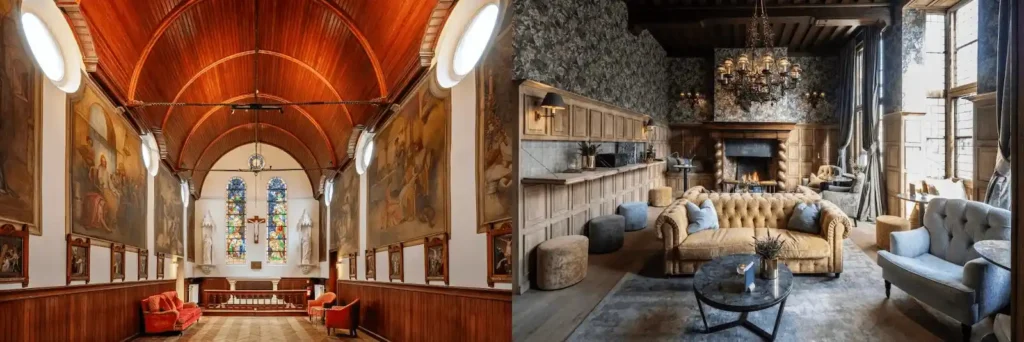
These two properties represent the apex of Bruges’ heritage hierarchy—one a literal ducal palace with 15th-century royal frescoes, the other a Carthusian convent where monastic timber beams frame your canal views. Both deliver on the promise that your accommodation is a verified landmark, not just a well-decorated hotel near one.
🏰 Dukes’ Palace Brugge – by Dukes’ Hotel Collection ★★★★★
This property is the only hotel in Bruges with direct sovereign lineage—it’s the former Prinsenhof, the 1429 residence of the Dukes of Burgundy. The visible heritage isn’t decorative: the original 15th-century Gothic tower anchors the complex, and the “Mary of Burgundy” suite features authentic period frescoes that survived six centuries.
What this means for your stay is that you’re sleeping inside structural history, not themed nostalgia—reception sits where ducal courts once convened, and the spa occupies vaulted stone chambers that predate Columbus.
Service operates at a pitch that assumes you already understand why this building matters, with staff trained to discuss architectural provenance rather than upsell amenities.
The positioning is central but buffered—no street noise reaches the interior courtyard garden, which feels like a private ducal enclosure.
Best for: Travelers seeking verified sovereign history with 5-star service, central Bruges positioning, and accommodations where the building’s royal past is structurally evident.
Signature Experience: Original 15th-century Gothic tower suite access, authentic Mary of Burgundy frescoes, vaulted spa chambers in medieval stone, private courtyard garden enclosed by ducal walls, concierge-guided architectural tours of the property’s Burgundian heritage.
“Standing in that tower suite, touching walls that Mary of Burgundy saw—that’s not something you can replicate anywhere else in Belgium.” — Henrik, CopenhagenCheck Availability & Rates →
⛪ Hotel De Orangerie by CW Hotel Collection – Small Luxury Hotels of the World ★★★★
This is Bruges’ monastic icon—a 15th-century Carthusian convent on the Dijver canal where the building’s ecclesiastical bones remain structurally visible. The original wood-paneled halls and exposed timber beams on the ground floor aren’t recreations; they’re the actual framework that housed silent monks for three centuries.
What distinguishes De Orangerie from Bruges’ merchant-house conversions is the scale of the heritage: entire wings retain their cloister footprint, and the property’s canal positioning means your room overlooks the same water that once brought provisions to the religious community.
Service feels residential rather than corporate—staff operate with quiet attentiveness that mirrors the building’s contemplative origins, and breakfast is served in a salon where timber ceilings and leaded glass create morning light that feels historically specific.
The trade-off is room size: monastic cells were never grand, so expect intimate proportions with period character rather than modern sprawl.
Best for: Couples prioritizing canalside positioning, visible monastic architecture, and intimate heritage accommodations where ecclesiastical history shapes daily atmosphere.
Signature Experience: Original 15th-century wood-paneled monastic halls, exposed heavy timber beams, Dijver canal views from period leaded windows, breakfast salon in former cloister refectory, quiet residential service echoing contemplative heritage.
“That morning light through the leaded glass, with the canal below—felt like stepping into a Vermeer painting.” — Claire, BrusselsCheck Availability & Rates →
Mercantile & Government Heritage: Bruges’ Trading Power Encoded in Stone
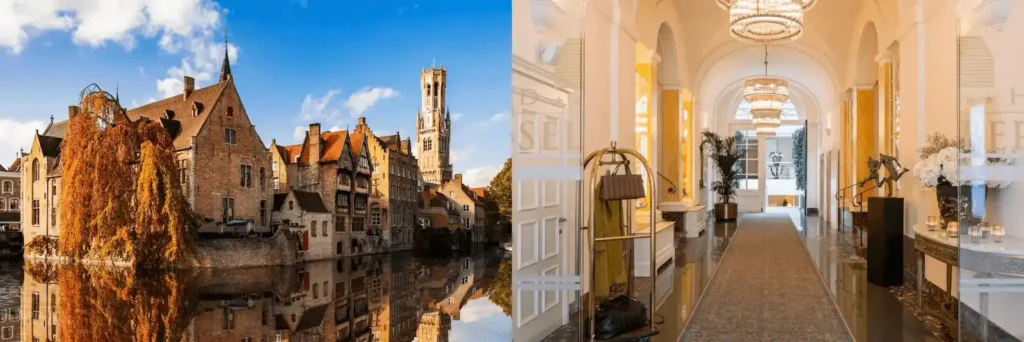
These two properties represent the city’s commercial and political might—one a cluster of Hanseatic merchant houses with original half-timbered facades, the other a royal exile court with Rococo salons and medieval stone vaults. Both offer visible history that standard luxury chains can’t replicate, with positioning that keeps you inside Bruges’ pedestrian core.
🏚️ Relais Bourgondisch Cruyce, A Luxe Worldwide Hotel ★★★★
This property is Bruges’ rare surviving cluster of 13th–16th century merchant houses, representing the city’s role as a Hanseatic trading power when Flemish textiles moved through these very walls.
The visible impact is the original half-timbered (wooden) facade—one of the last in central Bruges—and interiors that retain steep medieval staircases, exposed beams, and leaded glass that frame canal views exactly as merchant families saw them five centuries ago.
Not two rooms share the same proportions because they weren’t built as hotel suites, they were built as merchant family quarters.
Service operates with personal warmth rather than corporate polish, and the canal terrace functions as the property’s social anchor during warmer months.
Best for: History-focused travelers seeking original Hanseatic architecture, canalside terrace access, and accommodations where irregular medieval proportions signal structural authenticity.
Signature Experience: Original half-timbered wooden facade (rare in central Bruges), steep medieval staircases with exposed beams, leaded glass canal views, intimate merchant-house room proportions, canal terrace for seasonal outdoor dining.
“Those creaky stairs and uneven floors—exactly what I wanted. You’re living in a real medieval house, not a hotel pretending to be one.” — Thomas, AmsterdamCheck Availability & Rates →
👑 Grand Hotel Casselbergh ★★★★
This is Bruges’ government and royal seat conversion—the former Exile Court of King Charles II, featuring monumental 18th-century Rococo salons that hosted displaced monarchy and 13th-century stone vaults now repurposed as the wellness area’s foundation.
The visible heritage toggle is dramatic: upstairs you’re in gilded Rococo splendor with stucco ceilings and crystal chandeliers, downstairs you’re in medieval stone chambers where original vaulting creates atmospheric spa treatments.
What distinguishes Casselbergh from Bruges’ more intimate conversions is room size—these were state apartments built to impress, so expect generous proportions and high ceilings that amplify the historic setting.
Service skews professional and efficient rather than deeply personal, which suits travelers who want refined hospitality without excessive familiarity.
The wellness floor is the property’s strongest asset, offering a rare opportunity to experience hydrotherapy surrounded by 13th-century stone that predates the Renaissance.
Best for: Travelers seeking larger heritage rooms, monumental Rococo architecture, and wellness facilities set within medieval stone vaults.
Signature Experience: 18th-century Rococo salons with original stucco and chandeliers, 13th-century stone vaults in wellness spa, generous room proportions from former state apartments, professional service balancing heritage atmosphere with modern efficiency.
“That spa set inside 13th-century stone—it’s like getting a massage in a medieval fortress, except it’s actually luxurious.” — Isabelle, ParisCheck Availability & Rates →
📊 Comparison: Best Hotels in Bruges
| Hotel | Heritage Origin | Visible History | Key Differentiator | Wellness & Spa | Best For |
|---|---|---|---|---|---|
|
🏰 Dukes’ Palace Brugge ★★★★★ | 1429 Ducal Residence | Original Gothic tower, 15th-c. frescoes | Only hotel with sovereign lineage | Vaulted medieval stone spa chambers | Royal history, 5-star service |
|
⛪ Hotel De Orangerie ★★★★ | 15th-c. Carthusian Convent | Wood-paneled halls, timber beams | Canalside monastic authenticity | Intimate wellness, period atmosphere | Couples, canal positioning |
|
🏚️ Relais Bourgondisc Cruyce ★★★★ | 13th–16th c. Merchant Houses | Half-timbered facade, medieval stairs | Rare Hanseatic architectural cluster | Basic wellness, canal terrace focus | Mercantile history, intimate charm |
- For those drawn to Belgium’s castle conversions beyond Bruges’ urban core, our guide to the best luxury castle stays in the Ardennes showcases rural fortifications where landscape drama amplifies historical architecture.
❓ FAQ: Best Hotels in Bruges
What makes Bruges’ historic hotels different from standard luxury properties?
Bruges’ historic hotels occupy verified 13th–18th century conversions—ducal palaces, monastic convents, and merchant houses where the building’s original structure remains visible. Dukes’ Palace Brugge features authentic 15th-century royal frescoes, while Hotel De Orangerie retains its Carthusian timber beams. You’re booking architecture with sovereign or ecclesiastical lineage, not modern construction with historical theming.
Which Bruges hotel has the most authentic medieval architecture?
Relais Bourgondisch Cruyce delivers the most structurally honest medieval experience—it’s a cluster of 13th–16th century Hanseatic merchant houses with the original half-timbered wooden facade still intact. The steep medieval staircases, exposed beams, and irregular room proportions aren’t design choices—they’re the building’s actual bones. If visible authenticity matters more than polished refinement, this property wins.
Do Bruges historic hotels offer modern spa facilities?
Yes, but with heritage integration. Grand Hotel Casselbergh sets its wellness floor inside 13th-century stone vaults, creating atmospheric treatments within medieval architecture. Dukes’ Palace Brugge offers a vaulted spa in the property’s original stone chambers. Hotel De Orangerie provides more intimate wellness suited to its monastic scale. Expect historical atmosphere with contemporary treatments, not generic hotel spas.
Which Bruges hotel is best for canal views?
Hotel De Orangerie sits directly on the Dijver canal with rooms overlooking the water through original leaded glass windows—the building’s monastic positioning means unobstructed views that mirror the 15th-century perspective. Relais Bourgondisch Cruyce also offers canal access with a seasonal terrace. Dukes’ Palace Brugge prioritizes interior courtyard tranquility over canal proximity, trading water views for sovereign heritage.
Are Bruges’ best hotels within walking distance of major landmarks?
All four properties sit inside Bruges’ compact pedestrian core, placing the Markt, Belfry, and Basilica of the Holy Blood within 5–10 minutes on foot. Dukes’ Palace Brugge and Hotel De Orangerie offer the most central positioning with immediate museum access. The city’s heritage district walkability means your accommodation choice should prioritize architectural soul over location—proximity differences are negligible.
What’s the best time to book historic hotels in Bruges?
Book 4–6 months ahead for spring (April–May) and Christmas market season (December), when Bruges’ heritage properties reach 90%+ occupancy and premium rooms sell out first. Dukes’ Palace Brugge’s “Mary of Burgundy” suite and Hotel De Orangerie’s dual-canal rooms disappear earliest. January–February and November offer better availability with lower rates, though you sacrifice seasonal atmosphere for quieter heritage access.
How do Bruges hotels compare to Belgium’s castle properties?
Bruges delivers urban heritage—sovereign palaces and monastic conversions within walking distance of museums, restaurants, and medieval streetscapes. Belgium’s Ardennes castle hotels offer isolated landscape drama with rural positioning and longer transfer times. Choose Bruges if you want heritage accommodations embedded in a living medieval city; choose Ardennes castles if you prioritize countryside seclusion and fortress architecture over urban cultural access.
Final Verdict: Booking the Right Historic Hotel in Bruges
Selecting best hotels in Bruges isn’t about finding the highest star rating—it’s about matching the building’s past life to how you want to experience medieval Belgium.
The properties above represent the city’s most structurally authentic conversions, where ducal towers, monastic cloisters, and Hanseatic facades create emotional pull that standard luxury brands can’t replicate. Availability in these landmark conversions tightens once spring and holiday bookings accelerate, and premium heritage rooms sell out months before arrival.
For broader perspectives across Belgium’s historical landscape, continue with our curation of the best hotels in Ghent. Travelers seeking Belgium’s capital positioning should explore the finest historic hotels in Brussels.
For more curated itineraries and luxury-focused travel insights, visit Your Luxury Guide. For official travel information and destination updates, visit Belgium tourism-info.
Booking your Bruges historic hotel secures access to properties where 15th-century walls and monastic timber beams justify the rate before you unpack—availability at this architectural caliber shifts quickly once seasonal demand begins.
Your Luxury Guide — Where Exceptional Travel Begins.
⏳ THE CONNOISSEUR’S DEBATE
Every landmark featured in this audit holds a distinct chapter of European history. If you have crossed the threshold of these storied properties, we welcome your insights.
📌 Past vs. Present: Did the preservation of the antique interiors live up to your expectations?
📌 The Golden Era: If you could spend a week marooned at just one of these landmarks, which era would you choose to experience?
🔒 Privacy Notice: To protect your discretion, you are welcome to sign using your initials or a pseudonym. Your email address is strictly confidential and will never be published.