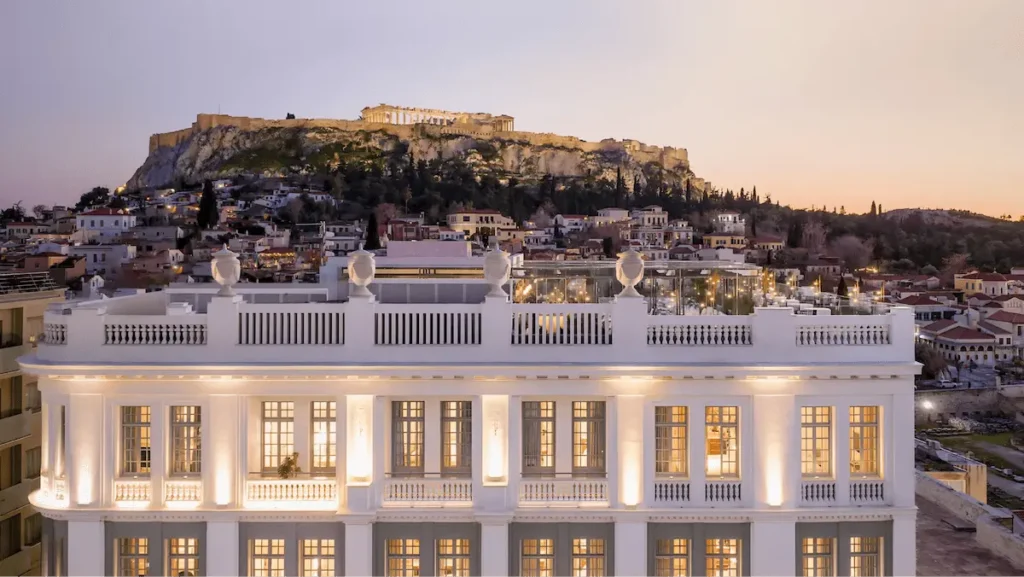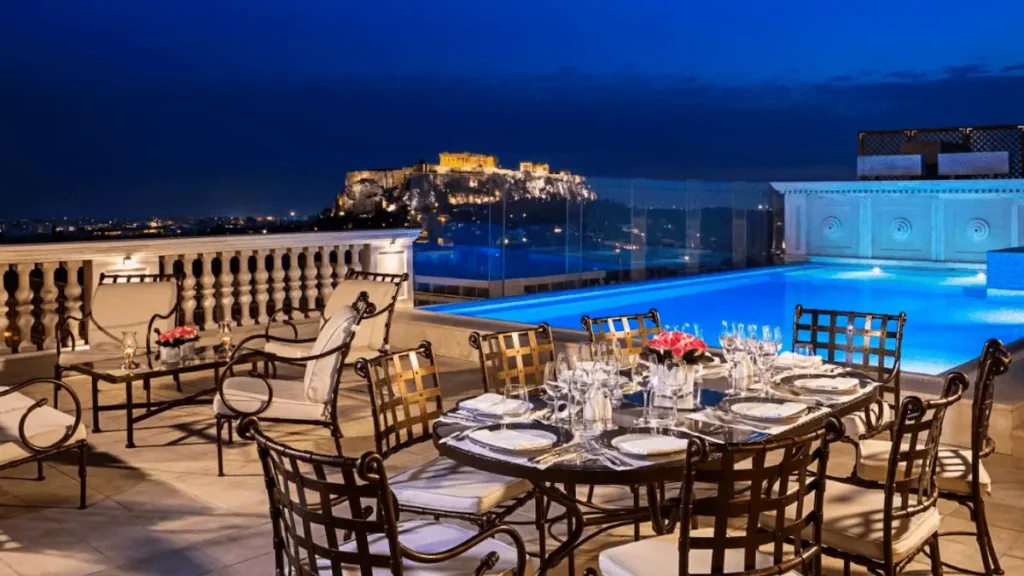
A view from the balcony of the King George hotel in Athens, a historic 1930s landmark that served as a former prime ministerial residence, featuring its neoclassical design and a private penthouse pool overlooking the Acropolis and Parthenon.

King George Athens: Where Historic Greek Grandeur Meets Modern Prestige

The King George Athens stands as one of the capital’s most significant architectural monuments—a 1936 neoclassical masterpiece occupying the city’s most commanding position on Syntagma Square, directly facing the Hellenic Parliament. This historic property has hosted heads of state, European royalty, and the global elite for nearly nine decades, establishing itself as Athens’ premier address […]

King George Athens: Where Historic Greek Grandeur Meets Modern Prestige Read More »

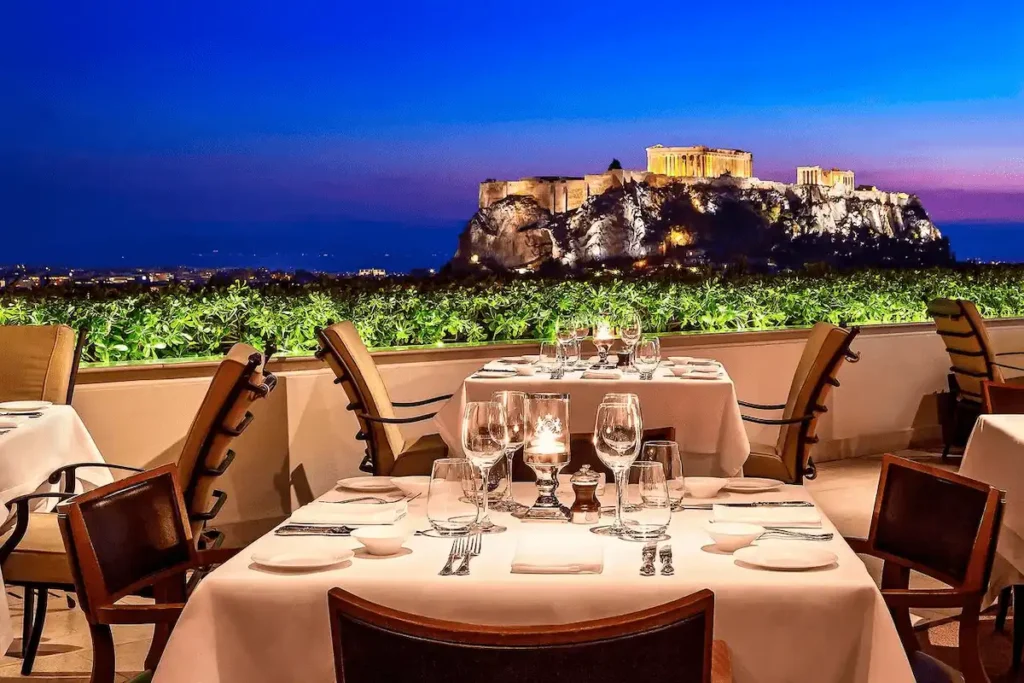
A luxury dinner setting at the rooftop of the Hotel Grande Bretagne Athens, a historic 19th-century palace that hosted King Edward VII's state banquets, showing white-clothed tables with a direct, illuminated view of the Acropolis and Parthenon.

Hotel Grande Bretagne Athens: Imperial Throne Over Syntagma Square

Hotel Grande Bretagne Athens occupies the most commanding position in Greek capital history—a neoclassical palace built in 1874 as the city’s first grand hotel, positioned directly opposite the Hellenic Parliament where European monarchs negotiated territorial sovereignty and diplomatic authority. Winston Churchill directed Mediterranean operations from its suites during WWII. The marble halls that hosted King

Hotel Grande Bretagne Athens: Imperial Throne Over Syntagma Square Read More »

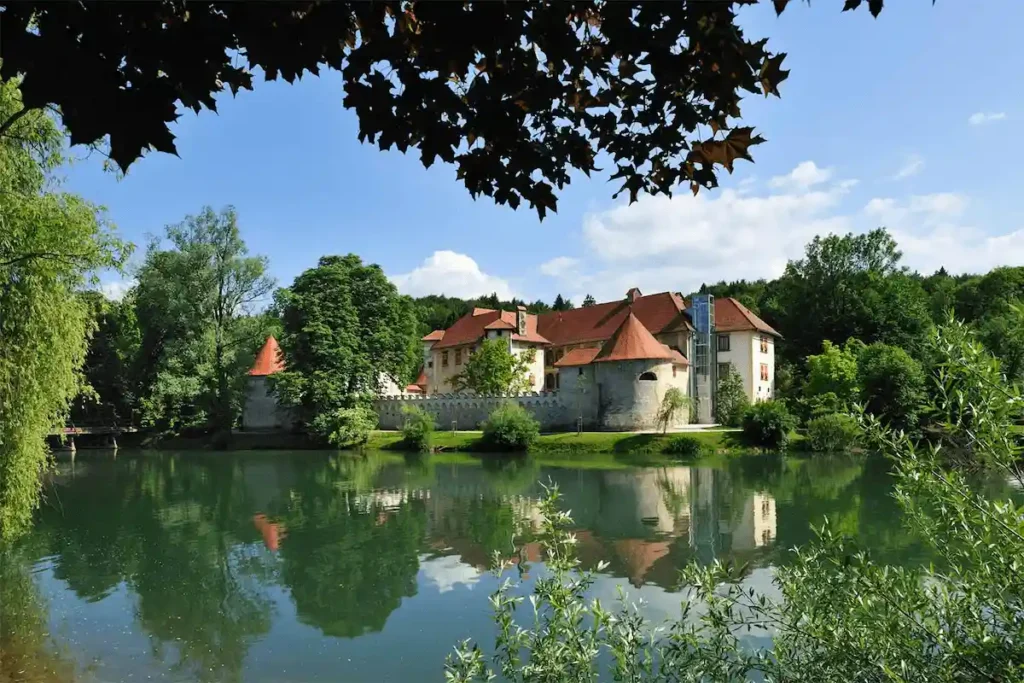
A view of Hotel Grad Otočec, a medieval Gothic castle situated on a small island in the middle of the Krka River in Slovenia, featuring stone walls, red-tiled circular towers, and lush green trees reflecting in the calm emerald water.

Hotel Grad Otočec: Renaissance Water Castle on Krka River Island

Hotel Grad Otočec stands as Slovenia’s only water castle hotel, occupying an island fortification in the Krka River since 1252. The Renaissance structure enforces complete territorial isolation through its natural moat—a defensive architecture that transforms modern privacy into a sovereign experience. As a Relais & Châteaux property since 1997, the castle’s military origins as a

Hotel Grad Otočec: Renaissance Water Castle on Krka River Island Read More »

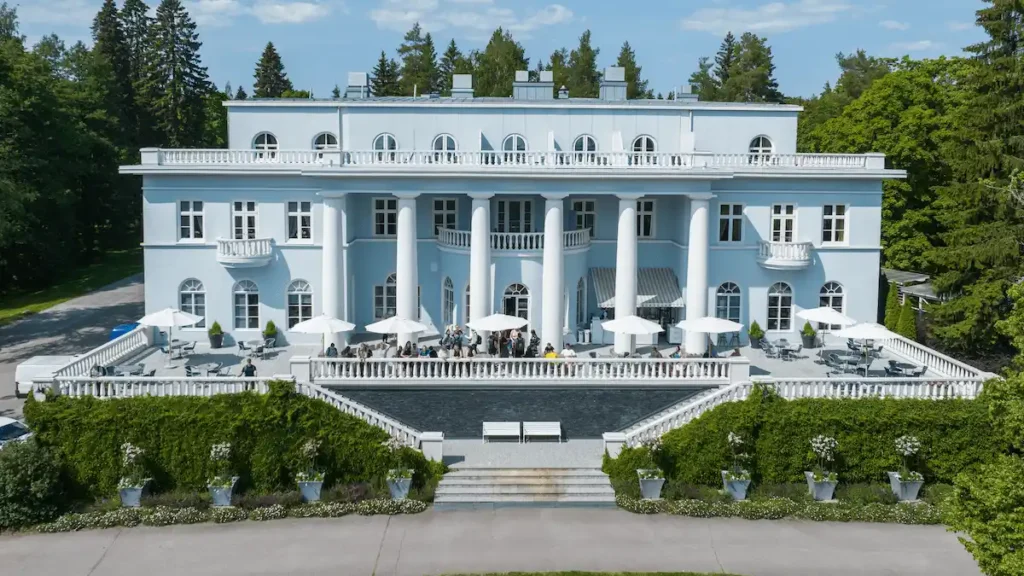
A symmetrical front view of the historic Hotel Haikko Manor & Spa in Porvoo, Finland, featuring its pale blue Neoclassical facade, grand white columns, and a wide sun terrace overlooking the coastal parkland.

Hotel Haikko Manor: Finland’s 1362 Coastal Estate Where Medieval Landholding Became Exclusive Wellness Territory

Hotel Haikko Manor commands a 1362 estate on Finland’s southern coast—a medieval landholding that evolved from agricultural dominion to one of Northern Europe’s most exclusive wellness destinations. The property’s 660-year lineage maps the transition of territorial power: from feudal grain production through aristocratic summer residence to modern sanctuary where 20 hectares of Gulf coastline enforce

Hotel Haikko Manor: Finland’s 1362 Coastal Estate Where Medieval Landholding Became Exclusive Wellness Territory Read More »

An aerial view of Hotel Vanajanlinna, a grand early 20th-century red-brick manor estate in Hämeenlinna, Finland, featuring its sprawling architectural wings and the lush green fairways of the Linna Golf course surrounding a scenic pond.

Hotel Vanajanlinna Hämeenlinna: Former Industrial Baron’s Neo-Gothic Castle Estate

Hotel Vanajanlinna operates from a verified 1924 Neo-Gothic castle commissioned by Hugo Standertskjöld, the Finnish industrial magnate who controlled the region’s timber and paper monopoly during the early 20th century. The estate’s lakeside positioning on Vanajavesi was chosen for strategic access—waterways served as industrial transport routes during Finland’s resource extraction era. Today, the castle’s original

Hotel Vanajanlinna Hämeenlinna: Former Industrial Baron’s Neo-Gothic Castle Estate Read More »

A panoramic view of Hotel Ullensvang situated on the edge of the Hardangerfjord in Lofthus, Norway, featuring its sprawling wings and outdoor infinity pool against a backdrop of snow-capped mountains and lush fruit orchards.

Hotel Ullensvang: Norway’s 178-Year Fjord Estate Where Orchard Barons Built Coastal Command

Hotel Ullensvang has occupied the same strategic Hardangerfjord shoreline since 1846, when the Utne family converted their fruit-trading dominance into Norway’s first documented tourist lodge. The estate’s 30,000 apple trees—planted to supply Bergen’s merchant fleet—remain the physical proof of agricultural authority that predated Norway’s tourism economy. This is not a resort that borrowed fjord views;

Hotel Ullensvang: Norway’s 178-Year Fjord Estate Where Orchard Barons Built Coastal Command Read More »

An aerial view of Oscarsborg Castle Hotel, showing the historic circular stone fortress of Oscarsborg situated on an island in the middle of the Oslofjord, surrounded by green coastal vegetation and defensive batteries.

Oscarsborg Castle Hotel: Island Fortress Command Over Oslo Fjord

Oscarsborg Castle Hotel places guests inside the active 1850s military fortress that commanded the narrowest point of Oslo Fjord—the same artillery batteries that sank the German cruiser Blücher on April 9, 1940, altering the invasion timeline of Norway. This is not a decorative castle experience. You occupy operational casemates, walk fortified ramparts built to withstand

Oscarsborg Castle Hotel: Island Fortress Command Over Oslo Fjord Read More »

An aerial view of La Contessa Castle Hotel, a grand 19th-century Neo-Classicist mansion in Szilvásvárad, featuring a long symmetrical facade with a red roof and formal manicured gardens, surrounded by the lush green forests of the Bükk Mountains.

La Contessa Castle Hotel: Sovereign Territorial Command in Hungary’s Bükk Mountains

La Contessa Castle Hotel restores the 19th-century hierarchical order of Hungarian landed aristocracy, where the manor house functioned as the administrative and social nucleus of vast territorial holdings. Located in Szilvásvárad within the Bükk National Park, this estate represents the architectural consolidation of regional authority—a physical manifestation of the agrarian elite’s dominance over the surrounding

La Contessa Castle Hotel: Sovereign Territorial Command in Hungary’s Bükk Mountains Read More »

An aerial view of Hotel Palota Lillafüred, a grand Neo-Renaissance castle hotel in Hungary, featuring its iconic pointed turrets and stone facades nestled within the dense forests of the Bükk Mountains alongside the tranquil Lake Hámori.

Hotel Palota Lillafüred: Hungary’s State Hunting Palace in the Bükk Mountains

Hotel Palota Lillafüred stands as the 1927 Neo-Renaissance palace commissioned by Admiral Miklós Horthy, Regent of Hungary, to serve as the official state hunting residence in the Bükk Mountains. Positioned above Lake Hámori as a territorial command post where Hungary’s interwar political elite conducted both diplomacy and sport. The palace’s construction utilized Bükk limestone and

Hotel Palota Lillafüred: Hungary’s State Hunting Palace in the Bükk Mountains Read More »

A wide view of Hotel Zamek Gniew, a massive 13th-century Gothic fortress in Pomerania, Poland, featuring its soaring brick walls and four corner towers overlooking the Vistula River valley.

Hotel Zamek Gniew: Command the Teutonic Knights’ Vistula Stronghold

Hotel Zamek Gniew delivers territorial authority within a 1290 Teutonic Order fortress. This is not decorative medievalism—you occupy the defensive architecture that controlled the lower Vistula trade corridor for three centuries. The castle’s 40-meter brick walls, perimeter towers, and strategic elevation above the river represent the physical infrastructure of medieval martial dominance. The Teutonic Knights

Hotel Zamek Gniew: Command the Teutonic Knights’ Vistula Stronghold Read More »