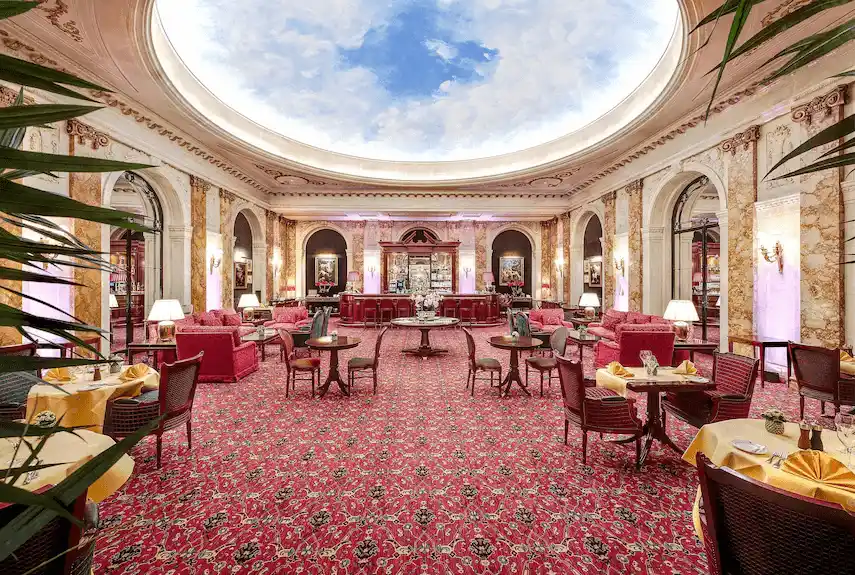
The grand L'Esterel lounge at Hotel Le Plaza Brussels featuring a circular trompe-l'œil sky ceiling, marble columns, and 1930s-inspired red velvet seating.

Hotel Le Plaza Brussels: 1930 Art Deco Command Center Where European Power Assembled

Hotel Le Plaza Brussels occupies Michel Polak’s 1930 architectural statement—a deliberate replica of Paris’s George V transplanted to Belgium’s capital as a seat of French-style authority. During WWII, military command requisitioned the reinforced structure for strategic headquarters. After two decades of closure, the 1996 restoration returned the 1,300-square-meter cinema palace to operational grandeur. Presidential guests […]

Hotel Le Plaza Brussels: 1930 Art Deco Command Center Where European Power Assembled Read More »
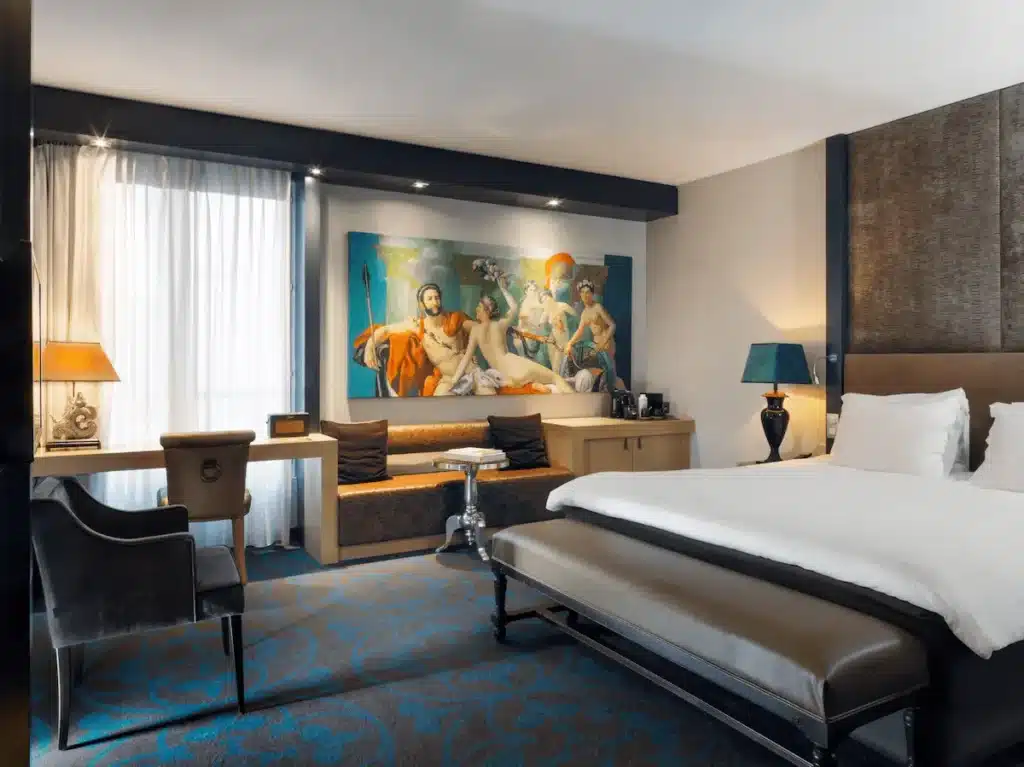
A contemporary guest room at The Dominican Brussels, a Member of Design Hotels featuring a large reproduction of a Jacques-Louis David painting and modern monastic-inspired furniture.

The Dominican Brussels: Where Jacques-Louis David Painted His Final Canvas in Exile

The Dominican Brussels stands on the foundations of a 15th-century Dominican abbey, where the exiled French painter Jacques-Louis David lived and died in 1825 after completing The Mars Disarmed by Venus in his final studio. The hotel preserves the original cloister layout, monastic archways, and the central courtyard where monks once walked in silent contemplation.

The Dominican Brussels: Where Jacques-Louis David Painted His Final Canvas in Exile Read More »

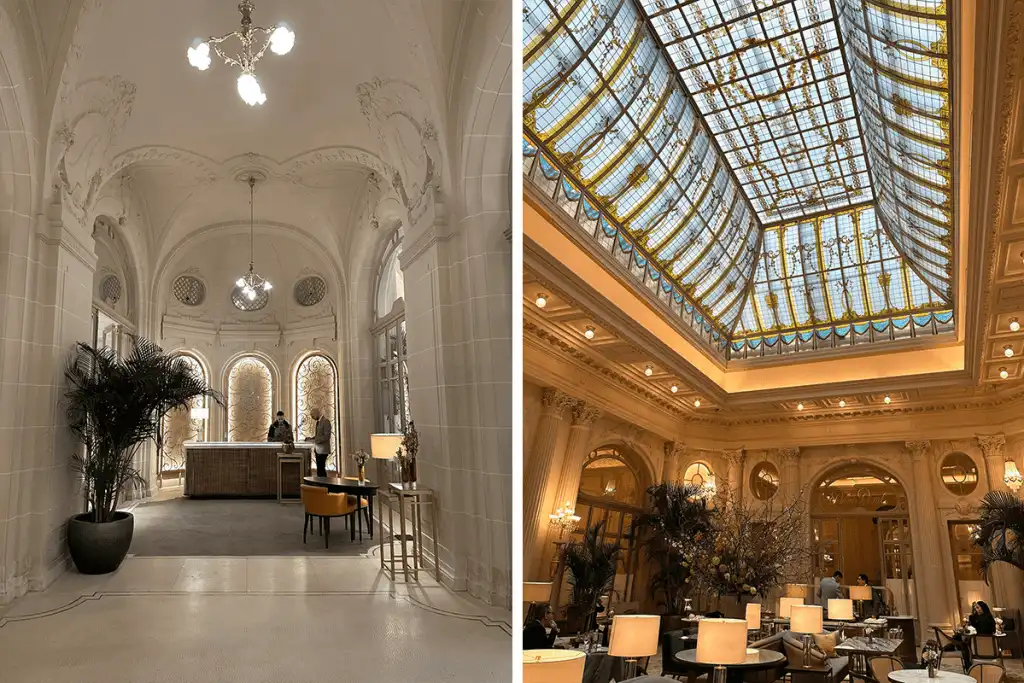
A side-by-side view of the Corinthia Grand Hotel Astoria Brussels interiors, showing the white stone-carved reception area and the grand Palm Court lounge featuring a massive 1910-original stained-glass skylight.

Corinthia Grand Hotel Astoria Brussels: Royal Command Post in the Capital

Corinthia Grand Hotel Astoria Brussels occupies King Leopold II’s 1910 Beaux-Arts commission on Rue Royale—a structure designed as Belgium’s architectural proclamation for the Brussels International Exposition. Henri Van Dievoet’s Louis XVI façade conceals a lineage of wartime command, Royal receptions, and literary immortality. The building served as headquarters for both German and British forces during

Corinthia Grand Hotel Astoria Brussels: Royal Command Post in the Capital Read More »

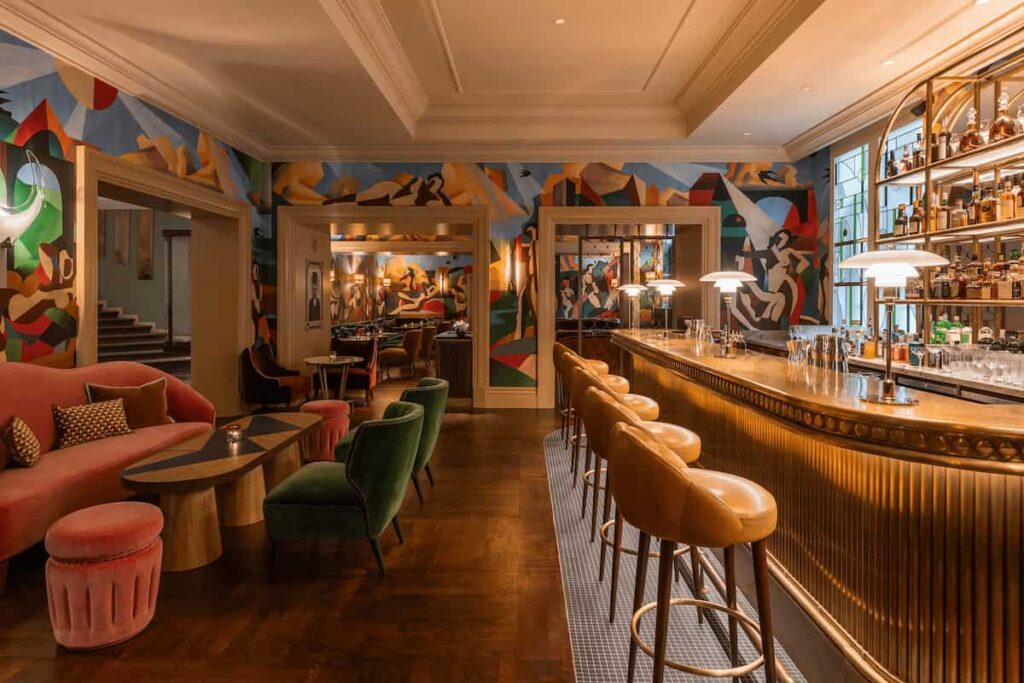
The interior of Bar Magritte at Hotel Amigo Brussels, featuring a long fluted brass bar, velvet cocktail seating in jewel tones, and expansive colorful wall murals inspired by the surrealist works of René Magritte.

Hotel Amigo Brussels: Spanish Renaissance Authority on Medieval Foundations

Hotel Amigo Brussels commands the 1522 Spanish jail site where soldiers coined “Amigo” from the Flemish Vrunte—transforming linguistic confusion into Brussels nomenclature. The 16th-century red-brick structure rises on 14th-century merchant house foundations that shaped the original Grand Place district. The 1958 World Expo conversion retained the stepped-gable footprint while embedding 17th-century basalt street stones in

Hotel Amigo Brussels: Spanish Renaissance Authority on Medieval Foundations Read More »

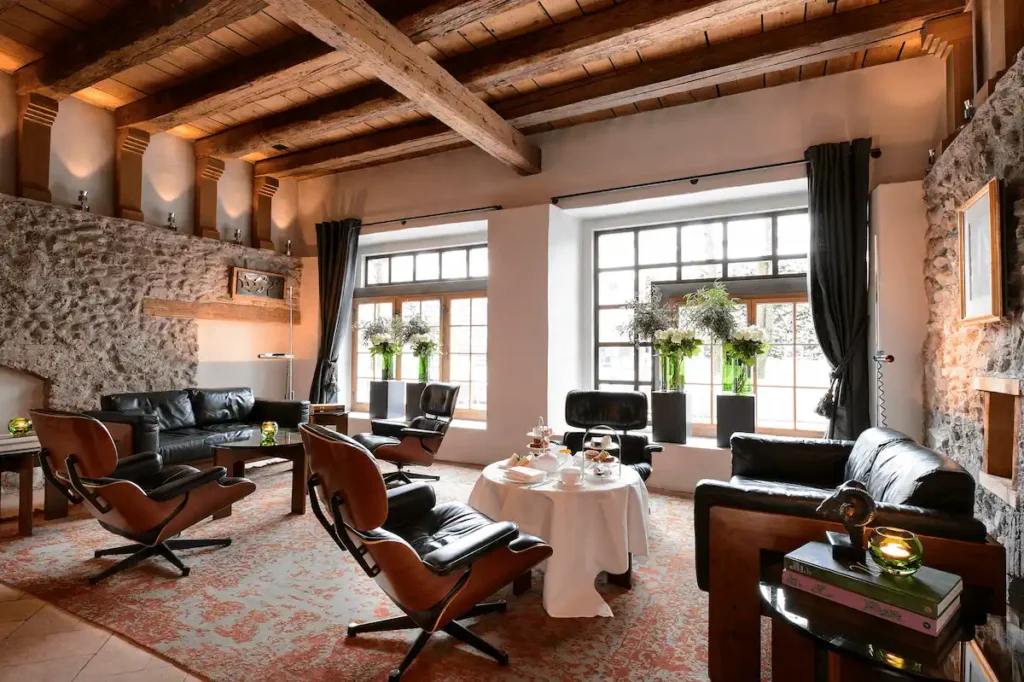
A luxury suite at Widder Hotel Zurich featuring original 14th-century stone walls and wood beams paired with 20th-century designer furniture.

Widder Hotel Zurich: Where Nine Medieval Houses Command the Augustiner Quarter

Widder Hotel Zurich is not a hotel—it is an architectural empire. Nine medieval townhouses, their stone foundations laid in the 14th century above 2,000-year-old Roman and Celtic ruins, were fused into a single structure through a decade-long restoration by architect Tilla Theus. Completed in 1995, this transformation required over 1,000 specialists to preserve 15th-century frescoes

Widder Hotel Zurich: Where Nine Medieval Houses Command the Augustiner Quarter Read More »

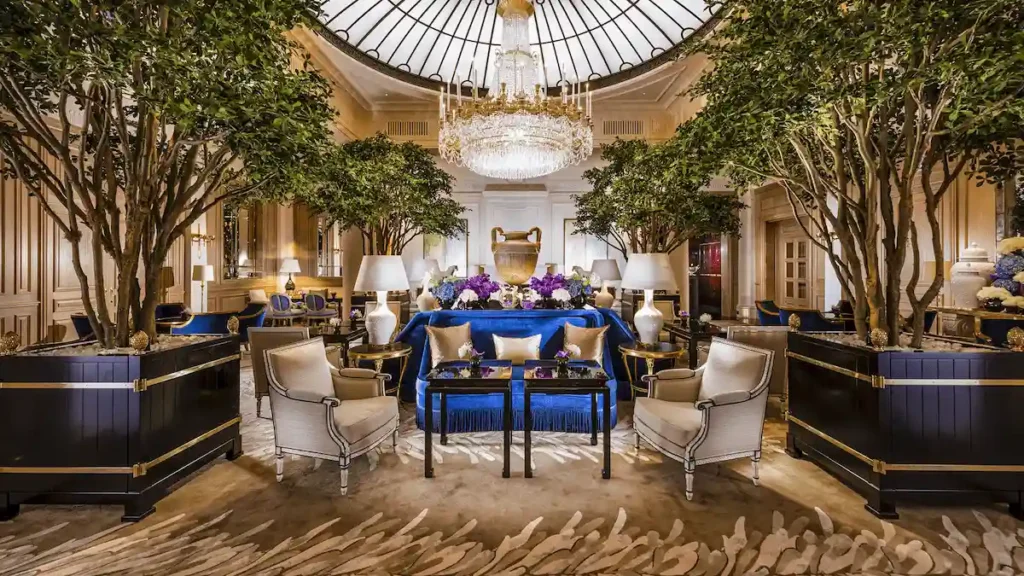
The iconic "Le Hall" lobby at Baur au Lac, featuring indoor trees, plush blue velvet seating, and a grand crystal chandelier beneath a glass dome.

Baur au Lac Zurich: 180 Years of Command at the End of Bahnhofstrasse

Baur au Lac is not a hotel that emerged from the luxury market—it created the luxury market. Opened in 1844 by Johannes Baur as a private lakeside villa, this Neoclassical estate at the southern terminus of Bahnhofstrasse has remained in the founding family’s hands for seven consecutive generations. Its 1,400 sqm private park is the

Baur au Lac Zurich: 180 Years of Command at the End of Bahnhofstrasse Read More »

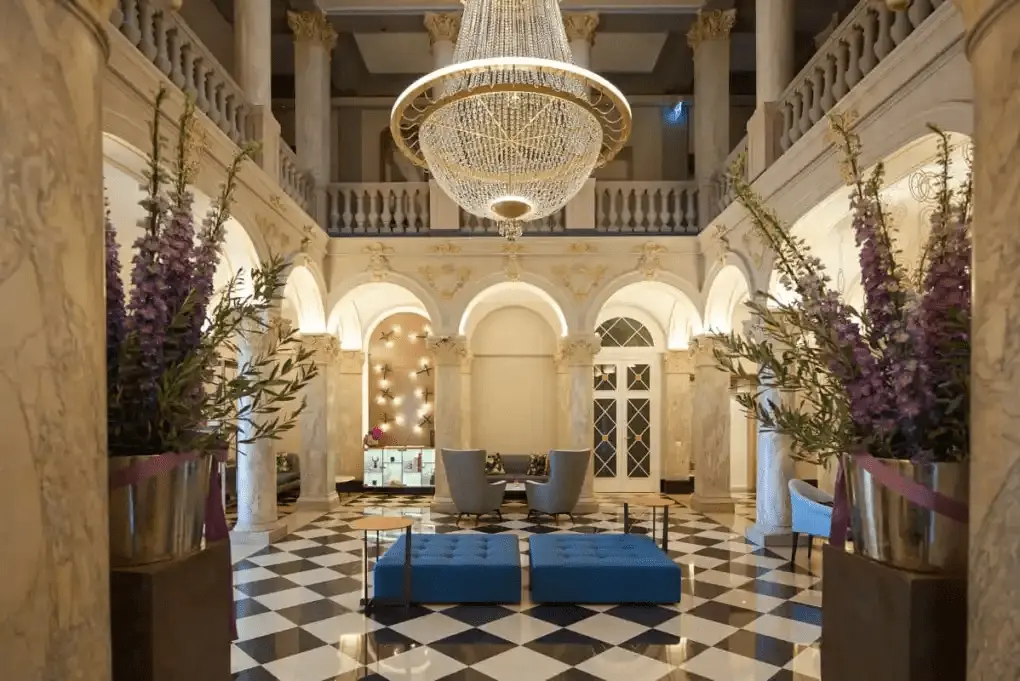
The spectacular six-story central atrium of The Ritz-Carlton Hotel de la Paix Geneva, featuring a checkered floor, marble columns, and a grand crystal chandelier.

Ritz-Carlton Hotel de la Paix Geneva: Where 1865 Diplomatic Authority Meets Lakefront Command

Ritz-Carlton Hotel de la Paix Geneva occupies the 1865 Italianate palazzo where the Alabama Claims arbitration established Geneva as the global seat of diplomatic resolution. Architect Jean-Marie Gignoux designed this lakefront structure as a statement of international authority—a building conceived to host the architects of peace treaties, not leisure tourists. The 1872 arbitration banquet between

Ritz-Carlton Hotel de la Paix Geneva: Where 1865 Diplomatic Authority Meets Lakefront Command Read More »

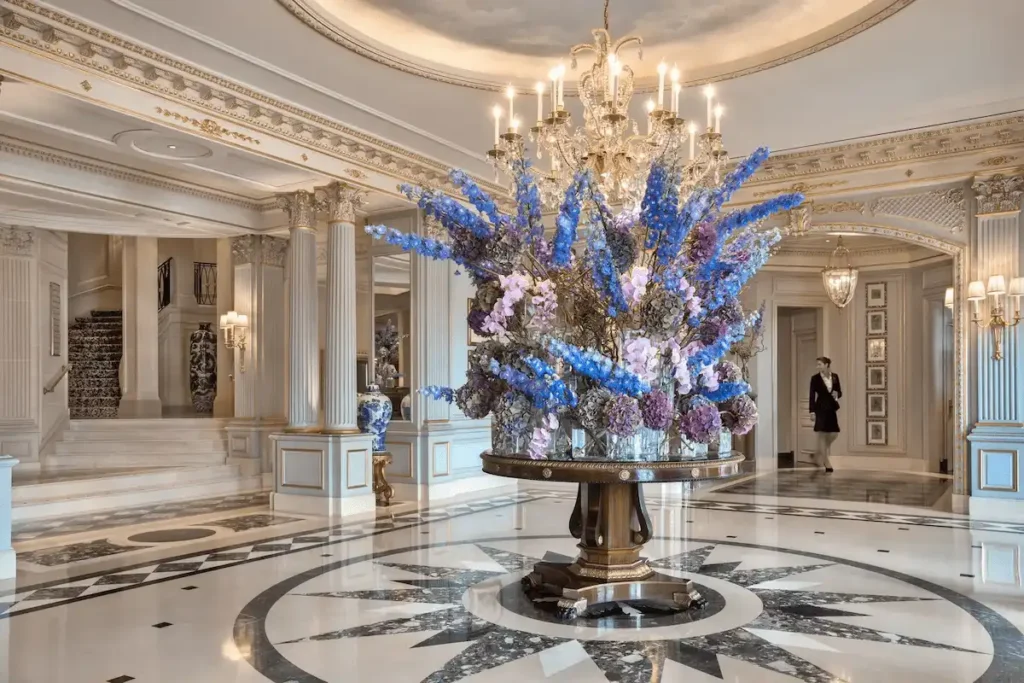
The ornate marble lobby of Four Seasons Hotel des Bergues Geneva featuring a massive, signature floral arrangement beneath a crystal chandelier.

Four Seasons Hotel des Bergues Geneva: Where the League of Nations Convened in 1834’s First Grand Swiss Hotel

Four Seasons Hotel des Bergues Geneva opened May Day 1834 as Switzerland’s first and largest hotel—a neoclassical monument on Lake Geneva where the League of Nations held its inaugural 1920 assembly in the Salle des Nations. Designed by François-Ulrich Vaucher and reimagined by Pierre-Yves Rochon in 2005, the 115-room property remains the exclusive Four Seasons

Four Seasons Hotel des Bergues Geneva: Where the League of Nations Convened in 1834’s First Grand Swiss Hotel Read More »

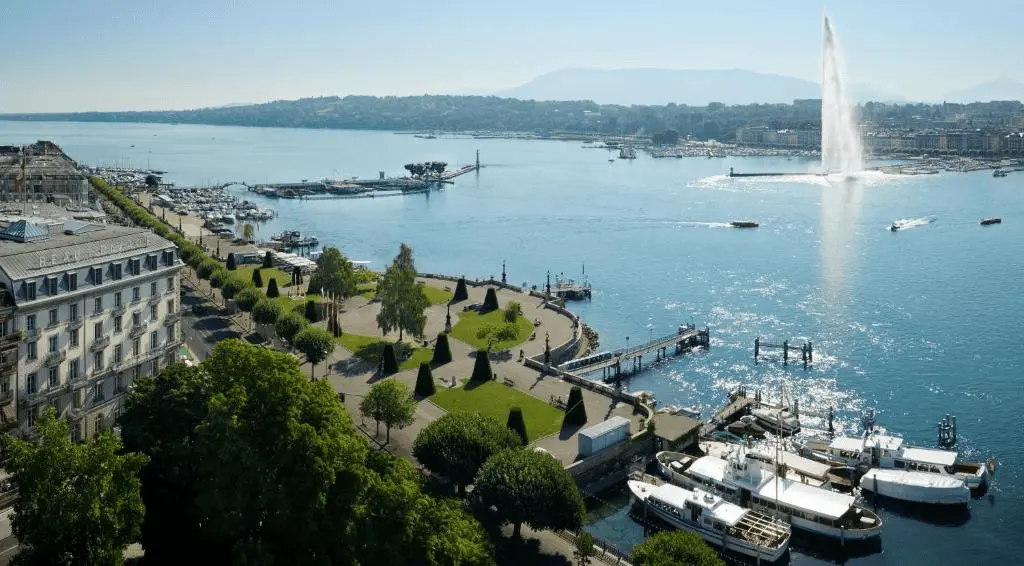
An aerial view of Beau-Rivage Genève overlooking the Lake Geneva promenade and the iconic Jet d'Eau fountain.

Beau-Rivage Genève: The Lakefront Palace Where Nations Were Born and Royalty Fell

Beau-Rivage Genève is not a hotel—it is a theater of consequence. Founded in 1865 by Jean-Jacques Mayer, this lakefront fortress witnessed the signing of Czechoslovakia’s founding treaty in 1918, the assassination of Empress Elisabeth of Austria in 1898, and Eleanor Roosevelt drafting the Universal Declaration of Human Rights within its salons. Still family-owned, it installed

Beau-Rivage Genève: The Lakefront Palace Where Nations Were Born and Royalty Fell Read More »

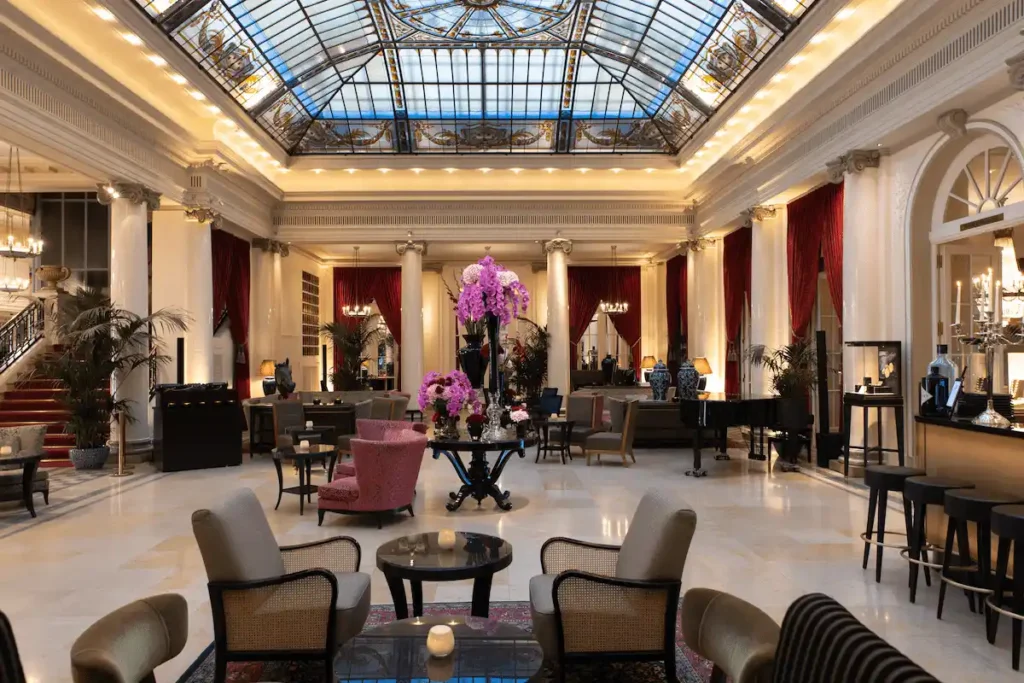
The grand lobby of Hotel Bellevue Palace Bern featuring its famous ornate stained-glass ceiling, marble columns, and velvet furnishings in the official guesthouse of the Swiss government.

Hotel Bellevue Palace Bern: Swiss Government’s Official Command Post Since 1913

Hotel Bellevue Palace Bern stands as Switzerland’s only state-owned Grand Hotel, a 1913 Neo-Classical fortress that served as General Ulrich Wille’s WWI military headquarters and Allen Dulles’ Cold War intelligence nerve center. The Swiss National Bank purchased it in 1976 to prevent Soviet acquisition—establishing it as the nation’s official diplomatic residence where heads of state

Hotel Bellevue Palace Bern: Swiss Government’s Official Command Post Since 1913 Read More »