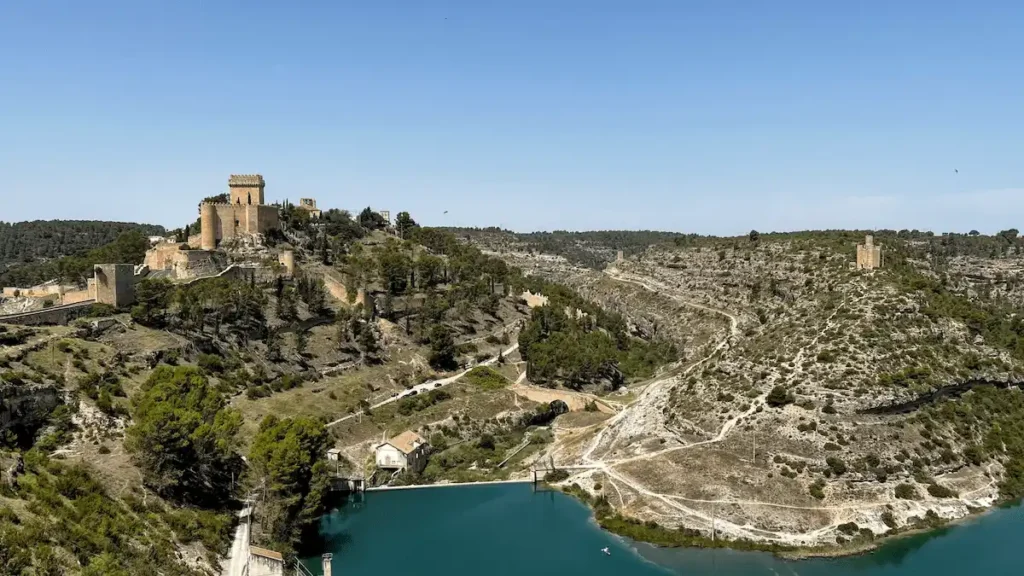
A wide landscape view of the Parador de Alarcón, an 8th-century medieval fortress with a massive square stone keep, situated on a craggy hilltop surrounded by defensive walls and the deep blue waters of the Júcar River.

Parador de Alarcón: Medieval Fortress Commanding Spain’s Strategic Heartland

Parador de Alarcón rises from a limestone promontory encircled by the Júcar River—a defensive stronghold engineered by Arab rulers in the 8th century and seized during the Reconquista by Castilian forces in 1184. The fortress controlled the vital Castile-Aragón corridor, and its strategic dominance made occupation synonymous with territorial sovereignty. Today, this 4-star parador translates […]

Parador de Alarcón: Medieval Fortress Commanding Spain’s Strategic Heartland Read More »
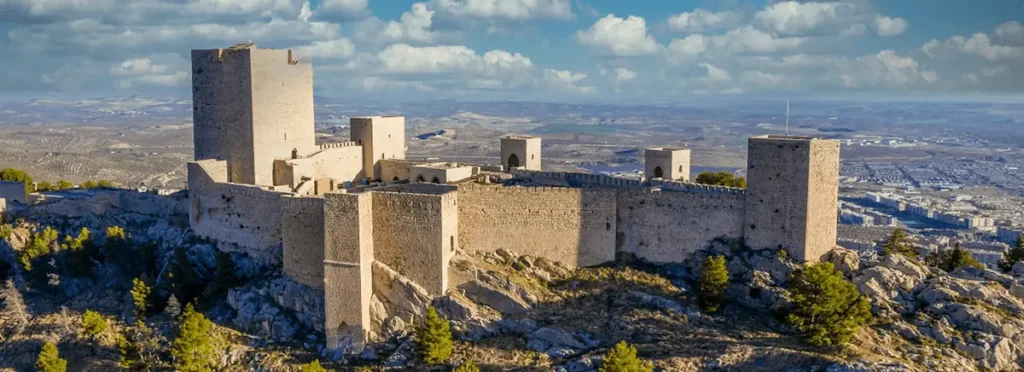
An aerial panorama of the Parador de Jaén, a monumental hotel integrated into the 13th-century Santa Catalina Castle; the image showcases the massive stone defensive walls, a prominent square keep, and several smaller watchtowers perched atop the rugged crest of Santa Catalina Hill.

Parador de Jaén: Command the Andalusian Highlands from a Medieval Fortress

The Parador de Jaén is not a repurposed castle—it is an active continuation of a 13th-century military stronghold that has commanded the approach to Andalusia’s eastern frontier for eight centuries. Built as a forward observation post during the Reconquista, this fortress was engineered for territorial dominance: its clifftop position overlooks 60 kilometers of olive groves

Parador de Jaén: Command the Andalusian Highlands from a Medieval Fortress Read More »

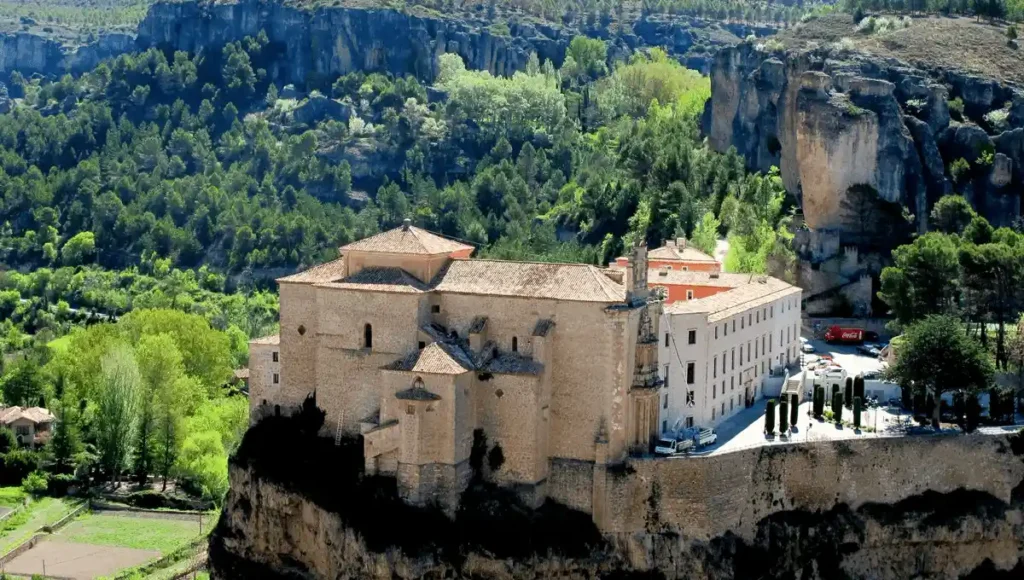
An aerial view of the Parador de Cuenca, a 16th-century former Convent of San Pablo, showcasing its prominent stone church and monastery buildings perched precariously on the edge of a sheer limestone cliff overlooking the Huécar Gorge.

Parador de Cuenca: Cliffside Dominican Command Above Castilla’s River Canyons

Parador de Cuenca converts the San Pablo Convent—a Dominican monastery founded in 1523—into a territorial command post suspended 100 meters above the Huécar Gorge. This isn’t adaptive reuse; it’s the continuation of a site selected for visual dominance over Cuenca’s canyon network and the fortified medieval city across the gorge. The original cloisters, vaulted refectory,

Parador de Cuenca: Cliffside Dominican Command Above Castilla’s River Canyons Read More »

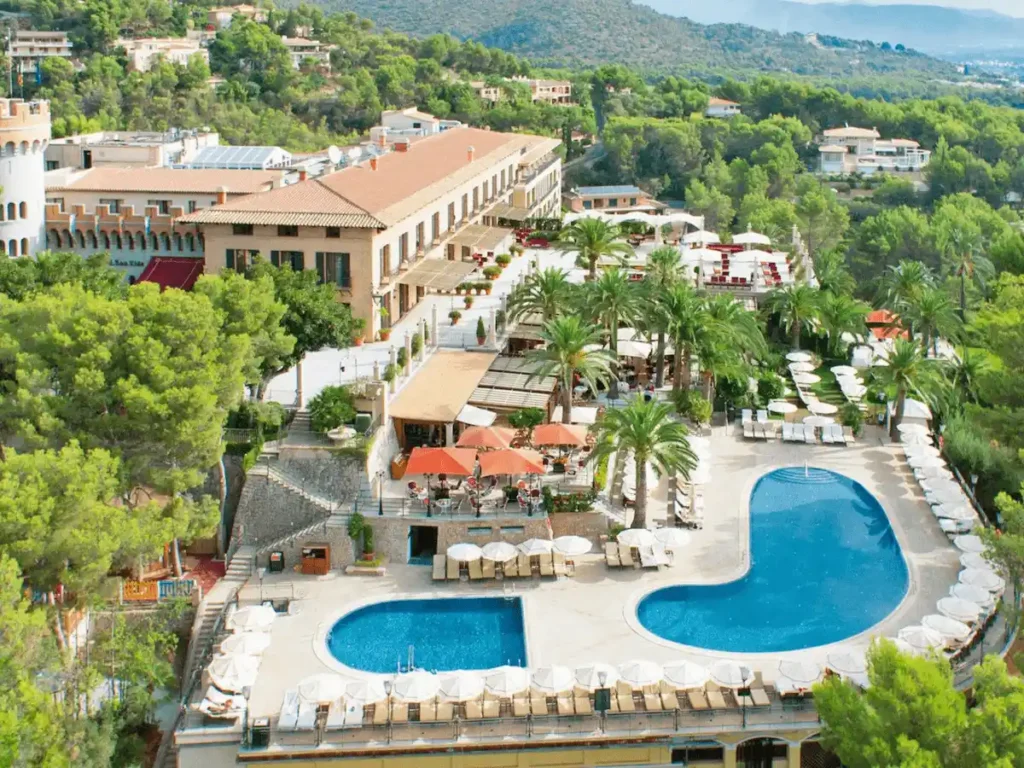
An elevated view of Castillo Hotel Son Vida in Mallorca, a 13th-century estate and former castle featuring traditional Mediterranean architecture, expansive sun terraces, and two turquoise swimming pools nestled within lush, pine-covered hills overlooking the Bay of Palma.

Castillo Hotel Son Vida: Mallorca’s Sovereign 13th-Century Estate Commanding 350 Private Acres

Castillo Hotel Son Vida occupies the highest defensive position in Palma—a 13th-century baronial fortress that has commanded the Son Vida plateau since Aragonese conquest. Originally constructed as a territorial watchtower during the Reconquista, this Gothic stronghold evolved into a noble estate before its conversion into Mallorca’s first and most exclusive castle hotel. From its fortified

Castillo Hotel Son Vida: Mallorca’s Sovereign 13th-Century Estate Commanding 350 Private Acres Read More »

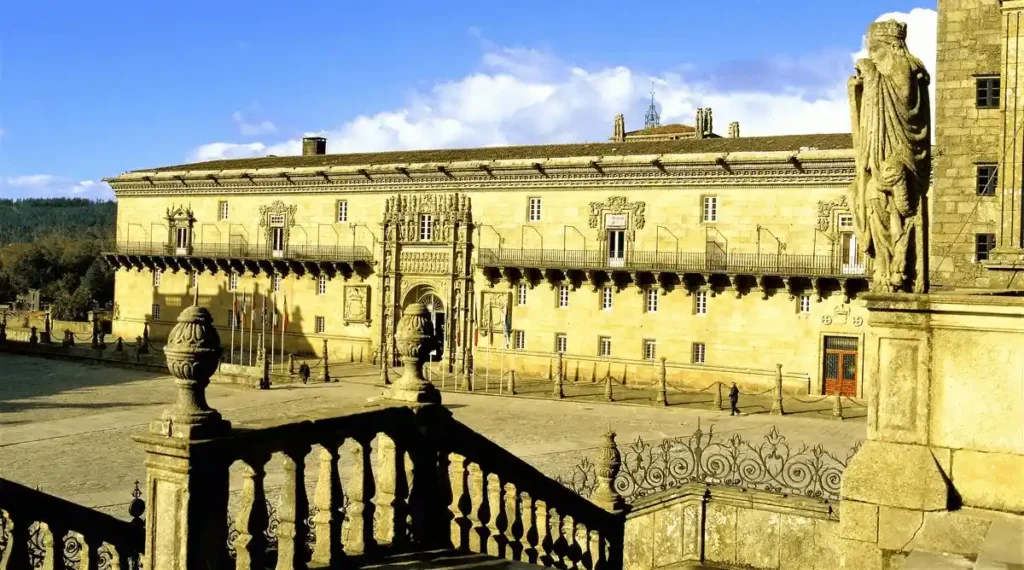
A view from the stone stairs of the Praza do Obradoiro toward the grand 15th-century Plateresque facade of Parador de Santiago - Hostal dos Reis Católicos, showcasing its ornate arched portal and intricate stone carvings originally commissioned by King Ferdinand and Queen Isabella as a royal hospital for pilgrims.

Parador de Santiago: Where Catholic Monarchs Built Power Into Stone

The Parador de Santiago occupies the former Royal Hospital of the Catholic Monarchs, commissioned in 1499 as the most ambitious pilgrimage infrastructure in Europe. Ferdinand and Isabella ordered this fortress of mercy at the terminus of the Camino de Santiago—not as charity, but as territorial assertion. The building’s four Renaissance courtyards, Gothic chapel, and vaulted

Parador de Santiago: Where Catholic Monarchs Built Power Into Stone Read More »

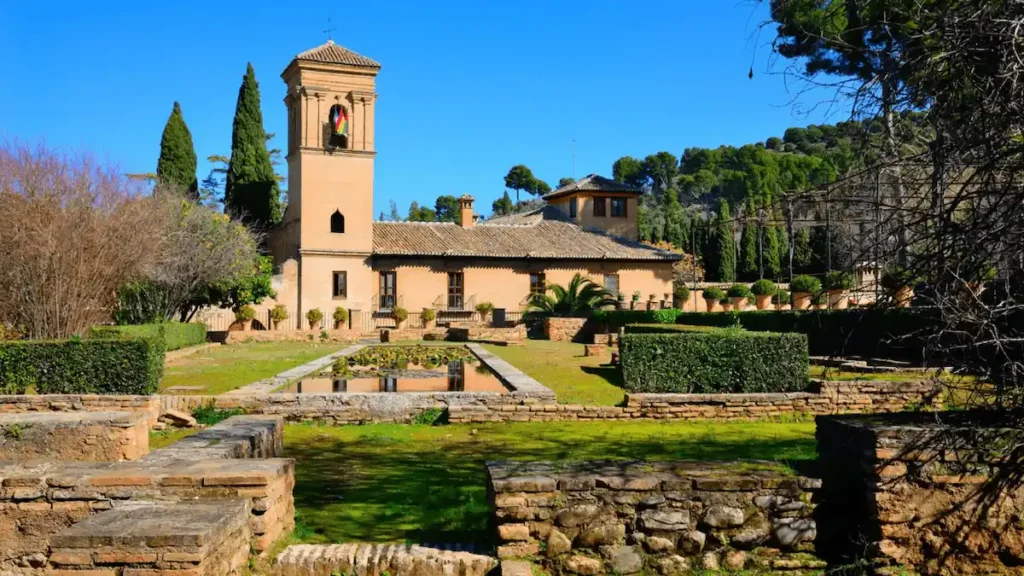
A view of the Parador de Granada, a 15th-century Franciscan convent built upon the remains of a Nasrid palace, featuring its iconic bell tower and a reflecting pool set within the historic gardens of the Alhambra.

Parador de Granada: Royal Monastery Inside the Alhambra Complex

The Parador de Granada operates within a 15th-century convent commissioned by the Catholic Monarchs immediately after the Reconquista. Built on Nasrid foundations within the Alhambra’s fortified perimeter, this property represents the architectural assertion of sovereign transition—the physical conversion of Islamic Granada into a seat of Catholic royal authority. You occupy rooms where Ferdinand and Isabella’s

Parador de Granada: Royal Monastery Inside the Alhambra Complex Read More »

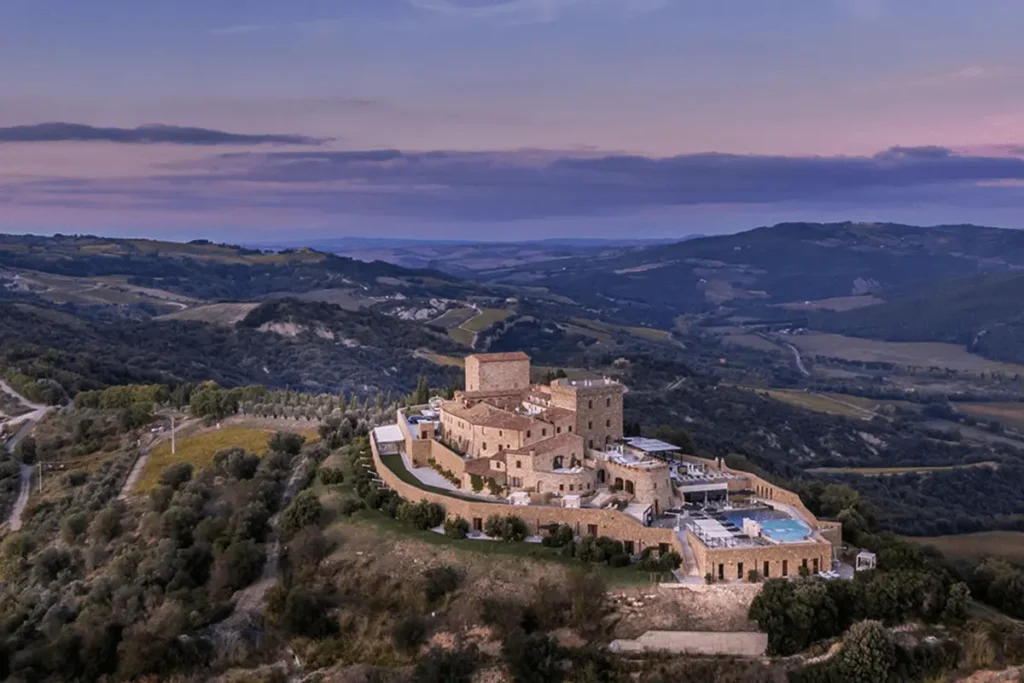
A wide twilight shot of the 11th-century Castello di Velona fortress on a hilltop in Val d'Orcia, featuring its restored stone watchtowers, expansive thermal pool decks, and panoramic views of the surrounding Tuscan landscape.

Castello di Velona: Where Medieval Command Meets Modern Tuscan Sovereignty

Castello di Velona rises from the Val d’Orcia landscape as it has since the 11th century—a territorial command post transformed into a five-star estate where guests inherit the elevated position once reserved for feudal lords surveying their domain. This isn’t hotel luxury borrowed from history; it’s territorial authority you occupy. The fortified structure that once

Castello di Velona: Where Medieval Command Meets Modern Tuscan Sovereignty Read More »

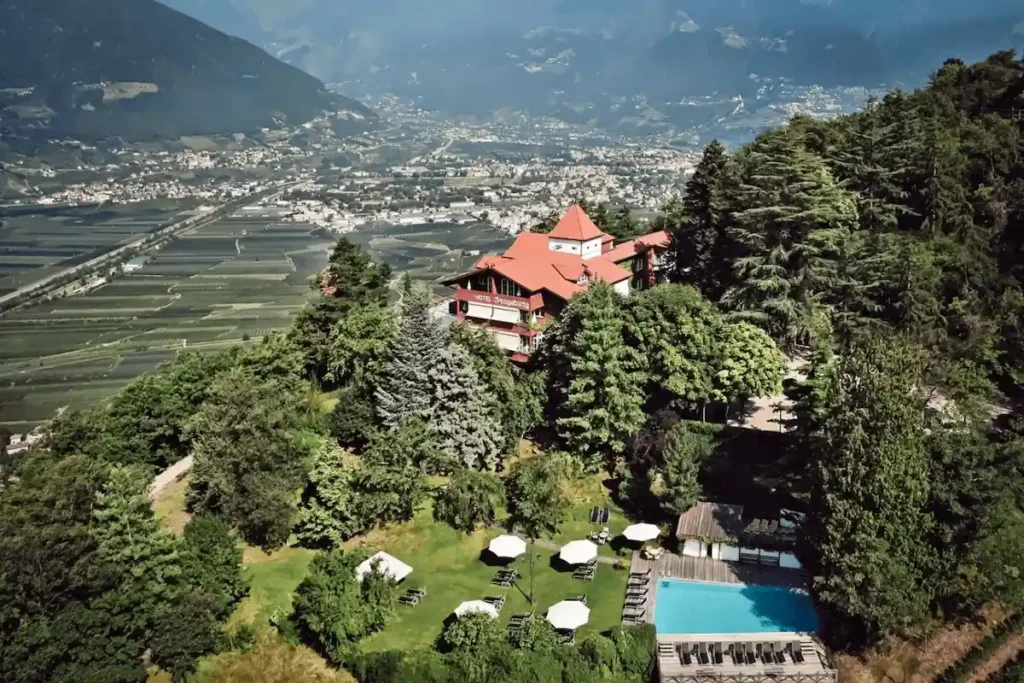
An elevated aerial view of the red-roofed Castel Fragsburg perched high on a wooded mountainside, featuring a sun-drenched pool deck and panoramic views over the terraced Adige Valley in South Tyrol.

Castel Fragsburg: Alpine Command Post Above Merano’s Aristocratic Valley

Castel Fragsburg occupies the strategic high ground above Merano—a 17th-century fortress estate that once controlled the valley approaches between the Italian plains and the Austrian Alpine passes. Built as a defensive seat by South Tyrolean nobility, this stone command post has maintained its territorial authority for four centuries. The castle’s elevation and masonry anchored aristocratic

Castel Fragsburg: Alpine Command Post Above Merano’s Aristocratic Valley Read More »

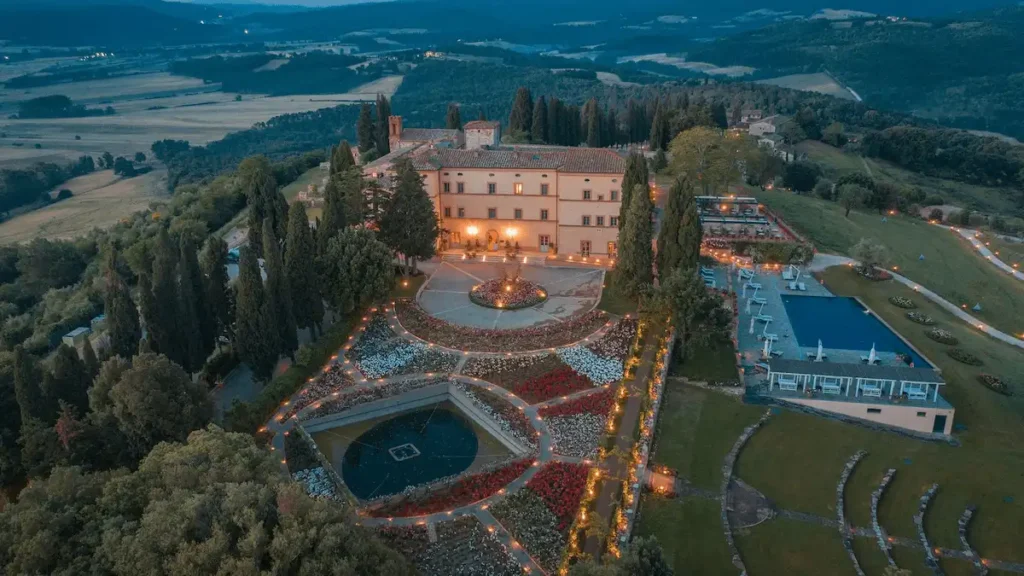
An evening aerial view of Castello di Casole Belmond Hotel, featuring its illuminated 10th-century manor, tiered circular gardens with colorful blooms, and a sleek infinity pool overlooking the rolling Tuscan hills at twilight.

Castello di Casole Belmond: 10th-Century Feudal Command in the Tuscan Hills

Castello di Casole Belmond transforms a verified 10th-century feudal stronghold into a 4,200-acre territorial estate where Sienese nobility once governed the agrarian wealth of Tuscany. The castello’s documented origins as a defensive fortification established its strategic elevation. Guests inhabit a lineage of territorial command where physical elevation and agricultural productivity defined social hierarchy. This is

Castello di Casole Belmond: 10th-Century Feudal Command in the Tuscan Hills Read More »

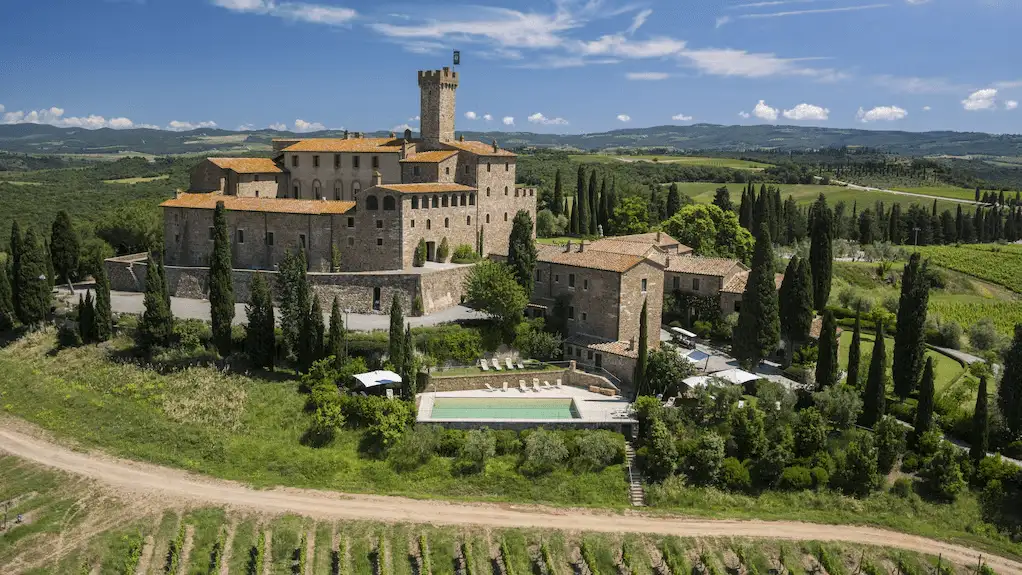
An elevated view of the medieval stone fortress of Castello Banfi il Borgo in Tuscany, featuring a prominent watchtower and terracotta roofs, surrounded by cypress trees and vast estate vineyards.

Castello Banfi il Borgo: Medieval Wine Fortress in Montalcino

Castello Banfi il Borgo stands as a fortified 13th-century settlement commanding 7,100 acres of Brunello vineyards in southern Tuscany. The property centers on Poggio alle Mura, a medieval defensive borgo that served as a territorial watchtower over the Val d’Orcia. Today, the estate operates as both a UNESCO-recognized wine producer and a five-star residence where

Castello Banfi il Borgo: Medieval Wine Fortress in Montalcino Read More »