Your Luxury Guide

"Founder of ExploreSlovenija — sharing budget stays, hidden gems, hikes, and authentic experiences for backpackers, digital nomads, and travelers. Passionate about nature and community travel in Slovenia."

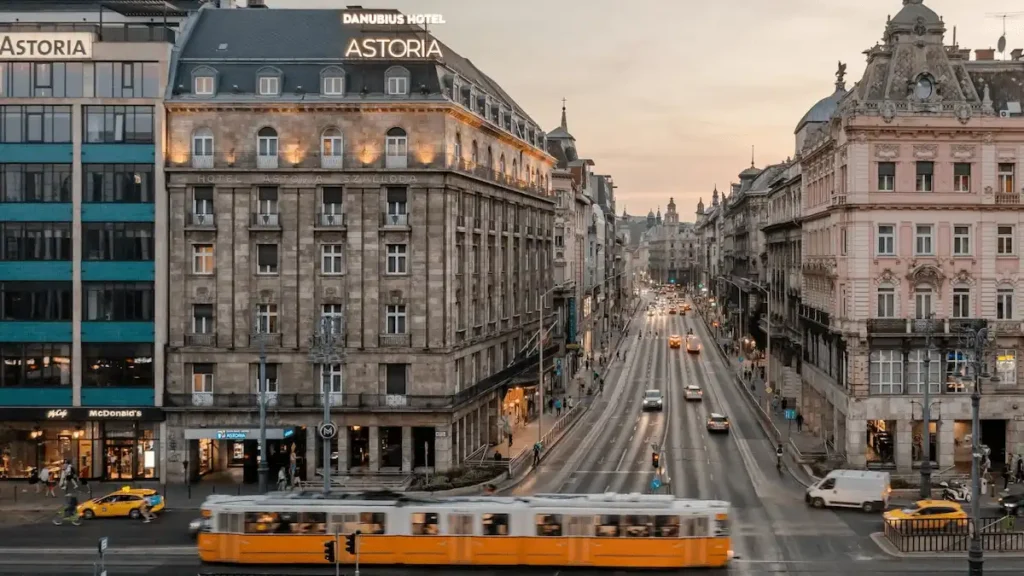
A high-angle dusk view of the historic stone facade of Danubius Hotel Astoria City Center, overlooking a busy Budapest street with a passing yellow tram and city lights.

Danubius Hotel Astoria Budapest: Empire Authority at the City’s Command Center

Danubius Hotel Astoria stands at the intersection named in its honor—a 1914 Ármin Hegedűs and Izidor Sterk monument to Empire-style command. Preserved dark wood paneling, polished brass, and leaded glass define spaces where revolutionary governments convened and diplomats negotiated. This is not adaptive reuse; this is original authority maintained across 110 years at Budapest’s administrative […]

Danubius Hotel Astoria Budapest: Empire Authority at the City’s Command Center Read More »

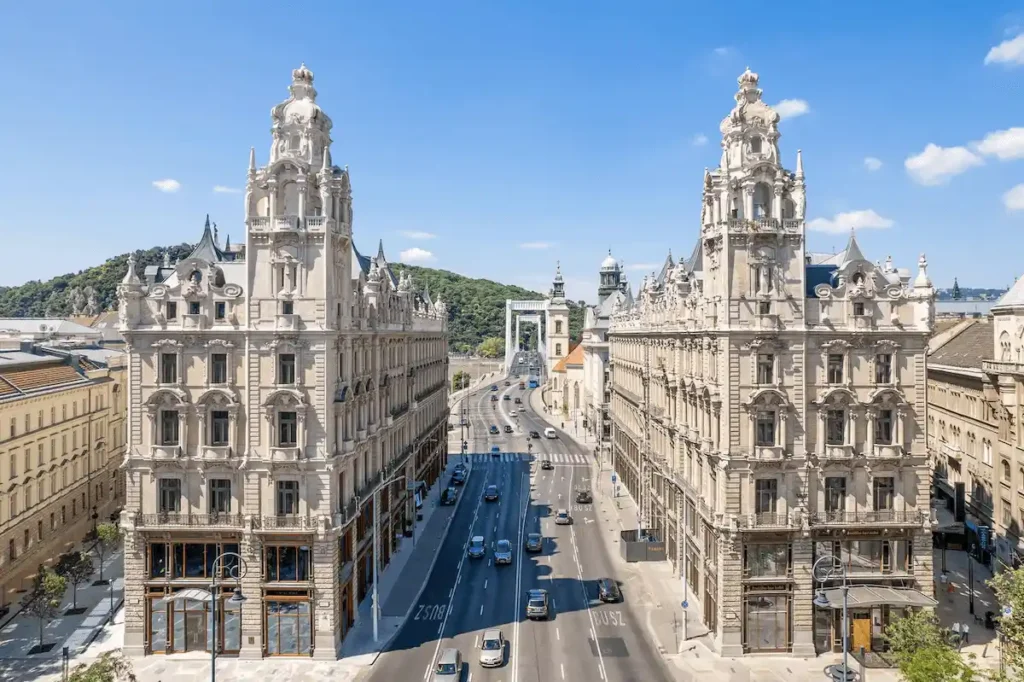
A wide aerial view of the neo-baroque twin buildings of Matild Palace Budapest and Klotild Palace, flanking the entrance to the Elisabeth Bridge under a clear blue sky.

Matild Palace Budapest: Where Imperial Commission Meets Modern Command

The Matild Palace Budapest stands as a deliberate statement of Habsburg authority—a neo-baroque twin palace commissioned in 1902 by Archduchess Maria Klotild to create an architectural “gate” at the foot of Elisabeth Bridge. Designed by Flóris Korb and Kálmán Giergl, the architects behind the Liszt Academy, this UNESCO-protected structure anchors the entrance to Váci utca

Matild Palace Budapest: Where Imperial Commission Meets Modern Command Read More »

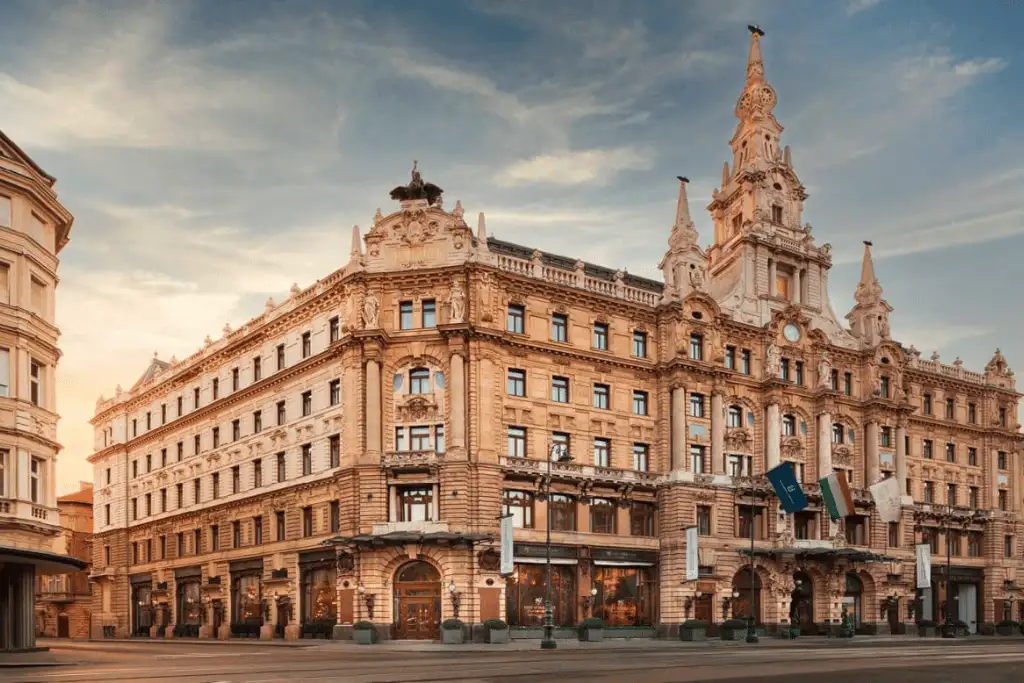
The ornate Italian Renaissance-style facade of Anantara New York Palace Budapest, featuring the landmark clock tower and intricate stone carvings against a soft sunset sky.

Anantara New York Palace Budapest: Where Insurance Empire Became Literary Palace

Anantara New York Palace Budapest commands the intersection where 19th-century American ambition meets Hungarian imperial architecture. Designed by Alajos Hauszmann—architect of the Royal Palace and Parliament—this 1894 insurance headquarters was engineered to project permanence across Europe. The same marble halls that once housed actuarial power became the epicenter of Hungary’s literary revolution, where the Nyugat

Anantara New York Palace Budapest: Where Insurance Empire Became Literary Palace Read More »

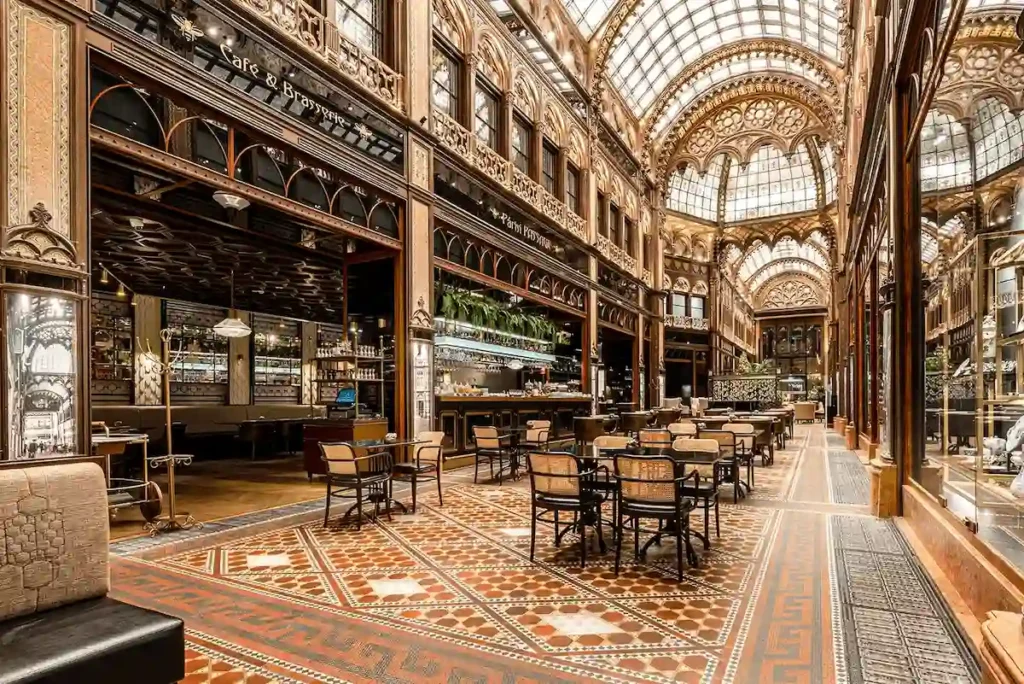
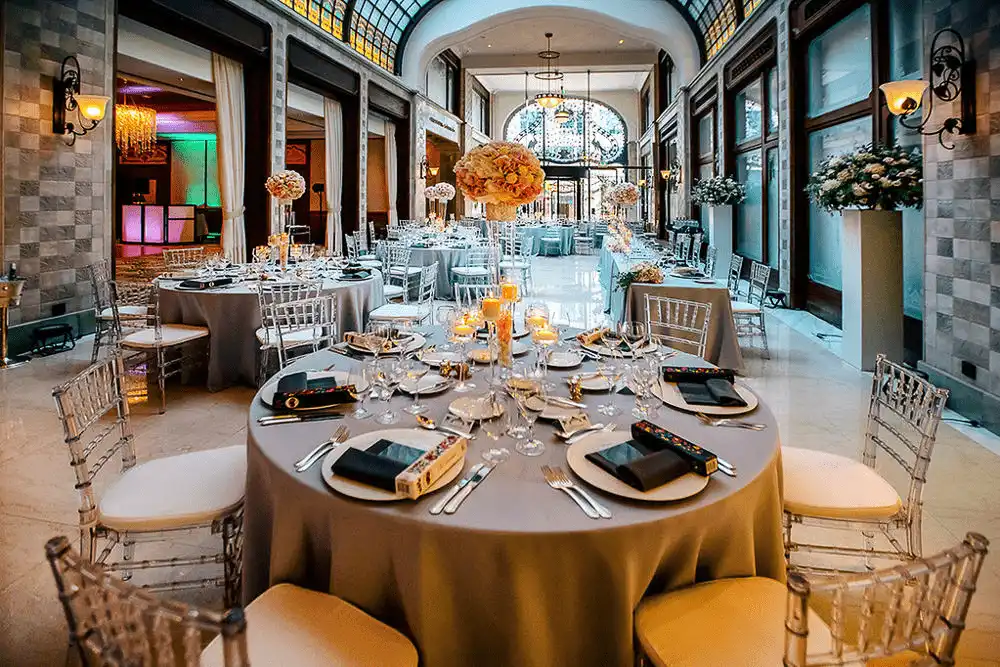
A formal banquet setup within the historic glass-roofed arcade of Four Seasons Gresham Palace Budapest, featuring mosaic tile floors and the iconic peacock ironwork gates in the distance.

Four Seasons Gresham Palace Budapest: Art Nouveau Command at Roosevelt Square

Four Seasons Gresham Palace Budapest occupies the 1906 Secessionist landmark that once housed the London Gresham Life Assurance Company’s Central European headquarters. Architect Zsigmond Quittner designed this T-shaped palace as a fortified seat of British financial power, commanding Roosevelt Square directly opposite the Chain Bridge. The $110 million restoration transformed Miksa Róth’s stained glass windows,

Four Seasons Gresham Palace Budapest: Art Nouveau Command at Roosevelt Square Read More »

The historic Royal Spa at Corinthia Budapest featuring a grand 15-meter swimming pool surrounded by Art Deco stone pillars, intricate wall tiles, and an ornate stained-glass ceiling.

Corinthia Budapest: The 1896 Grand Hotel Royal That Defined European Cinema

Corinthia Budapest operates from the Grand Hotel Royal, commissioned in 1896 to mark Hungary’s millennium with a technological dominance no European property could match. Architect Rezső Ray delivered French Renaissance grandeur on the Grand Boulevard, creating the structure that would later inspire The Grand Budapest Hotel. The Lumière brothers chose this building for Hungary’s first

Corinthia Budapest: The 1896 Grand Hotel Royal That Defined European Cinema Read More »

A high-angle view of the neo-baroque facade of Hotel Bellevue Opatija, situated along the coastal road with the blue Adriatic Sea and Kvarner Bay in the background.

Hotel Bellevue Opatija: Imperial Command of the Kvarner Gulf

Hotel Bellevue Opatija has dominated the town’s skyline since 1891, when it was erected as a visual beacon for vessels navigating the Kvarner Gulf. Commissioned during Opatija’s transformation into the Austro-Hungarian Empire’s premier health resort, the neo-baroque structure served as both imperial accommodation and social command center. Today, the 87-room property retains its original high

Hotel Bellevue Opatija: Imperial Command of the Kvarner Gulf Read More »

The interior of the historic Golden Hall at Hotel Imperial Opatija, featuring high ornate ceilings, grand crystal chandeliers, and classical stucco details arranged for fine dining.

Hotel Imperial Opatija: 1885 Crown Princess Stephanie Palace

Hotel Imperial Opatija commands Opatija’s historic center from an 1885 Secession palace originally christened after Crown Princess Stephanie of Belgium. Architect Franz Wilhelm engineered this monument as the second jewel in Opatija’s imperial resort expansion, establishing a legacy defined by Emperor Franz Joseph I’s personal patronage and German Emperor Wilhelm II’s diplomatic visits. The 2018

Hotel Imperial Opatija: 1885 Crown Princess Stephanie Palace Read More »

The grand neoclassical facade of Hotel Kvarner Opatija featuring an outdoor swimming pool, elegant columns, and sun loungers under a clear blue sky.

Hotel Kvarner Opatija: The 1884 Imperial Ballroom Commanding Kvarner Bay

Built in a decisive 10-month construction campaign by the Southern Railway Society, Hotel Kvarner Opatija established the Adriatic’s first purpose-built imperial resort in 1884. Emperor Franz Joseph I selected this neoclassical structure as his official winter residence, transforming a fishing settlement into the Austro-Hungarian Empire’s premier coastal authority seat. The property’s legendary Crystal Hall—with its

Hotel Kvarner Opatija: The 1884 Imperial Ballroom Commanding Kvarner Bay Read More »

A side-by-side view of Hotel Vestibul Palace showing the historic stone Villa annex by day and the illuminated ancient Roman archway of the main Palace building at night in Split.

Hotel Vestibul Palace Split: The Imperial Entrance Transformed

Hotel Vestibul Palace is not adjacent to history—it is history. Built directly into the Vestibul, the 4th-century imperial entrance hall of Emperor Diocletian’s Palace, this 7-room property occupies one of the most architecturally significant positions in Roman antiquity. The structure merges three construction periods—Roman, Romanesque, Gothic—into a single UNESCO-protected address. Guests inhabit the exact threshold

Hotel Vestibul Palace Split: The Imperial Entrance Transformed Read More »

Aerial view of Hotel Park Split featuring the modern outdoor swimming pool and sun loungers set against the historic stone facade and lush Mediterranean garden terrace.

Hotel Park Split: Where Dalmatian Diplomacy Shaped History

Hotel Park Split opened in 1921 as the Kingdom of Yugoslavia’s first international luxury address on the Adriatic—a monumental stone estate where the elite negotiated power and the terrace became Split’s diplomatic salon. Today, the €10 million restoration preserves the Art Deco grandeur while adding modern authority: rooftop infinity views, Prana wellness, and direct beach

Hotel Park Split: Where Dalmatian Diplomacy Shaped History Read More »