Your Luxury Guide

"Founder of ExploreSlovenija — sharing budget stays, hidden gems, hikes, and authentic experiences for backpackers, digital nomads, and travelers. Passionate about nature and community travel in Slovenia."

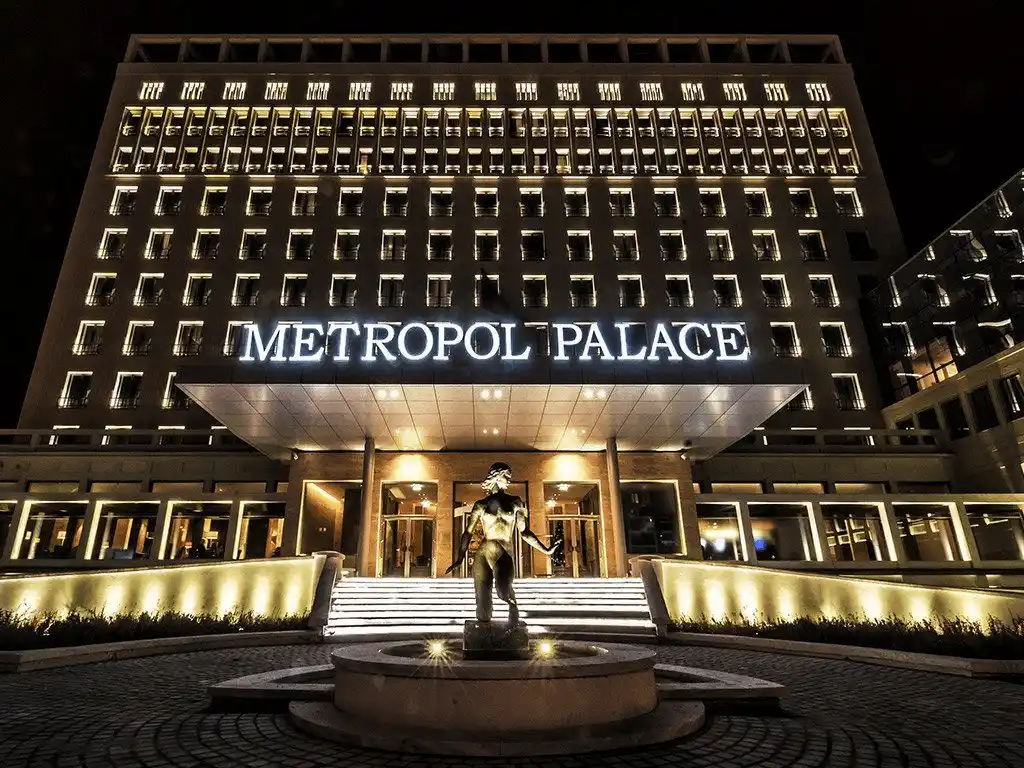
The illuminated modernist facade of Metropol Palace Belgrade at night, featuring the grand entrance, lit-up windows, and the iconic bronze fountain sculpture in the foreground.

Metropol Palace Belgrade: 1961 Non-Aligned Summit Hotel

Metropol Palace Belgrade occupies the physical site where 30 heads of state gathered in 1961 for the first Conference of the Non-Aligned Movement—a geopolitical pivot point that defined Cold War neutrality. This Yugoslav Modernist landmark, commissioned as a political headquarters and transformed into a luxury hotel in 1957, combines the monumental scale of 1950s socialist […]

Metropol Palace Belgrade: 1961 Non-Aligned Summit Hotel Read More »

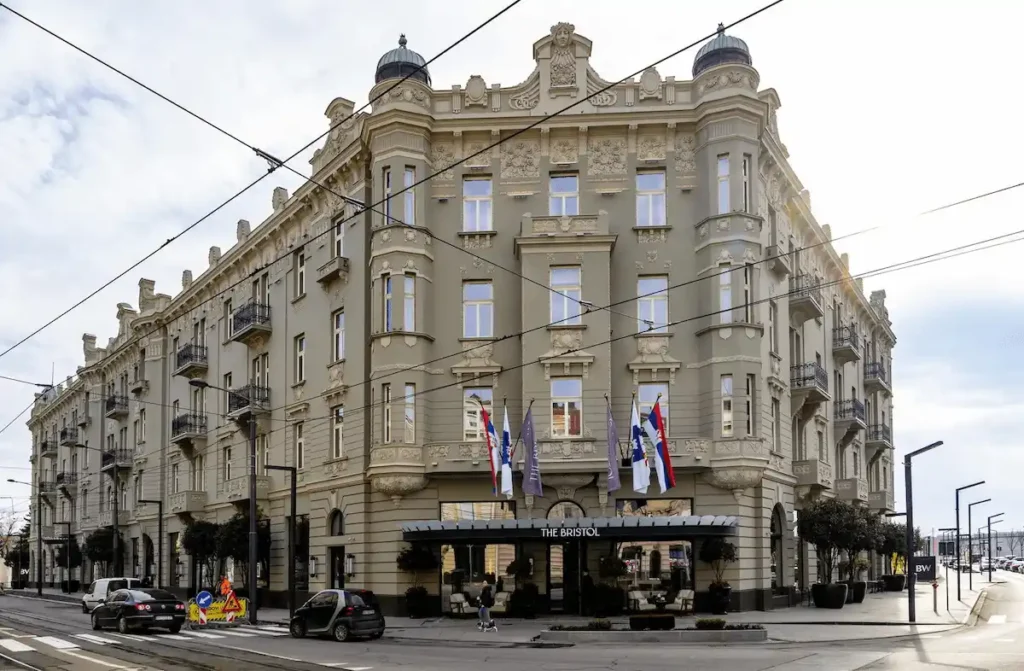
The meticulously restored Art Nouveau facade of The Bristol Belgrade, a 1912 architectural landmark featuring ornate stone carvings and classical domes in the Savamala district.

The Bristol Belgrade: Where Art Nouveau Grandeur Meets a Century of Diplomatic Authority

The Bristol Belgrade occupies Nikola Nestorović’s 1912 Secession monument—a building formally protected since 1987 and restored by 16 specialist artists to its exact original form. This is where the Rockefeller family stayed during Belgrade’s interwar golden age, where chess champions and heads of state established the property’s reputation as the city’s premier diplomatic seat. Behind

The Bristol Belgrade: Where Art Nouveau Grandeur Meets a Century of Diplomatic Authority Read More »

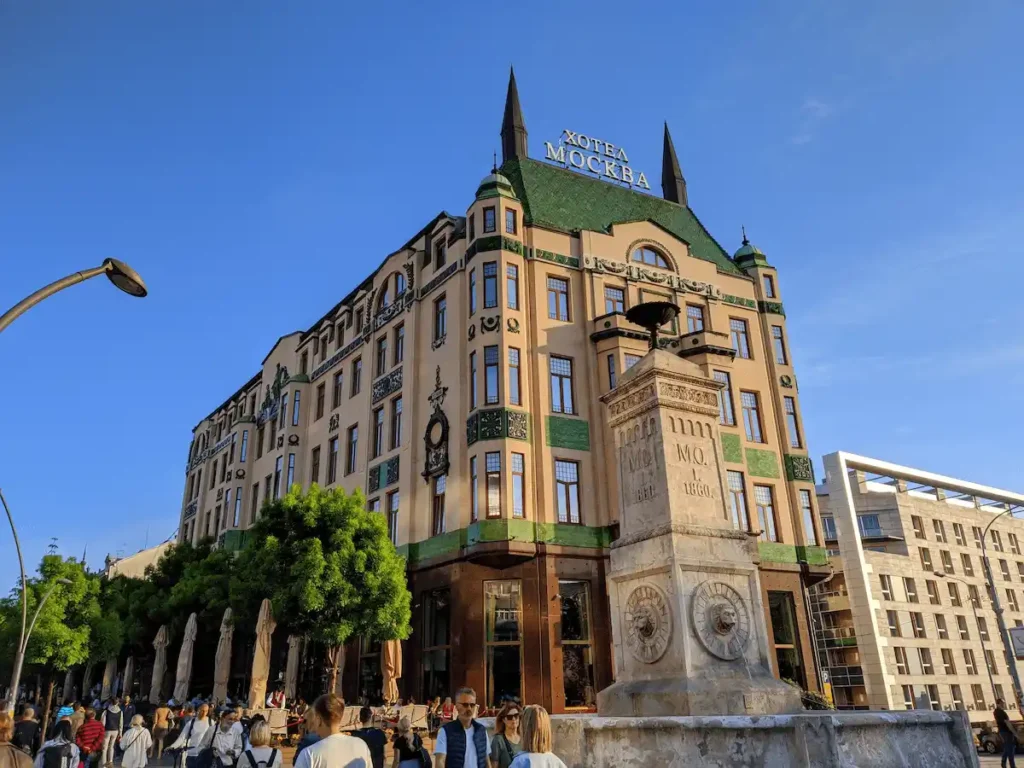
The iconic Russian Secessionist facade of Hotel Moskva in Belgrade, featuring its signature emerald green Zsolnay ceramic tiles and architectural towers under a clear blue sky.

Hotel Moskva Belgrade: Russian Imperial Authority at Serbia’s Power Center

Hotel Moskva has commanded Belgrade’s most strategic intersection since King Peter I Karađorđević personally inaugurated this Russian Secession monument in 1908. The emerald Zsolnay-tiled facade overlooks Terazije Square—the city’s historical seat of commerce and power—where 40 million guests have inhabited suites that sheltered Einstein, Hitchcock, and Gandhi. The building has never closed. Not through two

Hotel Moskva Belgrade: Russian Imperial Authority at Serbia’s Power Center Read More »

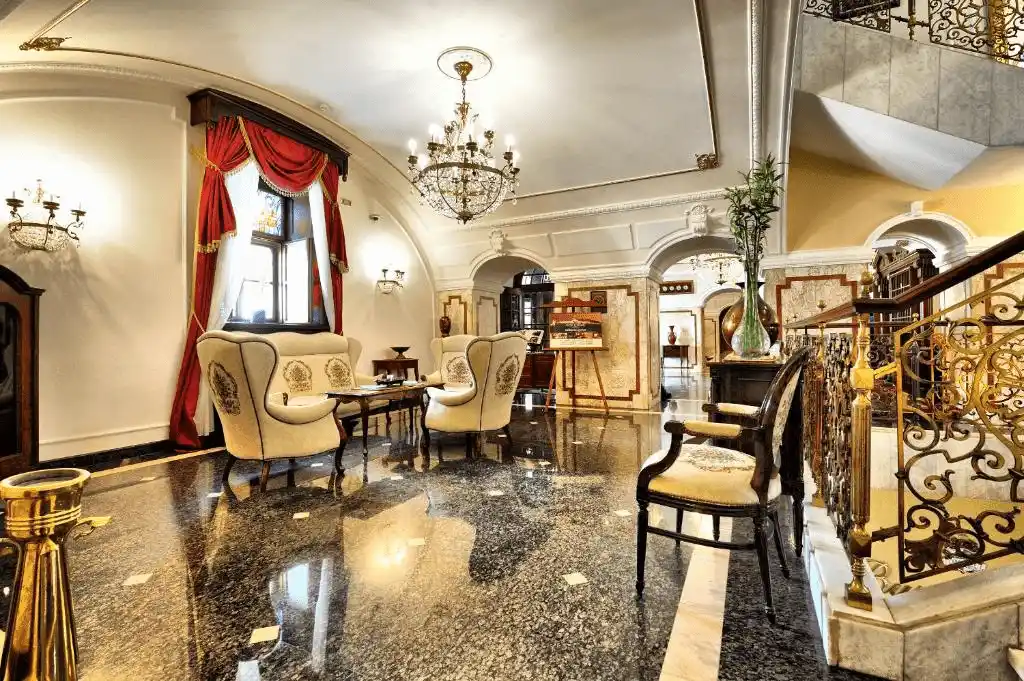
The opulent baroque lobby of Hotel Leopold I in the Petrovaradin Fortress, featuring polished marble floors, classical archways, crystal chandeliers, and imperial-style furniture.

Hotel Leopold I, Novi Sad: Imperial Habsburg Command Post Within Europe’s Fortress Gibraltar

Hotel Leopold I occupies a 17th-century Baroque military residence inside Petrovaradin Fortress, where Emperor Leopold I laid the cornerstone in 1692 to establish Habsburg dominance over the Danube. This isn’t a hotel themed around history—it’s the actual command structure where fortress officers directed operations during centuries of Habsburg-Ottoman conflict. The building’s thick defensive walls, vaulted

Hotel Leopold I, Novi Sad: Imperial Habsburg Command Post Within Europe’s Fortress Gibraltar Read More »

The rooftop restaurant terrace of Hotel Astoria Budva, featuring elegant table settings overlooking the medieval stone fortifications and the blue Adriatic Sea.

Hotel Astoria Budva: Sleep Within Venetian Fortress Walls

Hotel Astoria Budva delivers what coastal resorts cannot replicate: residence within the actual 18th-century Venetian defensive walls that protected this Adriatic stronghold. The property maintains its rugged stone exterior as mandated by UNESCO-adjacent preservation codes, while offering one of the Old Town’s only private beach clubs—a privilege reserved for fewer than three hotels within the

Hotel Astoria Budva: Sleep Within Venetian Fortress Walls Read More »

The illuminated outdoor swimming pool of Palazzo Radomiri Heritage Boutique Hotel at dusk, set against the historic stone walls of the 18th-century captain's palace.

Palazzo Radomiri: 18th-Century Captain’s Palace with Private Adriatic Jetty

Palazzo Radomiri stands as one of Montenegro’s most authentic maritime residences—a white stone Baroque palace built by ship-owning captains during Venetian rule. Constructed in the early 1700s in Dobrota, this captain’s estate features the original private mooring where trading vessels once docked, now transformed into an exclusive sunbathing platform extending directly into the Bay of

Palazzo Radomiri: 18th-Century Captain’s Palace with Private Adriatic Jetty Read More »

A stunning waterfront view of Heritage Grand Perast in Montenegro, featuring its historic stone palace architecture and bell tower against the backdrop of the Bay of Kotor mountains.

Heritage Grand Perast: Venetian Naval Power in Perast’s Grandest Palace

Heritage Grand Perast commands the waterfront of Perast from within the Smekja Palace, the largest and most architecturally significant of the town’s 16 baroque structures. Built in 1764 entirely from white Korčula stone, this former residence of the maritime Smekja family represents the apex of Venetian aristocratic influence during Perast’s “Golden Age”—when the town trained

Heritage Grand Perast: Venetian Naval Power in Perast’s Grandest Palace Read More »

The serene late-baroque inner courtyard of Hotel Kristály Imperial in Tata, featuring an elegant outdoor banquet setup with white linens and a classic stone fountain.

Hotel Kristály Imperial Tata: Imperial Esterházy Guesthouse Since 1770

Hotel Kristály Imperial holds the documented distinction of being Hungary’s oldest continuously operating hotel, functioning without interruption since 1770 as the premier guesthouse for the noble Esterházy family. This late-Baroque landmark stands as the original accommodation for Central Europe’s political and cultural elite visiting Tata’s “City of Waters.” Over 255-year-old structure preserves authentic imperial architecture—grand

Hotel Kristály Imperial Tata: Imperial Esterházy Guesthouse Since 1770 Read More »

The grand neoclassical ballroom of Anna Grand Hotel in Balatonfüred, featuring high ceilings, ornate stucco work, a large crystal chandelier, and a professional conference setup.

Anna Grand Hotel Balatonfüred: Where Hungary’s Reform Era Elite Gathered

Anna Grand Hotel stands as the documented birthplace of Hungary’s most prestigious social tradition—the Anna Ball, first held July 26, 1825, when nobleman Fülöp János Szentgyörgyi Horváth opened his Neoclassical estate to celebrate his daughter Anna-Krisztina. This sprawling late-Baroque and Neoclassical complex became the primary assembly point for Hungarian cultural and political leaders including István

Anna Grand Hotel Balatonfüred: Where Hungary’s Reform Era Elite Gathered Read More »

The historic glass-domed passage of Párisi Udvar Hotel Budapest, showcasing intricate Moorish-Gothic architecture, mosaic floors, and the elegant Párisi Passage Café.

Párisi Udvar Hotel Budapest: Henrik Schmahl’s 1913 Orientalist Banking Palace

Párisi Udvar Hotel Budapest occupies Henrik Schmahl’s 1913 architectural monument—a Gothic-Moorish-Art Nouveau banking palace that served as the Central Savings Bank headquarters until the mid-20th century. Originally built on the site of the 1817 “Brudern House” (inspired by Paris’s Passage des Panoramas), the structure features thousands of hand-restored Zsolnay ceramic tiles and a 10-story mahogany-and-glass

Párisi Udvar Hotel Budapest: Henrik Schmahl’s 1913 Orientalist Banking Palace Read More »