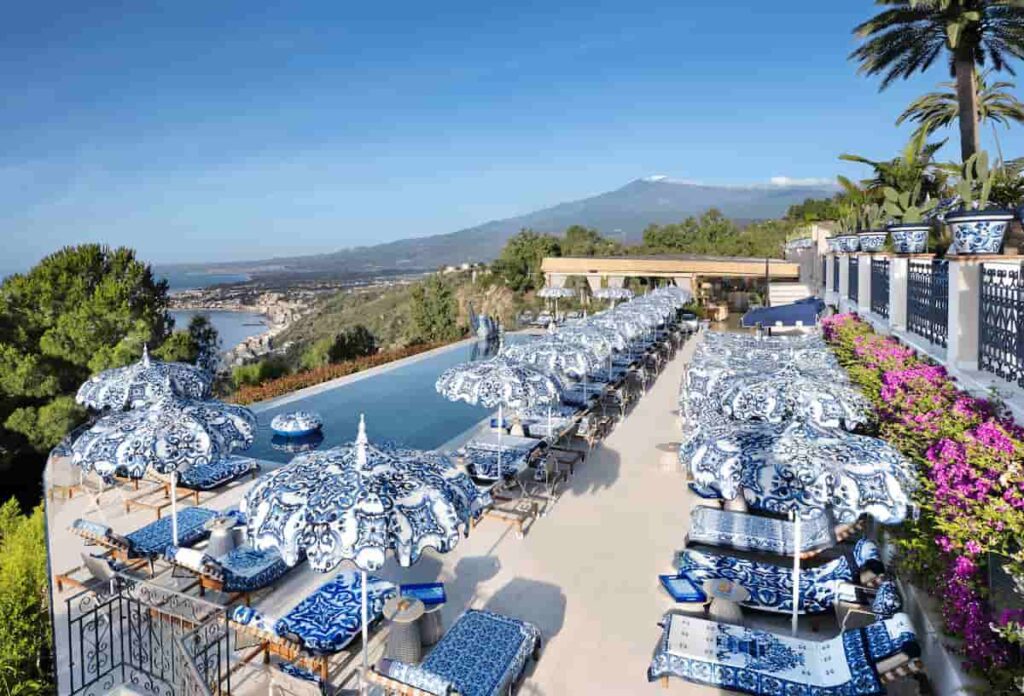
San Domenico Palace Taormina commands Sicily’s eastern coastline from a Dominican monastery established in 1374. This clifftop landmark—Sicily’s first grand hotel conversion in 1896—delivers volcanic panoramas, Renaissance-era cloisters, and oceanfront terraces where Europe’s aristocracy established Taormina as the Mediterranean’s elite retreat.
Original vaulted chapels now frame spa suites, century-old gardens transition into infinity pools, and monastic cells have transformed into suites with private Ionian Sea balconies. The property’s dual wings—historic monastery and modern Grand Hotel—create a vertical estate where 14th-century frescoes meet contemporary luxury.
San Domenico Palace Taormina ★★★★★
The monastery’s foundation in 1374 marked Taormina’s establishment as a spiritual center commanding the Strait of Messina. Dominican friars selected this clifftop specifically for its strategic position—600 feet above the Ionian Sea with direct sightlines to Mount Etna’s volcanic cone. The original cloister, built around a central courtyard with terracotta arcades, served as the region’s ecclesiastical headquarters for five centuries.
Baroque renovations in the 1700s added ornamental gardens and the chapel’s marble altar, elements that remain architecturally intact today.
San Domenico Palace Taormina, is a prestigious clifftop sanctuary that offers guests the rare privilege of residing within a 14th-century Dominican monastery, blending its sacred architectural heritage with a legendary infinity pool perspective that overlooks the Ionian Sea and Mount Etna.
The property’s transformation into Sicily’s first luxury hotel in 1896 established the template for Mediterranean monastery conversions. The original monastic wing retained its vaulted stone corridors, hand-painted ceiling frescoes, and Gothic-arched windows—now integrated as the hotel’s historic core. A separate Grand Hotel wing, constructed in 1896, added Belle Époque terraces and oceanfront salons.
This dual structure creates distinct experiences: monastery suites offer Renaissance-era architecture with exposed stonework and religious artifacts, while Grand Hotel rooms provide turn-of-the-century elegance with private sea-view balconies.
The hotel’s 111 rooms span both architectural periods. Monastery suites occupy former monk cells, featuring original terracotta floors, beamed ceilings, and windows framing either Mount Etna’s eastern flank or the monastery’s interior cloister. Grand Hotel rooms deliver larger footprints with marble bathrooms, period furnishings, and direct Mediterranean sightlines. The Presidential Suite, located in the monastery’s former chapter house, preserves 16th-century frescoes above a modern living space with wraparound terraces.
The cloister gardens—planted by Dominican monks in the 15th century—cascade down the cliff face in terraced levels. Original stone pathways connect cultivated herb gardens (still supplying the hotel’s restaurants), century-old citrus groves, and infinity pools cantilevered over the coastline. These gardens function as both historic preservation and active luxury amenity, maintaining monastic agricultural traditions while providing poolside Mediterranean access.
The property’s dining spaces occupy repurposed religious chambers. The main restaurant utilizes the monastery’s former refectory, where frescoed walls and vaulted stone ceilings frame contemporary Sicilian cuisine. The rooftop terrace—built atop the monastery’s original bell tower—provides 360-degree views spanning Mount Etna, the Bay of Naxos, and Taormina’s Greek Theatre. These elevated dining positions leverage the monastery’s original defensive architecture, transforming strategic sightlines into premium hospitality experiences.
San Domenico Palace’s spa inhabits the monastery’s subterranean levels—vaulted stone chambers originally used for wine storage and food preservation. These underground rooms, with naturally cool temperatures and minimal natural light, now house treatment rooms, thermal pools, and meditation spaces. The contrast between 14th-century stonework and contemporary wellness design creates atmospheric spa environments unavailable in purpose-built facilities.
The hotel’s art collection includes religious paintings and sculptures from the monastery’s active period, displayed in original niches and prayer alcoves throughout the property. These aren’t museum pieces—they remain in their intended architectural context, functioning as both historic preservation and immersive design elements. The chapel, still consecrated, hosts private events while maintaining its religious artifacts and Baroque altar.
The location delivers Taormina’s most commanding position. The monastery occupies the town’s highest accessible elevation, providing immediate access to Corso Umberto (Taormina’s main pedestrian thoroughfare) while maintaining separation from tourist foot traffic.
The ancient Greek Theatre sits 400 meters uphill; the beach clubs of Isola Bella lie directly below via private funicular—the only hotel-operated cliff railway in Sicily.
Check Availability & Rates →Six centuries of Dominican architecture meet Sicily’s volcanic coastline—where monastery cloisters frame Mount Etna’s active crater and Renaissance frescoes anchor contemporary luxury within authentic ecclesiastical heritage.
FAQ: San Domenico Palace Taormina
What is the historical significance of San Domenico Palace Taormina?
San Domenico Palace occupies a Dominican monastery founded in 1374, serving as Sicily’s ecclesiastical center for five centuries before converting to a luxury hotel in 1896. The property preserves its original Gothic cloister, Baroque chapel, and Renaissance-era frescoes while functioning as Taormina’s first grand hotel conversion—establishing the monastery-to-hotel model across Mediterranean Europe.
What makes San Domenico Palace unique among Taormina hotels?
The hotel combines authentic 14th-century monastic architecture with oceanfront positioning 600 feet above the Ionian Sea. Original monastery elements—vaulted stone corridors, hand-painted ceilings, consecrated chapel—remain architecturally intact and actively integrated into guest spaces. The dual-wing structure offers distinct experiences: Renaissance monastery suites versus Belle Époque Grand Hotel rooms, both with direct Mount Etna views.
What amenities does San Domenico Palace offer?
The property features 111 rooms across monastery and Grand Hotel wings, clifftop infinity pools within 15th-century terraced gardens, a subterranean spa in former wine cellars, multiple dining venues including a rooftop terrace with volcanic panoramas, and a private funicular accessing Taormina’s beach clubs. The original monastery cloister, chapel, and period art collection remain accessible to guests.
How does San Domenico Palace integrate its monastery heritage?
The hotel preserves the monastery’s architectural footprint—Gothic arches, terracotta cloisters, frescoed chapels—as functional luxury spaces rather than museum displays. Former monk cells serve as suites with exposed stonework; the refectory operates as the main restaurant; underground storage vaults house spa facilities. Religious artifacts, paintings, and the consecrated chapel maintain their original positions within the property’s daily operations.
The Summit of Sicilian Heritage Hospitality
San Domenico Palace Taormina delivers what Sicily’s coastal estates promise but few achieve: authentic ecclesiastical architecture maintaining its 14th-century structural integrity while functioning as contemporary luxury. The monastery’s clifftop position—600 feet above the Mediterranean with unobstructed Mount Etna sightlines—provides geographic dominance that modern construction cannot replicate.
Travelers exploring Sicily’s historic hotel legacy, consider Grand Hotel Et Des Palmes and Grand Hotel Timeo, A Belmond Hotel, Taormina.
For more curated itineraries and luxury-focused travel insights, visit Your Luxury Guide. For official travel information and destination updates, visit Italy tourism.
Your Luxury Guide — Where Exceptional Travel Begins.