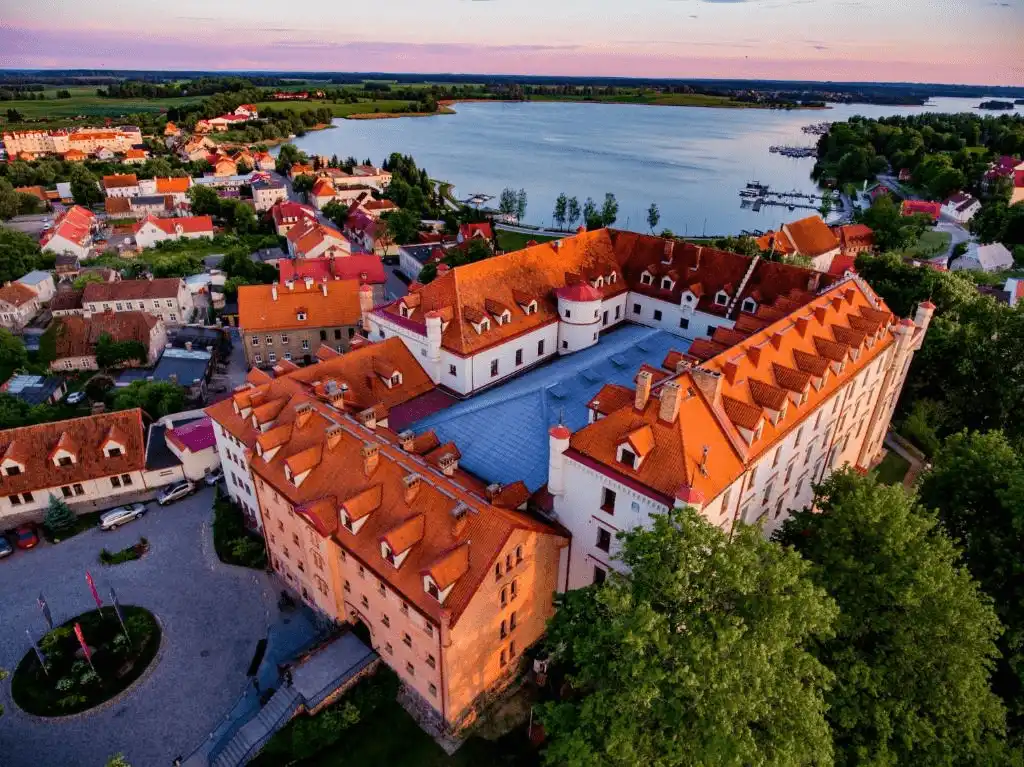
Hotel Zamek Ryn stands on the strategic high ground where the Teutonic Order built their 14th-century fortress to control the Masurian lake route between Königsberg and their southern territories. The castle’s defensive position commanded water traffic, trade routes, and territorial authority across the Great Masurian Lakes. The fortress walls, Gothic brick masonry, and corner bastions remain intact as physical evidence of medieval military engineering.
Today’s guests occupy the same vaulted chambers where Teutonic commanders directed regional dominance for over three centuries.
Hotel Zamek Ryn ★★★★
The Teutonic Knights constructed this fortress in 1377 as a komturship—a territorial command center within their Prussian state. The castle’s elevation above Lake Ołów and Lake Ryńskie provided tactical advantage: sight lines extended across water routes critical to the Order’s commercial and military operations. The Gothic brick construction employed the Teutonic architectural system—thick defensive walls, corner towers, and inner courtyards designed to withstand siege warfare that defined 14th-century territorial conflicts.
Hotel Zamek Ryn offers a monumental plunge into 14th-century history, housing a luxury retreat within one of Poland’s largest Teutonic strongholds, complete with a covered courtyard and a subterranean swimming pool.
The fortress served as the administrative seat for komturs who governed surrounding lands, collected tithes, and maintained military readiness. The vaulted cellars stored grain and weapons.
The knights’ refectory hosted councils that determined regional law. The chapel sanctified the Order’s religious-military mission. This was not merely a defensive structure; it functioned as the complete apparatus of medieval state power—military, economic, and ecclesiastical authority concentrated within stone walls.
After the Order’s decline, Prussian nobility claimed the property, converting military chambers into residential quarters while preserving the Gothic skeleton. The 20th century brought restoration projects that stabilized the medieval masonry and reactivated the castle as a hospitality venue that honors its martial origins.
Hotel Zamek Ryn translates this legacy into 59 rooms distributed across the original fortress structure and tasteful modern extensions. Guests occupy spaces where territorial power once resided. The stone-walled chambers maintain Gothic proportions—high ceilings, arched passages, and small fortress windows that once served defensive purposes. The corner tower suites provide the same commanding lake views that allowed medieval sentries to monitor approaching vessels.
The hotel preserves the fortress character through exposed brick, original vaulting, and Gothic architectural details. Modern amenities—spa facilities with lake-view pools, conference spaces within the historical wings, restaurants serving contemporary Polish cuisine—operate within the authenticated medieval framework. The result is accommodation where the weight of Teutonic authority remains physically present in every brick and every shadow cast by fortress walls.
The lakeside location offers immediate access to Masuria’s water network. Private marina facilities continue the castle’s historical relationship with waterborne movement. The surrounding forests and walking paths frame the fortress exactly as they did when the Teutonic Order selected this promontory for strategic dominance.
The guest inhabits the actual physical environment of medieval territorial command—stone, water, and elevation combined into defensible authority.
Check Availability & Rates →The fortress walls that once defended Teutonic territorial claims now enclose a sanctuary of privilege, where Gothic severity yields to refined hospitality without surrendering the stone-cold reality of medieval power.
FAQ: Hotel Zamek Ryn
What historical role did Hotel Zamek Ryn serve?
Built in 1377 as a Teutonic Order komturship, the castle functioned as a military command center and administrative headquarters controlling the Masurian lake region. The fortress served as the territorial seat for komturs who governed surrounding lands, collected revenues, and maintained military readiness throughout the medieval period.
What original Teutonic architecture remains at Hotel Zamek Ryn?
The Gothic brick defensive walls, corner bastions, vaulted cellars, and central courtyard preserve the original 14th-century Teutonic construction. The fortress elevation and strategic positioning above Lake Ołów remain unchanged, maintaining the same tactical advantage the Order exploited for territorial control.
How does Hotel Zamek Ryn incorporate modern amenities?
The 59-room property integrates spa facilities, conference spaces, and dining venues within the authenticated medieval structure and complementary modern wings. Guests access contemporary comfort while occupying spaces where Gothic proportions, exposed masonry, and fortress windows maintain the building’s military heritage.
What makes the Masuria location strategically significant?
The castle’s promontory position commands sight lines across Lake Ołów and Lake Ryńskie, controlling medieval water routes between Königsberg and southern Teutonic territories. This elevation provided the defensive advantage and commercial monitoring capability essential to the Order’s regional dominance.
The Fortress Authority Endures
Hotel Zamek Ryn delivers accommodation where medieval territorial power remains architecturally present. The Teutonic masonry, defensive elevation, and Gothic chambers create an environment where 14th-century military authority translates into contemporary exclusivity. For additional fortress experiences, explore Hotel Zamek Gniew.
For more curated itineraries and luxury-focused travel insights, visit Your Luxury Guide. For official travel information and destination updates, visit Poland tourism-info.
Your Luxury Guide — Where Exceptional Travel Begins.