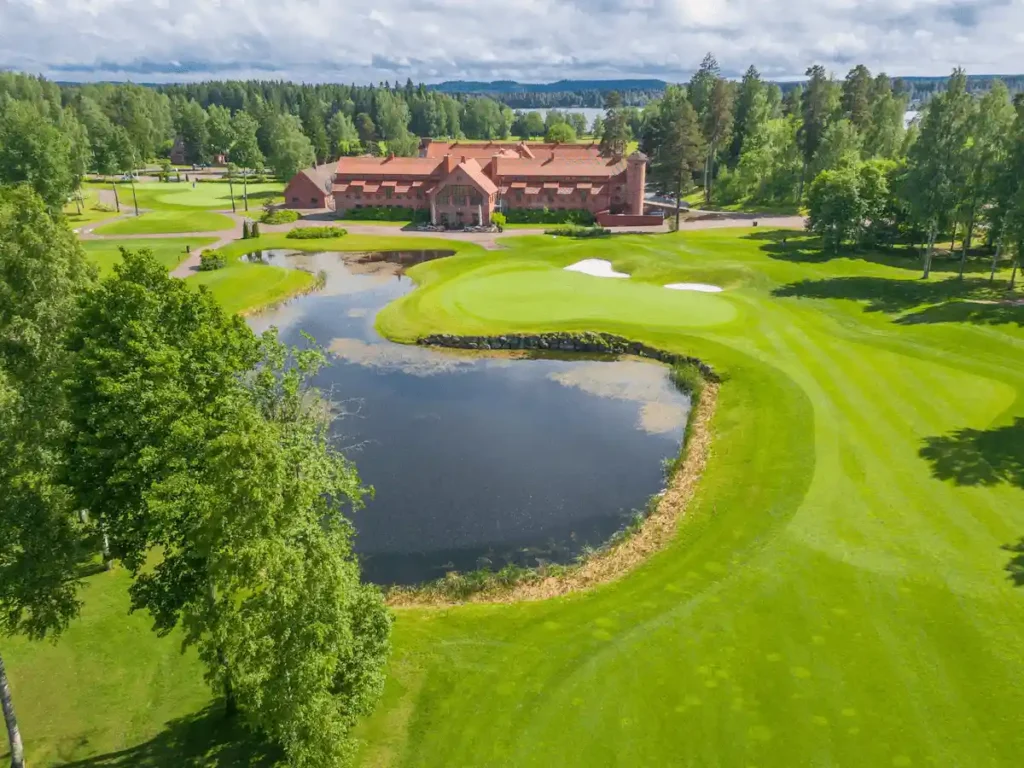
Hotel Vanajanlinna operates from a verified 1924 Neo-Gothic castle commissioned by Hugo Standertskjöld, the Finnish industrial magnate who controlled the region’s timber and paper monopoly during the early 20th century. The estate’s lakeside positioning on Vanajavesi was chosen for strategic access—waterways served as industrial transport routes during Finland’s resource extraction era.
Today, the castle’s original stone halls, tower chambers, and baronial salons function as a luxury property where guests inhabit the physical infrastructure of territorial command. The building’s Gothic Revival elements—pointed arches, castellated towers, and vaulted corridors—were intentional power signals in an era when industrial wealth sought architectural validation. This is not adaptive reuse; this is documented lineage presented for modern occupation.
Hotel Vanajanlinna ★★★★
The Standertskjöld family commissioned Vanajanlinna in 1924 as a private residence that doubled as a command center for their regional industrial empire. Hugo Standertskjöld’s wealth derived from timber processing—Finland’s primary export during the interwar period—and the castle’s placement on Lake Vanajavesi was no aesthetic choice. Water routes facilitated resource transport, and the estate’s elevation provided territorial oversight.
Hotel Vanajanlinna stands as one of Finland’s most prestigious estates, blending 1920s hunting lodge history with modern luxury, world-class golf, and a picturesque lakeside setting in the heart of Hämeenlinna.
The Neo-Gothic design—executed by Finnish architect Jussi Paatela—followed the European tradition of industrial barons adopting medieval fortress aesthetics to project permanence. The castle’s crenellated towers and lancet windows mirrored the defensive architecture of 13th-century strongholds, translating historic power structures into modern masonry.
The property’s conversion to a hotel preserved the original spatial hierarchy. The Main Tower houses premium suites with lake views—rooms that once functioned as the family’s private chambers. The stone-walled dining hall retains its baronial proportions: vaulted ceilings, oak paneling, and wrought-iron chandeliers that illuminate the same space where Standertskjöld entertained Finland’s industrial elite.
The hotel’s 39 rooms maintain the Gothic Revival vocabulary—dark wood furniture, stone fireplaces, and leaded glass—creating environments where the architecture itself communicates exclusivity. The castle’s turret suites offer 360-degree views of the Vanajavesi waterway system, placing guests in the same visual command position the original owner occupied when monitoring his timber fleets.
The estate’s 15-hectare lakefront grounds include the original boathouse and private dock, historically used for receiving industrial shipments. Today, these facilities serve recreational purposes, but the infrastructure remains intact.
The property’s restaurant operates from the castle’s original great hall, where ceiling heights exceed 20 feet—proportions designed to accommodate large social gatherings that reinforced the family’s regional dominance. The menu integrates local Finnish traditions, but the setting remains pure Gothic Revival: a space built to display wealth through architectural scale.
Modern amenities—spa facilities, conference rooms—have been integrated into the castle’s lower levels without compromising the upper floors’ historic character. This is territorial luxury: you occupy the verified seat of a family that controlled Finland’s resource economy during its most critical industrial phase.
Check Availability & Rates →Vanajanlinna translates industrial dominance into Gothic permanence. The castle’s lakeside towers and stone halls preserve the spatial authority of an era when Finland’s economic power flowed through waterways, and those who controlled the routes occupied physical command centers that doubled as private estates.
FAQ: Hotel Vanajanlinna
What historical significance does Hotel Vanajanlinna hold?
Hotel Vanajanlinna was built in 1924 as the private castle of Hugo Standertskjöld, an industrial magnate who controlled Finland’s timber and paper processing industry. The estate’s Neo-Gothic design and lakeside positioning on Vanajavesi reflected the owner’s economic dominance—waterways served as transport routes for resource extraction during Finland’s interwar industrial expansion. The castle functioned as both residence and territorial command center.
What architectural features distinguish Hotel Vanajanlinna?
The castle showcases Neo-Gothic Revival architecture designed by Jussi Paatela, including crenellated towers, pointed arch windows, vaulted stone corridors, and baronial halls with 20-foot ceilings. The Main Tower’s turret suites offer commanding views of Lake Vanajavesi, replicating the original owner’s visual control over the waterway network. Oak paneling, stone fireplaces, and wrought-iron fixtures preserve the early 20th-century power aesthetic.
How does Hotel Vanajanlinna integrate its historic spaces today?
The hotel maintains 39 rooms within the original castle structure, with premium suites occupying the tower chambers that once served as the family’s private quarters. The great hall functions as the primary restaurant, preserving its baronial scale and Gothic elements. Modern spa and conference facilities have been added to lower levels while keeping upper floors historically intact, allowing guests to inhabit the verified spatial hierarchy of an industrial estate.
What makes the location of Hotel Vanajanlinna strategically significant?
The castle sits on a 15-hectare lakefront estate on Vanajavesi, a waterway system that was critical for timber transport during Finland’s resource economy era. The elevated positioning provided territorial oversight of shipping routes—essential for an owner whose wealth depended on controlling lumber and paper production. Today, this translates to exclusive lakeside privacy with the original boathouse and private dock still operational.
Experience Finland’s Industrial Baron Legacy
Hotel Vanajanlinna preserves the territorial command of Finland’s timber economy era within a verified 1924 Neo-Gothic castle. The property’s tower suites, baronial halls, and lakeside positioning offer documented access to the architectural language of industrial power—spaces designed for those who controlled resource empires.
For further Finnish estate heritage, explore Hotel Haikko Manor & Spa, where 19th-century spa culture meets documented aristocratic lineage.
More curated itineraries and luxury-focused travel insights at Your Luxury Guide. For official travel information and destination updates, visit Finland tourism-info.
Your Luxury Guide — Where Exceptional Travel Begins.