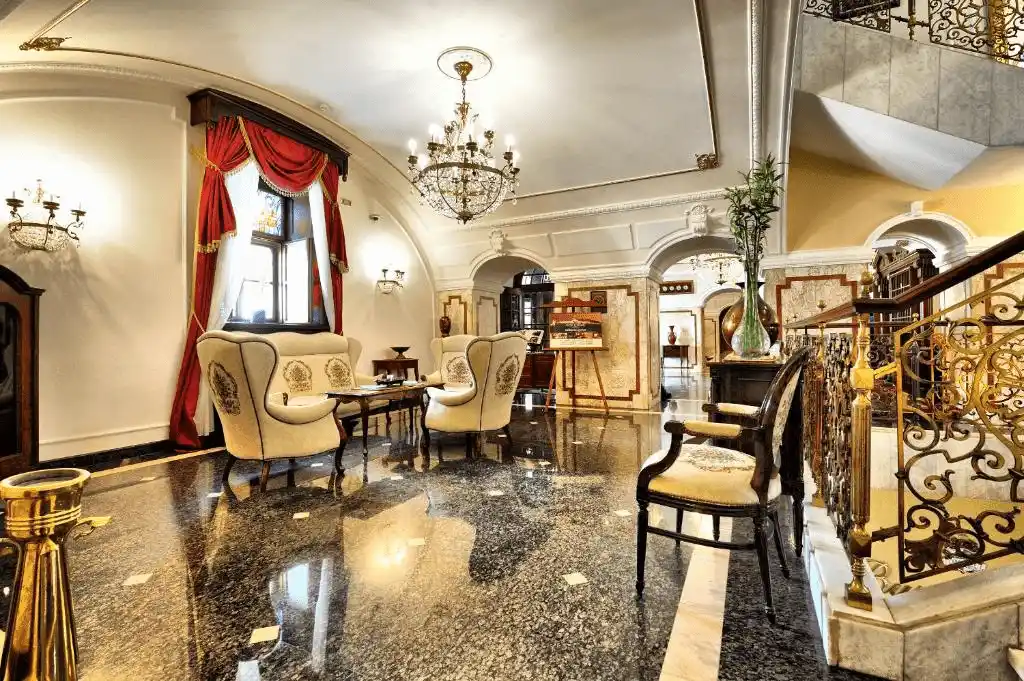
Hotel Leopold I occupies a 17th-century Baroque military residence inside Petrovaradin Fortress, where Emperor Leopold I laid the cornerstone in 1692 to establish Habsburg dominance over the Danube. This isn’t a hotel themed around history—it’s the actual command structure where fortress officers directed operations during centuries of Habsburg-Ottoman conflict.
The building’s thick defensive walls, vaulted chambers, and strategic elevation above the Danube now frame a luxury experience where Empire-style suites and bastion spa facilities inhabit authentic military architecture. Guests occupy the same rooms where fortress commanders exercised authority over one of Europe’s largest artillery networks.
Hotel Leopold I ★★★★
The fortress wasn’t decorative. When Emperor Leopold I commissioned Petrovaradin in 1692, he ordered the construction of what military historians call the “Gibraltar on the Danube“—a massive defensive complex built to permanently secure Habsburg control of the river crossing into Ottoman territory. Hotel Leopold I stands within this original network, occupying a high-ranking military residence that served the fortress command structure for over two centuries.
Hotel Leopold I is a magnificent 17th-century baroque palace located at the heart of the Petrovaradin Fortress, offering guests a regal stay with unrivaled panoramic views of the Danube and the Novi Sad skyline.
The building’s architecture reflects pure military functionality converted into residential luxury. Load-bearing stone walls up to two meters thick—designed to withstand artillery bombardment—now enclose suites furnished with hand-carved Empire furniture, silk wallpapers, and period chandeliers that recreate Austro-Hungarian court interiors. The structural footprint remains unchanged: guests navigate the same corridors where fortress commanders moved between their private chambers and the command operations managing 16 kilometers of underground military tunnels.
The fortress position itself was strategic dominance made physical. Built on volcanic rock 40 meters above the Danube’s right bank, Petrovaradin controlled all river traffic and provided artillery coverage across the approach to Novi Sad. Officers stationed here directed operations from the highest point of regional authority. Today’s guests inhabit that elevation advantage: rooms face the same panoramic sight lines that military planners used, now offering direct views across the Danube toward Novi Sad’s Neo-Gothic skyline.
The property maintains its integration with active fortress infrastructure. The famous Petrovaradin Clock Tower—where reversed hands historically guided Danube sailors—stands steps from hotel entrances. The wellness center occupies renovated bastion chambers where defensive fortifications have been converted into spa facilities featuring saunas, salt rooms, and hot tubs positioned against rampart walls. Fortress tunnels remain accessible for guided tours, providing guests direct entry to underground networks that once stored ammunition and housed garrison troops.
What distinguishes this property is its position within a working cultural fortress. Over 80 artist studios currently operate within the fortress walls, occupying former military buildings around the hotel. The restaurants and event spaces utilize grand vaulted halls—original fortress architecture now hosting diplomatic summits and high-profile weddings. This isn’t heritage preservation isolated from function; it’s a live historic district where the hotel serves as the residential anchor.
The bastion location provides something the modern city center cannot: structural seclusion backed by 17th-century defensive engineering. Fortress walls create natural sound barriers and physical separation that transform the property into a secured retreat above urban activity. Guests access the command position where Habsburg power was exercised over the Danube corridor, now delivered as a luxury residential experience within Europe’s largest preserved artillery fortress.
Check Availability & Rates →Hotel Leopold I delivers command-level access to Habsburg fortress authority, where 17th-century military architecture frames contemporary luxury within Europe’s Gibraltar on the Danube—occupancy within the strategic position where emperors secured river dominance.
FAQ: Hotel Leopold I
What is the historical significance of Hotel Leopold I?
Hotel Leopold I occupies an original 1692 Habsburg military residence within Petrovaradin Fortress, commissioned by Emperor Leopold I as part of the “Gibraltar on the Danube” defensive network. The building served as fortress command quarters during Habsburg-Ottoman conflicts and now operates as a luxury hotel within one of Europe’s largest preserved artillery fortifications.
What makes staying at Hotel Leopold I unique compared to other historic hotels?
The hotel provides direct occupancy within active fortress infrastructure—including access to 16 kilometers of underground military tunnels, proximity to 80 artist studios in converted garrison buildings, and suites positioned in original officer quarters with two-meter-thick defensive walls. Guests inhabit the actual command structure that controlled Danube river traffic for the Habsburg Empire.
What amenities are available at Hotel Leopold I?
The property features Empire-style suites with period furniture and marble bathrooms, a wellness center with sauna and hot tub positioned within bastion fortifications, multiple restaurants across fortress terraces serving international and Vojvodina cuisine, and event spaces in vaulted fortress halls. All facilities integrate authentic 17th-century military architecture.
Why was Petrovaradin Fortress built at this location?
Emperor Leopold I selected this volcanic rock formation 40 meters above the Danube’s right bank to establish permanent Habsburg control of the critical river crossing into Ottoman territory. The elevated position provided artillery coverage across the approach to Novi Sad and visual command of all Danube traffic, making it the strategic anchor of Habsburg regional dominance.
Imperial Authority Above the Danube
Hotel Leopold I positions guests within the fortress structure where Habsburg emperors projected power across the Danube corridor—a stay inside military command architecture where 17th-century defensive walls now frame contemporary luxury. Experience similar imperial establishments at Hotel Moskva in Belgrade’s administrative district, or discover The Bristol Belgrade within the capital’s diplomatic quarter.
For more curated itineraries and luxury-focused travel insights, visit Your Luxury Guide. For official travel information and destination updates, visit Serbia tourism-info.
Your Luxury Guide — Where Exceptional Travel Begins.