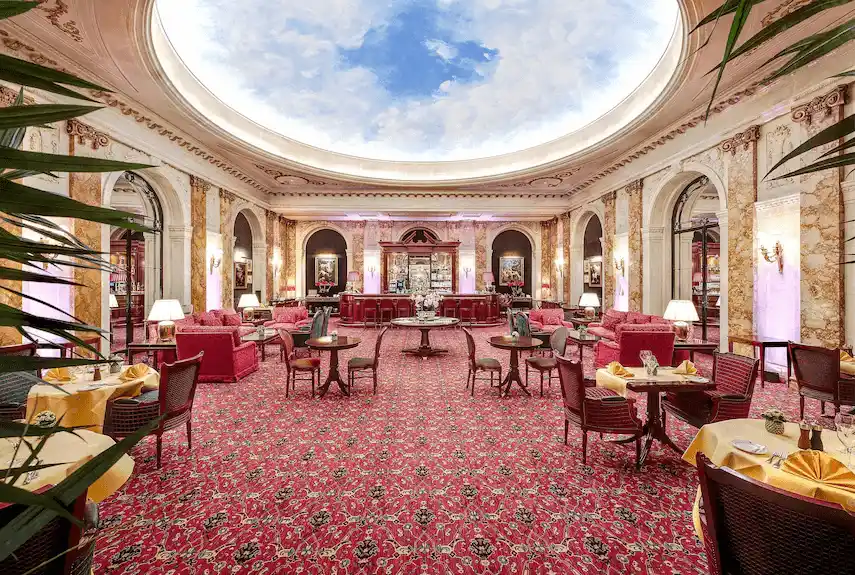
Hotel Le Plaza Brussels occupies Michel Polak’s 1930 architectural statement—a deliberate replica of Paris’s George V transplanted to Belgium’s capital as a seat of French-style authority. During WWII, military command requisitioned the reinforced structure for strategic headquarters. After two decades of closure, the 1996 restoration returned the 1,300-square-meter cinema palace to operational grandeur.
Presidential guests and royal overflow have inhabited these marble corridors since opening day. This is not hotel nostalgia—this is verified architectural dominance where European elite have always exercised influence. Explore more properties in our guide to best historic hotels in Brussels.
Hotel Le Plaza Brussels ★★★★★
Michel Polak delivered explicit instructions in 1930: replicate the George V Paris blueprint for Brussels. The result was not homage but territorial expansion—French luxury architecture claiming Belgian ground through 6-story imperial scale. The monumental facade announces authority before entry. High-set ceilings span original 1930s dimensions. Stained-glass windows filter light across polished marble columns. This is structural preservation without compromise—the lobby volume matches opening-day specifications.
Hotel Le Plaza Brussels, a 1930s Art Deco masterpiece featuring a hidden 1,300-square-meter heritage theater and interiors modeled after the George V in Paris.
The concealed advantage sits behind unmarked doors: a 1,300-square-meter cinema palace, one of Europe’s last surviving 1930s movie theaters. Original tiered balconies remain operational. The gold-leaf stage hosts gala events where film premieres once commanded Brussels society. The vintage projection room—still equipped with 1930 mechanical apparatus—offers private viewing access. This hidden theater represents architectural rarity: entertainment infrastructure designed for pre-war European elite, intact and functional.
WWII command recognized the strategic value. High-ranking military officials requisitioned the hotel as headquarters—the reinforced structure and central location provided operational advantages civilian buildings could not match. The hotel became a command node where wartime decisions shaped national outcomes. Post-war decline followed: from 1976 to 1996, the building entered “Winter Sleep,” closed and deteriorating. The 1996 restoration reversed two decades of neglect, returning Art Deco elements to documented 1930s condition.
Royal proximity established the hotel’s elite function. The Belgian Royal Palace used Le Plaza as overflow residence—close enough for immediate access, grand enough for sovereign standards. Winston Churchill’s documented stays appear in hotel archives. Charles Aznavour maintained residency during Brussels concert tours, his presence in the lobby lounge a regular occurrence among the brass fixtures and original silk wall coverings.
The Presidential Suite operates at 340 square meters—among Brussels’ largest private accommodations. Antique furniture and silk-covered walls preserve the suite’s 1930s material specifications.
L’Esterel Restaurant mirrors ocean liner grandeur through hand-painted frescoes and spatial proportions designed for formal European dining.
The Heritage Bar specializes in rare whiskies and Belgian abbey beers within wood-paneled interiors that reject modern minimalism. Original wrought-iron elevator cages—modernized for safety, preserved for visual authority—transport guests through vertical space as they did in 1930.
This is documented architectural legacy where Polak’s French blueprint established Brussels presence, where military command operated during continental conflict, where royal guests inhabited verifiable luxury, and where a hidden cinema palace represents pre-war entertainment infrastructure accessible to modern guests. The building’s 94-year lineage defines elite accommodation standards that contemporary construction cannot replicate.
Check Availability & Rates →A 1930 cinema palace disguised as a hotel—where European command assembled in Art Deco corridors, military headquarters operated during wartime crisis, and French architectural authority claimed permanent Brussels territory through marble columns and hidden theater ballrooms.
FAQ: Hotel Le Plaza Brussels
What makes Hotel Le Plaza Brussels architecturally significant?
Architect Michel Polak designed the 1930 building as an explicit replica of Paris’s George V, establishing French Art Deco authority in Brussels through imperial-scale facades, stained-glass windows, marble columns, and a concealed 1,300-square-meter cinema palace—one of Europe’s last surviving 1930s movie theaters with original projection equipment and gold-leaf stage.
What historical role did Hotel Le Plaza Brussels serve during WWII?
Military command requisitioned the hotel as headquarters for high-ranking officials during WWII due to its reinforced structure and strategic central location. The building functioned as an operational command node where wartime decisions were executed, establishing its legacy beyond civilian hospitality.
Why was Hotel Le Plaza Brussels closed for 20 years?
From 1976 to 1996, the hotel entered “Winter Sleep”—a two-decade closure and deterioration period. The 1996 restoration project reversed the decline, returning Art Deco elements, marble interiors, and original 1930s spatial dimensions to documented architectural specifications.
What defines the Presidential Suite at Hotel Le Plaza Brussels?
At 340 square meters, the Presidential Suite ranks among Brussels’ largest private accommodations. It features original silk-covered walls, antique furniture matching 1930s material standards, and spatial proportions designed for sovereign-level guests when the hotel served as Royal Palace overflow residence.
Where 1930 French Command Meets Modern Brussels Authority
Hotel Le Plaza Brussels represents Michel Polak’s territorial architecture—French luxury claiming Belgian ground through documented Art Deco dominance. The hidden cinema palace, WWII command history, and royal overflow function establish rarity that contemporary properties cannot replicate.
For travelers seeking Brussels heritage where European power assembled in verified luxury, explore the Corinthia Grand Hotel Astoria Brussels and The Dominican, Brussels—properties where historical command defines modern prestige.
For more curated itineraries and luxury-focused travel insights, visit Your Luxury Guide. For official travel information and destination updates, visit Belgium tourism-info.
Your Luxury Guide — Where Exceptional Travel Begins.