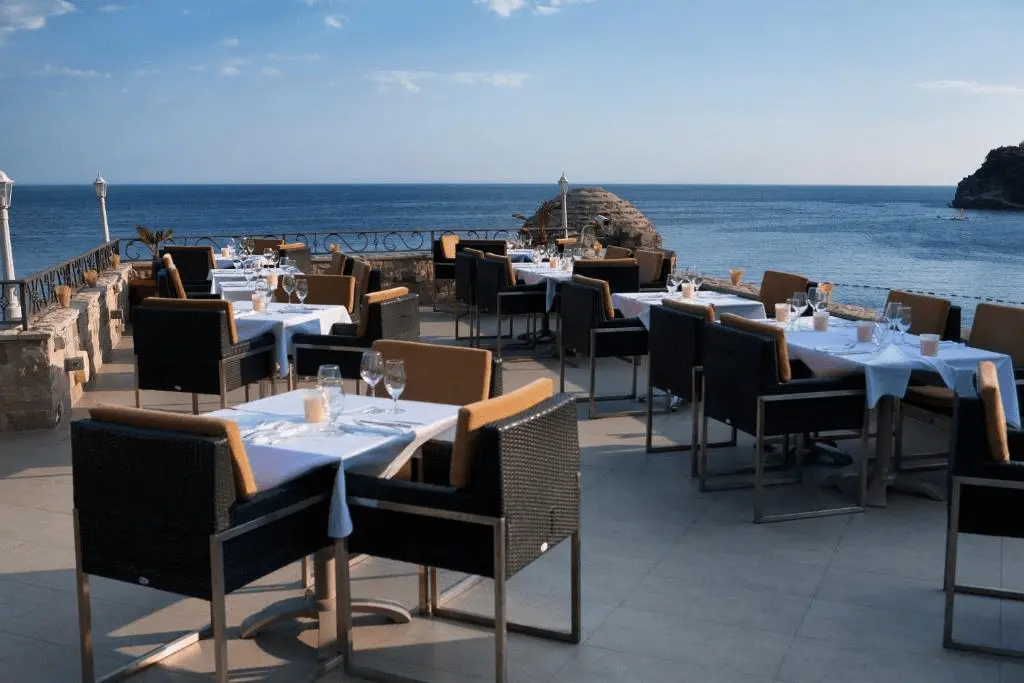
Hotel Astoria Budva delivers what coastal resorts cannot replicate: residence within the actual 18th-century Venetian defensive walls that protected this Adriatic stronghold. The property maintains its rugged stone exterior as mandated by UNESCO-adjacent preservation codes, while offering one of the Old Town’s only private beach clubs—a privilege reserved for fewer than three hotels within the medieval citadel.
Guests occupy suites where original fortress masonry forms bedroom walls, creating spatial immersion in 2,500 years of documented maritime power. The famous rooftop terrace positions you above the red-tiled labyrinth where Venetian admirals once commanded Mediterranean trade routes.
Hotel Astoria Budva ★★★★
The Astoria’s competitive advantage begins with its position: integrated into the defensive perimeter that made Budva a Venetian Republic strategic asset from the 15th through 18th centuries. While modern developments claim “proximity” to history, this property places guests inside it—sleeping within stone walls that absorbed Adriatic storms and Ottoman sieges.
The fortress designation protected Budva’s status as a key naval station, and the Astoria’s structure served as part of that military infrastructure before its transformation into exclusive accommodation.
Hotel Astoria Budva is a boutique landmark nestled directly within the medieval city walls, offering a unique opportunity to stay in a historic stone building that merges ancient fortifications with modern, chic Mediterranean luxury.
The architectural mandate is clear: preserve every exterior stone according to heritage codes, then introduce radical modern design inside those immovable walls. The result is the hotel’s signature aesthetic—exposed medieval masonry juxtaposed with contemporary minimalism.
Suites maintain the irregular dimensions of fortress chambers, with some featuring walls up to three feet thick. Original stone archways frame modern rain showers. Windows cut into 18th-century ramparts now overlook either the pedestrian maze of the citadel or direct sea views toward Sveti Nikola island.
The private beach component breaks Old Town convention. Most properties within the walls offer charm but require guests to navigate crowds for beach access. The Astoria maintains Astoria Beach, a dedicated shoreline club with premium sun loungers, towel service, and direct cocktail delivery—reachable by a private walkway from the hotel entrance. This dual access to both fortress intimacy and private seaside territory positions the hotel as the rare property delivering complete coastal control without sacrificing historic immersion.
The rooftop terrace functions as both dining venue and strategic vantage point. Guests occupy the same elevated position where Venetian sentries monitored approaching vessels. The modern interpretation: a gourmet restaurant serving Adriatic sea bass and Montenegrin cheese while overlooking the Old Town’s terracotta roofscape. Evening service here offers what the hotel terms “fortress dining”—meals consumed at the defensive perimeter where maritime power was historically exercised.
Interior spaces reflect the property’s refusal of traditional hotel aesthetics. The ground-floor café features the striking “tree of knowledge” bookshelf installation—a floor-to-ceiling sculptural element that’s become the hotel’s visual signature. High-end patisserie and artisan coffee service attract both guests and Budva’s social elite, creating a lobby atmosphere more aligned with Milan design culture than Balkan hospitality conventions.
The restaurant extends this approach: international culinary standards applied to local Adriatic ingredients, served in rooms where stone fortress walls meet contemporary lighting design.
The hotel’s capacity reinforces exclusivity—intimate room count ensures that medieval corridors never feel crowded, maintaining the spatial dignity of the original fortress layout. Tailored excursions include private boat transfers to Sveti Nikola and guided walks through the citadel’s labyrinth, led by historians who explain the defensive logic still visible in the Old Town’s street patterns. These aren’t generic tours but strategic readings of how Venetian military architecture shaped the environment guests now inhabit.
Check Availability & Rates →Hotel Astoria Budva delivers residence within operational Venetian fortress infrastructure—where 18th-century defensive walls define suite boundaries, private beach access circumvents Old Town crowds, and rooftop dining occupies the strategic perimeter where maritime commanders once monitored Adriatic approaches. Historic immersion with territorial control.
FAQ: Hotel Astoria Budva
What makes Hotel Astoria Budva historically significant?
The hotel occupies a section of Budva’s 18th-century Venetian defensive walls, part of the fortification system that protected this Adriatic naval station during the Republic’s control. The structure maintains its original stone masonry under UNESCO-adjacent preservation codes, allowing guests to inhabit actual fortress infrastructure rather than replica architecture.
Does Hotel Astoria Budva have beach access from the Old Town?
Yes. The Astoria operates one of only three private beach clubs accessible directly from within the Old Town walls. Astoria Beach provides dedicated sun loungers, towel service, and cocktail delivery, eliminating the need to navigate public beaches while maintaining fortress residence.
What room features preserve the building’s fortress origins?
Suites retain exposed stone walls up to three feet thick, irregular medieval chamber dimensions, and original archways. Many rooms feature windows cut into the ramparts with views over the citadel or sea, while modern amenities like rain showers are integrated into the historic stone structure.
How does the rooftop terrace reflect the building’s strategic history?
The terrace occupies the same elevated defensive position where Venetian sentries monitored maritime approaches. Today it functions as a gourmet restaurant with views over the Old Town’s red-tiled roofs and the Adriatic, offering what the hotel calls “fortress dining” at the perimeter where naval power was historically commanded.
Historic Fortress Living With Modern Adriatic Access
Hotel Astoria Budva proves that legitimate architectural provenance need not compromise contemporary luxury—it enhances it. Residence within documented Venetian defensive walls, paired with private beach territory, creates a stay profile unavailable in modern coastal construction.
For those continuing Montenegro’s heritage trail, Heritage Grand Perast and Palazzo Radomiri extend this model of historic properties where past military and aristocratic dominance informs present-day exclusivity.
For more curated itineraries and luxury-focused travel insights, visit Your Luxury Guide. For official travel information and destination updates, visit Montenegro tourism-info.
Your Luxury Guide — Where Exceptional Travel Begins.