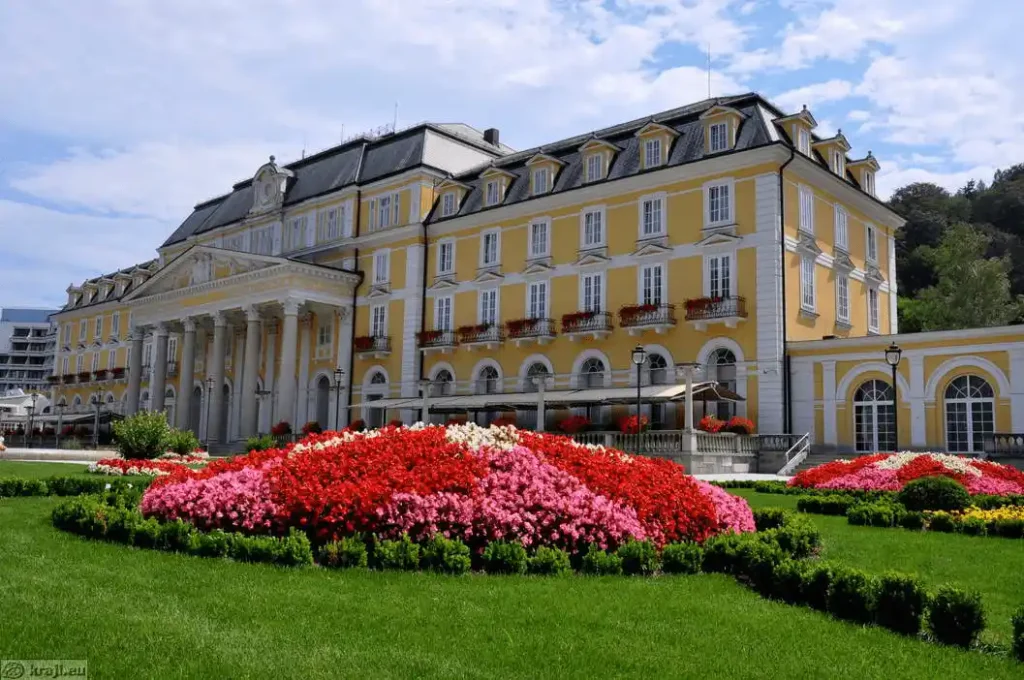
The Grand Hotel Rogaška occupies the architectural throne of Rogaška Slatina, a town founded on medicinal spring water discovery in 1665. This is verified institutional power. The hotel complex governs a 10,000-square-meter neo-Baroque park, three interconnected historic wings (the main Superior building, Strossmayer Wing from 1848, and Styria Wing), and direct territorial control over Europe’s highest-magnesium mineral water source.
The current “Grand” structure rose from the 1910 fire that consumed the original “Spa Home” during Emperor Franz Joseph I’s birthday illuminations, reopening in 1912 as the Austro-Hungarian Empire’s most ambitious spa reconstruction. Your stay inhabits the same hydrotherapy halls where Empress Elisabeth of Austria executed her legendary beauty protocols and Franz Liszt commanded audiences in 1846.
Grand Hotel Rogaška ★★★★
The hotel’s supremacy derives from unrepeatable 19th-century territorial acquisition. When European aristocracy required spa treatment, they didn’t visit resorts—they commanded estates. Grand Hotel Rogaška secured that status through exclusive access to the Donat Mg spring, documented since 1665 as the world’s most magnesium-concentrated natural mineral water. The Hapsburg, Bonaparte, and Bourbon dynasties didn’t choose this site for leisure; they chose it for verified medical necessity wrapped in imperial-grade accommodation.
Grand Hotel Rogaška remains the cultural heart of the spa district, known for hosting elite social events in the region’s most opulent ballroom.
The 1912 Architectural Rebirth: The hotel’s defining moment came through catastrophe. On August 18, 1910, during Emperor Franz Joseph’s birthday festivities, the celebratory illuminations ignited the original wooden “Spa Home.” The 1912 rebuild introduced fireproof masonry construction and the Crystal Hall, a ballroom engineered around five monumental chandeliers handcrafted by Rogaška Glassworks. Austrian painter Schröter completed four massive oil paintings in 1912 depicting the resort’s evolution, permanently installed as ceiling-to-wall historical documentation.
The Crystal Hall as Social Command Center: This isn’t a renovated ballroom—it’s a preserved 1912 power room. The five chandeliers weren’t decorative upgrades; they were diplomatic lighting installations designed for the Ana’s Ball tradition, the region’s 200-year-old elite social calendar anchor. Nobel Peace Prize laureate Bertha von Suttner, Slovenian writer Ivan Vavpotič, and the entire Central European intellectual class gathered here because this hall represented institutional validation, not architectural novelty.
Spatial Hierarchy Across Three Wings: The Superior building commands the central courtyard with classicist symmetry. The 1848 Strossmayer Wing extends east as the medical treatment axis—guest suites positioned above hydrotherapy chambers for direct thermal water pipe access. The Styria Wing houses the long-stay residential quarters where Franz Liszt occupied rooms during his 1846 concert residency.
The Mineral Water Infrastructure: Location 100 meters from the Medical Center Rogaška isn’t promotional convenience—it’s the original site selection logic. Guests drink Donat Mg water under medical supervision in the same pavilion where Empress Sisi followed prescribed hydrotherapy schedules.
The hotel’s Medical Spa & Beauty Center operates balneotherapy protocols unchanged since the 1860s: magnesium-water immersion for digestive and metabolic conditions, the identical treatments that attracted European royalty for three centuries.
Rogaška Riviera as Thermal Engineering: The 1,000-square-meter thermal complex with indoor-outdoor pools, whirlpools, and 100+ massage jets represents modern utility layered onto 19th-century spring infrastructure. The outdoor pools overlook the neo-Baroque park’s original fountain system, engineered in the 1880s to demonstrate the spring’s mineral volume capacity. Every swim inhabits the same water table that powered the resort’s medical reputation.
The Grand Café’s Imperial Continuity: This 19th-century café operates as the estate’s social filter—traditional “imperial” pastries served in the original salon where post-treatment aristocracy conducted informal diplomacy. The café’s park-facing windows frame the 10,000-square-meter gardens exactly as designed: the view isn’t scenic accident but territorial display, proving the hotel’s continued command over the historic spa quarter’s most valuable real estate.
The Secret Garden Bar’s sustainable cocktail menu using estate-grown herbs isn’t contemporary innovation—it’s operational continuity. The manor’s private botanical gardens have supplied the kitchen since the Strossmayer Wing construction. You’re drinking from the same supply chain that served Hapsburg houseguests.
The Rooms as Status Confirmation: Suites in the Superior building retain original 1912 ceiling heights (4.2 meters), door hardware from the post-fire reconstruction, and modernized amenities installed within preserved architectural envelopes. The spatial experience communicates institutional authority—these aren’t hotel rooms upgraded for comfort, but ministerial chambers adapted for contemporary luxury without sacrificing their command presence.
Your reservation at Grand Hotel Rogaška isn’t accommodation booking—it’s territorial occupation of Central Europe’s most historically validated spa command center, where every chandelier, every thermal pipe, and every park sightline documents 358 years of continuous elite patronage.
Check Availability & Rates →To occupy Grand Hotel Rogaska is to inherit the Hapsburg court’s hydrotherapy monopoly—where Europe’s most powerful dynasties didn’t merely visit for healing waters, but commanded an entire spa town’s medical infrastructure as their private territorial right, a privilege now accessible through simple reservation.
FAQ: Grand Hotel Rogaska
What makes Grand Hotel Rogaška historically significant?
Grand Hotel Rogaška commands Rogaška Slatina’s spa quarter since 1665, rebuilt in 1912 after the Emperor Franz Joseph birthday fire. The hotel preserves the Crystal Hall with five original Rogaška Glassworks chandeliers and four 1912 Schröter oil paintings documenting the resort’s evolution. It maintains exclusive territorial access to the Donat Mg spring, Europe’s highest-magnesium mineral water source, the identical hydrotherapy infrastructure that attracted Hapsburg, Bonaparte, and Bourbon dynasties for three centuries.
Which royal figures stayed at Grand Hotel Rogaška?
Empress Elisabeth of Austria (Sisi) maintained regular treatment residencies for her documented beauty protocols. Emperor Franz Joseph I visited multiple times, most notably in August 1910 when birthday illuminations accidentally ignited the fire that destroyed the original building. Franz Liszt performed a legendary 1846 concert in the hotel’s original hall. Nobel laureate Bertha von Suttner and the entire Central European intellectual class attended the Ana’s Ball tradition, the region’s 200-year-old elite social calendar.
What is the Crystal Hall at Grand Hotel Rogaška?
The Crystal Hall is the 1912 ballroom rebuilt immediately after the fire, engineered around five monumental chandeliers handcrafted by Rogaška Glassworks specifically for this space. Austrian painter Schröter completed four massive ceiling-to-wall oil paintings in 1912 depicting the town’s spa evolution. The hall hosts the Ana’s Ball, the nearly 200-year-old social event that established this as Central Europe’s premier diplomatic venue, where institutional validation occurred through attendance, not invitation.
How does Grand Hotel Rogaška’s thermal spa operate today?
The Medical Spa & Beauty Center operates balneotherapy protocols unchanged since the 1860s—magnesium-water immersion treatments for digestive and metabolic conditions positioned 100 meters from the Medical Center Rogaška. The Rogaška Riviera thermal complex features 1,000 square meters of indoor-outdoor pools built atop the original 1880s spring infrastructure. Guests drink Donat Mg water under medical supervision in the same pavilion where 19th-century aristocracy followed prescribed hydrotherapy schedules, accessing the identical water table that powered three centuries of elite patronage.
The Hapsburg Spa Quarter Endures
Grand Hotel Rogaška demonstrates why territorial command over medicinal resources establishes permanent hospitality hierarchies. The 1912 reconstruction was institutional reaffirmation, proving that Central Europe’s elite required this specific hydrotherapy access regardless of architectural loss. Your occupancy continues that unbroken chain of selective privilege, where the Crystal Hall chandeliers, the thermal water infrastructure, and the neo-Baroque park sightlines documented 358 years of Europe’s most powerful families choosing this exact location for their health and social dominance.
For comparable estate-level historic authority, explore Kendov Dvorec fortified manor luxury or Grand Hotel Toplice alpine lakefront legacy.
For more curated itineraries and luxury-focused travel insights, visit Your Luxury Guide. For official travel information and destination updates, visit Slovenia tourism-info.
Your Luxury Guide — Where Exceptional Travel Begins.