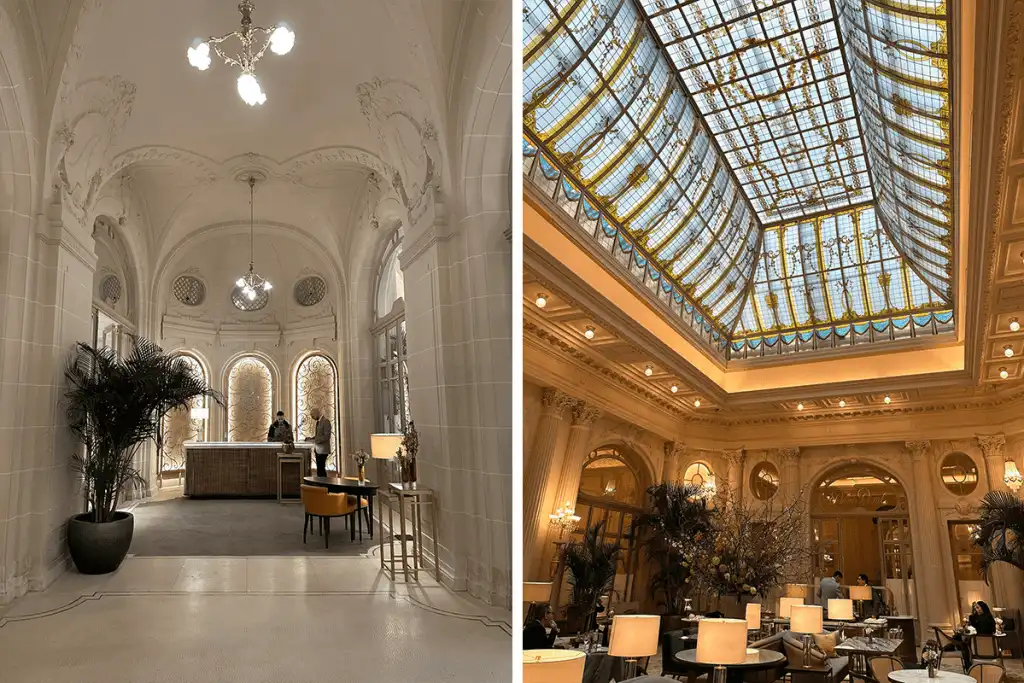
Corinthia Grand Hotel Astoria Brussels occupies King Leopold II’s 1910 Beaux-Arts commission on Rue Royale—a structure designed as Belgium’s architectural proclamation for the Brussels International Exposition. Henri Van Dievoet’s Louis XVI façade conceals a lineage of wartime command, Royal receptions, and literary immortality.
The building served as headquarters for both German and British forces during World War II, hosted King Philippe and Queen Mathilde’s wedding reception in 1999, and appears in Charlotte Brontë’s Villette as the symbolic center of Brussels society. The 15-meter stained-glass Palm Court dome has been reconstructed to its original 1910 coloration; beneath the historic foundations, a newly excavated 1,200-square-meter thermal spa extends the estate’s authority underground. This is not adaptive reuse—this is inhabiting Belgium’s seat of power.
Explore more commanding estates among the best historic hotels in Brussels.
Corinthia Grand Hotel Astoria Brussels ★★★★★
King Leopold II commissioned this Beaux-Arts palace in 1910 as Belgium’s architectural statement for the Brussels International Exposition. Architect Henri Van Dievoet delivered a Louis XVI façade with neoclassical moldings, marble staircases, and Belle Époque interiors that codified aristocratic design at the turn of the century.
The building’s lineage as a command structure began during World War II, when it served sequentially as headquarters for German and British forces—original “377COY HQ” markings were visible on the exterior until recent restoration. In 1999, the Palm Court hosted the grand wedding reception of King Philippe and Queen Mathilde, cementing the hotel’s status as Belgium’s official ceremonial venue.
Corinthia Grand Hotel Astoria Brussels is a Belle Époque palace commissioned by royal decree for the 1910 World Expo.
The 15-meter-long, 11-meter-high stained-glass skylight crowning the Palm Court has been reconstructed using period photographs to restore the original 1910 color palette—a technical feat that re-establishes the light dynamics of the Exposition era.
Charlotte Brontë immortalized the building’s location on Rue Royale in her novel Villette, written during her Brussels residency; the Brontë Penthouse honors this literary legacy with a custom book sculpture by Su Blackwell, crafted from a vintage edition of the novel.
The Churchill Suite archives Winston Churchill’s documented stays with period photography; the Dalí Suite curates Salvador Dalí’s surrealist vocabulary into the textile and art selections.
The Grand Masters Penthouse translates Flemish artistic dominance into spatial design: hand-tufted rugs reference the color palettes of Bruegel and Rubens, while a Calacatta Oro marble fireplace anchors the salon. The Brel Soundwave Sculpture by Baldvin Ringsted visualizes Jacques Brel’s La Chanson des Vieux Amants as a permanent installation in the public galleries—a tribute to Belgium’s musical authority. Every suite occupies rooms where European power was negotiated, celebrated, and memorialized.
Palais Royal, the flagship restaurant, features bespoke crystal glass reception desks and brass screens inspired by traditional Belgian metalwork—functional heritage rendered as contemporary luxury. Under The Stairs cocktail bar integrates mirrored panels and tree patterns that reference Victor Horta’s Art Nouveau ironwork, Belgium’s definitive design export.
The 1,200-square-meter Sisley Spa occupies a subterranean floor excavated beneath the 1910 foundations, housing seven treatment suites, a thermal circuit, and a dedicated tea room within the building’s historic sub-structure. Coutume Concept Store operates as a permanent retail space within the hotel, showcasing Belgian fashion brands like Maison La Collection alongside exclusive floral installations.
Corinthia Grand Hotel Astoria Brussels is not a restoration—it is the active preservation of Belgium’s ceremonial and intellectual command. Guests inhabit the rooms where Royal unions were celebrated, wartime strategies were executed, and literary history was composed. The reconstructed Palm Court dome restores the light conditions under which Leopold II received dignitaries; the Churchill and Dalí suites archive the documented presence of global icons.
This is the Belgian establishment—occupied, never replicated.
Check Availability & Rates →In the shadow of Leopold II’s Beaux-Arts dome and beneath the weight of Churchill’s wartime command, guests occupy the ceremonial heart of Belgium’s Royal legacy—where stained glass crowns marble, and history remains the ultimate luxury.
FAQ: Corinthia Grand Hotel Astoria Brussels
What makes Corinthia Grand Hotel Astoria Brussels historically significant?
Corinthia Grand Hotel Astoria Brussels was commissioned by King Leopold II for the 1910 Brussels International Exposition, designed by Henri Van Dievoet in Beaux-Arts style. The building served as wartime headquarters for German and British forces during World War II, hosted King Philippe and Queen Mathilde’s 1999 wedding reception, and was immortalized in Charlotte Brontë’s novel Villette. The 15-meter stained-glass Palm Court dome has been reconstructed to its original 1910 specifications.
Which historic figures stayed at Corinthia Grand Hotel Astoria Brussels?
The hotel hosted Winston Churchill and Salvador Dalí, with dedicated suites preserving their legacy through archived photography and curated design elements. King Philippe and Queen Mathilde held their Royal wedding reception in the Palm Court in 1999. Charlotte Brontë referenced the building’s location in her novel Villette, written during her Brussels residency.
What architectural features define Corinthia Grand Hotel Astoria Brussels?
The hotel features a Louis XVI façade with neoclassical moldings, Belle Époque marble staircases, and a reconstructed 15-meter stained-glass Palm Court dome restored to its 1910 coloration. A newly excavated 1,200-square-meter subterranean floor houses the Sisley Spa. The Palais Royal restaurant showcases bespoke crystal glass desks and traditional Belgian brass screens.
What amenities are available at Corinthia Grand Hotel Astoria Brussels?
Amenities include Palais Royal restaurant with heritage-inspired Belgian metalwork, Under The Stairs cocktail bar featuring Victor Horta-inspired Art Nouveau design, a 1,200-square-meter Sisley Spa with seven treatment suites and thermal circuit, and Coutume Concept Store showcasing Belgian fashion and floral installations. The Brontë Penthouse contains a custom book sculpture by Su Blackwell.
Royal Heritage, Modern Authority
Corinthia Grand Hotel Astoria Brussels translates Leopold II’s 1910 architectural vision into a living ceremonial venue. The reconstructed Palm Court dome, subterranean spa expansion, and Churchill-Dalí archives establish the property as Belgium’s definitive luxury command post.
For parallel prestige, explore Hotel Amigo Brussels and Hotel Le Plaza Brussels.
For more curated itineraries and luxury-focused travel insights, visit Your Luxury Guide. For official travel information and destination updates, visit Belgium tourism-info.
Your Luxury Guide — Where Exceptional Travel Begins.