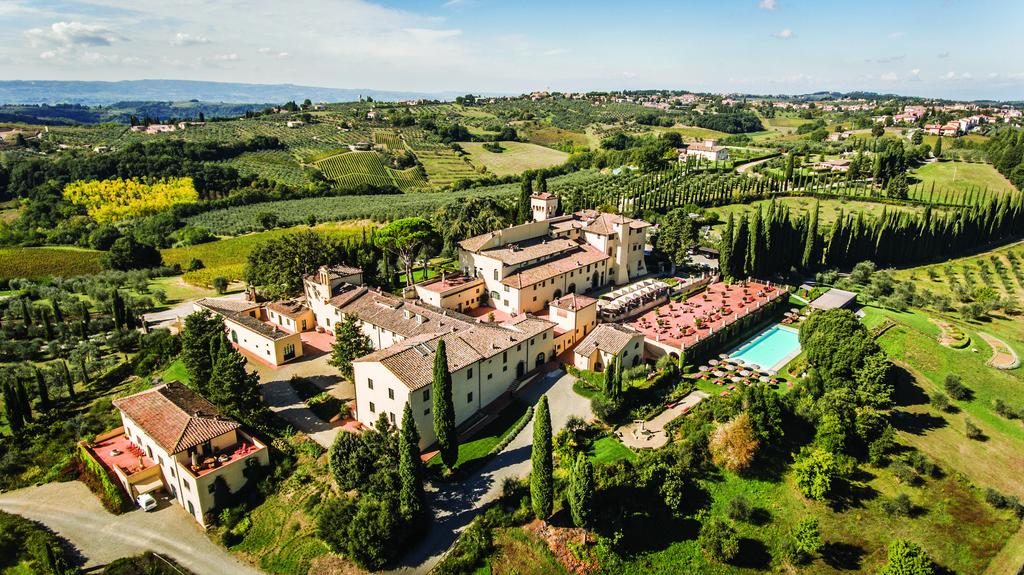
COMO Castello Del Nero stands as a 15th-century Renaissance fortress in the Chianti hills, where Florentine nobility once commanded 740 acres of territorial dominion. The castello’s defensive masonry and elevated position established it as a seat of regional authority for five centuries before COMO’s transformation into a luxury estate. Today’s guests inhabit frescoed chambers within walls that enforced aristocratic power across Tuscany’s wine country, accessing Michelin-starred dining and spa facilities within a historic footprint that continues to signal exclusivity.
For broader context on elite Tuscan estates, explore the best luxury castle stays in Tuscany.
COMO Castello Del Nero ★★★★★
The castello’s origins trace to the 1420s, when Florentine merchant families constructed fortified estates across Chianti to control wine trade routes and agricultural production. Castello Del Nero’s thick stone walls and strategic hilltop position weren’t decorative choices—they were territorial declarations that enforced economic dominance over the surrounding 740 acres of vineyards, olive groves, and forest holdings.
COMO Castello Del Nero preserves its 12th-century heritage as a noble family seat, curating an environment where Renaissance frescoes and contemporary wellness intersect within the heart of the Chianti wine region.
The Renaissance period architecture reflects the Florentine nobility’s transition from military fortification to cultural authority. The estate’s frescoed salons and vaulted ceilings served as stages for displaying wealth accumulated through Tuscany’s wool and banking industries. When guests now dine beneath 16th-century ceiling frescoes in La Torre restaurant—holder of a Michelin star—they’re occupying the same chambers where Renaissance families negotiated marriages, trade agreements, and regional governance.
COMO’s 2005 restoration maintained the castello’s defensive character while installing modern luxury infrastructure. The 50 rooms and suites occupy the original fortress chambers, with some suites featuring restored frescoes depicting mythological scenes that once communicated the owner’s classical education to visiting dignitaries.
The estate’s positioning—326 meters above sea level with sight lines across the Chianti valley—still provides the territorial overview that made this location valuable to Florentine power brokers.
The property’s spa occupies former storage chambers beneath the castello’s main structure, where wine and provisions were once secured behind meter-thick walls. Guests access heated indoor and outdoor pools, steam rooms, and treatment spaces within the same defensive architecture that protected the estate’s wealth five centuries ago.
The 740-acre grounds maintain their original agricultural character—working vineyards still produce Chianti Classico under the estate’s label, continuing the economic function that justified the castello’s construction.
The estate’s restaurant’s Michelin-starred menu sources ingredients from the castello’s own production—wild boar from the estate’s forests, olive oil from its groves, vegetables from restored Renaissance gardens. This isn’t farm-to-table marketing; it’s a continuation of the self-sufficient agricultural system that made Renaissance estates function as independent economic units.
Check Availability & Rates →Within COMO Castello Del Nero’s Renaissance walls, guests don’t simply observe Tuscany’s aristocratic past—they inhabit the physical infrastructure of territorial command that defined Chianti’s power structure for five centuries, now converted to luxury hospitality without diluting its defensive authority.
FAQ: COMO Castello Del Nero
What is the historical significance of COMO Castello Del Nero?
Built in the 1420s by Florentine merchant nobility, Castello Del Nero functioned as a fortified agricultural estate controlling 740 acres of Chianti wine production and trade routes. Its elevated defensive position and thick masonry walls enforced territorial authority across the region for over 500 years before conversion to luxury hospitality.
What makes COMO Castello Del Nero architecturally distinctive?
The castello represents transitional Renaissance architecture where military fortification merged with cultural display. Original 15th-century defensive walls contain 16th-century frescoed chambers that served as stages for aristocratic social authority. The estate maintains its original agricultural footprint with working vineyards and olive groves.
What dining experience does the castello offer?
La Torre restaurant holds a Michelin star under Chef Giovanni Luca Di Pirro, operating within the castello’s original vaulted dining chambers beneath Renaissance frescoes. The menu sources ingredients exclusively from the estate’s 740 acres—wild boar, olive oil, wine—continuing the self-sufficient agricultural model that made the fortress economically independent.
How does the spa utilize the historic structure?
The COMO Shambhala spa occupies former storage chambers beneath the castello’s main fortress, converting defensive vault spaces into treatment rooms, pools, and steam facilities. The meter-thick walls that once secured provisions now provide acoustic and thermal insulation for modern wellness facilities within Renaissance masonry.
Territorial Authority Preserved in Stone
COMO Castello Del Nero delivers what few properties can document: verified Renaissance command architecture converted to luxury hospitality without compromising its territorial character. The castello’s 740-acre domain continues to function as an agricultural estate while offering guests direct access to the defensive infrastructure that established Chianti’s aristocratic hierarchy.
For similar fortress estate experiences, consider Jumeirah Capri Palace and Castello di Casole Belmond.
More curated itineraries and luxury-focused travel insights at Your Luxury Guide. For official travel information and destination updates, visit Italy tourism-info.
Your Luxury Guide — Where Exceptional Travel Begins.