Luxury Travel

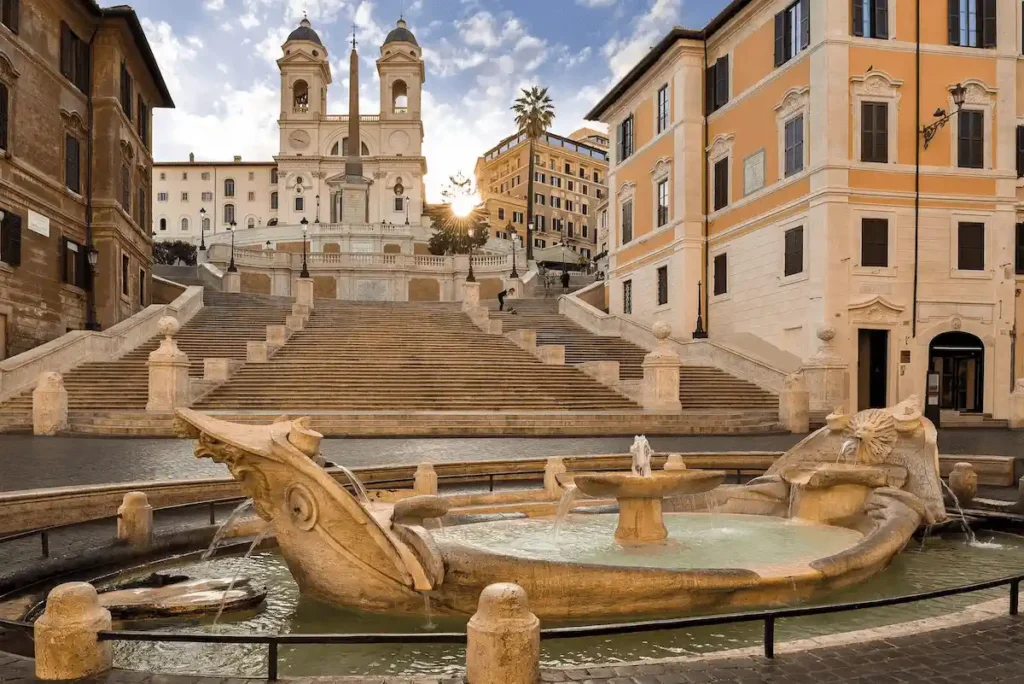
A panoramic view from the Hassler Roma at the top of the Spanish Steps, overlooking the rooftops of Rome and the Piazza di Spagna, featuring the hotel's terrace where guests have enjoyed the city's most iconic vantage point since 1893.

Hassler Roma: The Spanish Steps Command Post Where Rome’s Elite Converge

Hassler Roma has held the apex position above the Spanish Steps since 1893—a strategic vantage where cardinals, diplomats, and film royalty have exercised social authority for over a century. The Wirth family transformed a Belle Époque palazzo into Rome’s most commanding luxury address, maintaining uninterrupted ownership through papal transitions and political upheavals. Today’s suites occupy […]

Hassler Roma: The Spanish Steps Command Post Where Rome’s Elite Converge Read More »
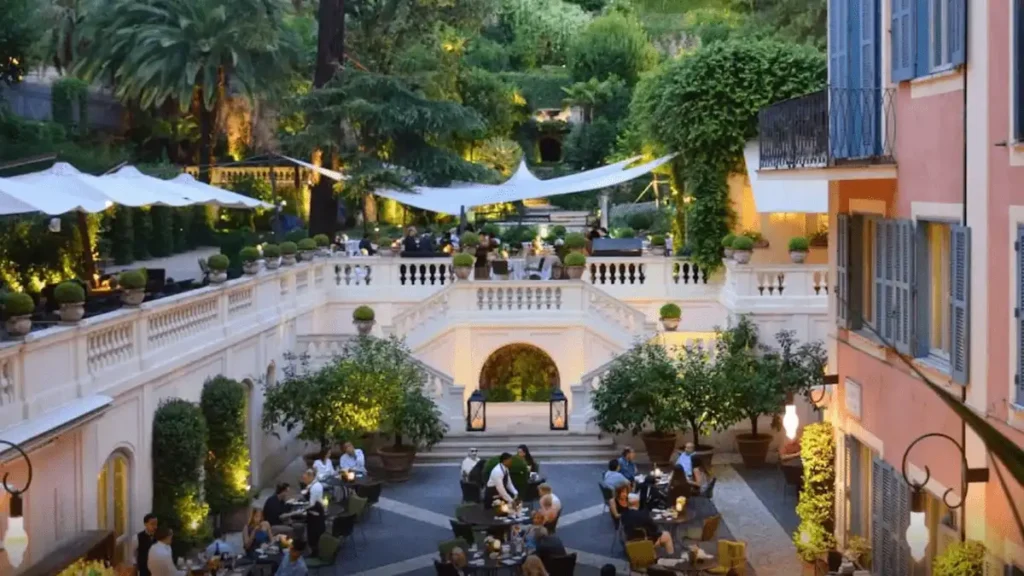
An evening view of the Hotel de Russie Rome "Secret Garden" in Rome, showing guests dining on the tiered Mediterranean terrace surrounded by lush greenery and illuminated neoclassical stone balustrades.

Hotel de Russie Rome: Diplomatic Quarters Above Vatican State

The Hotel de Russie Rome stands on consecrated ground—a terraced estate carved from the Pontifical State’s northern gardens in 1814. For two centuries, this neoclassical palace served as the private residence of Russian diplomats and European nobility before Rocco Forte transformed it into his Italian flagship. You’re not booking a hotel; you’re inhabiting the formal

Hotel de Russie Rome: Diplomatic Quarters Above Vatican State Read More »

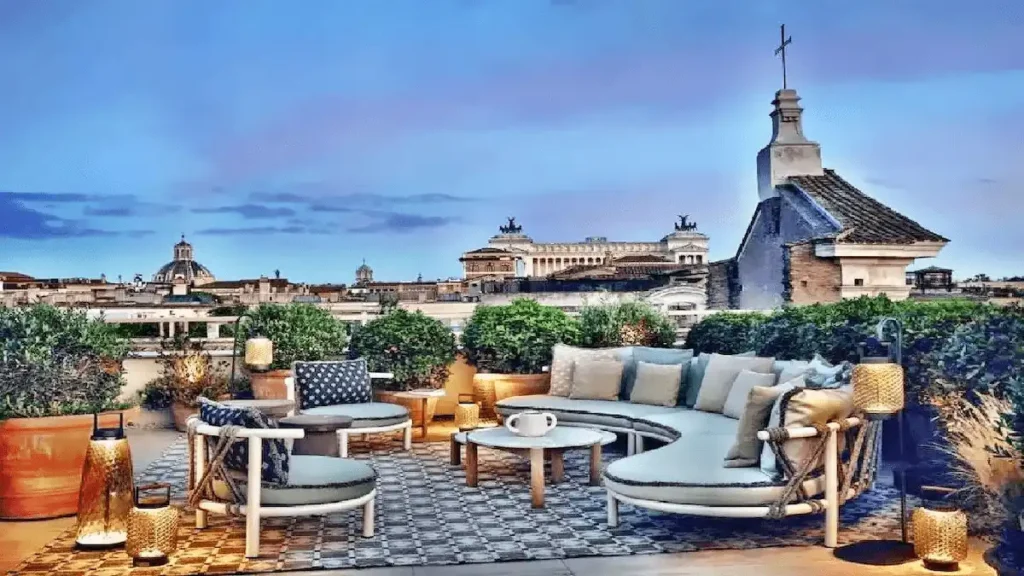
The sustainable luxury rooftop terrace of Six Senses Rome, featuring contemporary outdoor lounge seating and panoramic views of the Roman skyline, including the neighboring San Marcello al Corso Church and the Altare della Patria.

Six Senses Rome: 18th-Century Palazzo Reimagined as Wellness Sanctuary

Six Senses Rome establishes its authority in a meticulously restored 18th-century palazzo, steps from Piazza di Spagna. This is not adaptive reuse for aesthetic purposes—this is the transformation of an aristocratic Roman residence into a contemporary wellness destination that maintains the architectural command of its original noble inhabitants. The palazzo’s historic salons, frescoed ceilings, and

Six Senses Rome: 18th-Century Palazzo Reimagined as Wellness Sanctuary Read More »

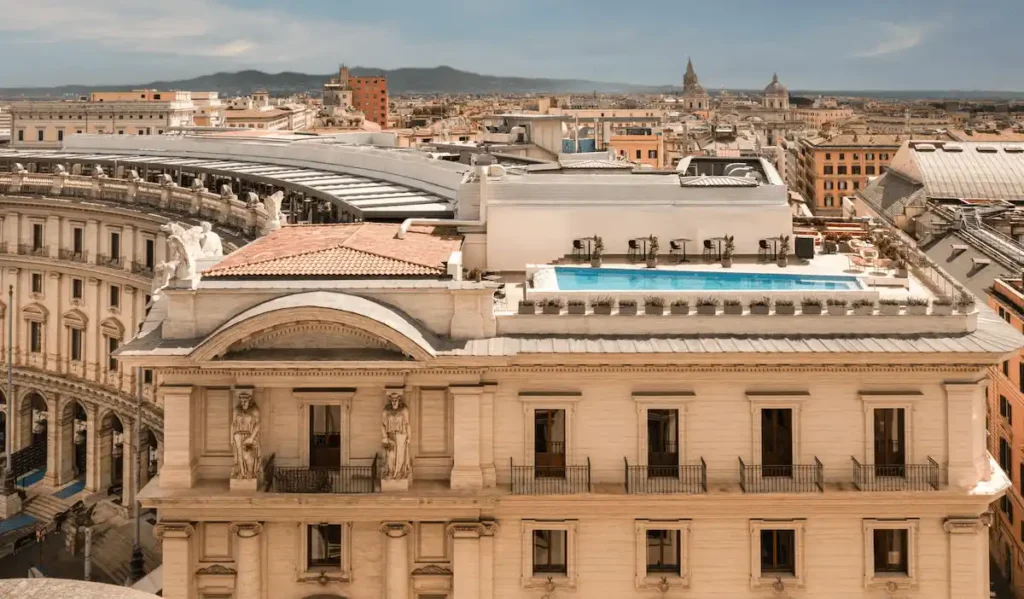
An aerial view of the Anantara Palazzo Naiadi Rome Hotel, showing the rooftop terrace and infinity pool overlooking the neoclassical architecture of Piazza della Repubblica and the Roman skyline.

Anantara Palazzo Naiadi Rome Hotel: Imperial Baths Command

Anantara Palazzo Naiadi Rome Hotel occupies Piazza della Repubblica, where the semicircular colonnade mirrors the original perimeter of the Baths of Diocletian—the largest imperial thermae complex ever constructed in Rome. Built between AD 298-306, these baths accommodated 3,000 bathers simultaneously and represented the apex of Roman engineering and social hierarchy. The hotel’s façade follows the

Anantara Palazzo Naiadi Rome Hotel: Imperial Baths Command Read More »

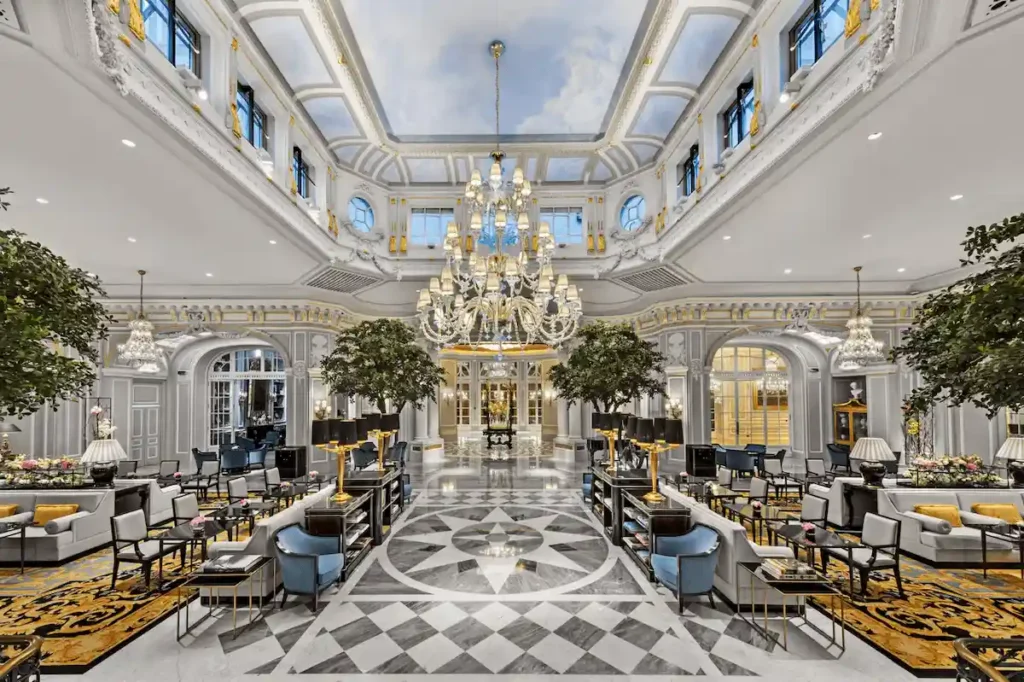
The opulent Grand Hall of The St. Regis Rome, a historic 1894 palazzo, featuring a soaring skylight with a trompe l'oeil cloud ceiling, massive crystal chandeliers, and a checkered marble floor.

The St. Regis Rome: Where Italian Aristocracy Built the Republic

The St. Regis Rome stands on Via Vittorio Veneto, the boulevard that became Italy’s seat of aristocratic power after Rome was declared capital in 1871. This was where noble families who unified the peninsula built their urban residences, establishing the social architecture that governed the young Italian state. Today’s guests occupy the same spatial command—private

The St. Regis Rome: Where Italian Aristocracy Built the Republic Read More »

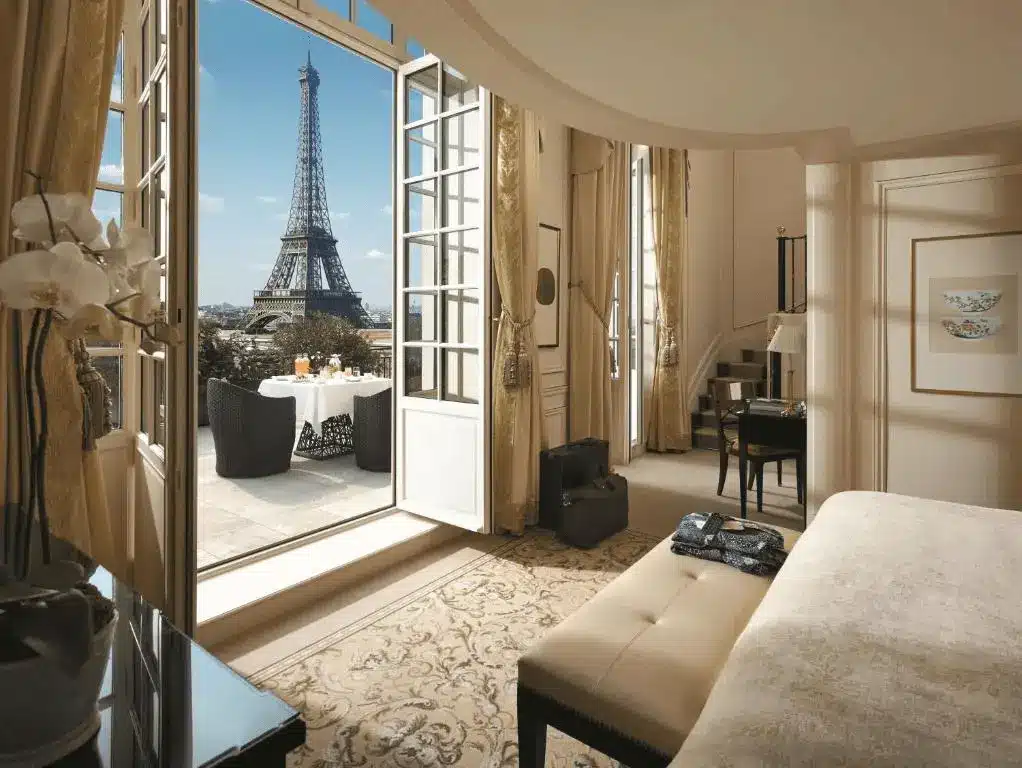
A view from a luxury guest suite at Shangri-La Paris, featuring an open balcony with a breakfast table and a direct, framed view of the Eiffel Tower, housed in the former 19th-century palace of Prince Roland Bonaparte.

Shangri-La Paris: Imperial Residence Commanding Trocadéro’s Most Coveted Address

Shangri-La Paris occupies the former residence of Prince Roland Bonaparte, grandnephew of Napoleon I, built in 1896 as a monument to imperial prestige and scientific authority. This isn’t a hotel styled to resemble a palace—it is the authenticated seat of Bonaparte lineage, where global power was exercised and intellectual society convened. The property’s position at

Shangri-La Paris: Imperial Residence Commanding Trocadéro’s Most Coveted Address Read More »

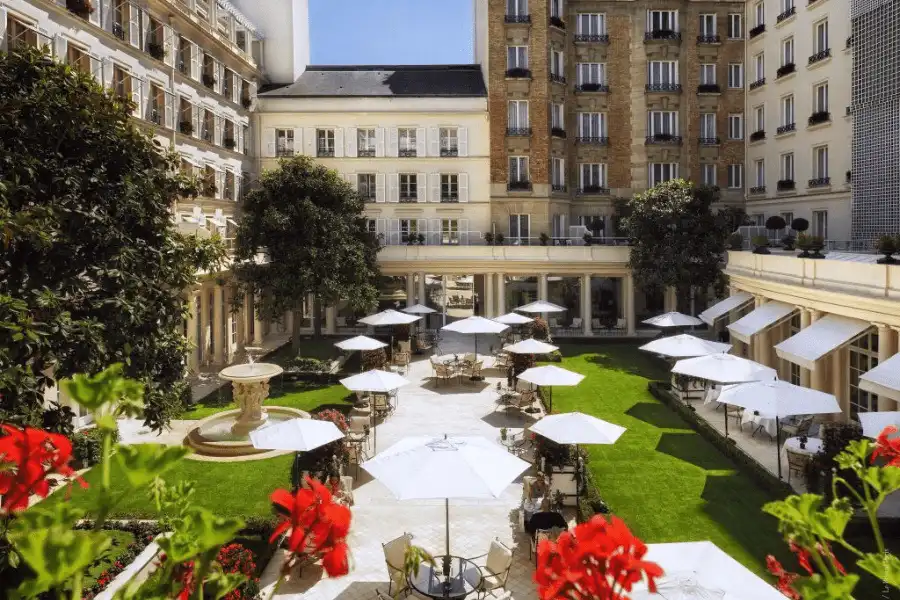
An overhead view of the lush, manicured garden courtyard at Le Bristol Paris, featuring white café umbrellas, a stone fountain, and the hotel's classic French architecture.

Le Bristol Paris: Palace Hotel Where Aristocratic Command Shaped Faubourg Saint-Honoré

Le Bristol Paris occupies the 1758 address on Rue du Faubourg Saint-Honoré where French aristocratic society established territorial dominance over Paris’s most commanding commercial avenue. The estate transitioned from private hôtel particulier to institutional seat before the Oetker Collection transformed the structure into palace-grade accommodations in 1925. Today’s configuration preserves the original spatial hierarchy—grand salons,

Le Bristol Paris: Palace Hotel Where Aristocratic Command Shaped Faubourg Saint-Honoré Read More »

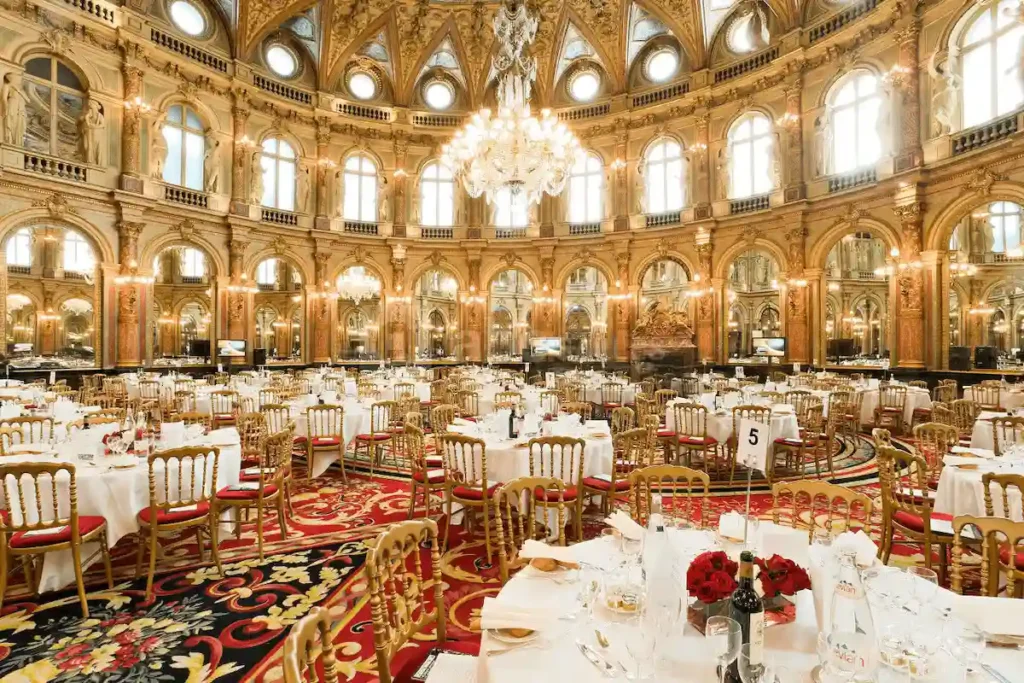
The opulent Salon Opéra ballroom at the InterContinental Paris Le Grand, a historic 1862 landmark, featuring its grand crystal chandeliers, gold-leaf detailing, and soaring domed ceiling designed by Charles Garnier.

InterContinental Paris Le Grand: Napoleon III’s Opéra Command Post

The InterContinental Paris Le Grand occupies the apex of Haussmann’s Second Empire Paris—commissioned in 1862 by Napoleon III as Grand Hôtel de la Paix to serve as the official hospitality monument for his reconstruction of the capital. Positioned directly on Place de l’Opéra, this was not merely a hotel but the empire’s formal reception hall

InterContinental Paris Le Grand: Napoleon III’s Opéra Command Post Read More »

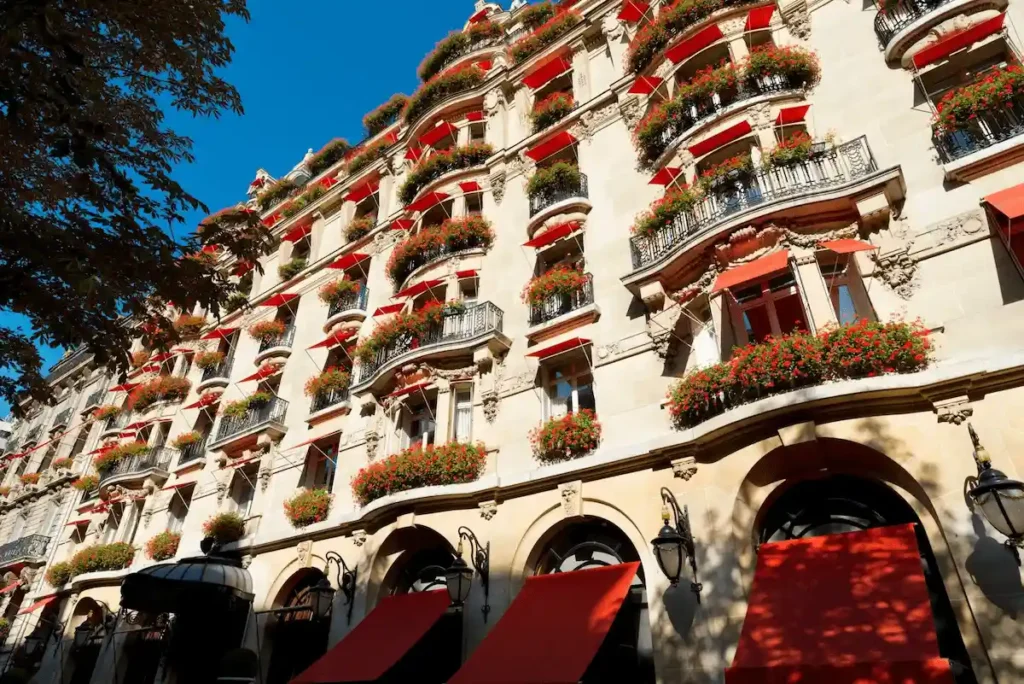
The iconic Haussmann-style facade of Hôtel Plaza Athénée Paris, featuring its signature bright red awnings and flower-filled window boxes against the limestone exterior on Avenue Montaigne.

Plaza Athénée Paris: The Avenue Montaigne Authority Since 1913

Avenue Montaigne commands Paris’s Golden Triangle—the three-block radius where global luxury is defined, negotiated, and executed. Since 1913, Plaza Athénée Paris has anchored this axis of elite commercial power, positioning guests at the center of Haute Couture’s historical seat of influence. The building functions as the operational headquarters for those who shape luxury markets, not

Plaza Athénée Paris: The Avenue Montaigne Authority Since 1913 Read More »

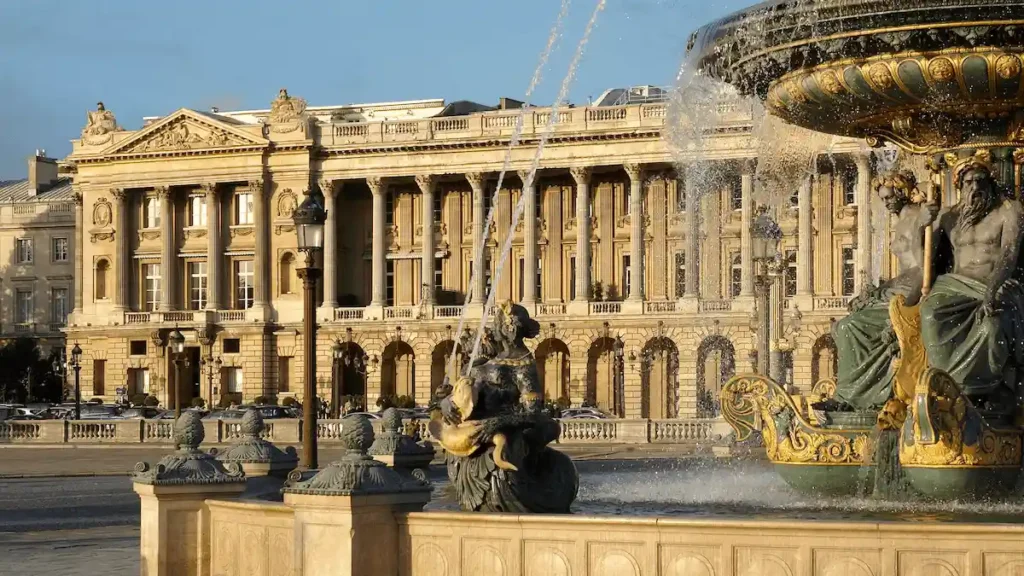
The neoclassical facade of Hôtel de Crillon in Paris, an 18th-century palace commissioned by King Louis XV, viewed from Place de la Concorde behind the ornate Fontaines des Mers at golden hour.

Hotel de Crillon Paris: The Palace Where French Authority Lives

For over 260 years, Hotel de Crillon’s building has functioned as a command center. Commissioned by Louis XV in 1758 as a private palace for the Comte de Crillon, this structure has housed military nobility, hosted treaty signings that redefined global borders, and served as headquarters for France’s Automobile Club—the nation’s first automotive authority. Today’s

Hotel de Crillon Paris: The Palace Where French Authority Lives Read More »