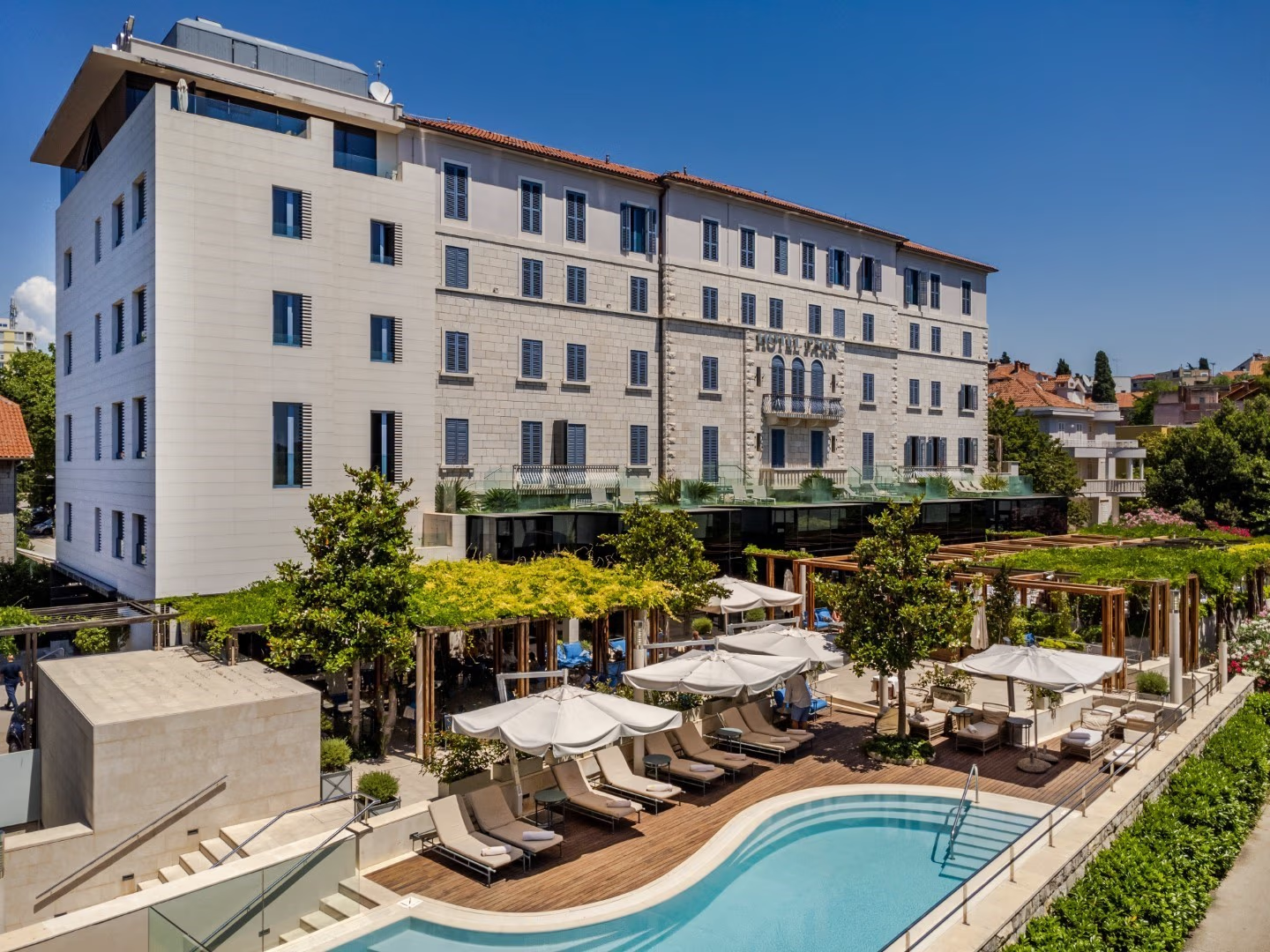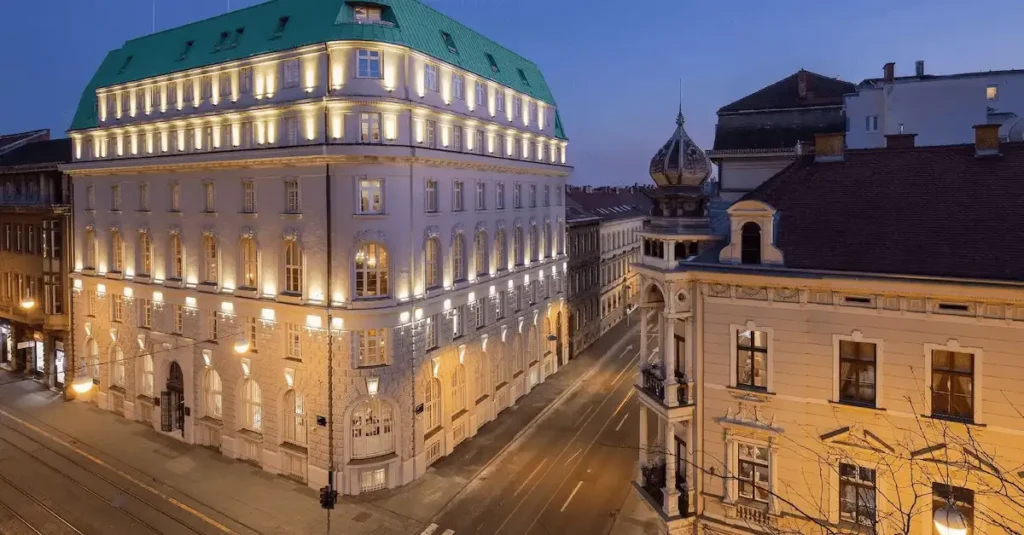
The illuminated early 20th-century Art Deco facade of Hotel Capital Zagreb at night, showing the historic mint-green mansard roof and classical stone arches on a central street corner.

Hotel Capital Zagreb: Where Austrian Banking Authority Meets Modern Command

Hotel Capital Zagreb positions you within a 1923 Viennese banking fortress designed to project institutional dominance across Zagreb’s financial district. This isn’t retrofitted heritage—it’s a protected monument where Ernst Gotthilf and Alexander Neumann’s original vault doors, mahogany walls, and Art Deco stained glass still define the spatial experience. Less than 300 meters from Ban Jelačić […]

Hotel Capital Zagreb: Where Austrian Banking Authority Meets Modern Command Read More »

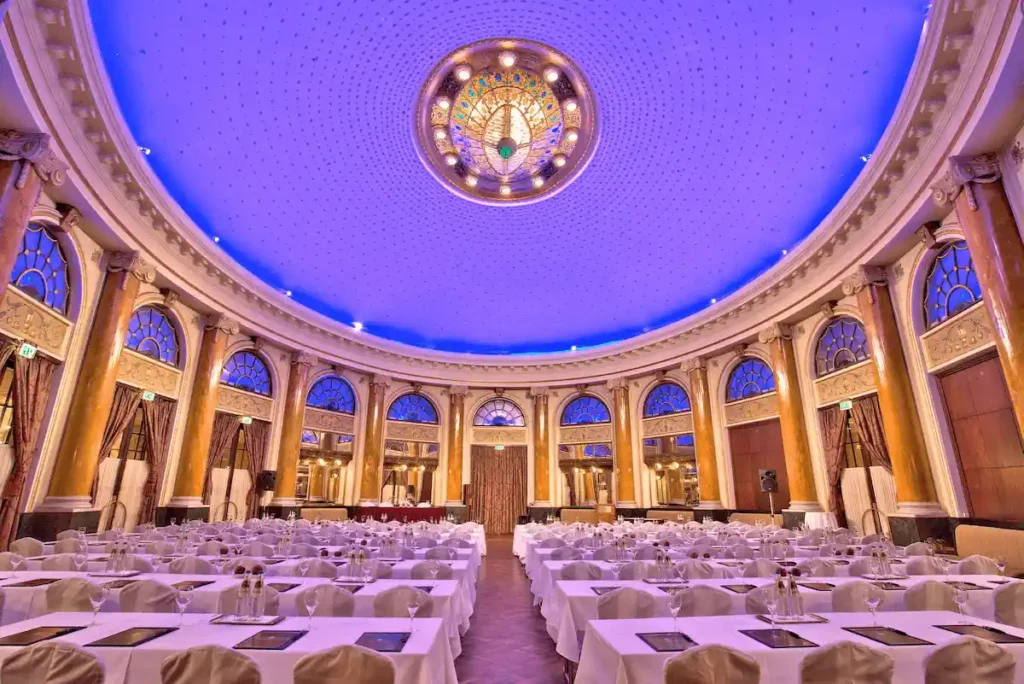
The monumental Emerald Ballroom of Esplanade Zagreb Hotel featuring a soaring blue-lit dome, classical golden columns, and a majestic Art Deco chandelier arranged for a formal event.

Esplanade Zagreb Hotel: The 1925 Orient Express Palace Where European Elite Still Arrive

Esplanade Zagreb Hotel was purpose-built in 26 months as the official terminus luxury for the Paris-Istanbul Orient Express line. Since 1925, this Art Deco masterpiece has functioned as Croatia’s diplomatic reception hall—hosting Queen Elizabeth II, Charles Lindbergh, Orson Welles, and Josephine Baker within its 208-suite historic footprint. The copper-domed Emerald Ballroom remains Zagreb’s premier site

Esplanade Zagreb Hotel: The 1925 Orient Express Palace Where European Elite Still Arrive Read More »

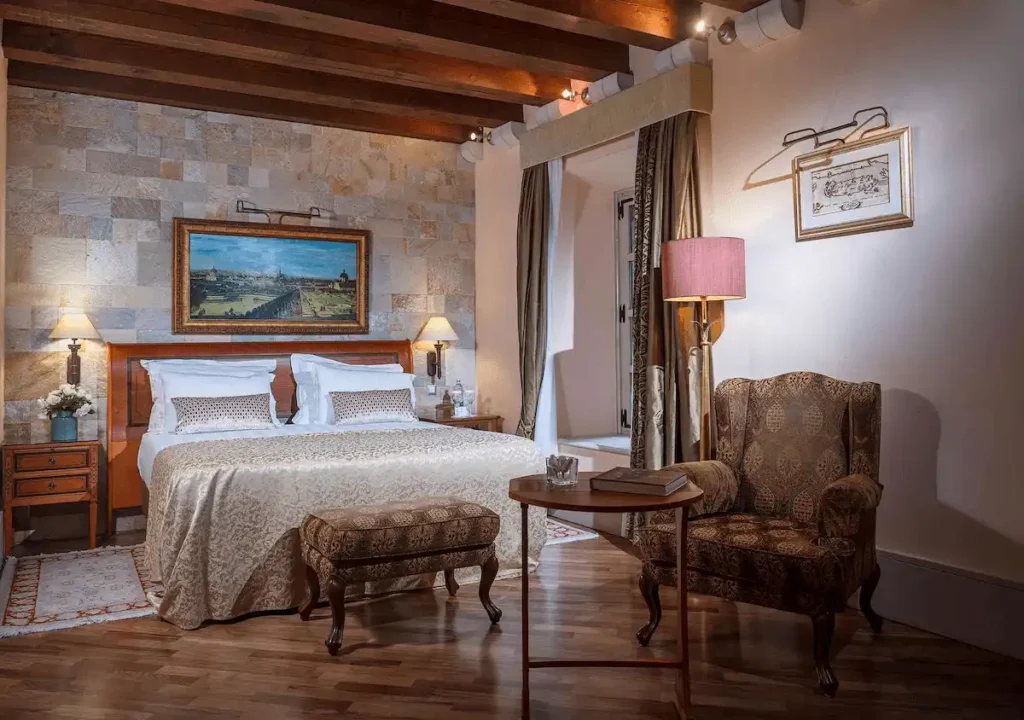
A luxury guest room at The Pucic Palace featuring authentic 18th-century stone walls, original dark wood ceiling beams, and classical aristrocratic furnishings in Dubrovnik's Old Town.

The Pucic Palace Dubrovnik: Former Noble Seat in UNESCO City Core

The Pucic Palace operates from the 1700-built urban residence of the Pucić family, one of the Republic of Ragusa’s most commanding noble lineages. As Dubrovnik’s first hotel established within the fortified city walls in 1895, this protected cultural landmark positions guests in a 19-suite Baroque palace where senators once governed maritime trade routes. Original stone

The Pucic Palace Dubrovnik: Former Noble Seat in UNESCO City Core Read More »

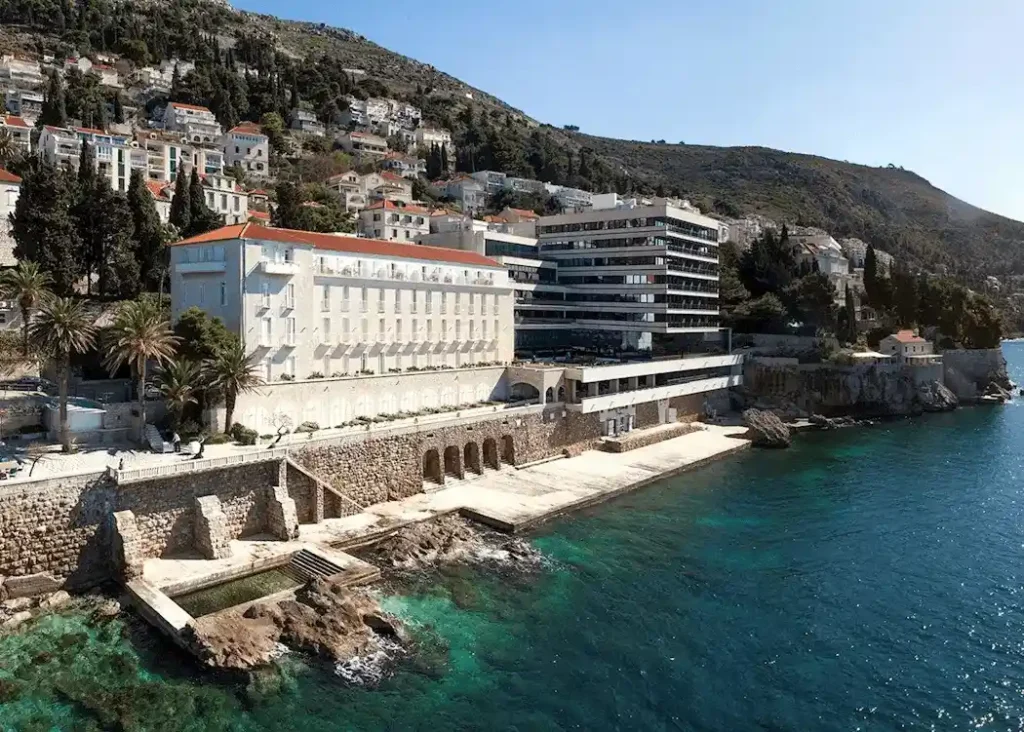
Aerial view of Hotel Excelsior Dubrovnik showing the historic white stone Villa Odak and the modern glass tower integrated into a cliffside with a private beach and rock-cut swimming pool on the Adriatic Sea.

Hotel Excelsior Dubrovnik: The 1913 Royal Villa Where Global Power Meets the Adriatic

For over a century, the Adriatic’s most influential guests have inhabited the same cliff-edge estate. Hotel Excelsior Dubrovnik began as Villa Odak in July 1913—a royal diplomatic villa engineered to serve as the city’s primary social command center. This is not merely historic accommodation; this is the physical site where Queen Elizabeth II, Princess Margaret,

Hotel Excelsior Dubrovnik: The 1913 Royal Villa Where Global Power Meets the Adriatic Read More »

View from the yellow-railed balcony of Hilton Imperial Dubrovnik overlooking the terracotta roofs of the Old Town, the Adriatic Sea, and the historic Lovrijenac Fortress.

Hilton Imperial Dubrovnik: 1897 Cliffside Command Post Above the Adriatic

Hilton Imperial Dubrovnik operates from Baron Viktor Kalchberg’s 1897 Grand Hotel Imperial—the first property in the region to introduce electric lighting and mechanical lifts to the Adriatic aristocracy. Positioned on a strategic cliffside plateau 100 meters from Pile Gate, this 149-room fortress hosted British King Edward VIII in 1936 and served as a civilian sanctuary

Hilton Imperial Dubrovnik: 1897 Cliffside Command Post Above the Adriatic Read More »

The grand Art Nouveau facade of Grand Hotel Union Eurostars in Ljubljana, featuring ornate stone carvings, classical balconies, and the original 1905 Secessionist glass canopy.

Grand Hotel Union Eurostars Ljubljana: Where Secession Royalty Meets Presidential Authority

Grand Hotel Union Eurostars stands as Ljubljana’s definitive Art Nouveau power statement, designed by Josip Vancaš in 1905 as the region’s most technologically advanced building. The first hotel in the city to feature electric lighting, central heating, and elevators, it immediately became the official residence for visiting heads of state—a function it maintains today. From

Grand Hotel Union Eurostars Ljubljana: Where Secession Royalty Meets Presidential Authority Read More »

The historic breakfast lounge of Antiq Palace Ljubljana, featuring original 16th-century white vaulted ceilings, stone pillars, and elegant wrought-iron furniture.

Antiq Palace Ljubljana: 16th-Century Baronial Seat on Roman Foundations

Antiq Palace Ljubljana occupies a protected 16th-century palatial residence on Gosposka ulica—”Gentry Street“—where Venetian-descended Barons of the Lazarini family maintained their urban seat for over four centuries. Built atop 2,000-year-old foundations from Roman Emona, the palace retains original frescoes, monumental stone staircases, and vaulted ceilings across 18 individually designed suites. The property’s lineage as the

Antiq Palace Ljubljana: 16th-Century Baronial Seat on Roman Foundations Read More »

The sleek black-framed modern entrance of Hotel Heritage Ljubljana, integrated into a historic 16th-century Renaissance facade on the city's shortest pedestrian street.

Hotel Heritage Ljubljana: A 16th-Century Publisher’s Residence in the Old Town

Hotel Heritage Ljubljana at Čevljarska ulica 2 has held its position at the intersection of three medieval squares since 1600. This Renaissance bourgeois townhouse—designated a protected cultural monument—served as the residence and workshop of Fabijan Kirchberger, the 16th-century publisher whose press helped establish printed Slovene during the Protestant Reformation. The 2021 restoration preserved 400-year-old stone

Hotel Heritage Ljubljana: A 16th-Century Publisher’s Residence in the Old Town Read More »

The historic exterior of Hotel Piran, featuring its classical Mediterranean architecture and outdoor cafe on the Piran waterfront.

Hotel Piran: 1913 Adriatic Command Post at the Sunniest Edge of Slovenia

For over a century, Hotel Piran has occupied the sunniest position in Slovenia, situated on Piran’s medieval waterfront. Opened in 1913 as the successor to Hotel Metropol, this 103-room estate was the final luxury project completed under Austro-Hungarian rule. Its 2013 renovation preserved the original high ceilings and Mediterranean proportions while invisibly integrating modern climate

Hotel Piran: 1913 Adriatic Command Post at the Sunniest Edge of Slovenia Read More »

An aerial view of the modernist white stone Vila Bled estate nestled in a dense green forest on the shore of Lake Bled, with the iconic island and pilgrimage church in the turquoise water nearby.

Vila Bled: Marshal Tito’s Presidential Command Post Above Lake Bled

Vila Bled functioned as Yugoslavia’s most exclusive presidential residence from 1947 to 1980, where Marshal Josip Broz Tito entertained global leaders including Indira Gandhi, Muammar Gaddafi, and Haile Selassie. Originally commissioned in 1947 as the summer seat of Yugoslav state authority, this lakeside command post transformed diplomatic history through three decades of Cold War summit

Vila Bled: Marshal Tito’s Presidential Command Post Above Lake Bled Read More »