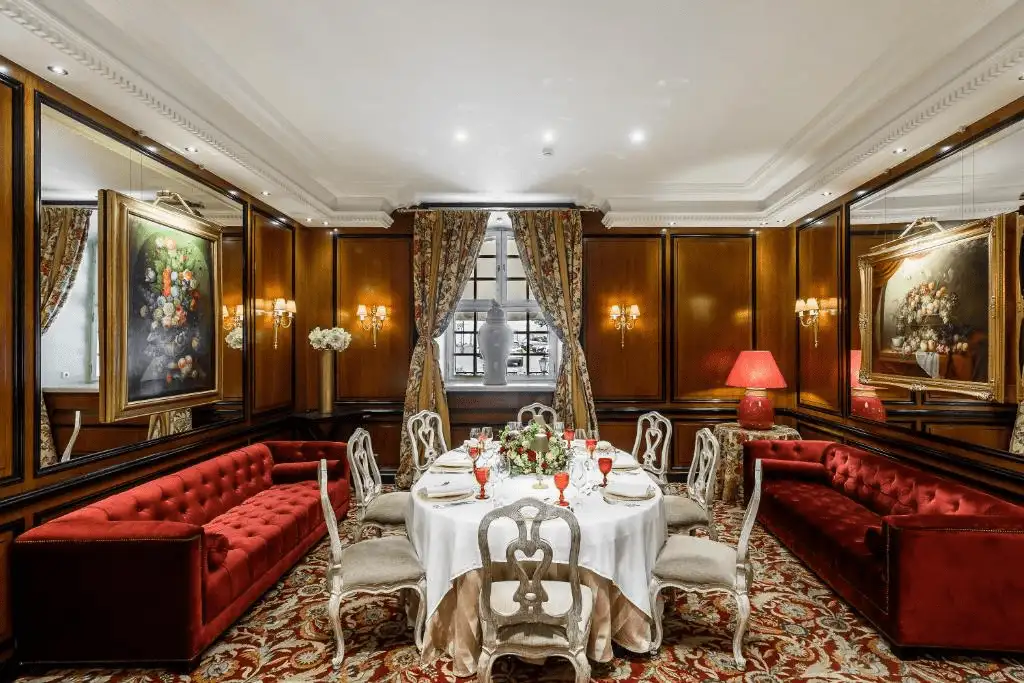
The opulent, wood-paneled "Column Hall" at Narutis Hotel Vilnius, featuring deep red velvet sofas, 18th-century style oil paintings, and an elegant fine-dining table setting.

Narutis Hotel Vilnius: Where Vilnius University Professors Once Lived

Narutis Hotel Vilnius occupies a 1581 landmark complex on Pilies Street that once housed the elite Nobles’ College (Collegium Nobilium) and served as residence for Vilnius University professors. The idiosyncratic structure blends Gothic cellars with 18th-century Baroque frescoes and Classical additions across multiple wings. Today, the building operates as a 5-star boutique hotel with 51 […]

Narutis Hotel Vilnius: Where Vilnius University Professors Once Lived Read More »
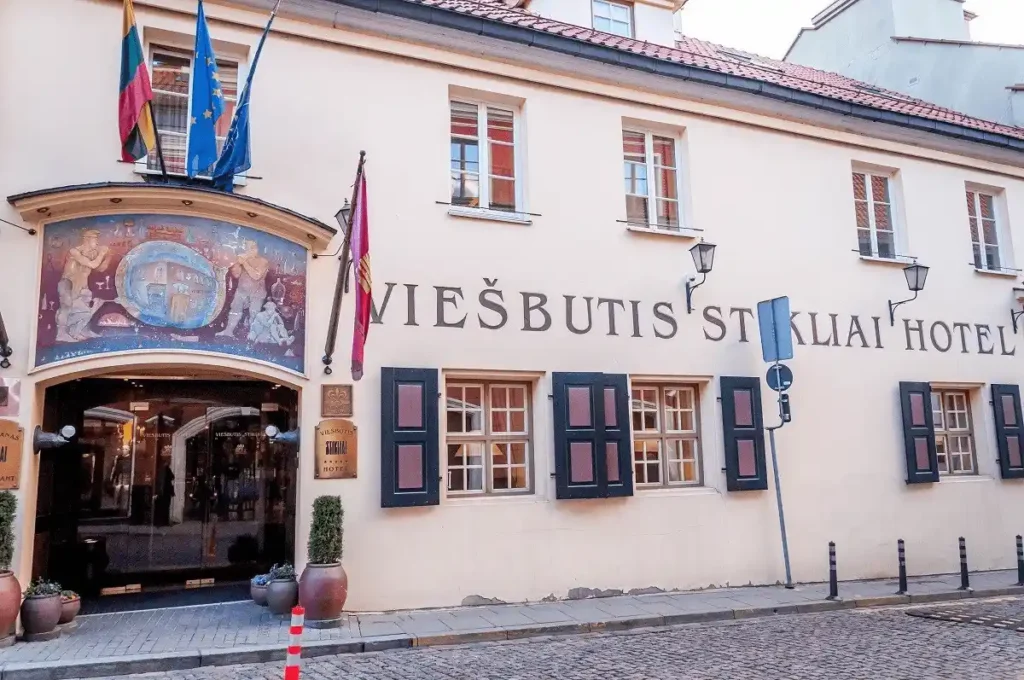
The exterior of the Stikliai Hotel Vilnius, featuring the historic arched entrance topped by a traditional artisan-themed mural and the original wood-shuttered windows of the 16th-century complex.

Stikliai Hotel Vilnius: 16th-Century Glassmakers’ Residence in UNESCO Old Town

Stikliai Hotel Vilnius commands the historic glassblowers’ quarter where Gothic, Renaissance, and Baroque architecture converge around a private ivy-covered courtyard. This Relais & Châteaux property integrates 15th-century brick vaults with French luxury standards across 43 individually designed suites. The hotel occupies the oldest foundations in Vilnius Old Town, three minutes from the Presidential Palace, functioning

Stikliai Hotel Vilnius: 16th-Century Glassmakers’ Residence in UNESCO Old Town Read More »

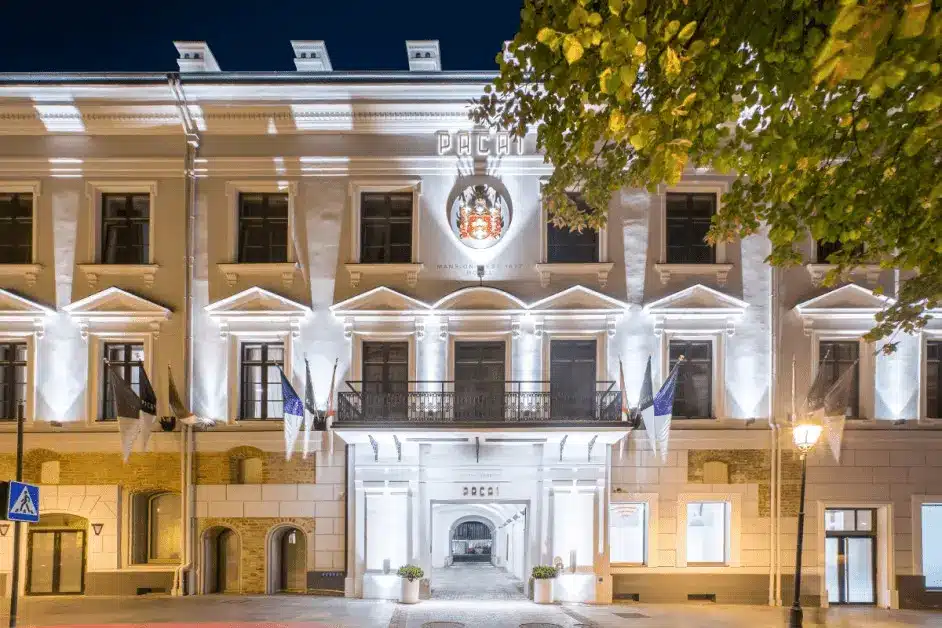
The illuminated 17th-century facade of Hotel Pacai Vilnius at night, featuring the noble Pacas family coat of arms and the arched entrance to the private Baroque courtyard.

Hotel Pacai Vilnius: Where Baltic Military Power Became 5-Star Authority

The Hotel Pacai Vilnius occupies the 1667 palace commissioned by Mykolas Kazimieras Pacas, a Lithuanian military commander whose battlefield dominance translated into architectural permanence. The Italian sculptors who created the Church of St. Peter and St. Paul decorated these walls with frescoes that remain visible today. The building’s guest register includes Tsar Peter I, Emperor

Hotel Pacai Vilnius: Where Baltic Military Power Became 5-Star Authority Read More »

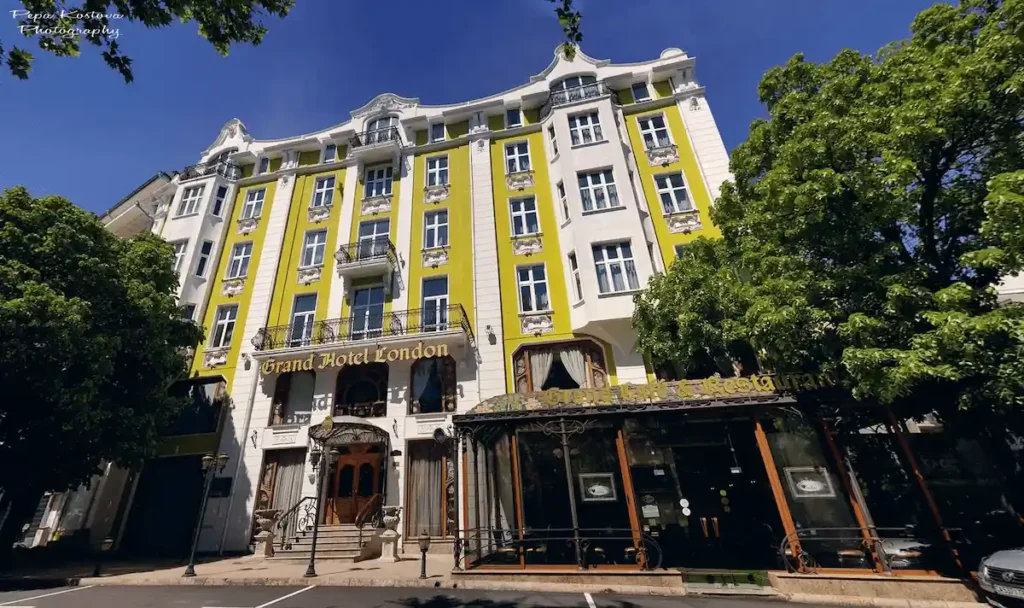
The vibrant yellow and white Art Nouveau facade of Grand Hotel London Varna, featuring ornate 1912 architectural carvings and the landmark street-level Grand Café terrace.

Grand Hotel London Varna: Art Nouveau Command Center Since 1912

Grand Hotel London Varna stands as the city’s original luxury property, a 1912 Art Nouveau monument designed by architect Dabko Dabkov. As Varna’s first building to install both central heating and an electric Otis-style elevator, this 24-room boutique hotel established the template for Black Sea hospitality. The 4-meter ceilings and ornate plasterwork remain intact, while

Grand Hotel London Varna: Art Nouveau Command Center Since 1912 Read More »

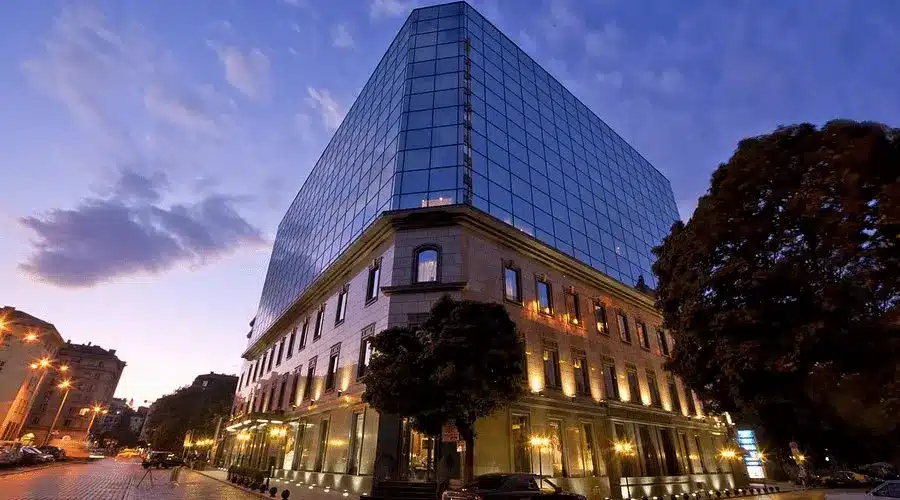
The contemporary stone and glass facade of Grand Hotel Sofia at twilight, overlooking the historic City Garden and the 19th-century architecture of the Sredets district.

Grand Hotel Sofia: Bulgaria’s Museum-Gallery Hotel Overlooking the 1906 National Theater

Grand Hotel Sofia rises on the legendary address where the original Grand Hotel Panachkov hosted Bulgaria’s post-liberation elite throughout the late 19th century. This contemporary 5-star property preserves the monumental scale of Sofia’s early grand hotels—high ceilings, expansive corridors, and guest rooms averaging over 50 square meters. The building functions as Bulgaria’s only private museum-hotel,

Grand Hotel Sofia: Bulgaria’s Museum-Gallery Hotel Overlooking the 1906 National Theater Read More »

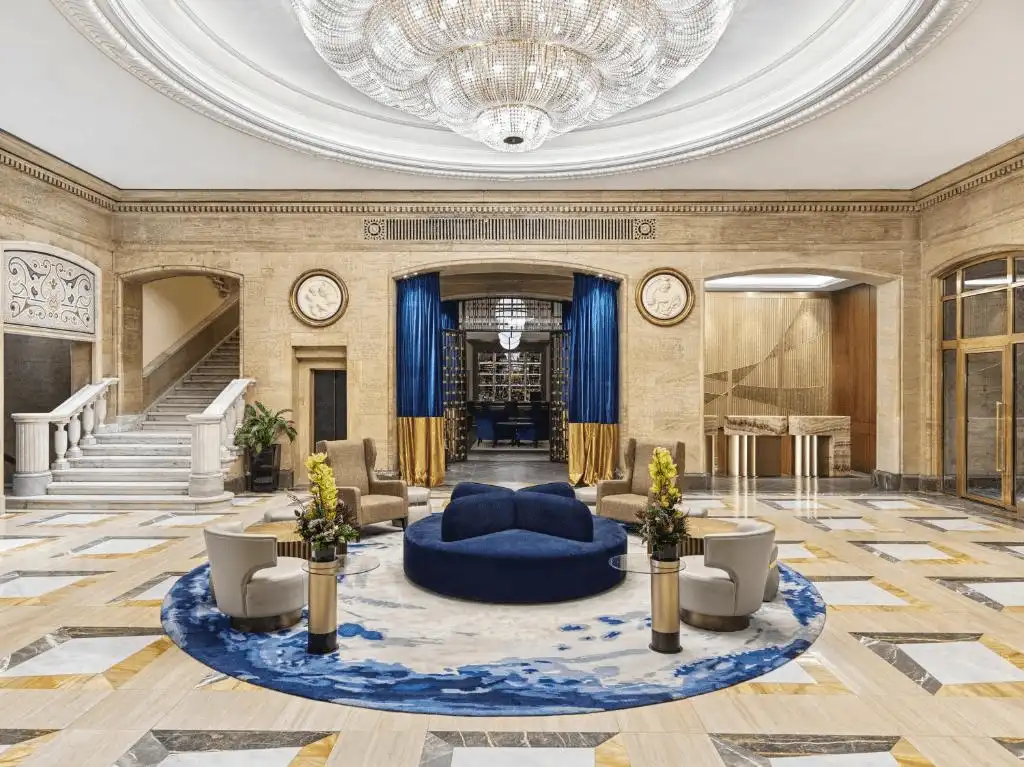
The opulent lobby of the Sofia Balkan Palace, featuring a grand crystal chandelier, marble flooring with geometric patterns, and elegant blue velvet seating arrangements.

Sofia Balkan Palace: The Presidential Quarter’s Cold War Gateway

Sofia Balkan Palace stands as the 1956 diplomatic anchor of Bulgaria’s most powerful address—the Largo ensemble. This monumental Socialist Classicist structure forms part of the Presidential Palace complex, where thick-walled mastery and Byzantine-inspired interiors create silent refuge in the capital’s command center. Built atop Roman Serdica’s administrative ruins and immediately adjacent to the President’s Office,

Sofia Balkan Palace: The Presidential Quarter’s Cold War Gateway Read More »

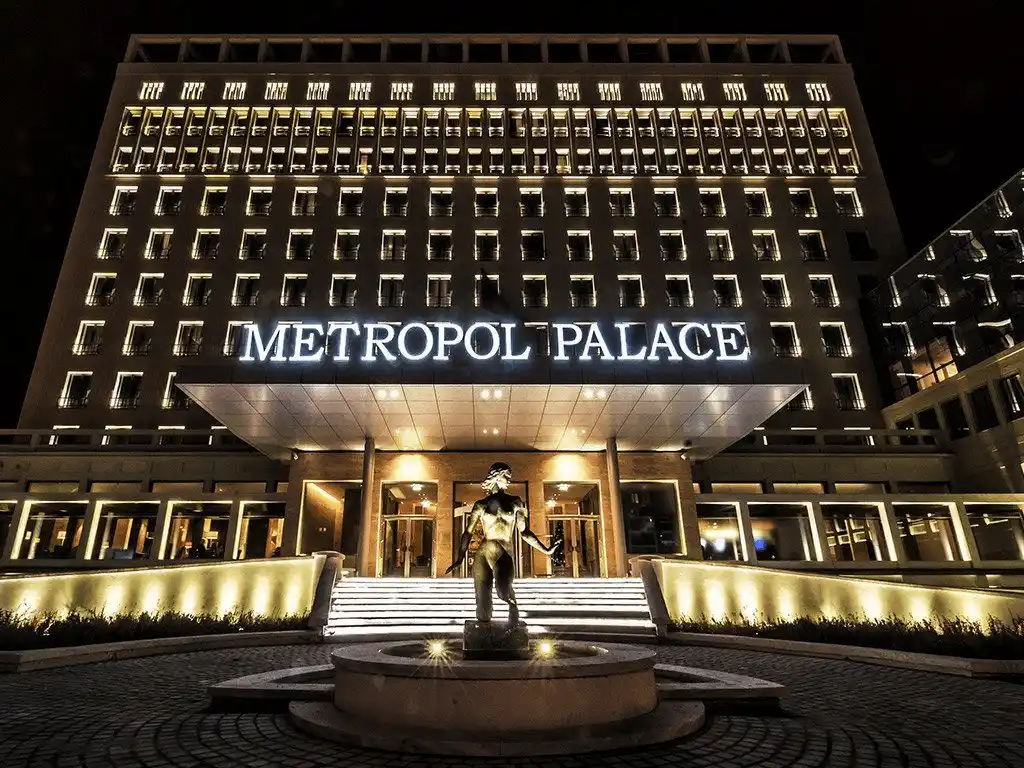
The illuminated modernist facade of Metropol Palace Belgrade at night, featuring the grand entrance, lit-up windows, and the iconic bronze fountain sculpture in the foreground.

Metropol Palace Belgrade: 1961 Non-Aligned Summit Hotel

Metropol Palace Belgrade occupies the physical site where 30 heads of state gathered in 1961 for the first Conference of the Non-Aligned Movement—a geopolitical pivot point that defined Cold War neutrality. This Yugoslav Modernist landmark, commissioned as a political headquarters and transformed into a luxury hotel in 1957, combines the monumental scale of 1950s socialist

Metropol Palace Belgrade: 1961 Non-Aligned Summit Hotel Read More »

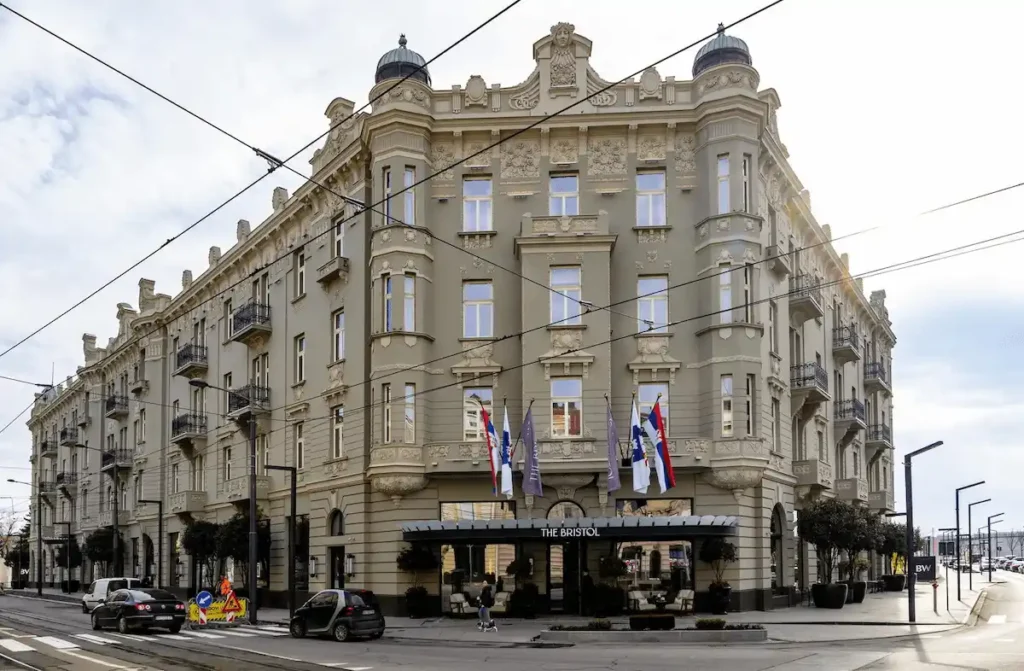
The meticulously restored Art Nouveau facade of The Bristol Belgrade, a 1912 architectural landmark featuring ornate stone carvings and classical domes in the Savamala district.

The Bristol Belgrade: Where Art Nouveau Grandeur Meets a Century of Diplomatic Authority

The Bristol Belgrade occupies Nikola Nestorović’s 1912 Secession monument—a building formally protected since 1987 and restored by 16 specialist artists to its exact original form. This is where the Rockefeller family stayed during Belgrade’s interwar golden age, where chess champions and heads of state established the property’s reputation as the city’s premier diplomatic seat. Behind

The Bristol Belgrade: Where Art Nouveau Grandeur Meets a Century of Diplomatic Authority Read More »

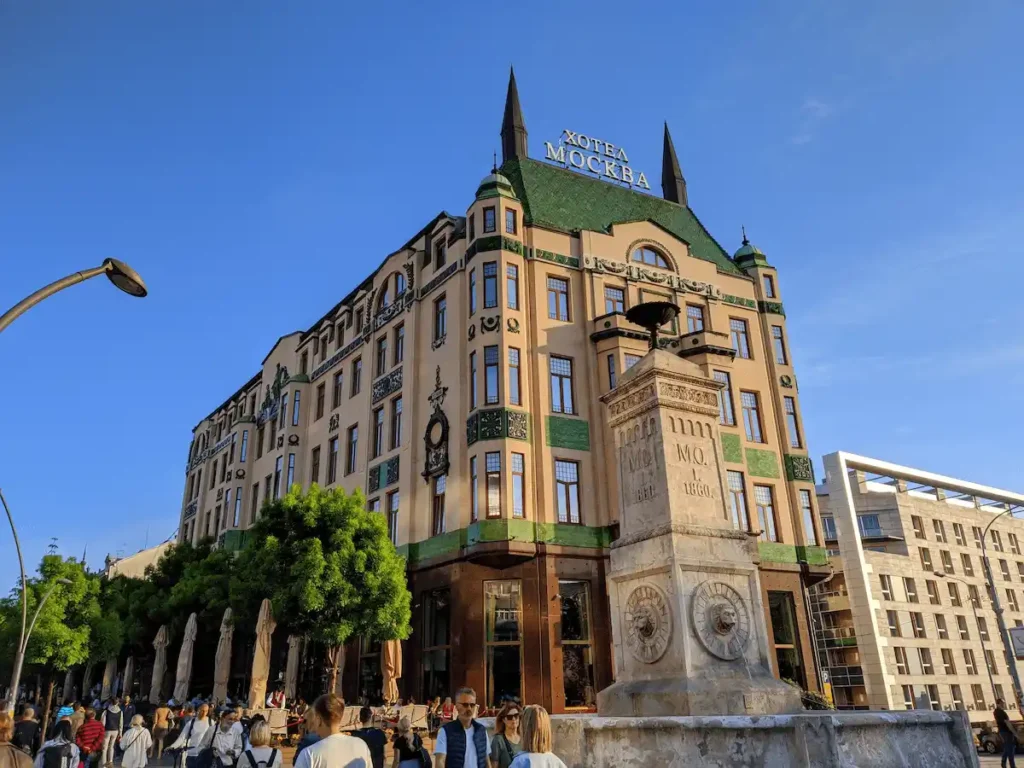
The iconic Russian Secessionist facade of Hotel Moskva in Belgrade, featuring its signature emerald green Zsolnay ceramic tiles and architectural towers under a clear blue sky.

Hotel Moskva Belgrade: Russian Imperial Authority at Serbia’s Power Center

Hotel Moskva has commanded Belgrade’s most strategic intersection since King Peter I Karađorđević personally inaugurated this Russian Secession monument in 1908. The emerald Zsolnay-tiled facade overlooks Terazije Square—the city’s historical seat of commerce and power—where 40 million guests have inhabited suites that sheltered Einstein, Hitchcock, and Gandhi. The building has never closed. Not through two

Hotel Moskva Belgrade: Russian Imperial Authority at Serbia’s Power Center Read More »

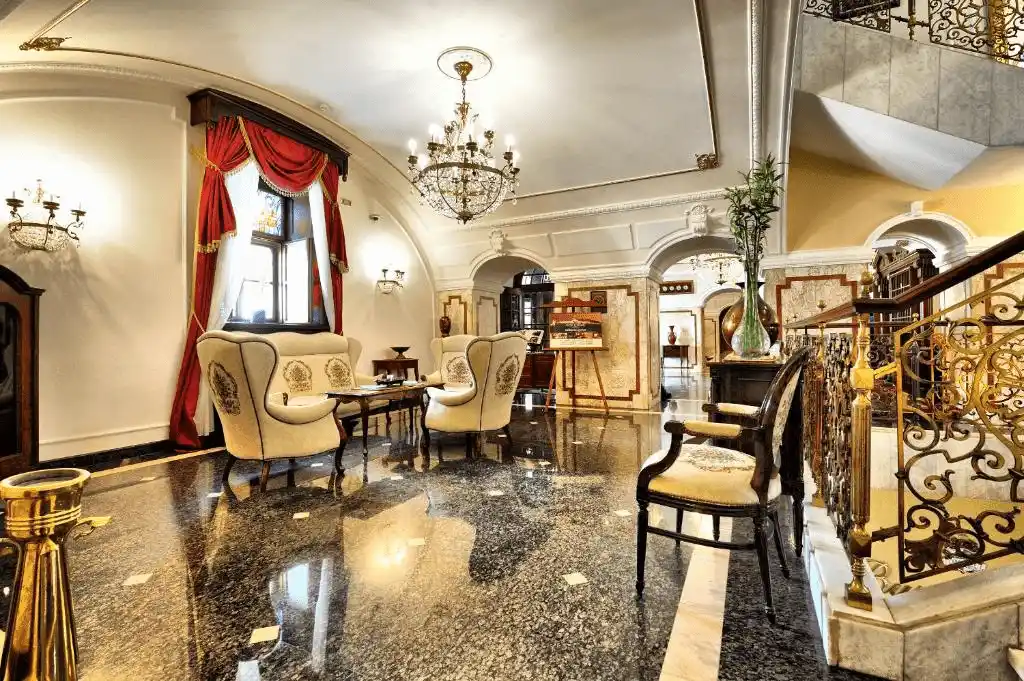
The opulent baroque lobby of Hotel Leopold I in the Petrovaradin Fortress, featuring polished marble floors, classical archways, crystal chandeliers, and imperial-style furniture.

Hotel Leopold I, Novi Sad: Imperial Habsburg Command Post Within Europe’s Fortress Gibraltar

Hotel Leopold I occupies a 17th-century Baroque military residence inside Petrovaradin Fortress, where Emperor Leopold I laid the cornerstone in 1692 to establish Habsburg dominance over the Danube. This isn’t a hotel themed around history—it’s the actual command structure where fortress officers directed operations during centuries of Habsburg-Ottoman conflict. The building’s thick defensive walls, vaulted

Hotel Leopold I, Novi Sad: Imperial Habsburg Command Post Within Europe’s Fortress Gibraltar Read More »