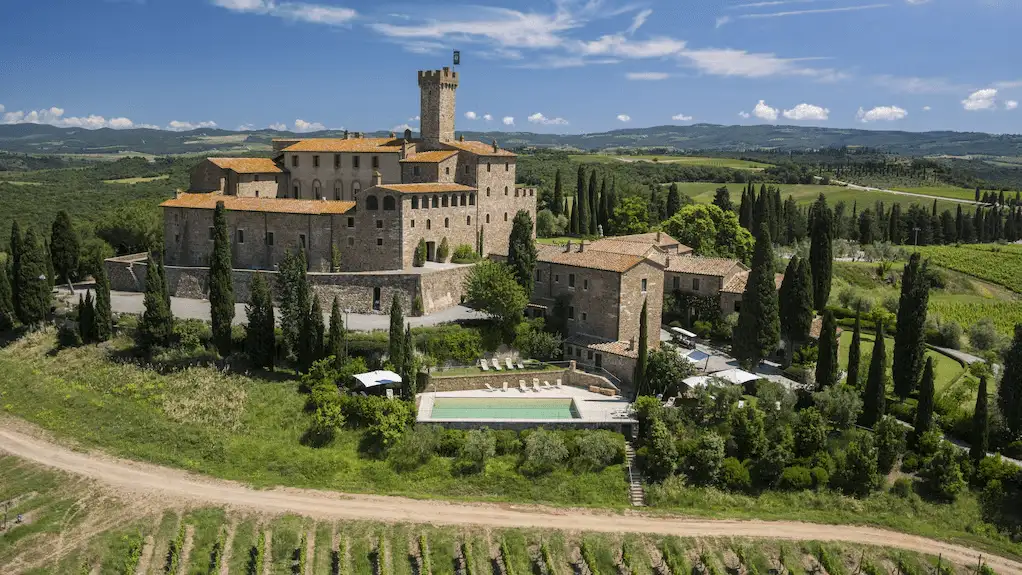
An elevated view of the medieval stone fortress of Castello Banfi il Borgo in Tuscany, featuring a prominent watchtower and terracotta roofs, surrounded by cypress trees and vast estate vineyards.

Castello Banfi il Borgo: Medieval Wine Fortress in Montalcino

Castello Banfi il Borgo stands as a fortified 13th-century settlement commanding 7,100 acres of Brunello vineyards in southern Tuscany. The property centers on Poggio alle Mura, a medieval defensive borgo that served as a territorial watchtower over the Val d’Orcia. Today, the estate operates as both a UNESCO-recognized wine producer and a five-star residence where […]

Castello Banfi il Borgo: Medieval Wine Fortress in Montalcino Read More »
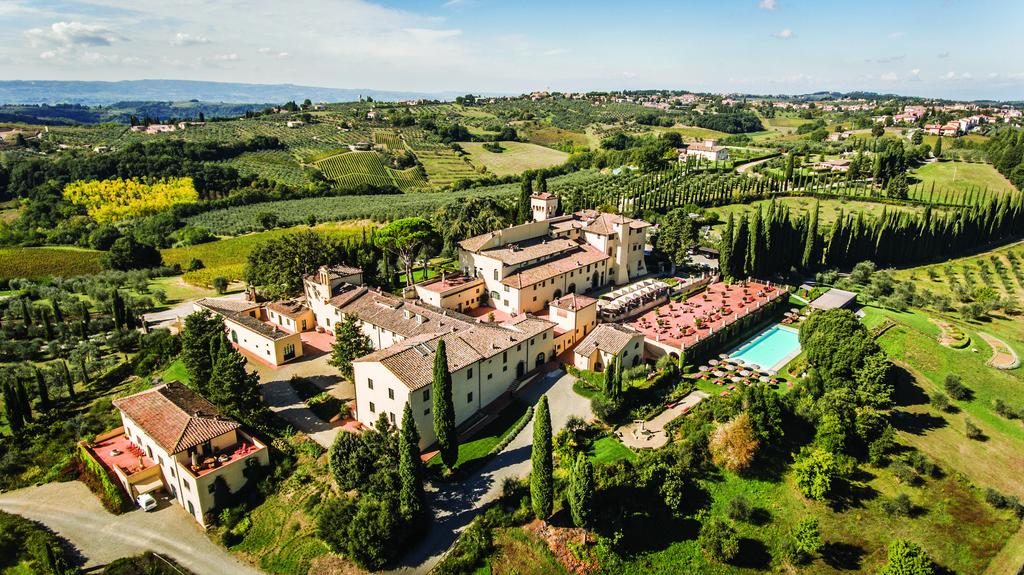
An elevated aerial view of the sprawling COMO Castello Del Nero estate in Tuscany, featuring terracotta-roofed villas, a large swimming pool, and manicured gardens surrounded by rolling vineyards and cypress trees.

COMO Castello Del Nero, Tuscany: Renaissance Fortress Command in Chianti’s 740-Acre Domain

COMO Castello Del Nero stands as a 15th-century Renaissance fortress in the Chianti hills, where Florentine nobility once commanded 740 acres of territorial dominion. The castello’s defensive masonry and elevated position established it as a seat of regional authority for five centuries before COMO’s transformation into a luxury estate. Today’s guests inhabit frescoed chambers within

COMO Castello Del Nero, Tuscany: Renaissance Fortress Command in Chianti’s 740-Acre Domain Read More »

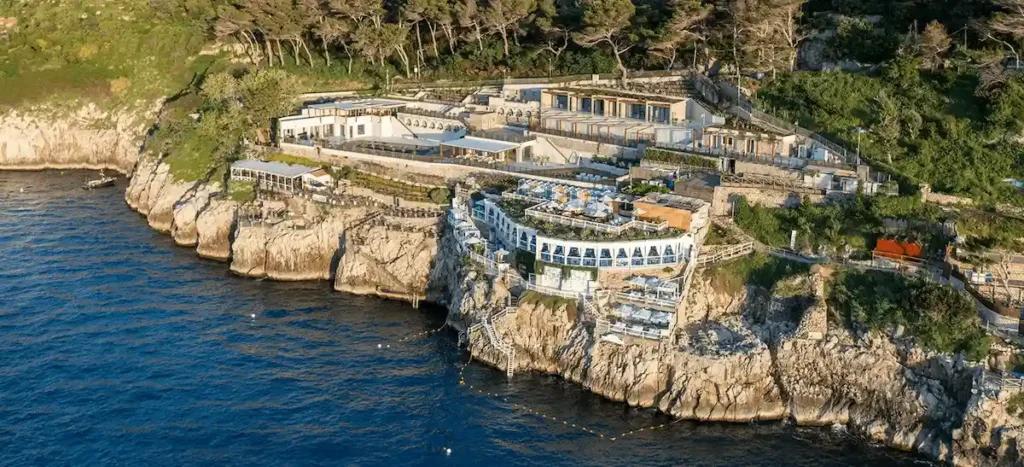
An expansive aerial view of the white, terraced architecture of Jumeirah Capri Palace perched on the rugged limestone cliffs of Anacapri, overlooking the deep blue Mediterranean Sea.

Jumeirah Capri Palace: Where Imperial Ruins Meet Modern Sovereignty on Anacapri’s Summit

The Jumeirah Capri Palace occupies the strategic high ground where Roman emperors positioned their retreats—a deliberate territorial claim that transformed Anacapri into the Mediterranean’s ultimate power address. This clifftop command post delivers unobstructed dominion over the Tyrrhenian Sea from ramparts where imperial sentinels once monitored approaching vessels. For travelers seeking accommodation beyond conventional luxury, explore

Jumeirah Capri Palace: Where Imperial Ruins Meet Modern Sovereignty on Anacapri’s Summit Read More »

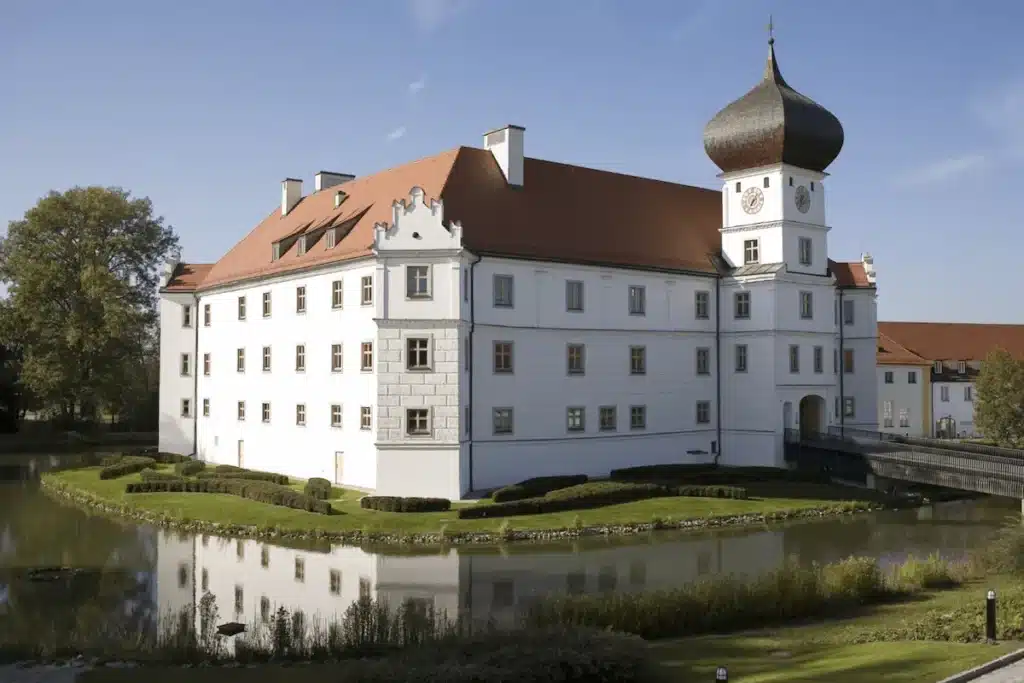
The pristine white facade of Schloss Hohenkammer in Bavaria, featuring a distinctive onion-domed clock tower and red-tiled roof, reflected in the calm waters of its surrounding moat.

Schloss Hohenkammer: Where Renaissance Command Meets Executive Sovereignty

The authority of Schloss Hohenkammer begins in 1560, when Duke Albrecht V of Bavaria commissioned this fortress as a territorial seat of regional dominance. For over four centuries, this Renaissance stronghold operated as a command center for Bavarian aristocracy—its fortified walls enforcing sovereign boundaries, its chambers hosting strategic councils that determined land rights and agricultural

Schloss Hohenkammer: Where Renaissance Command Meets Executive Sovereignty Read More »

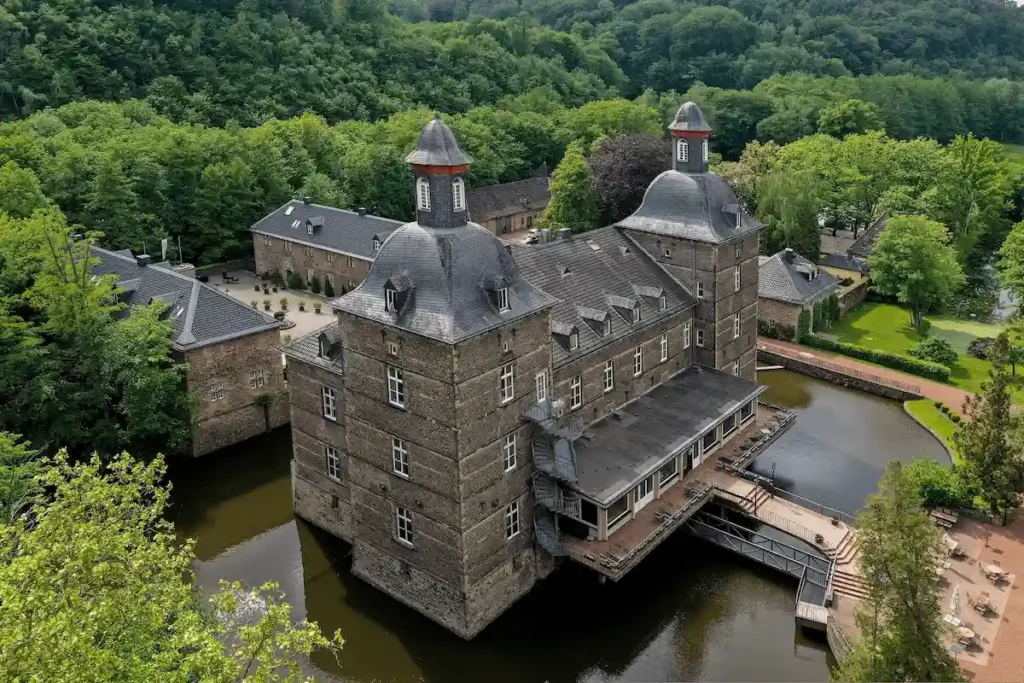
An aerial perspective of the dark stone Schlosshotel Hugenpoet in Essen, a 17th-century moated castle featuring prominent corner turrets with slate domes, set within a lush forest and reflected in its surrounding defensive waters.

Schlosshotel Hugenpoet: Where Eight Centuries of Territorial Command Became Germany’s Most Defensively Positioned Luxury Estate

Schlosshotel Hugenpoet occupies a moated island that has enforced territorial sovereignty since the 13th century. The water barriers that once protected feudal lords now create absolute privacy for guests inhabiting a fortress where Ruhr Valley industrialists consolidated dynastic power. This is not hospitality adapted to history—this is a defensive stronghold operating as a sovereign luxury

Schlosshotel Hugenpoet: Where Eight Centuries of Territorial Command Became Germany’s Most Defensively Positioned Luxury Estate Read More »

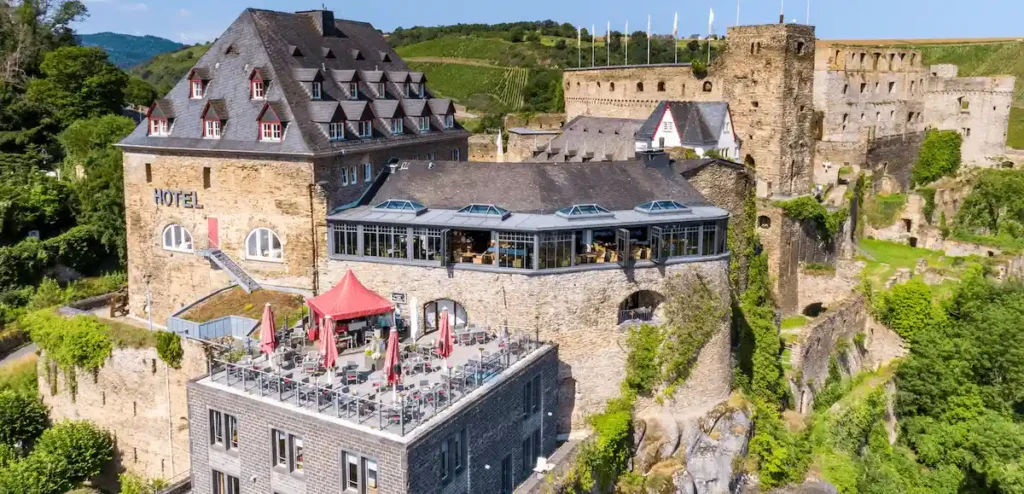
An aerial view of Hotel Schloss Rheinfels integrated into the historic stone ruins of Rheinfels Castle, featuring a large outdoor terrace and a modern glass-enclosed restaurant overlooking the Rhine Valley.

Hotel Schloss Rheinfels: Medieval Fortress Command Above the Rhine Gorge

Hotel Schloss Rheinfels stands on the site where Count Diether V of Katzenelnbogen constructed the largest fortress complex on the Rhine in 1245. The castle’s strategic position 120 meters above the river controlled the narrowest navigable passage of the Middle Rhine Valley—every merchant vessel, every military flotilla, every ecclesiastical delegation passed under the visual command

Hotel Schloss Rheinfels: Medieval Fortress Command Above the Rhine Gorge Read More »

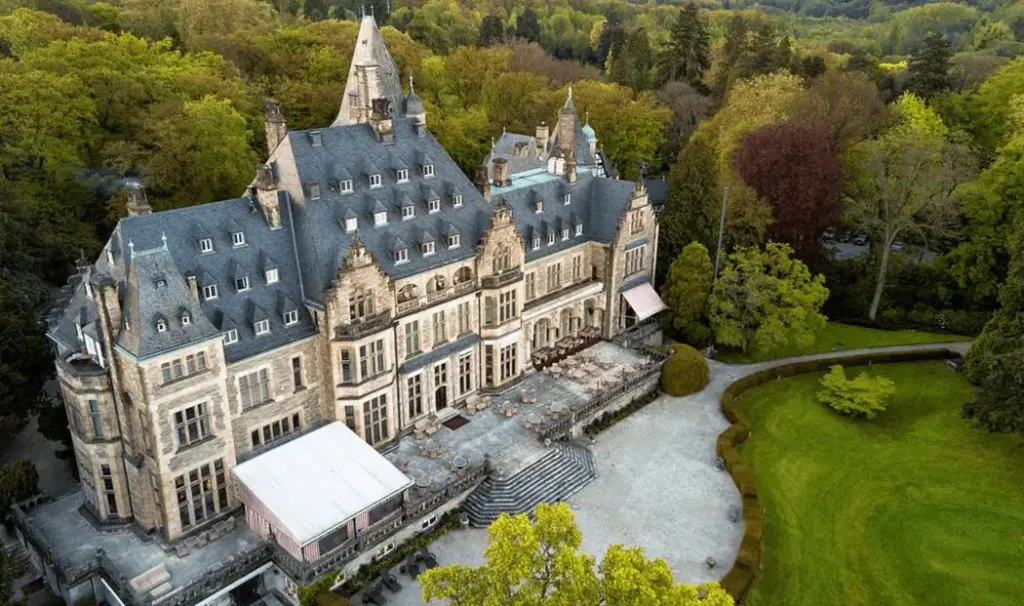
The grand Tudor-style facade of Schlosshotel Kronberg, showcasing intricate half-timbering, ornate gables, and red-tiled roofing, originally built as a royal residence for Empress Victoria.

Schlosshotel Kronberg: The Empress’s Command Post in the Taunus Hills

Schlosshotel Kronberg operates within the documented 1889 fortress commissioned by Empress Victoria of Germany. The property functions as a preserved seat of imperial authority where British-German dynastic power was administered for three generations. Original Gobelin tapestries, hand-carved mahogany stairwells, and the Empress’s private chapel remain operational. This is the actual residence where Europe’s ruling elite

Schlosshotel Kronberg: The Empress’s Command Post in the Taunus Hills Read More »

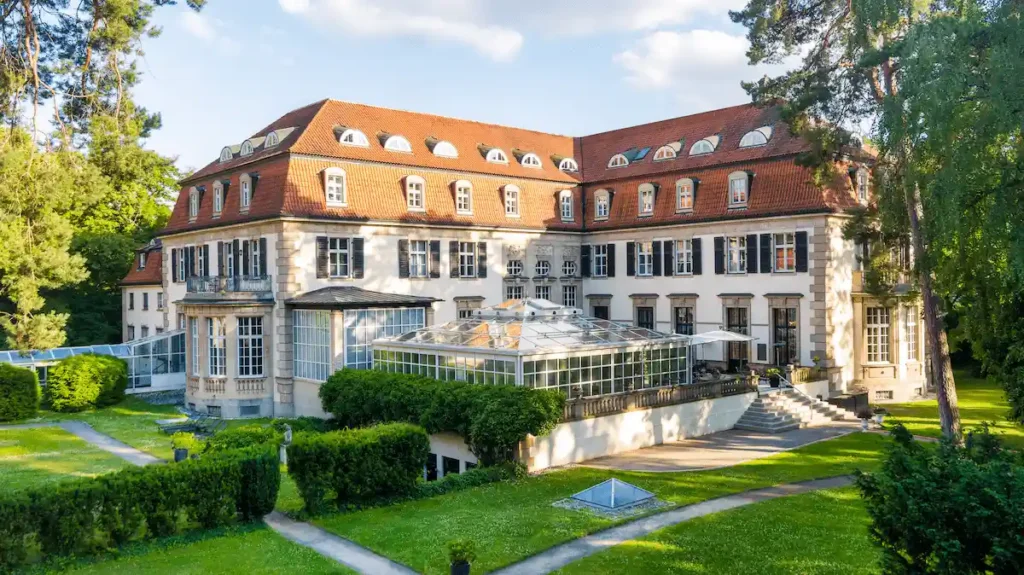
The garden-side view of Schlosshotel Berlin, showcasing the Neo-Renaissance architecture, a large glass-enclosed conservatory, and manicured lawns surrounded by the private greenery of the Grunewald forest.

Schlosshotel Berlin: The Kaiser’s Private Residence in Grunewald

Schlosshotel Berlin occupies the 1914 palace built for Kaiser Wilhelm II’s attorney general, preserving the imperial-era power architecture that defined Germany’s final monarchy. Beyond its limestone facade, the estate’s original Jugendstil interiors and private woodland park function as a high-density archive of Prussian social hierarchy. By integrating Michelin-starred gastronomy into these preserved state rooms, the

Schlosshotel Berlin: The Kaiser’s Private Residence in Grunewald Read More »

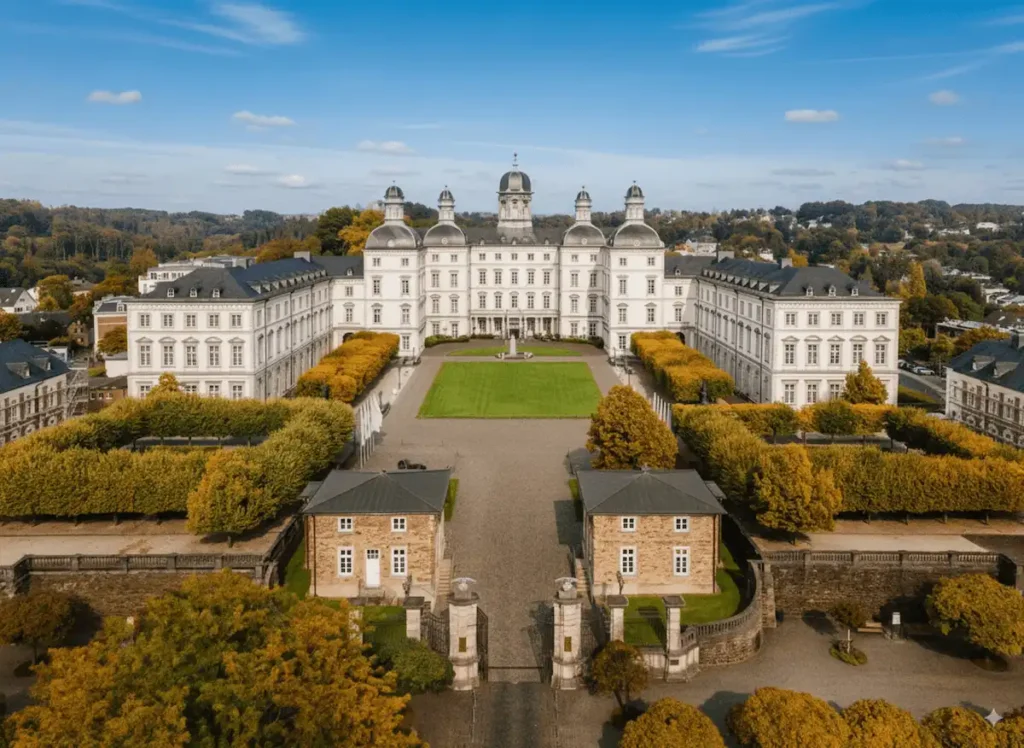
An expansive aerial view of the Baroque Althoff Grandhotel Schloss Bensberg, showcasing its symmetrical three-wing layout, grand courtyard, and formal landscaping overlooking the Bergisches Land.

Schloss Bensberg: The Elector’s Baroque Command Post Above the Rhineland

Grandhotel Schloss Bensberg rises from the Bergisch Gladbach highlands as the 1711 hunting command of Johann Wilhelm II, Elector Palatine—a territorial sovereign whose 120-room baroque fortress surveyed the Rhine’s commercial arteries from its hilltop throne. The palace’s symmetrical wings, hewn from regional sandstone, enforced architectural dominance across a landscape where competing powers monitored river trade

Schloss Bensberg: The Elector’s Baroque Command Post Above the Rhineland Read More »

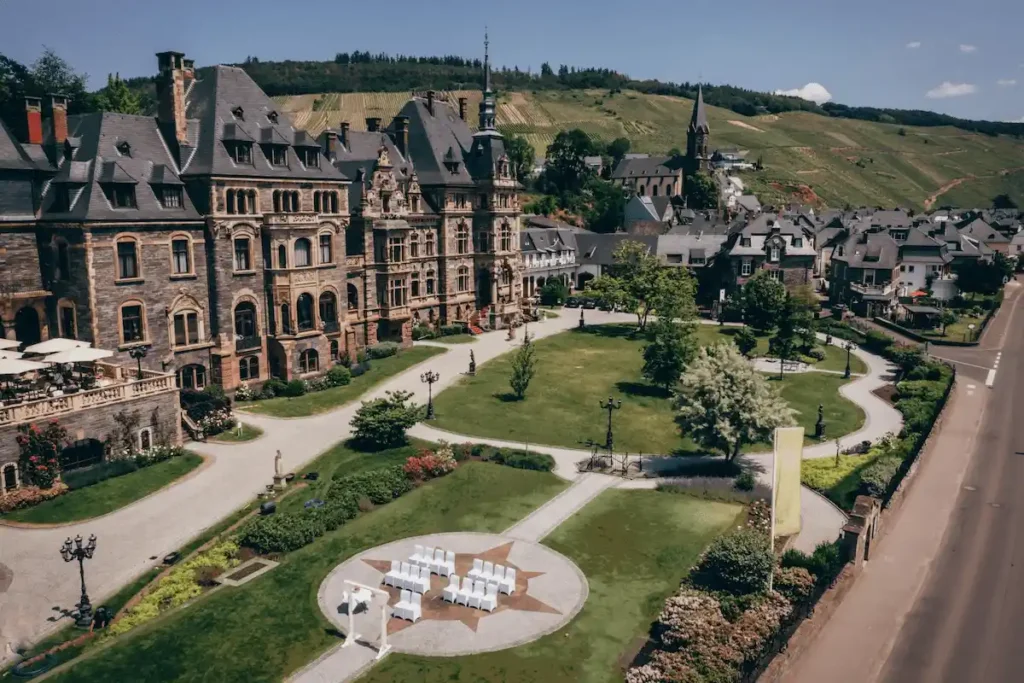
An elevated view of the grand Neo-Renaissance facade of Schloss Lieser along the Mosel River, featuring ornate stone carvings, slate-roofed spires, and a circular courtyard set against terraced vineyards.

Schloss Lieser: The Mosel Valley’s Fortified Renaissance Command Post

Schloss Lieser stands as a verified Renaissance fortress on the Mosel River, documented since 1560 as the territorial seat of the von Schorlemer family—a lineage that controlled regional viticulture and river commerce for four centuries. The castle’s strategic elevation commanded both trade routes and vineyard estates, enforcing territorial authority through physical dominance and economic control.

Schloss Lieser: The Mosel Valley’s Fortified Renaissance Command Post Read More »