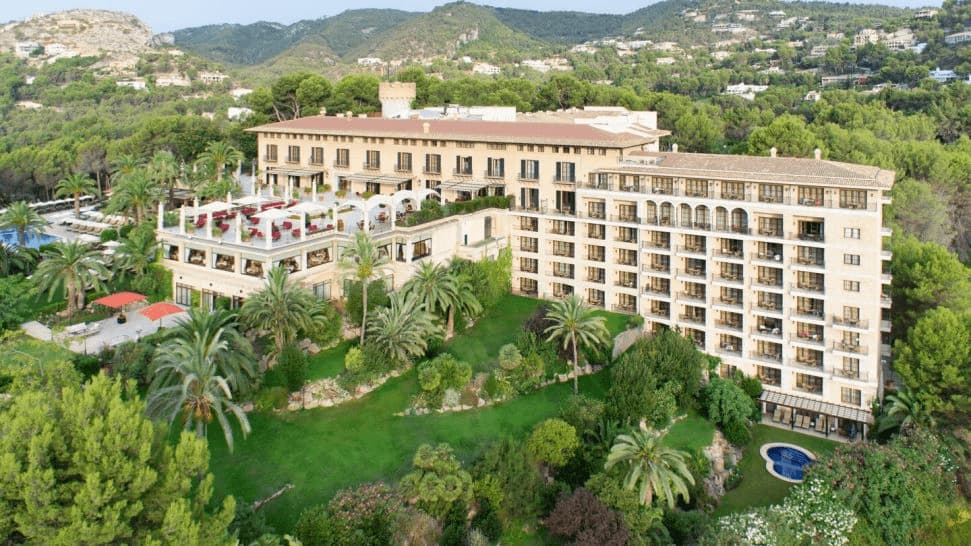
Best Luxury Castle Hotels in Spain occupy a distinct category — they’re not theme park replicas or converted ruins, but functioning estates where medieval architecture meets contemporary service standards. Spain’s castle hotels range from state-run Paradors in strategic fortresses to privately held palaces on Balearic hillsides, each offering a different calibration of authenticity and refinement.
After evaluating properties across Castilla-La Mancha, Andalusia, Galicia, and Mallorca, we’ve identified seven castle hotels that consistently deliver on location, preservation quality, and modern comfort — without sacrificing historical integrity for boutique trends.
Below are the stays that make sense if you value architectural authenticity, elevated service, and accommodations that feel curated rather than commercialized. These aren’t nostalgic experiments — they’re refined bases for exploring Spain’s royal history from the inside.
For context on how Spain’s castle hotels compare across the continent, explore our best Luxury Castle Hotels in Europe complete guide.
Imperial Foundations — Spain’s Premier Castle Estates
Spain’s top-tier castle hotels operate at the intersection of UNESCO-level preservation and five-star hospitality infrastructure. These properties weren’t adapted for tourism as an afterthought — they were purpose-renovated to function as luxury accommodations while maintaining structural and decorative authenticity.
Expect original stonework, period furnishings under glass, and service teams trained in both hospitality protocol and regional history. The difference between a premium castle hotel and a standard Parador isn’t just star rating — it’s whether the property feels like a museum you sleep in or a residence that happens to be centuries old.
🏰 Parador de Santiago – Hostal Reis Catolicos ★★★★★
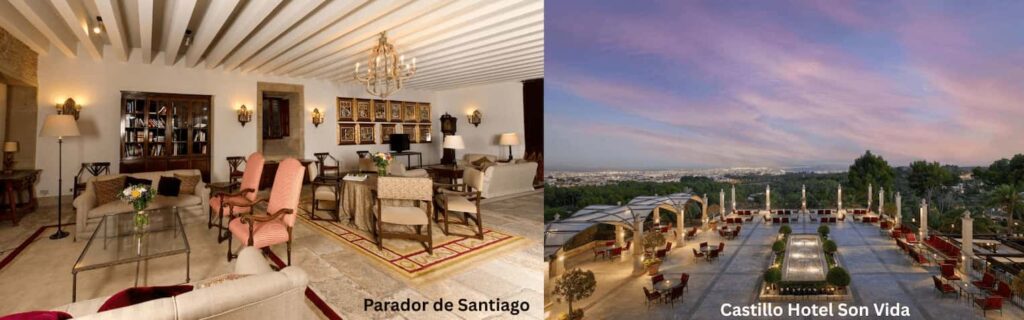
This property occupies Santiago de Compostela’s main plaza, directly adjacent to the cathedral that anchors the Camino pilgrimage route. Originally commissioned by Catholic Monarchs in 1499 as a pilgrim hospital, it now operates as Spain’s flagship Parador — a distinction reflected in reception protocols, room restoration quality, and preferential cathedral access for guests. The interior layout preserves four Renaissance courtyards, stone-vaulted corridors with original heraldic crests, and chapel spaces repurposed as event salons.
Rooms blend exposed stonework with climate-controlled comfort and blackout systems that acknowledge both architectural preservation and modern sleep standards.
Service leans formal without rigidity — staff manage high-volume pilgrimage season foot traffic while maintaining boutique-level attention for overnight guests. This isn’t a castle in defensive architecture terms, but it functions as Spain’s most historically significant luxury accommodation and delivers experiences unavailable at surrounding boutique properties.
Best for: Travelers prioritizing UNESCO World Heritage immersion, Camino route cultural access, and Spain’s most refined historic hospitality execution.
Signature Experience: Four internal Renaissance courtyards with original stonework, private cathedral view suites, Dos Reis restaurant serving Galician haute cuisine, 24-hour pilgrimage route concierge services.
“Waking to cathedral bells from a 15th-century window — no boutique hotel replicates that kind of authenticity.” — Marcus, LondonCheck Availability & Rates →
🏰 Castillo Hotel Son Vida, Mallorca ★★★★★
Son Vida sits above Palma on a 13th-century estate that functioned as defensive fortification before transitioning to aristocratic residence, then luxury hotel under Luxury Collection management.
The setting delivers what mainland castle hotels cannot — Mediterranean views from rampart terraces, direct access to Mallorca’s golf infrastructure, and island-specific service calibration that balances formality with resort ease. Interiors preserve castle architecture (stone archways, coffered ceilings, original fireplaces) while integrating spa-level wellness facilities and infinity pools that exploit elevation advantages.
This property suits travelers who want castle authenticity without sacrificing modern resort amenities or warm-weather outdoor programming. It’s less about medieval immersion, more about refined accommodation within legitimately historic architecture that happens to overlook yacht harbors instead of siege plains.
Best for: Affluent travelers seeking Mediterranean castle luxury with golf access, spa infrastructure, and island-specific service rather than mainland formality.
Signature Experience: Rampart infinity pool with Palma Bay panoramas, Arabella Golf Mallorca access, Es Castell restaurant in original fortress dining hall, Serenitas Spa with thermal circuit.
“The only castle hotel where you can tee off before breakfast and watch sunset from 13th-century battlements.” — Elena, MadridCheck Availability & Rates →
Fortress Conversions — Spain’s Strategic Parador Network
Spain’s four-star castle Paradors occupy defensive positions chosen for military advantage — clifftop fortresses, river gorge overlooks, mountain passes.
These properties prioritize location drama and architectural preservation over boutique-level service refinement.
Rooms tend toward compact historic layouts rather than modern suite proportions, but what you sacrifice in square footage you gain in rampart access, original stonework, and views that justified centuries of strategic importance.
These aren’t diluted castle experiences — they’re authentic fortifications adapted for overnight stays with full modern infrastructure.
🏰 Parador de Alarcón ★★★★
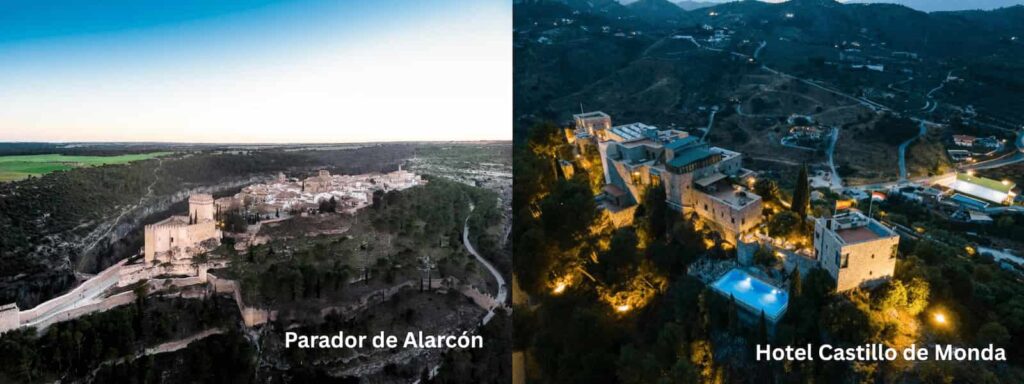
Alarcón’s fortress rises from a river peninsula bend that provided 360-degree defensive surveillance for Moorish and Christian armies before Parador conversion in 1966. The property maintains military architecture integrity — stone battlements you can walk, original tower staircases, arrow-slit windows that frame Júcar River gorge views.
Rooms occupy former garrison quarters and noble chambers, preserving vaulted ceilings and fortress-thick walls that double as natural soundproofing and climate control.
Service operates at regional Parador standard — professional, historically informed, less polished than five-star urban properties.
This castle suits travelers prioritizing authentic medieval architecture and dramatic natural settings over contemporary luxury amenities. The restaurant executes Castilian cuisine in what was once the castle’s great hall, and evening rampart walks deliver isolation rare in Spain’s hotel infrastructure.
Best for: History-focused travelers valuing architectural authenticity, dramatic natural fortification settings, and Castilian medieval atmosphere over modern resort comforts.
Signature Experience: 360-degree fortress rampart walks above Júcar River gorge, original Moorish and Christian defensive architecture, seasonal game-focused Castilian dining, complete medieval village access.
“Standing on those battlements at dawn — you understand why armies fought over this position for centuries.” — David, BarcelonaCheck Availability & Rates →
🏰 Hotel Castillo de Monda ★★★★
This Andalusian fortress occupies a hilltop above Marbella’s coastal sprawl, providing Costa del Sol access without beach resort proximity. Originally built as Moorish defensive structure, it transitioned through Christian reconquest and aristocratic ownership before boutique hotel conversion that preserved exterior fortress architecture while modernizing interiors with Andalusian design elements.
The property delivers castle authenticity — stone towers, rampart terraces, original foundation elements — combined with southern Spain’s climate advantages and Marbella’s upscale infrastructure access.
Rooms balance historic proportions with contemporary comfort standards, and the outdoor pool terrace exploits elevation for Mediterranean views without beach crowds.
Service calibrates between boutique intimacy and regional castle hotel standards, making this a refined base for exploring Andalusia’s white villages and coastal luxury without committing to full resort programming.
Best for: Travelers seeking Andalusian castle atmosphere with Costa del Sol proximity, village setting over beach resort density, and boutique-caliber service within fortress architecture.
Signature Experience: Rampart pool terrace with Mediterranean coast views, Moorish tower suite accommodations, Andalusian restaurant in original castle hall, white village walking access.
“The best of both — authentic castle walls, but pool weather from April through October.” — Sophie, GenevaCheck Availability & Rates →
🏰 Parador de Cuenca ★★★★
Cuenca’s Parador occupies a former convent carved into gorge cliffside opposite the city’s hanging houses — a UNESCO World Heritage site famous for medieval buildings suspended over Huécar River ravine. The property isn’t a traditional castle but functions as fortified religious architecture with defensive positioning and original stone construction intact.
Rooms feature gorge-facing windows that frame Cuenca’s most photographed views, and the interior preserves monastery corridors, vaulted refectory spaces, and cloisters now functioning as outdoor terraces.
Service maintains Parador consistency with added attention to UNESCO site access and regional cuisine specialization.
This property suits travelers prioritizing dramatic natural architecture integration and World Heritage immersion over traditional castle fortress layouts. The restaurant executes Castilian-Manchegan cuisine with gorge views that rival the food quality, and evening walks to hanging houses deliver medieval atmosphere without tour group density.
Best for: Unesco World Heritage focused travelers valuing cliffside drama, hanging house proximity, and monastery-fortress architecture over traditional castle layouts.
Signature Experience: Gorge-suspended positioning opposite hanging houses, original monastery cloisters and refectory dining, UNESCO Old Town pedestrian access, Castilian-Manchegan cuisine with ravine views.
“Waking to those hanging houses across the gorge — no photo captures what it’s like from inside the Parador.” — Thomas, AmsterdamCheck Availability & Rates →
🏰 Parador de Jaén ★★★★
Jaén’s Parador sits atop Santa Catalina hill in a 13th-century Moorish fortress that later served Christian defensive purposes before Parador conversion.
The location delivers what few Spanish castle hotels can — unobstructed Sierra Morena mountain range views, complete Renaissance city panoramas, and olive grove landscapes extending to Andalusia’s interior horizon. Interiors preserve fortress architecture (vaulted stone ceilings, Gothic arches, original tower chambers) while integrating modern comfort infrastructure.
Rooms vary from compact tower quarters to expanded suites with private terraces, all maintaining period proportions rather than contemporary spatial expectations.
Service operates at standard Parador professionalism with emphasis on regional olive oil culture and Renaissance Jaén historical context. This property suits travelers combining Andalusian cultural exploration with authentic fortress accommodation, prioritizing location drama and architectural preservation over luxury amenities.
Best for: Travelers seeking Andalusian interior exploration, fortress panoramas over urban landscapes, and olive oil cultural immersion within medieval military architecture.
Signature Experience: Santa Catalina hilltop positioning with 360-degree views, original Moorish and Christian fortress architecture, olive oil focused Andalusian dining, Renaissance city UNESCO access.
“That fortress breakfast terrace at sunrise — you’re looking at the same olive groves Moors defended 800 years ago.” — Javier, SevillaCheck Availability & Rates →
🏰 Hotel Castillo de Arteaga ★★★★
This Basque Country castle operates as privately managed boutique property rather than state-run Parador, occupying a 13th-century tower expanded into Gothic Revival architecture during 19th-century aristocratic ownership.
The property sits within forested estate grounds between Bilbao and San Sebastian, providing strategic Basque coast and Rioja wine region access. Interiors blend original medieval tower elements with Victorian-era additions — Gothic windows, baronial fireplaces, period furniture preserved under boutique hotel management that prioritizes intimate scale over large property infrastructure.
Rooms occupy tower chambers and estate wing quarters, maintaining historic proportions while integrating updated comfort systems. Service calibrates to boutique standards with family-run hospitality warmth rather than corporate hotel protocols.
This castle suits travelers seeking Basque Country cultural immersion, wine region proximity, and privately managed castle authenticity over standardized Parador experience.
Best for: Basque Country explorers valuing boutique-scale castle intimacy, wine region access, and privately managed authenticity over large Parador infrastructure.
Signature Experience: Gothic Revival architecture within medieval foundations, forested estate grounds with private walking trails, Basque-Rioja cuisine in baronial dining hall, family-managed boutique service.
“The most personal castle experience in Spain — feels like staying with aristocratic friends who happen to own a tower.” — Claire, ParisCheck Availability & Rates →
Documented Landmarks: 38 Audited Historic Hotels in Spain
📊 Comparison: Best Castle Hotels in Spain
| Hotel | Location | Architecture | Dining | Unique Perks | Best For |
|---|---|---|---|---|---|
|
🏰 Parador Santiago ★★★★★ |
Santiago de Compostela |
1499 pilgrim hospital, Renaissance |
Galician haute cuisine, Dos Reis |
Cathedral adjacency, UNESCO access |
Pilgrimage route cultural immersion |
|
🏰 Son Vida Mallorca ★★★★★ |
Palma, Mallorca |
13th-century fortress, resort |
Es Castell, Mediterranean |
Golf access, infinity pool, spa thermal |
Island castle resort luxury |
|
🏰 Parador Alarcón ★★★★ |
Alarcón, Castilla-La Mancha |
Moorish-Christian fortress, peninsula |
Castilian regional, game focused |
River gorge isolation, medieval village |
Architectural authenticity seekers |
|
🏰 Castillo de Monda ★★★★ |
Monda, Costa del Sol |
Moorish hilltop fortress, boutique |
Andalusian regional cuisine |
Mediterranean views, white village access |
Coastal castle proximity |
❓FAQ: Best Luxury Castle Hotels in Spain
What makes Spain’s castle hotels different from other European castle stays?
Spain’s castle hotels divide between state-operated Paradors occupying strategic fortifications and privately managed estates with aristocratic heritage. Paradors prioritize architectural preservation and regional cultural immersion over boutique luxury trends, while private properties like Son Vida integrate resort amenities within historic structures. The difference matters for travelers choosing between authentic fortress atmospheres and contemporary luxury service calibrated to castle settings.
Are Spain’s Parador castle hotels worth the premium over standard historic hotels?
Parador castle properties occupy fortifications and monasteries that functioned for centuries before hotel conversion — they’re not recreations or adapted manor houses. You’re paying for architectural authenticity, strategic locations chosen for defensive advantage, and preservation standards that maintain original stonework and spatial layouts. Standard historic hotels offer period atmosphere; Paradors deliver immersive residence within structures that shaped Spain’s medieval and Renaissance history.
Which Spanish castle hotel offers the most refined luxury experience?
Parador de Santiago – Hostal Reis Catolicos and Castillo Hotel Son Vida operate at five-star standards with full-service dining, spa infrastructure, and premium room configurations. Santiago excels in cultural immersion and UNESCO World Heritage access; Son Vida delivers Mediterranean resort luxury within fortress architecture. Four-star Paradors like Alarcón and Jaén prioritize location drama and architectural preservation over contemporary amenity breadth.
Can you access castle architecture features like ramparts and towers as a hotel guest?
Most Spanish castle hotels provide guest access to battlements, tower chambers, and defensive architecture during daylight hours, with some properties offering private rampart sections for premium suites. Parador de Alarcón and Parador de Jaén allow 360-degree fortress walks; Castillo de Monda’s tower suite includes exclusive rooftop access. Access varies by property — confirm specific architectural features during booking if rampart exploration matters to your stay.
What’s the best time to book luxury castle hotels in Spain for availability and rates?
Spring (April-May) and fall (September-October) deliver optimal weather with lower occupancy than summer peak season, particularly for Andalusian and Castilian properties. Son Vida in Mallorca follows island tourism patterns with highest demand June-August. Parador de Santiago sees year-round pilgrimage traffic but experiences shoulder season gaps in January-February. Book 90-120 days ahead for specific room categories; prime fortress suites and courtyard chambers fill earliest during preferred travel windows.
Andalusia’s Most Refined Castle Retreats
Which Spanish Castle Hotel Matches Your Travel Style?
Spain’s luxury castle hotels aren’t interchangeable — they divide between five-star properties integrating resort amenities within fortress architecture and four-star Paradors prioritizing authentic military fortification experiences over contemporary luxury calibration.
The seven properties above represent the country’s most consistently refined castle accommodations for travelers valuing architectural preservation, strategic positioning, and service that acknowledges both historical context and modern comfort expectations.
Availability at premier properties tightens significantly once shoulder seasons begin, particularly for courtyard-facing rooms and tower suites with private rampart access.
Discover more refined castle stays across the Iberian Peninsulaat at luxury castle hotels in Portugal. For travelers seeking French château heritage, access curated selections at icoinic castle hotels in France.
For more curated itineraries and luxury-focused travel insights, visit Your Luxury Guide. For official travel information and destination updates, visit Spain tourism-info.
Booking your luxury castle hotel in Spain positions you within centuries of architectural heritage where medieval fortifications, Renaissance palaces, and Moorish defensive structures function as refined accommodations — not museum reproductions, but authentic estates that balanced royal power with strategic necessity long before tourism existed.
Your Luxury Guide — Where Exceptional Travel Begins.