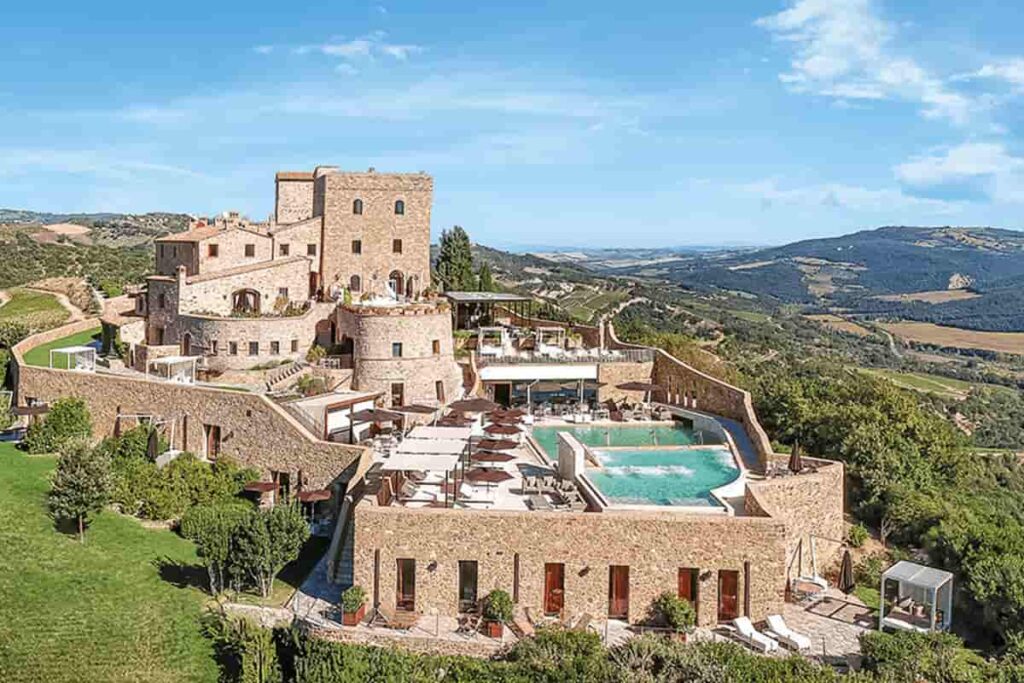
Best Luxury Castle Hotels in Italy aren’t about reconstructed fairy tales—they’re about medieval architecture adapted for travelers who value privacy, vineyard views, and service that feels personal rather than scripted. After reviewing Italy’s most refined castle conversions, we narrowed the selection to seven properties where history serves experience, not the other way around.
Below are the stays that deliver on location, spa quality, and atmosphere without relying on generic Tuscan tropes.
For a broader perspective on Europe’s most exceptional castle stays, explore our best Luxury Castle Hotels in Europe complete guide.
Tuscan Hilltop Estates
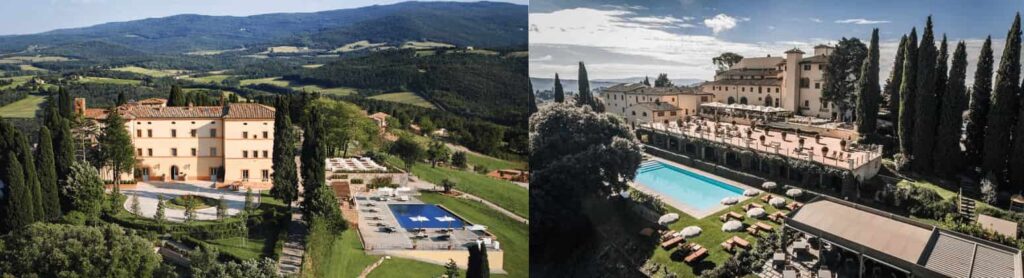
These five properties anchor themselves in Chianti and Val d’Orcia—locations where vineyard access and thermal spa facilities matter as much as stone towers and frescoed ceilings.
Expect working wineries, elevation-driven views, and accommodations designed around quiet rather than spectacle. This is Tuscany filtered for travelers who’ve already seen Florence and prefer countryside refinement over city landmarks.
Explore Italy beyond castles with our guide to the best Luxury Hotels in Italy, highlighting exceptional retreats where timeless style and refined comfort define every stay.
🏰 Castello di Casole, A Belmond Hotel, Tuscany ★★★★★
This 4,200-acre estate positions itself for travelers seeking vineyard immersion without sacrificing wellness infrastructure. The castello dates to the 10th century, but current renovations prioritize spa treatments and private villa access over historical tours.
Guests gain direct entry to estate-grown olive groves, a multi-level infinity pool, and Essere Spa—one of Tuscany’s most comprehensive thermal facilities.
What separates Casole from competitors is spatial scale: you’re not confined to a converted tower; you’re moving through working farmland with dedicated trails, dedicated vineyard tastings, and seasonal truffle hunts arranged on property rather than through external vendors. This makes sense if your Tuscan stay centers around decompression rather than sightseeing.
Best for: Extended stays prioritizing wellness, vineyard access, and self-contained estate activities over proximity to medieval towns.
Signature Experience: Essere Spa with thermal pools and bio-sauna, private villa accommodations with vineyard views, estate-grown olive oil tastings, falconry demonstrations on castello grounds.
“Three nights here and we never left the estate—didn’t need to.” — Marco, MilanCheck Availability & Rates →
🏰 Castello di Velona Resort, Thermal SPA & Winery ★★★★★
Val d’Orcia positioning gives Velona elevation advantage—rooms frame Montalcino, Monte Amiata, and uninterrupted vineyard rows without requiring balcony upgrades.
The thermal spa sources directly from on-site hot springs, a detail that distinguishes this property from competitors relying on external wellness partnerships. Castello di Velona operates its own winery, meaning tastings happen in cellars beneath guest suites rather than coordinated off-property excursions.
Service remains discreet; staff anticipates requests without hovering, and meal pacing at Oreade Restaurant reflects guest rhythm rather than kitchen schedules. This appeals to travelers who’ve grown tired of boutique hotels that perform intimacy rather than practice it.
Best for: Wine-focused travelers valuing thermal spa access, panoramic Val d’Orcia views, and integrated winery experiences within walking distance.
Signature Experience: Natural thermal pools with Monte Amiata views, private wine cellar tours beneath the castello, Oreade Restaurant with Michelin-caliber Tuscan cuisine, sunrise yoga sessions on medieval ramparts.
“That thermal pool at dawn—just us and the valley fog lifting below.” — Elena, FlorenceCheck Availability & Rates →
🏰 COMO Castello Del Nero ★★★★★
COMO’s Chianti Classico estate trades medieval drama for restoration discipline—12th-century foundations meet contemporary wellness without attempting rustic theater. The property anchors itself through COMO Shambhala Retreat, offering Asian-influenced treatments that feel intentional rather than trend-driven in a Tuscan context.
Suites balance original frescoes with underfloor heating and rain showers, acknowledging that historical charm loses appeal when plumbing disappoints. Dining at La Torre restaurant emphasizes Chianti ingredients without adopting farm-to-table rhetoric; menus shift based on estate harvest cycles rather than conceptual themes. This suits travelers who appreciate castello architecture but require hotel functionality—spa appointment flexibility, reliable WiFi, and service trained beyond regional hospitality norms.
Best for: Wellness-oriented stays combining Asian spa philosophies with Tuscan estate settings, appealing to COMO loyalists and first-time castle guests.
Signature Experience: COMO Shambhala Retreat with holistic treatments, heated outdoor infinity pool overlooking Chianti vineyards, wine tastings in 12th-century cellars, private cooking classes with estate-grown ingredients.
“The massage therapist knew exactly where I hold tension—didn’t need to ask.” — David, LondonCheck Availability & Rates →
🏰 Castello di Spaltenna Exclusive Resort & Spa ★★★★★
Spaltenna’s Gaiole-in-Chianti location favors travelers prioritizing village proximity over isolated estate life. The castello functions as a refined base for Chianti exploration rather than a destination requiring days on property.
Rooms occupy the medieval fortress and adjacent mill house—stone walls, beamed ceilings, and thermal spa facilities integrated into historical architecture without forced contrasts.
La Spa del Vino specializes in wine-therapy treatments, a detail that feels regionally appropriate rather than gimmicky given Chianti’s viticultural context. Dining at Il Pievano Restaurant delivers consistent quality without attempting innovation; expect traditional Tuscan preparations executed well rather than reinterpreted. This makes sense for guests wanting castello authenticity and village walkability without sacrificing modern spa infrastructure.
Best for: Active Chianti explorers seeking village access, wine-focused spa treatments, and castello accommodations within walking distance of Gaiole-in-Chianti.
Signature Experience: Wine-therapy spa treatments with Chianti grape extracts, medieval tower suites with valley views, Michelin-recognized Tuscan dining, complimentary mountain bikes for vineyard routes.
“We biked to three wineries before noon—never touched the car.” — Francesca, RomeCheck Availability & Rates →
🏰 Borgo Vescine ★★★★★
Borgo Vescine operates as a fortified hamlet rather than singular castello—13th-century stone buildings clustered around a central piazza, each housing suites with private terraces overlooking Chianti vineyards.
The property emphasizes spatial privacy; guests occupy individual residences rather than hotel corridors, creating an atmosphere closer to villa rental than traditional lodging. Dining happens at Contrada, where menus reflect estate production—olive oil, wine, vegetables—without marketing the farm-to-table narrative.
The spa remains modest compared to competitors, focusing on massage therapies rather than comprehensive wellness programs. This appeals to travelers wanting architectural authenticity and seclusion without requiring extensive on-site amenities, particularly those planning day trips to Siena and San Gimignano.
Best for: Privacy-focused travelers preferring independent suite accommodations in a fortified borgo setting, ideal for small groups or extended family stays.
Signature Experience: Private terrace suites in 13th-century stone residences, estate-produced olive oil and wine tastings, intimate spa with traditional Tuscan treatments, exclusive access to medieval piazza and chapel.
“Felt like we’d rented a village—just us and the cypress trees.” — Thomas, ZurichCheck Availability & Rates →
Beyond Tuscany—Alpine & Coastal Alternatives
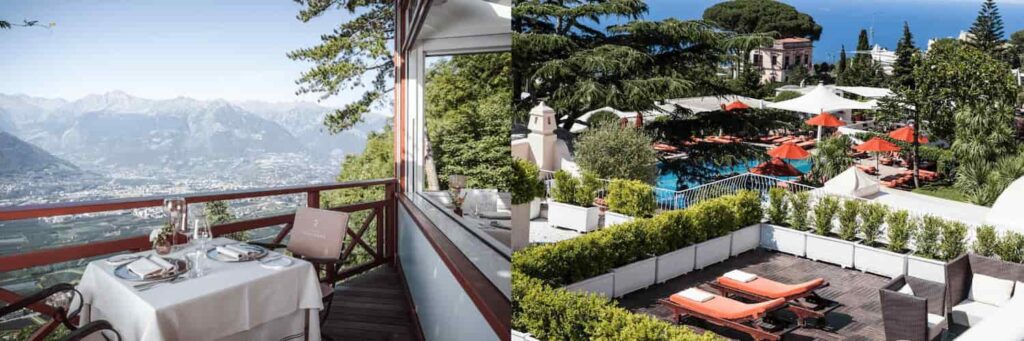
These two properties break from Tuscan castle conventions, offering South Tyrol mountain positioning and Capri coastal elevation.
Both deliver castle-level service and historical architecture while addressing travelers seeking altitude variations or Mediterranean access rather than vineyard immersion.
🏰 Relais & Châteaux Hotel Castel Fragsburg ★★★★★
Castel Fragsburg occupies a rare position: a South Tyrolean castello at 1,200 meters elevation, delivering Dolomite panoramas from a 17th-century structure designed for defense, now refined for travelers valuing alpine access over Tuscan predictability. The property functions best as a Merano base—thermal spa visits, hiking trails, and village exploration—rather than self-contained resort life.
Rooms balance Tyrolean woodwork with Italian design restraint, avoiding both rustic cliché and minimalist coldness. Dining emphasizes regional Alpine-Mediterranean fusion, reflecting South Tyrol’s cultural complexity without forcing conceptual narratives. Service remains family-operated, meaning staff consistency and personalized attention rather than corporate training protocols. This suits guests seeking castello atmosphere in mountain context, particularly those planning multi-region Italian itineraries beyond coastal and vineyard circuits.
Best for: Alpine-focused travelers seeking mountain castello positioning, Dolomite access, and South Tyrolean culture within a family-operated Relais & Châteaux property.
Signature Experience: Panoramic Dolomite views from 1,200-meter elevation, Alpine-Mediterranean cuisine with regional South Tyrolean influences, family-operated service with multi-generational castello knowledge, proximity to Merano thermal spas.
“Mountains at breakfast, vineyards by lunch—South Tyrol delivers both.” — Andreas, MunichCheck Availability & Rates →
🏰 Jumeirah Capri Palace ★★★★★
Capri Palace trades castle towers for Mediterranean villa architecture, but its inclusion reflects service caliber and cultural positioning rather than strict medieval credentials. The property sits in Anacapri—elevated above Capri town’s tourist density—offering coastal views without harbor crowds.
Two Michelin-starred L’Olivo restaurant and Capri Beauty Farm medical spa establish this as a wellness-focused coastal alternative to Tuscan estates. Suites emphasize space and terrace access; most exceed 50 square meters with private outdoor areas framing the Bay of Naples.
What distinguishes Jumeirah from Capri’s boutique hotels is operational scale: dedicated spa physicians, personalized fitness programs, and dining that competes with mainland Michelin establishments rather than relying on island reputation. This works for travelers wanting Italian coastal luxury with infrastructure typically found in larger resort contexts.
Best for: Mediterranean luxury seekers prioritizing coastal views, Michelin dining, and medical spa facilities over traditional castello architecture and vineyard settings.
Signature Experience: Two Michelin-starred L’Olivo restaurant, Capri Beauty Farm with medical spa treatments, infinity pools overlooking Bay of Naples, private beach club access via complimentary shuttle.
“That Michelin meal on the terrace—worth the Capri ferry alone.” — Isabella, NaplesCheck Availability & Rates →
Documented Landmarks: 49 Audited Historic Hotels in Italy
📊 Comparison: Best Castle Hotels in Italy
| Hotel | Location | Wellness & Spa | Dining | Unique Perks | Best For |
|---|---|---|---|---|---|
|
🏰 Castello di Casole ★★★★★ |
Tuscany, 4,200-acre estate |
Essere Spa, thermal pools |
Estate-grown olive oil cuisine |
Private villas, falconry displays |
Extended wellness estate stays |
|
🏰 Castello di Velona ★★★★★ |
Val d’Orcia, hilltop panoramas |
Natural thermal hot springs |
Oreade Restaurant, Michelin-level Tuscan |
On-site winery, cellar tastings |
Wine-focused thermal escapes |
|
🏰 COMO Castello Del Nero ★★★★★ |
Chianti Classico, vineyard estate |
COMO Shambhala holistic wellness |
La Torre, estate-harvest menus |
Asian spa fusion, 12th-century cellars |
Wellness-oriented castello stays |
|
🏰 Castello di Spaltenna ★★★★★ |
Gaiole-in-Chianti, village proximity |
Wine-therapy spa treatments |
Il Pievano, traditional Tuscan |
Tower suites, complimentary bikes |
Active Chianti exploration |
❓FAQ: Best Luxury Castle Hotels in Italy
Which Italian castello offers the best thermal spa facilities?
Castello di Velona and Castello di Casole lead in thermal wellness infrastructure. Velona sources directly from natural hot springs on property, while Casole’s Essere Spa provides more comprehensive treatment menus and multi-level thermal pools. Both deliver superior spa experiences compared to castello competitors relying on basic massage services.
Are Tuscan castle hotels suitable for families with children?
Borgo Vescine and Castello di Casole accommodate families best due to independent suite layouts and estate spatial scale. Most Italian castle hotels target couples and adult travelers; family suitability depends on property-specific villa configurations rather than standard suite availability. Verify children’s programs and connecting room options directly before booking.
How far in advance should I book Italy’s luxury castle hotels?
Reserve 4–6 months ahead for peak season (May–September) at properties like COMO Castello Del Nero and Castello di Casole. Smaller estates like Borgo Vescine and Spaltenna offer more last-minute flexibility during shoulder seasons (April, October). Michelin-starred dining reservations at castello restaurants require separate advance booking regardless of room confirmation.
Do Italian castle hotels include vineyard access and wine tastings?
Most Tuscan castle properties operate estate wineries—Castello di Velona, Casole, and Spaltenna all include complimentary tastings for overnight guests. COMO Castello Del Nero provides cellar access as part of the stay. Always confirm specific tasting inclusions at booking, as some estates charge separately for reserve wine collections or guided vineyard tours.
What’s the best time to visit Italian castle hotels for optimal weather?
Late April through early June and September through mid-October deliver ideal conditions—comfortable temperatures, fewer tourists, and active vineyard seasons. July–August brings heat and crowds to Tuscany; November–March sees limited daylight and cooler castello temperatures, though thermal spas and wine-focused stays remain appealing during winter months.
Tuscan Castle Living at Its Most Refined
Which Italian Castle Hotel Is Right for You?
Selecting the right luxury castle in Italy isn’t about chasing medieval aesthetics—it’s about matching estate scale, spa quality, and regional positioning to how you actually travel. The properties above represent the most consistently refined options for travelers who value vineyard integration, thermal wellness, and service that anticipates rather than reacts. Availability at castello properties shifts quickly once shoulder season begins, particularly for suites with private terraces and thermal spa access.
If French château elegance appeals, explore our curated Best Luxury Castle Hotels in France selection. For Iberian fortress conversions, our Best Luxury Castle Hotels in Spain guide highlights paradors and private estates across Andalusia and Catalonia.
For more curated itineraries and luxury-focused travel insights, visit Your Luxury Guide. For official travel information and destination updates, visit Italy tourism-info.
Book your Italian castello stay early to secure estate-level suites, lock in winery access during harvest season, and position yourself in Tuscany’s most refined properties before peak availability tightens.
Your Luxury Guide — Where Exceptional Travel Begins.