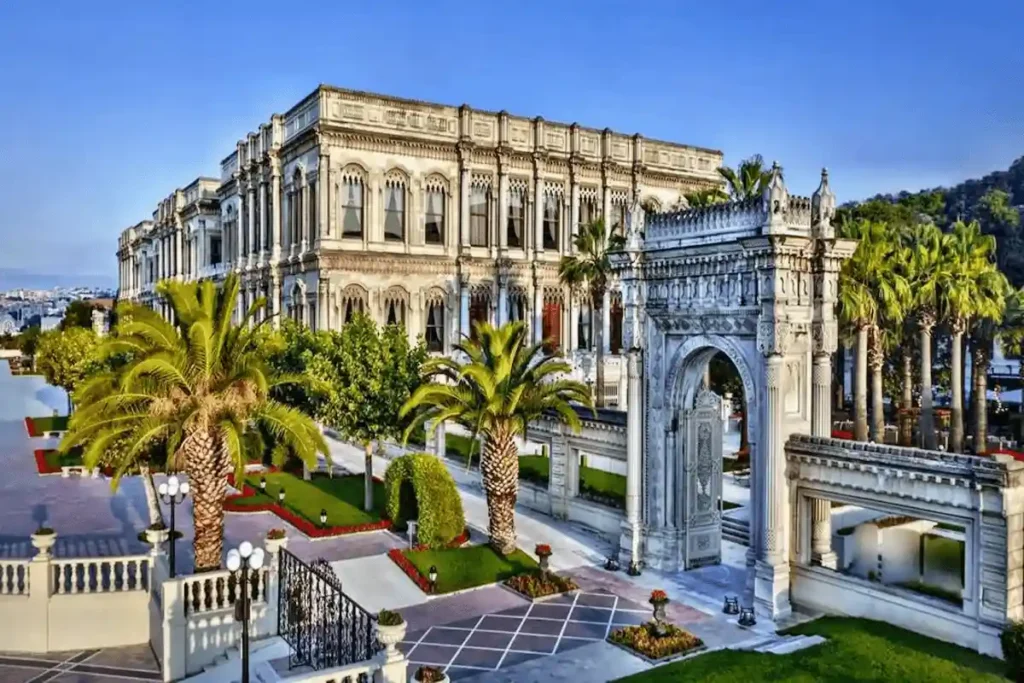
The best hotels on Bosphorus Istanbul aren’t generic waterfront properties—they’re the preserved palaces, yalıs, and imperial residences that once defined Ottoman power along Europe’s most strategic strait. The challenge: Istanbul’s hotel inventory is vast, and many “Bosphorus-view” properties are modern towers that dilute the architectural immersion with forgettable interiors and brand-saturated lobbies.
We’ve audited the strait’s entire inventory to isolate properties with verified “Past-Life Identities”—former imperial palaces, grand vizier mansions, and 19th-century yalıs where the original marble gates, gold-leaf ceilings, and neoclassical facades remain intact. This is not a list of five-star labels; it’s a curated selection of buildings that still carry the weight of their Ottoman lineage, ensuring your stay becomes a living document of the empire’s final golden age.
Imperial Palaces & Grand Vizier Residences
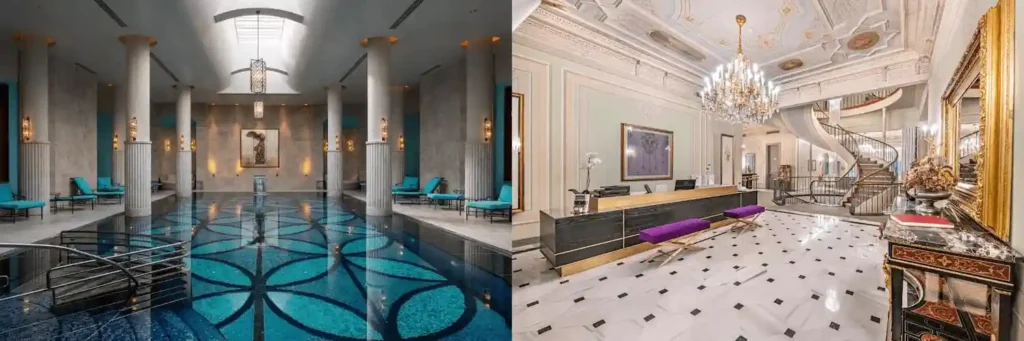
These aren’t replicas or “inspired-by” projects—they’re the original structures where sultans, viziers, and court architects once lived, now converted into luxury accommodations without erasing their monumental provenance. These properties dominate the strait’s most historically concentrated stretch, where every facade tells a story of imperial ambition.
⚜️ Çırağan Palace Kempinski Istanbul ★★★★★
The only hotel on the Bosphorus that was purpose-built as an imperial residence for a ruling sultan—Sultan Abdülaziz commissioned this palace in 1867 as the Ottoman Empire’s final grand architectural statement before its decline. The original “Palace Wing” preserves the monumental 19th-century masonry and the massive marble water-gate that once received royal barges directly from the strait.
The transition from the modern city into the palace courtyard is immediate: the scent of centuries-old cedar beams, the silence of thick stone walls, and the realization that you’re sleeping in rooms where imperial councils once convened. The property’s edge lies in its unmatched historical weight—no other Bosphorus hotel can claim direct lineage to a reigning sultan’s private residence. The palace’s original Turkish bath, Michelin-level dining in the Sultan’s Hall, and the 300-meter private waterfront remain untouched since restoration.
Best for: Collectors of imperial heritage seeking the most architecturally significant Ottoman palace conversion on the Bosphorus, with direct sultan-era provenance.
Signature Experience: Private palace wing with original 1867 masonry, waterfront marble gate where royal barges once docked, restored Turkish bath with 19th-century tilework, Michelin-level dining in the Sultan’s Hall, 300-meter private strait access.
“Standing at that marble water-gate at dawn—the exact spot where sultans once stepped from their barges—worth the entire trip.” — James, LondonCheck Availability & Rates →
🏰 Four Seasons Hotel Istanbul at the Bosphorus ★★★★★
A 19th-century imperial palace originally built as the Atik Pasha Palace, now operating under the Four Seasons banner without erasing its neoclassical provenance. The 190-meter waterfront facade is original 19th-century stonework, maintaining the grand proportions and columned entrance that once signaled Ottoman aristocracy.
Inside, the original marble lobby and courtyard garden preserve the spatial logic of a palace designed for ceremonial arrivals and private retreats from court life. The property’s edge: it’s the only Bosphorus palace conversion that balances original architecture with the operational precision of a global luxury brand, ensuring that historical immersion doesn’t come at the expense of service consistency. The restored Ottoman gardens, waterfront infinity pool, and spa carved into the palace’s original cellars complete the experience without compromising the building’s integrity.
Best for: Travelers who want verified imperial architecture combined with the operational reliability of a globally recognized luxury brand on the Bosphorus.
Signature Experience: 190-meter original neoclassical facade, restored Ottoman palace gardens, spa built into 19th-century cellars, waterfront infinity pool overlooking the strait, private boat dock for arrivals.
“That courtyard at sunset—marble columns, Ottoman roses, and zero modern intrusions. Exactly what I came for.” — Elena, MilanCheck Availability & Rates →
🌙 Bosphorus Palace Hotel
A 19th-century imperial yalı—originally the Debreli İsmail Paşa Mansion, completed in 1876 as a private residence for a high-ranking Ottoman official. The structure is a certified Neo-Ottoman monument with original gold-leaf ceiling details still intact in the main salon, and a waterfront garden that once served as the mansion’s private imperial boathouse. The transition from the bustling Bosphorus waterfront into this intimate mansion is dramatic: suddenly you’re in a space designed for a single family, not a hotel, where every room retains the narrow, high-ceilinged proportions of 19th-century Ottoman domestic architecture.
The property’s edge: it’s the most architecturally concentrated yalı conversion on the strait, where the scale remains domestic rather than institutional. The original marble fireplaces, hand-painted Ottoman motifs, and direct water access from the garden make this feel less like a hotel and more like inhabiting a preserved historical residence.
Best for: Architecture purists seeking the most intimate Ottoman yalı experience on the Bosphorus, with original 1876 gold-leaf interiors and private boathouse access.
Signature Experience: Original gold-leaf ceiling details from 1876, Neo-Ottoman monument status, waterfront garden with imperial boathouse access, hand-painted Ottoman motifs, marble fireplaces in every suite.
“Breakfast in that garden, steps from the water—felt like staying in someone’s private mansion, not a hotel.” — Ayşe, AnkaraCheck Availability & Rates →
🕌 Fuat Pasa Oteli – Special Category Bosphorus
An 18th-century imperial mansion originally built as the residence of Grand Vizier Keçecizade Fuat Paşa, now operating as a first-degree protected historic monument. The original 18th-century wooden exterior and the “Golden Horn” style ballroom remain untouched, preserving the architectural vocabulary of Ottoman court life before the 19th-century stone palace boom.
The property’s edge lies in its rarity—most Bosphorus hotels are 19th-century conversions, but this one predates them by a full century, offering a glimpse into the earlier, more intimate scale of Ottoman aristocratic residences. The transition from modern Istanbul into this mansion: original wooden lattice windows, hand-carved ceilings, and the realization that you’re staying in a building that was already 100 years old when Çırağan Palace was being constructed. The restored ballroom, intimate courtyard garden, and direct Bosphorus access make this feel like a hidden historical document.
Best for: History-focused travelers seeking the earliest surviving Ottoman mansion conversion on the Bosphorus, with 18th-century provenance and first-degree monument status.
Signature Experience: 18th-century wooden facade, original “Golden Horn” ballroom, first-degree historic monument protection, hand-carved ceilings, intimate courtyard garden with direct strait views.
“That ballroom felt like stepping into a museum no one else knows exists—absolutely singular.” — Thomas, BerlinCheck Availability & Rates →
Architect’s Residences & Maritime Landmarks
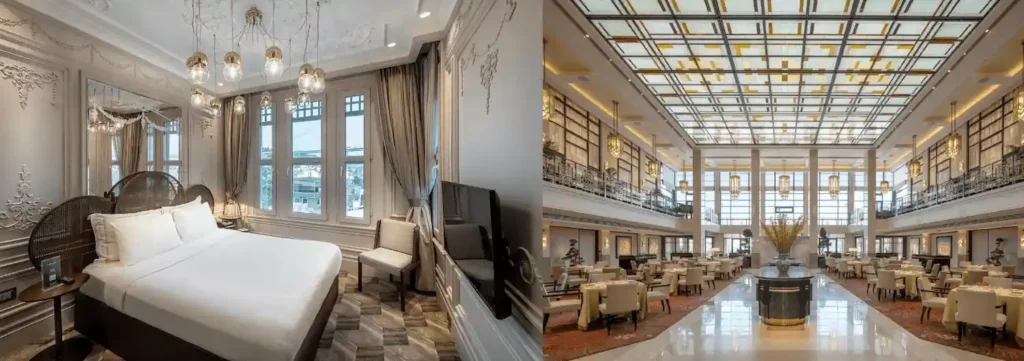
These properties represent a different category of Bosphorus conversion: not palaces or vizier mansions, but the residences of the empire’s master architects and the waterfront terminals that once defined Istanbul’s role as a global maritime hub. The preservation here focuses on spatial innovation—the narrow, vertical proportions of Balyan family yalıs, the Bauhaus geometry of 1940s passenger terminals—rather than imperial grandeur.
🏛️ The Stay Bosphorus
A 19th-century Bosphorus yalı originally owned by the Balyan family—the Armenian dynasty of imperial architects responsible for designing Dolmabahçe Palace and most of the Ottoman Empire’s final monumental buildings. The structure preserves the original 19th-century masonry and the narrow, high-vertical proportions that define Balyan’s domestic architecture, a deliberate contrast to the horizontal grandeur of the palaces they designed for sultans.
The property’s edge: it’s the only Bosphorus hotel where the building itself was designed by the empire’s most influential architectural family, making the stay an immersion into the professional class that shaped Istanbul’s skyline. The original stone facade, restored wooden balconies overlooking the strait, and the intimate scale of the interiors create a sense of inhabiting an architect’s private retreat rather than a public monument.
Best for: Design-focused travelers seeking a yalı conversion designed by the Balyan family, with original 19th-century masonry and the intimate spatial logic of imperial architects.
Signature Experience: Balyan family provenance, original 19th-century masonry, narrow vertical proportions unique to imperial architects’ residences, restored wooden balconies over the strait, intimate courtyard garden.
“Knowing the architects who built Dolmabahçe once lived here—added a layer of depth I wasn’t expecting.” — Michael, New YorkCheck Availability & Rates →
⚓ The Peninsula Istanbul ★★★★★
A multi-era maritime landmark combining the 1910 Neoclassical Çinili Han and the 1940s Bauhaus-style Karaköy Passenger Terminal into a single waterfront complex. The 1940s terminal facade and the 1910 Çinili Han entrance are fully preserved on the Bosphorus, making this the only hotel on the strait that documents Istanbul’s transition from Ottoman imperial architecture to mid-century modernist geometry.
The property’s edge: it’s the only Bosphorus conversion that preserves an active piece of maritime infrastructure, where the original passenger terminal’s soaring ceilings and geometric precision remain untouched. The restored Art Deco interiors, rooftop terrace overlooking the strait, and direct access to Karaköy’s historic ferry docks complete the experience without erasing the building’s original function as a gateway to Europe.
Best for: Modernist architecture enthusiasts seeking the only Bosphorus hotel that preserves 1940s Bauhaus maritime infrastructure alongside 1910 Neoclassical elements.
Signature Experience: 1940s Bauhaus passenger terminal, 1910 Çinili Han facade, preserved Art Deco interiors, rooftop terrace over the strait, direct access to historic Karaköy ferry docks.
“That terminal hall at night—pure 1940s geometry, zero compromise. Best architectural conversion in the city.” — Sophie, ParisCheck Availability & Rates →
📊 Comparison: Best Hotels on Bosphorus Istanbul
| Hotel | Location | Wellness & Spa | Dining | Unique Perks | Best For |
|---|---|---|---|---|---|
|
⚜️ Çırağan Palace Kempinski ★★★★★ |
Bosphorus, waterfront palace |
Restored Turkish bath, original 1867 tilework |
Michelin-level, Sultan’s Hall |
Sultan-era residence, marble water-gate |
Imperial provenance, unmatched heritage |
|
🏰 Four Seasons Bosphorus ★★★★★ |
Bosphorus, neoclassical palace |
Spa in 19th-century cellars, infinity pool |
Contemporary Ottoman, palace courtyard |
190m original facade, Four Seasons precision |
Heritage + operational luxury balance |
|
🌙 Bosphorus Palace Hotel |
Bosphorus, 1876 yalı |
Intimate wellness, original marble baths |
Ottoman garden dining, waterfront terrace |
Gold-leaf ceilings, imperial boathouse |
Intimate yalı scale, domestic architecture |
|
🕌 Fuat Pasa Oteli |
Bosphorus, 18th-century mansion |
Restored Ottoman baths, courtyard spa |
Traditional Turkish, Golden Horn ballroom |
First-degree monument, 18th-century wood |
Earliest Ottoman mansion conversion |
- Compare our audit of best hotels in Sultanahmet for Old City monument conversions.
❓ FAQ: Best Hotels on Bosphorus Istanbul
What makes a hotel on the Bosphorus “historic” versus just waterfront luxury?
A historic Bosphorus hotel preserves verified Ottoman-era architecture—original 19th-century palace facades, yalı structures, or vizier mansions with intact masonry, gold-leaf ceilings, and waterfront marble gates. Generic “luxury” properties may offer strait views but lack the physical provenance and architectural soul of buildings that once housed sultans, grand viziers, or imperial architects.
Which Bosphorus hotel has the strongest imperial provenance?
Çırağan Palace Kempinski Istanbul is the only property purpose-built as a ruling sultan’s residence (1867), with the original palace wing and marble water-gate still intact. It carries the most direct lineage to Ottoman imperial power, making it the most historically significant conversion on the strait.
Are there smaller, more intimate historic hotels on the Bosphorus?
Yes. Bosphorus Palace Hotel (1876 yalı) and Fuat Pasa Oteli (18th-century mansion) operate at a domestic scale rather than institutional grandeur, preserving the narrow proportions and intimate spatial logic of private Ottoman residences. They offer gold-leaf ceilings, hand-carved details, and direct waterfront access without the sprawling public spaces of palace conversions.
Which Bosphorus hotel is best for modernist architecture enthusiasts?
The Peninsula Istanbul preserves the 1940s Bauhaus-style Karaköy Passenger Terminal alongside the 1910 Neoclassical Çinili Han, making it the only property that documents Istanbul’s transition from Ottoman imperial architecture to mid-century geometric precision. It’s the strongest modernist conversion on the strait.
Do these historic Bosphorus hotels maintain original Ottoman interiors?
The most significant properties—Çırağan Palace, Bosphorus Palace Hotel, and Fuat Pasa Oteli—preserve original 19th-century masonry, gold-leaf ceilings, marble fireplaces, and hand-painted Ottoman motifs. Four Seasons at the Bosphorus maintains its neoclassical facade and lobby but integrates modern interiors within the original palace structure.
How does staying in a yalı differ from staying in a palace conversion?
Yalıs (Bosphorus Palace Hotel, The Stay Bosphorus) were designed as private residences for Ottoman officials or architects, resulting in narrower, more vertical proportions and intimate gardens. Palaces (Çırağan, Four Seasons) were built for sultans and feature monumental public spaces, ceremonial entrances, and larger-scale architectural gestures. The choice depends on whether you want domestic intimacy or imperial grandeur.
Which Bosphorus historic hotel offers the best private waterfront access?
Çırağan Palace Kempinski has 300 meters of private Bosphorus waterfront with the original marble gate where royal barges once docked. Bosphorus Palace Hotel offers a more intimate imperial boathouse garden. Both provide direct strait access without public intrusion, but Çırağan’s scale and historical weight are unmatched.
Booking the Right Bosphorus Hotel
The properties above represent the most arhitectually significant Ottoman conversions on the Bosphorus, filtered to exclude modern towers masquerading as “historic” through superficial decor. Each carries verified provenance—whether as a sultan’s palace, a grand vizier’s mansion, or an imperial architect’s residence—ensuring your stay becomes an immersion into the strait’s layered history rather than just a waterfront room. Availability at this caliber shifts quickly once high season begins, particularly for palace-wing suites with original 19th-century details.
Explore best hotels in Beyoğlu for modernist Art Deco landmarks across the Golden Horn.
For more curated itineraries and luxury-focused travel insights, visit Your Luxury Guide. For official travel information and destination updates, visit Turkey tourism-info.
Booking your hotel on the Bosphorus secures direct access to Istanbul’s most concentrated stretch of imperial architecture, where every waterfront facade documents the Ottoman Empire’s final architectural golden age before dissolution.
Your Luxury Guide — Where Exceptional Travel Begins.