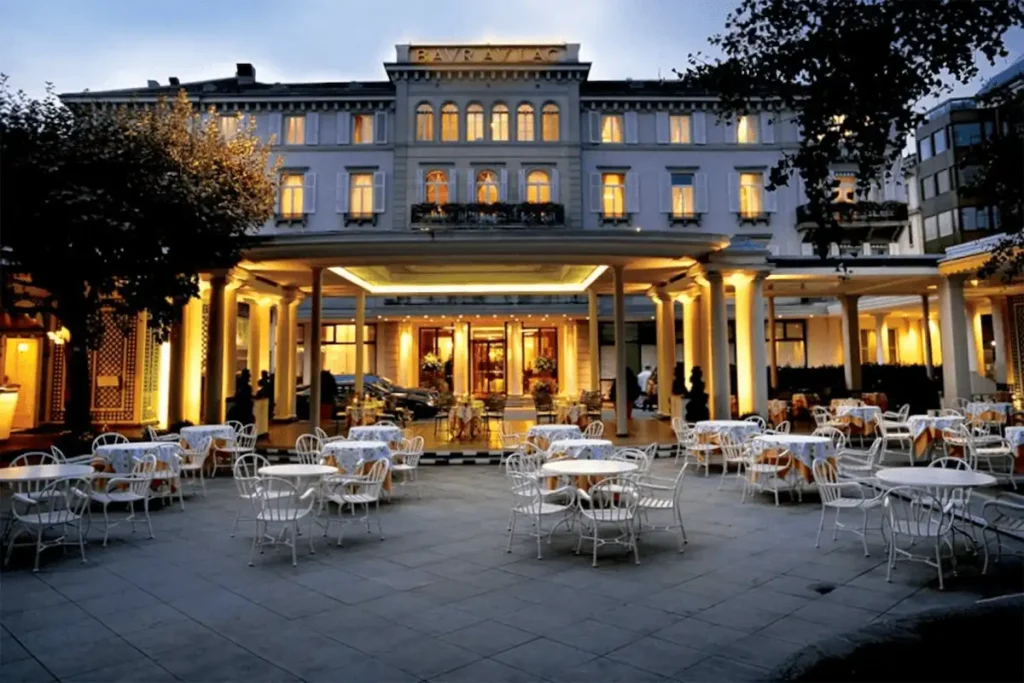
Choosing among the best hotels in Zurich isn’t about chasing Michelin stars or rooftop pools—it’s about securing a stay where the building itself carries as much weight as the service.
After filtering the city’s most refined properties, we’ve isolated six historic hotels that offer verified historical soul: medieval guild houses, patrician estates, and railway-era monuments that shaped Switzerland’s financial and diplomatic identity. These aren’t conversions dressed in heritage branding—they’re properties where the architecture, provenance, and continuous operation justify rates that standard luxury can’t touch.
Below are the stays that make sense if you value authenticity, cultural resonance, and accommodations that feel curated rather than replicated.
For a broader view of Switzerland’s most significant heritage conversions, explore our full guide to best historic stays in Switzerland.
Zurich’s Historical Icon
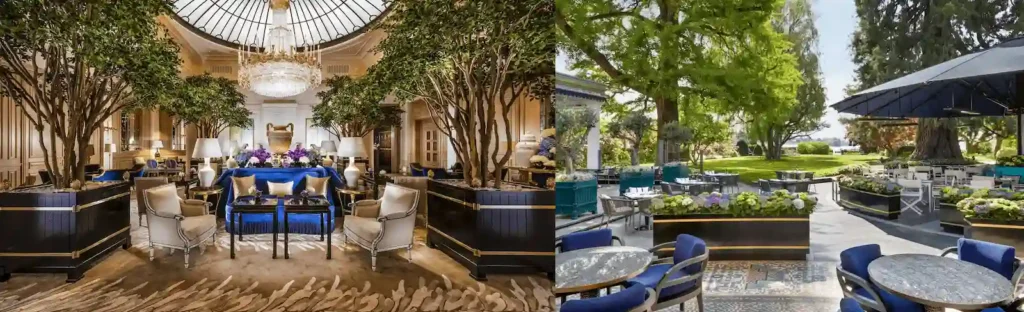
This is the property that defines elite accommodation in Zurich—the one global diplomats, Nobel laureates, and old-money European families have chosen for nearly two centuries. It’s not just luxury; it’s verified institutional prestige.
🏛️ Baur au Lac ★★★★★
This property sits on the old war harbor where Zurich’s medieval defenses once ended, transformed in 1844 into a patrician estate that has hosted everyone from Richard Wagner to modern heads of state. It remains the undisputed anchor of Zurich’s diplomatic and aristocratic legacy.
Service operates at the institutional level—staff anticipate needs without hovering, suites overlook private gardens that feel removed from the city despite sitting steps from Paradeplatz, and the guest list reads like a rotating summit of global influence.
The dining room, Le Pavillon, holds two Michelin stars, but regulars know the real power move is securing a lake-view table at Rive Gauche during autumn when the Alps frame the water in sharp relief.
Availability at this level is limited during diplomatic season and art week, and rooms are allocated based on legacy relationships as much as booking dates.
Best for: Global executives, diplomatic families, and travelers who value institutional prestige and uninterrupted patrician elegance over boutique novelty.
Signature Experience: Private garden terrace overlooking Schanzengraben canal, two-Michelin-star Le Pavillon, Wagner Suite with original 1844 architectural details, lakefront Rive Gauche dining, legacy concierge network across European capitals.
“The garden terrace in October—utterly untouchable for quiet power meetings.” — Laurent, GenevaCheck Availability & Rates →
Medieval Guild Houses & Continuous Heritage
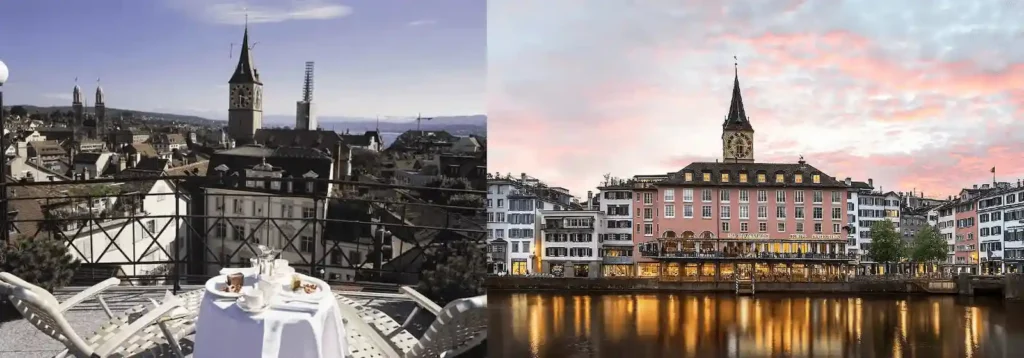
These properties don’t just reference Zurich’s medieval past—they occupy the actual structures where trade guilds, riverside merchants, and ecclesiastical power shaped the city’s economic and social fabric. Each building has operated continuously for centuries, offering a “Past Life” narrative that no new-build luxury can replicate.
🏛️ Widder Hotel – Zurichs Luxury Hideaway ★★★★★
Nine protected medieval townhouses, unified during a decade-long restoration that preserved 15th-century frescoes, guild emblems, and vaulted stonework from Zurich’s butchers’ quarter. This is the raw architectural DNA of the city’s trade power, converted into 49 suites where no two rooms share the same layout due to the original guild structures.
The Widder Bar is tucked into a former vault where meat traders once stored provisions, now serving rare Swiss spirits and hosting live jazz in surroundings that feel more clandestine than curated.
Service skews minimal and discreet—staff recognize regulars but don’t perform hospitality theater, and the atmosphere favors privacy over social spectacle. Location places you steps from Bahnhofstrasse shopping but within the Old Town’s pedestrian maze, where centuries of stonework buffer against tourist noise.
Availability tightens during Zurich Film Festival and Art Basel weeks when the creative elite claim this address exclusively.
Best for: Design-conscious travelers, art collectors, and those seeking medieval authenticity fused with contemporary minimalism rather than palace-scale grandeur.
Signature Experience: 15th-century frescoes in select suites, Widder Bar’s vaulted jazz sessions, nine interconnected guild houses with protected facades, modern art installations against medieval stonework, Augusto restaurant serving Mediterranean in former trade halls.
“The guild vault bar at midnight—medieval Zurich with zero tourism veneer.” — Clara, MilanCheck Availability & Rates →
🏛️ Storchen Zürich – Lifestyle Boutique Hotel ★★★★★
Operating continuously since 1357 on the Weinplatz, this riverside lodge predates Switzerland as a nation and remains the only Zurich hotel with its own boat pier on the Limmat. The building served as the city’s primary maritime social anchor for six centuries—first as a guild inn, later as a merchant lodge—and its position at the river’s narrowest crossing made it the de facto meeting point for trade, diplomacy, and power negotiations throughout medieval and Renaissance Zurich.
Today’s iteration balances 660 years of provenance with contemporary luxury: rooms overlook Grossmünster cathedral and the river flow that once powered the city’s early economy, service operates with quiet efficiency rather than performative hospitality, and the Rôtisserie occupies the original ground-floor hall where guild members gathered.
This is a living node of Zurich’s urban fabric that never stopped operating. Availability peaks during Sechseläuten spring festival when local elites book balconies overlooking the parade route.
Best for: History-conscious travelers, couples seeking romantic riverside continuity, and those who value operational legacy over restored grandeur.
Signature Experience: Private boat pier on the Limmat, 660+ years continuous operation, riverside Rôtisserie with cathedral views, evening water taxi arrivals, suites overlooking medieval Weinplatz crossing.
“Arriving by boat at sunset—felt like bypassing five centuries of modernity entirely.” — Thomas, LausanneCheck Availability & Rates →
🏛️ Hotel Schweizerhof Zürich ★★★★
Built in 1877 directly opposite Zurich’s Hauptbahnhof during the industrial boom that transformed the city into a global financial hub, this railway-era grand hotel symbolizes the moment Switzerland became synonymous with banking precision and capital flow. Originally christened “Hotel National,” it served as the official residence for international financiers, industrialists, and diplomatic delegations arriving by the new rail lines that connected Zurich to Vienna, Paris, and Milan.
The Belle Époque architecture remains intact—vaulted ceilings, original chandeliers, and marble staircases that telegraph 19th-century ambition without nostalgia.
Location is pure efficiency: step outside and you’re at the nexus of tram, train, and lake transit, with Bahnhofstrasse luxury retail a two-minute walk. Service skews professional rather than intimate—this property understands business travelers who value proximity and historical gravitas over boutique experimentation.
The Schweizerhof Bar preserves the original salon where rail barons negotiated deals, now serving rare Swiss whiskies in surroundings that feel more boardroom than lounge.
Best for: Business travelers, financial executives, and those prioritizing railway-era provenance, central efficiency, and institutional legacy over intimate boutique scale.
Signature Experience: 1877 Belle Époque architecture opposite Hauptbahnhof, original rail-baron salon bar, direct tram/train/lake access, marble grand staircases, WEF-era diplomatic overflow continuity.
“That original salon bar—still feels like closing 19th-century industrial deals.” — Henrik, StockholmCheck Availability & Rates →
🏛️ Hotel Glockenhof Zürich ★★★★
Constructed in stages between 1867 and 1911 on the site of Zurich’s former bell foundry and connected to the St. Anna Chapel foundation, this property occupies a unique intersection of the city’s Protestant ecclesiastical welfare history and urban industrial fabric.
The building served as both a social welfare lodge and a merchant inn during Zurich’s transformation from guild city to financial center, and the architectural layers reflect that dual identity: neo-Gothic chapel elements blend with industrial-era facades.
Service operates quietly and without pretense—staff focus on functional excellence rather than luxury theater, and the atmosphere skews understated compared to showier Old Town properties.
Location places you steps from Bahnhofstrasse shopping and Paradeplatz banking district, but within a quieter ecclesiastical quarter that buffers against tourist density. The on-site restaurant, Brasserie Glockenhof, occupies the original welfare hall and serves Swiss-French cuisine.
Availability remains accessible even during peak cultural weeks.
Best for: Travelers seeking genuine Old Town ecclesiastical heritage without patrician-level rates, and those who value Protestant social welfare history over guild or palace narratives.
Signature Experience: Former bell foundry and St. Anna Chapel foundation site, layered neo-Gothic and industrial-era architecture, Brasserie Glockenhof in original welfare hall, Paradeplatz proximity with ecclesiastical quarter quiet.
“The chapel woodwork in the corridors—unexpected Protestant soul at reasonable rates.” — Emma, BernCheck Availability & Rates →
Authentic Historical Old Town
This final property occupies a smaller scale but delivers genuine medieval urban fabric for travelers who prioritize architectural authenticity and pedestrian Old Town immersion over historical institutional prestige.
🏛️ Marktgasse Hotel ★★★★
First recorded in 1291, making it one of the oldest continuously operating guesthouses in Zurich’s Old Town, this property sits within the pedestrian maze where medieval trade routes converged at Marktgasse. The building’s 15th-century stonework, exposed beams, and narrow staircases remain intact, offering the raw texture of Zurich’s pre-guild urban fabric without grand-scale restoration or modern luxury overlays.
Rooms are compact by contemporary standards—this is medieval hospitality, where space was allocated for function rather than spectacle—but the trade-off is complete Old Town immersion: windows overlook cobblestone alleys, church bells mark the hour from Grossmünster, and the pedestrian-only setting eliminates vehicle noise entirely.
Service is minimal and direct—this property doesn’t perform hospitality theater, and the atmosphere favors independent travelers who value authenticity over amenities. The on-site restaurant, Bistrot Marktgasse, occupies the original ground-floor inn and serves Swiss-French bistro fare in surroundings that have hosted merchants, traders, and travelers for seven centuries.
Best for: Solo travelers, independent explorers, and those prioritizing authentic medieval urban fabric and pedestrian Old Town immersion over institutional prestige or modern luxury scale.
Signature Experience: 1291 founding date (oldest recorded guesthouse), 15th-century stonework and exposed beams, pedestrian-only Old Town setting, Bistrot Marktgasse in original merchant inn, cobblestone alley views.
“The alley window at dawn—medieval Zurich before the crowds arrive.” — Luca, FlorenceCheck Availability & Rates →
📊 Comparison: Best Hotels in Zurich
| Hotel | Location | Wellness & Spa | Dining | Unique Perks | Best For |
|---|---|---|---|---|---|
|
🏛️ Baur au Lac ★★★★★ |
1844 patrician estate, former war harbor |
Private garden terrace, lakefront wellness |
Le Pavillon (2 Michelin), Rive Gauche lakeside |
Nobel Prize conceived here, Wagner premiere venue |
Diplomatic elite, institutional prestige |
|
🏛️ Widder Hotel ★★★★★ |
9 medieval guild houses, Old Town core |
Minimalist spa, restored guild vaults |
Augusto Mediterranean, Widder Bar jazz vault |
15th-century frescoes, butchers’ guild origin |
Art collectors, medieval minimalism |
|
🏛️ Storchen Zürich ★★★★★ |
1357 riverside lodge, Weinplatz crossing |
Riverside wellness, Limmat views |
Rôtisserie in original guild hall |
Private boat pier, 660+ years operation |
Romantic continuity, riverside heritage |
|
🏛️ Hotel Schweizerhof ★★★★ |
1877 grand hotel, opposite Hauptbahnhof |
Traditional spa, Belle Époque setting |
Schweizerhof Bar, Swiss-French cuisine |
Railway-era finance hub, original rail-baron salon |
Business efficiency, institutional legacy |
- For a deeper exploration of Switzerland’s most significant historical conversions beyond Zurich, continue with our curated guide to the best hotels in Basel.
❓ FAQ: Best Hotels in Zurich
What makes Zurich’s historic hotels different from standard luxury properties?
Zurich’s historic hotels occupy verified historical structures—medieval guild houses, patrician estates, and railway-era monuments—where the building’s provenance is as significant as the service. These aren’t new-builds with period décor; they’re properties like Baur au Lac (1844 patrician estate where the Nobel Peace Prize was conceived) and Widder Hotel (nine protected medieval guild houses with 15th-century frescoes) that offer architectural soul and institutional continuity standard luxury cannot replicate. The premium reflects access to Zurich’s cultural and diplomatic legacy, not just thread count and amenities.
Which Zurich hotel offers the most authentic medieval experience?
Widder Hotel delivers the most concentrated medieval authenticity, occupying nine interconnected guild houses from the 12th century with preserved 15th-century frescoes, vaulted stonework, and the original butchers’ quarter layout. Storchen Zürich offers the longest continuous operation (since 1357), maintaining its role as the city’s primary riverside social anchor for 660+ years. Both provide genuine “Past Life” narratives rather than restoration theater, but Widder skews toward art-conscious minimalism while Storchen emphasizes romantic riverside continuity.
Are Zurich’s best hotels within walking distance of major attractions?
All six curated properties sit within Zurich’s compact Old Town or immediate lakefront, placing Bahnhofstrasse luxury shopping, Grossmünster cathedral, and the Limmat riverfront within 5–10 minutes on foot. Baur au Lac anchors the lake and park district; Widder, Storchen, and Marktgasse occupy the medieval pedestrian core; Schweizerhof sits opposite the main train station for maximum transit efficiency; and Glockenhof straddles the ecclesiastical quarter near Paradeplatz banking district. Zurich’s walkability eliminates the need for vehicles between heritage stays and cultural sites.
Which historic hotel in Zurich is best for business travelers?
Hotel Schweizerhof Zürich was purpose-built in 1877 to serve international financiers arriving via the new rail lines, and it remains the most efficient choice for corporate stays—positioned directly opposite Hauptbahnhof with immediate tram/train/lake access, original rail-baron salon bar for discreet meetings, and Belle Époque architecture that telegraphs institutional credibility. Baur au Lac attracts diplomatic and executive elites seeking patrician prestige, but Schweizerhof offers railway-era provenance optimized for modern business logistics at a lower rate tier.
Do Zurich’s historic hotels require advance booking?
Zurich’s historical properties—particularly Baur au Lac, Widder Hotel, and Storchen Zürich—experience tight availability during Art Basel week (June), Zurich Film Festival (late September), and Sechseläuten spring parade (April). Baur au Lac allocates rooms based on legacy relationships and diplomatic priority during World Economic Forum overflow periods. Booking 8–12 weeks ahead secures preferred room categories and ensures access to properties where institutional guests and returning families claim suites annually. Secondary heritage options like Glockenhof and Marktgasse maintain stronger year-round availability.
What is the best time of year to experience Zurich’s historic hotels?
Late September through October delivers optimal conditions: autumn light frames the Alps and lake in sharp relief, cultural programming peaks with Zurich Film Festival and opera season openings, and summer tourist density recedes while temperatures remain mild for terrace dining and riverside walks. Spring (April–May) offers Sechseläuten parade access and blooming gardens at Baur au Lac, but weather variability and higher shoulder-season rates apply. Winter provides the most accessible availability and rates, though shorter daylight limits lakefront experiences.
Can you stay in the actual medieval structures at Zurich’s historic hotels?
Yes—Widder Hotel’s 49 suites occupy the original nine guild houses with 15th-century frescoes, exposed beams, and vaulted stonework preserved in situ (no two rooms share identical layouts due to the medieval floor plans). Storchen Zürich maintains its 1357 riverside lodge foundation with rooms overlooking the original Weinplatz crossing. Marktgasse Hotel operates within its 1291 structure with intact medieval staircases and stonework. These aren’t replicas or annexes—guests sleep, dine, and move through the verified architectural fabric where Zurich’s guild power, trade routes, and ecclesiastical authority once functioned daily.
Securing Historical Zurich: Why These Six Define the City
Booking the right hotel in Zurich isn’t about accumulating amenities—it’s about choosing a property where the building commands as much authority as the service. The six estates above represent the city’s most architecturally significant and institutionally credible options for travelers who understand that medieval guild houses, patrician estates, and railway-era monuments justify premium rates through provenance, not polish. Availability at the historical tier shifts rapidly once autumn cultural programming begins and diplomatic calendars fill.
Explore Switzerland’s broader historical landscape through our complete guide to the best hotels in Bern, where federal institutional prestige meets Belle Époque architectural continuity.
For more curated itineraries and luxury-focused travel insights, visit Your Luxury Guide. For official travel information and destination updates, visit Switzerland tourism-info.
Booking your historic hotel in Zurich secures access to properties where Wagner premieres, Nobel Peace Prize conceptions, and 660 years of continuous riverside operation aren’t marketing narratives—they’re the verified institutional fabric that separates landmark stays from standard luxury accommodations.
Your Luxury Guide — Where Exceptional Travel Begins.