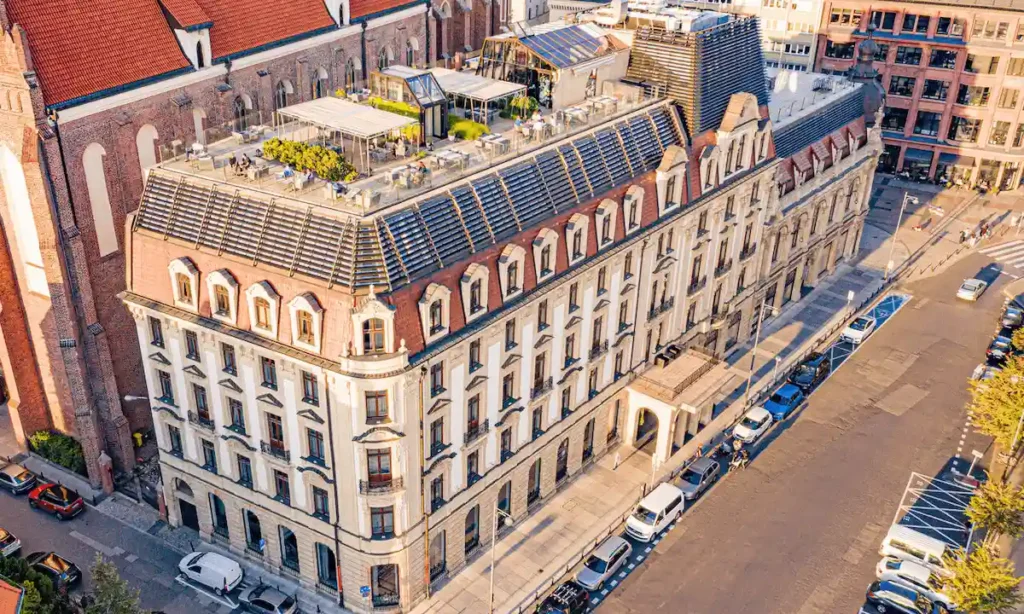
The best hotels in Wroclaw are architectural conversions of the city’s most significant 19th and early 20th-century landmarks. Wroclaw’s position as a commercial and cultural crossroads between Vienna, Prague, and Berlin created a building legacy of Art Nouveau banking palaces, Renaissance grain warehouses, and Neo-Baroque civic monuments.
The luxury accommodation problem here mirrors every European city: generic five-star chains occupy modern glass blocks while the city’s most extraordinary structures—1892 sandstone palaces, 16th-century granaries with exposed brick vaults, 1906 aristocratic villas—sit quietly converted into boutique properties that few travelers know to filter for.
We rejected corporate renovations and brand-saturated lobbies to audit exclusively for “Past-Life Identity”: properties where the original use—banker’s palace, city storehouse, private villa—remains the defining architectural experience. This selection guarantees you stay inside Wroclaw’s historical fabric, not adjacent to it, and saves you from scrolling through inventory that prioritizes marketing budgets over verified provenance and physical soul.
Continue your journey through best historic hotels in Poland for a complete national audit.
Art Nouveau & Neo-Baroque Banking Palaces
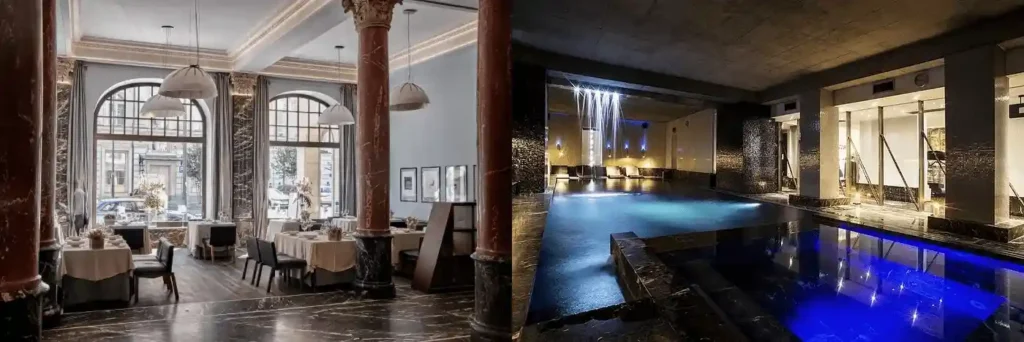
Wroclaw’s banking district produced some of Lower Silesia’s most opulent architectural statements during the late 19th-century economic boom. The city’s financiers commissioned master builders to create marble-clad monuments to commerce—structures designed to project permanence, power, and aesthetic superiority. These conversions preserve the original sandstone facades, sweeping staircases, and hand-carved ceilings that once intimidated depositors and impressed investors. Staying here places you inside the architectural language of empire-era wealth.
🏛️ Hotel Monopol ★★★★★
This is Karl Grosser’s 1892 masterpiece, commissioned by banker Wallenberg Pachaly and celebrated upon opening as the “Pearl of Lower Silesia.” The Monopol remains Wroclaw’s most architecturally complete Art Nouveau landmark, preserving the original sandstone facade, curved ceilings with period stucco work, and expanses of black marble that line the grand entrance hall.
The 1937 balcony above the main entrance—a structural addition that became as famous as the building itself—anchors the historic streetscape of Świdnicka Street. Inside, modern suites integrate seamlessly with Belle Époque proportions: high ceilings, oversized windows, and original oak detailing create a spatial experience no contemporary hotel can replicate.
The transition from the pedestrian chaos of the Old Town into the marble-floored silence of the lobby is immediate and absolute. The Monopol is the only property in the city that preserves both external grandeur and internal palatial scale at this level of authenticity.
Best for: Travelers seeking the most architecturally intact Art Nouveau experience in Wroclaw with full-service luxury and central Old Town access.
Signature Experience: Original 1892 marble entrance hall, Belle Époque suites with period ceilings, wellness center in historic vaults, rooftop terrace overlooking Market Square, fine dining in chandelier-lit salon with sandstone arches.
“Walking into that marble lobby felt like stepping onto a film set—except it’s all real, all 1892.” — Katarina, ViennaCheck Availability & Rates →
🎨 Mövenpick Grand Hotel Wroclaw ★★★★
Paul Rother designed this property in 1903 as the “Hotel du Nord,” purpose-built to serve the luxury rail travel market when Wroclaw’s central station was the gateway to Silesia.
The structure’s defining feature is the iconic corner tower with geometric Art-Deco detailing and sandstone ornamentation that required a seven-year restoration completed in 2025. The original external walls—saved in their entirety—frame interiors that balance 19th-century spatial proportions with contemporary design. Rooms maintain the high ceilings and window placement of the original hotel layout, while modern amenities integrate without compromising the building’s historic shell.
The location directly opposite the train station recreates the experience Rother intended: travelers arriving by rail step immediately into a landmark property. This is the only hotel in the city that preserves the architectural ambition of early 20th-century railway hospitality.
Best for: Design-conscious travelers drawn to Art-Deco architecture with contemporary refinement and direct access to Wroclaw’s transport hub.
Signature Experience: Restored 1903 corner tower with city views, geometric Art-Deco facade preserved through meticulous restoration, spa facilities, curated breakfast in historic dining hall, proximity to cultural quarter.
“That tower room at sunrise—worth booking months ahead just for the light through those original windows.” — Marcus, BerlinCheck Availability & Rates →
Renaissance Industrial Conversions & Civic Monuments
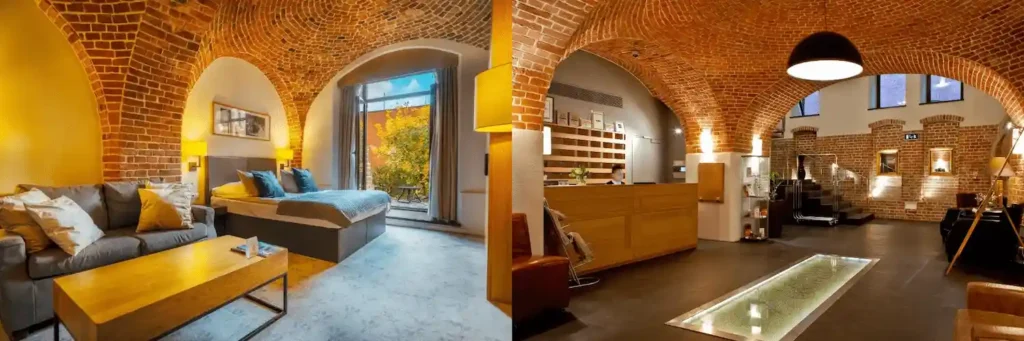
Wroclaw’s 16th-century role as a regional trading hub produced massive utilitarian structures—granaries, warehouses, and civic buildings—designed for function and durability rather than ornamentation.
These conversions expose the raw architectural honesty of Renaissance industrial design: thick brick walls, stone arches, and monumental scale. The transformation from grain storage to luxury accommodation reveals the structural integrity that allowed these buildings to survive centuries of war, flood, and urban change.
🌾 Great Polonia The Granary La Suite Hotel ★★★★★
This structure began as a 16th-century Renaissance granary—one of the city’s primary grain storage facilities and a rare surviving example of industrial Renaissance architecture in Poland.
The 2009 restoration exposed original brickwork and massive structural stone arches that once supported tons of stored grain across multiple floors. The interior maintains the raw, monumental scale of the historic granary: exposed brick walls rise to double-height ceilings, and the original layout—designed for efficient loading and storage—now creates suites with uncommon spatial volume.
The transition from the narrow cobblestone approach into the expansive brick-vaulted lobby recreates the physical contrast workers experienced entering the storehouse. This is the only hotel in Wroclaw where the building’s industrial past remains the defining spatial experience, and the only property that preserves 16th-century structural elements at this level of visibility.
Best for: Travelers seeking raw Renaissance architecture with luxury amenities and a spatial experience that prioritizes historic authenticity over decorative polish.
Signature Experience: Exposed 16th-century brick vaults and stone arches, suites with double-height ceilings in original granary layout, spa facilities, curated breakfast in vaulted dining hall, Old Town proximity with quiet residential setting.
“Those brick arches in the suite—five centuries old and still holding the ceiling. Unforgettable.” — Olivia, CopenhagenCheck Availability & Rates →
Aristocratic Villas & Private Residence Conversions
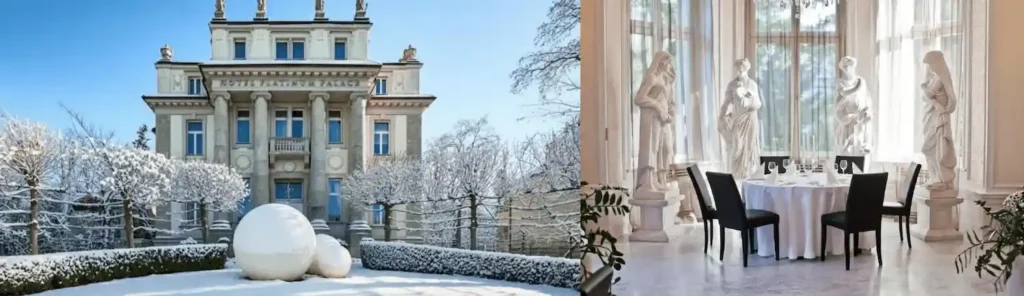
Turn-of-the-century Wroclaw attracted industrialists and aristocrats who commissioned private villas designed by the city’s most celebrated architects. These structures—built for single families and their staff—represent the pinnacle of domestic architectural ambition: hand-carved staircases, sculptural stucco detailing, wood-paneled libraries, and garden access.
The conversion from private residence to boutique hotel preserves the intimacy and craftsmanship that mass-market luxury cannot replicate.
🏰 Platinum Palace Boutique Hotel & SPA ★★★★★
Felix Henry designed this Neo-Renaissance villa in 1906 for the Schoeller family, one of Wroclaw’s most prominent industrial dynasties, and it remains the city’s most architecturally complete aristocratic residence conversion. The meticulous restoration preserved unique sculptural and stucco details: hand-carved wooden staircases, decorative ceiling medallions, and the original aristocratic layout of reception rooms, private quarters, and service spaces.
The interior maintains the spatial hierarchy of a grand private home—formal salons transition to intimate guest rooms through wood-paneled corridors lined with period detailing. The villa’s garden setting creates a buffer from the urban core while maintaining proximity to the Old Town.
This is the only hotel in Wroclaw that offers the full domestic experience of early 20th-century aristocratic living, and the only property where every architectural detail—from door handles to ceiling rosettes—reflects the original patron’s taste and budget.
Best for: Travelers drawn to aristocratic residential architecture with meticulous period detailing and a boutique experience prioritizing intimacy over scale.
Signature Experience: Hand-carved Schoeller family staircase, sculptural stucco detailing throughout, wellness spa in historic cellars, private garden access, suites maintaining original palace proportions.
“That staircase alone justified the booking—every step carved by hand in 1906. Pure craftsmanship.” — Alessandro, MilanCheck Availability & Rates →
Belle Époque & Early Art Nouveau Landmarks
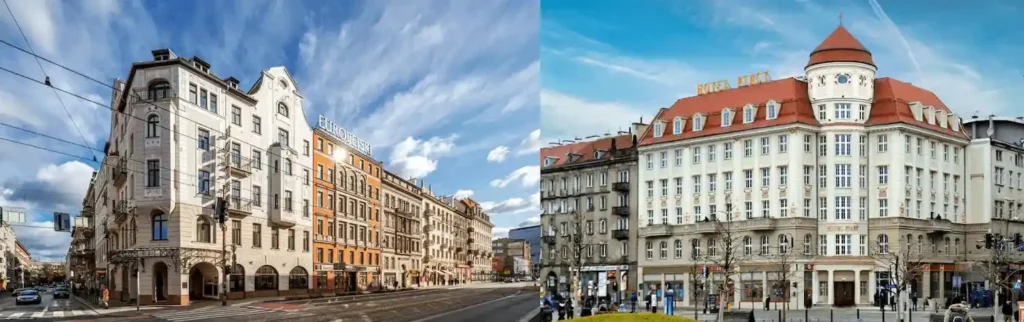
Wroclaw’s oldest surviving hotels occupy structures built during the late 19th-century transition from Classicism to early Art Nouveau. These properties preserve the architectural ambition of a city positioning itself as a cultural and commercial center: distinctive corner towers, semi-circular facades, and grand lobbies designed to impress arriving guests. The buildings’ longevity—surviving two world wars and multiple regime changes—validates their original construction quality and enduring appeal.
🕰️ Hotel Europejski Wrocław Centrum ★★★
This is Wroclaw’s oldest continuously operating hotel, originally opened in 1877 as the “Hohenzollernhof” and designed by master builder Pollack during the city’s Belle Époque expansion. The structure’s defining feature is the distinctive semi-circular corner tower with a cone-shaped roof—a landmark that anchors the intersection of two historic streets and remains one of the most photographed architectural elements in the city center.
The lobby and staircases retain original Classicist-to-Baroque proportions: high ceilings, wide corridors, and symmetrical spatial planning that reflects late 19th-century hospitality standards. Rooms occupy the building’s historic shell with period window placements and ceiling heights that create uncommon spatial volume for a three-star property.
This is the only hotel in Wroclaw offering direct access to 19th-century architectural authenticity at an accessible price point, and the only property where the building’s 147-year operational history remains visible in every structural detail.
Best for: Budget-conscious travelers prioritizing architectural authenticity and central location over full-service amenities and contemporary design.
Signature Experience: 1877 corner tower with cone-shaped roof, original Classicist lobby and staircase proportions, high-ceilinged rooms with period window details, Old Town Market Square proximity, historic streetscape views.
“That corner tower view at night—147 years of history for half the price of the chains. Smart choice.” — Ania, KrakowCheck Availability & Rates →
🗼 Hotel Piast Wrocław Centrum ★★★
Waldemar Osterloff designed this structure in 1908 as the “Kronprinz Hotel,” specifically positioned to form a ceremonial “city gate” with the adjacent Grand Hotel at the entrance to Wroclaw’s historic core. The building’s defining feature is the classic Art Nouveau tower—restored in 2014—that rises above the streetline and provides panoramic city views from upper-floor rooms.
The facade preserves original Art Nouveau detailing: geometric patterns, decorative balconies, and the vertical emphasis typical of early 20th-century hotel architecture. The unique superior rooms in the tower occupy the building’s most architecturally distinctive spaces, offering original proportions and sightlines that extend across the Old Town roofscape.
This is the only three-star property in Wroclaw offering tower accommodations in a verified Art Nouveau landmark, and the only hotel where the 1908 architectural vision—creating a grand entrance to the city—remains intact and experienceable.
Best for: Travelers seeking Art Nouveau tower accommodations with historic city views and central access at competitive rates compared to luxury properties.
Signature Experience: 1908 Art Nouveau tower with panoramic views, restored facade detailing, superior tower rooms with original architectural proportions, Old Town gateway location, historic streetscape context.
“That tower room view over the Old Town—pure 1908 perspective. Worth every złoty for location alone.” — Jan, AmsterdamCheck Availability & Rates →
📊 Comparison: Best Hotels in Wroclaw
| Hotel | Location | Wellness & Spa | Dining | Unique Perks | Best For |
|---|---|---|---|---|---|
|
🏛️ Hotel Monopol ★★★★★ |
Old Town, Świdnicka Street |
Wellness center, historic vaults |
Fine dining, chandelier salon |
1892 marble hall, rooftop terrace |
Art Nouveau completeness |
|
🌾 Great Polonia The Granary ★★★★★ |
Old Town, quiet residential |
Spa facilities, wellness area |
Vaulted dining, curated breakfast |
16th-century arches, exposed brick |
Renaissance industrial soul |
|
🕰️ Hotel Europejski ★★★ |
Market Square, city center |
Standard amenities |
Breakfast, lobby cafe |
1877 corner tower, oldest hotel |
Budget-friendly authenticity |
|
🏰 Platinum Palace Boutique ★★★★★ |
Garden district, near Old Town |
Historic cellar spa, wellness treatments |
Boutique dining, intimate setting |
1906 Schoeller villa, carved staircase |
Aristocratic residential feel |
- For broader context across Poland’s architectural heritage, explore best hotels in Warsaw for the capital’s palace conversions and Art-Deco landmarks.
❓ FAQ: Best Hotels in Wroclaw
What makes Wroclaw’s historic hotels architecturally significant?
Wroclaw’s position between Vienna, Prague, and Berlin created a unique architectural legacy of 19th and early 20th-century conversions. The city’s banking palaces, Renaissance granaries, and aristocratic villas represent some of Central Europe’s most intact examples of Art Nouveau, Neo-Baroque, and industrial Renaissance preservation. Properties like Hotel Monopol and The Granary La Suite maintain original structural elements—sandstone facades, brick vaults, marble halls—that contemporary hotels cannot replicate.
Which hotel offers the most authentic Art Nouveau experience in Wroclaw?
Hotel Monopol is the most architecturally complete Art Nouveau property, preserving Karl Grosser’s 1892 design with original sandstone facades, curved ceilings, black marble expanses, and the famous 1937 balcony. The building’s designation as the “Pearl of Lower Silesia” reflects its historical and aesthetic importance.
Are there affordable historic hotel options in Wroclaw?
Hotel Europejski offers verified 1877 Belle Époque architecture at three-star rates. The distinctive corner tower, original lobby proportions, and 147-year operational history provide architectural authenticity at a fraction of luxury property prices, making it accessible for budget-conscious travelers.
Which property best preserves Renaissance industrial architecture?
Great Polonia The Granary La Suite Hotel occupies a 16th-century grain storehouse, exposing massive structural stone arches and original brickwork throughout the interior. The restoration maintains the monumental scale and raw architectural honesty of Renaissance industrial design, creating a spatial experience unique in Wroclaw.
What is the most intimate historic hotel in Wroclaw?
Platinum Palace Boutique Hotel & SPA occupies Felix Henry’s 1906 Neo-Renaissance villa designed for the Schoeller family. The property maintains the spatial hierarchy and domestic intimacy of an aristocratic residence, with hand-carved staircases, sculptural stucco details, and garden access creating a boutique experience that larger properties cannot match.
Do these hotels preserve original architectural details or just facades?
All audited properties maintain significant interior preservation. Hotel Monopol retains 1892 marble halls and Belle Époque ceilings. The Granary exposes 16th-century brick vaults and stone arches. Platinum Palace preserves the Schoeller villa’s hand-carved staircase and aristocratic layout. These are full conversions, not facade-only renovations.
Which area of Wroclaw offers the best concentration of historic hotels?
The Old Town and adjacent districts contain the highest concentration of verified conversions, with properties ranging from Renaissance granaries to Art Nouveau banking palaces clustered within walking distance of Market Square. This concentration allows travelers to compare architectural periods and styles while maintaining central access to cultural sites.
Which Wroclaw Hotel Matches Your Architectural Preference?
Choosing the right hotel in Wroclaw depends on which historical period and architectural expression aligns with your preferences. The properties above represent the city’s most consistently preserved conversions—from 16th-century granaries to 1906 aristocratic villas—for travelers who prioritize verified provenance over generic luxury branding. Availability at Art Nouveau landmarks and Renaissance conversions shifts quickly during peak cultural seasons.
Compare Wroclaw’s Belle Époque preservation with best hotels in Gdansk for Baltic maritime architecture and Hanseatic trading house conversions.
For more curated itineraries and luxury-focused travel insights, visit Your Luxury Guide. For official travel information and destination updates, visit Poland tourism-info.
Booking your Wroclaw hotel secures access to Central Europe’s most undervalued Art Nouveau and Renaissance conversions before the city’s architectural significance reaches Prague-level international recognition.
Your Luxury Guide — Where Exceptional Travel Begins.