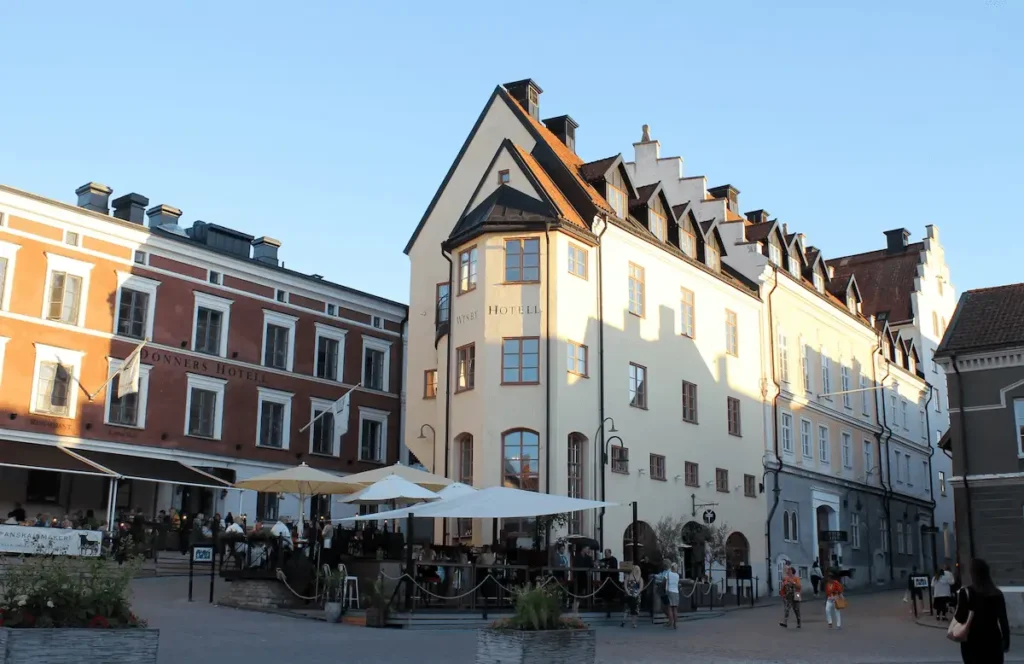
The best hotels in Visby aren’t just places to sleep—they are physical chapters of medieval Gotland, converted from 13th-century warehouses, hospitals, convents, and trade halls. This UNESCO-protected city remains one of Northern Europe’s most architecturally intact Hanseatic settlements, and staying here means sleeping within limestone walls that once governed commerce, faith, and power across the Baltic. The problem is that “boutique hotel” labels and “historic charm” claims have diluted what should be a selective field. Most properties lean on proximity to the city wall without offering any substantive architectural narrative.
We audited Visby’s entire inventory and rejected surface-level restorations and brand-saturated conversions. What remains are five best properties with verified “Past-Life Identities”—former hospitals, mercantile exchanges, governor residences, and a hotel literally integrated into church ruins. Each qualifies through original masonry, documented historical function, and preserved spatial character. This curation saves you from booking generic interiors marketed as “medieval” and guarantees a stay where the building itself is the destination.
For a broader view of Sweden’s top heritage conversions, explore the full collection in best historic hotels Sweden.
Medieval Core: Trade Halls & Religious Power
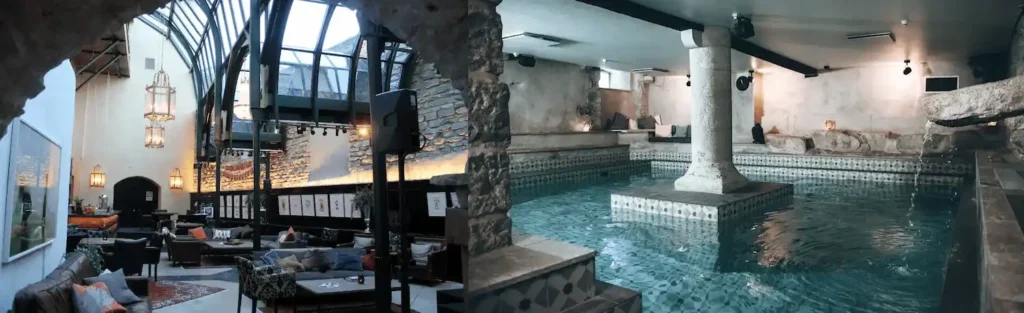
These properties occupy the most historically dense quarter of Visby—the original merchant and ecclesiastical center where Hanseatic trade routes converged with medieval spiritual authority. What unifies them is physical integration with the city’s 13th-century infrastructure: cross-vaulted warehouses, hospital wings, and church ruins. You’re not near history here—you’re inside it.
🏛️ Clarion Hotel Wisby ★★★★
This is Visby’s most architecturally significant hotel conversion—a 13th-century Hanseatic warehouse and alleyway transformed into a 127-room property that preserves its original cross-vaulted ceilings and medieval trade passages.
The physical soul of the building is the internal “medieval alleyway,” a narrow stone corridor that once connected merchant storage halls to the harbor loading docks. Today, it runs through the hotel’s core, flanked by original limestone walls and arched doorways that predate modern Sweden. The rooms occupy the upper merchant quarters, where vaulted ceilings and exposed masonry anchor the modern interiors in their 700-year-old shell.
The transition from Visby’s cobbled streets into the hotel’s vaulted reception feels like stepping from daylight into the controlled shadow of a stone vault—temperature drops, sound dampens, and the scale shifts to medieval proportions. What no other hotel in Gotland can claim is this level of spatial preservation: the warehouse structure remains functionally intact, not cosmetically referenced.
Best for: Architecture-focused travelers seeking the most structurally intact medieval conversion in Visby, with direct access to UNESCO core sites.
Signature Experience: Cross-vaulted medieval alleyway within the building, original 13th-century limestone masonry, upper-floor rooms with exposed beams, wellness area integrated into former merchant cellars, rooftop terrace overlooking Visby’s ring wall and St. Mary’s Cathedral.
“Walking through that internal alley at night felt like being alone in a medieval cloister.” — Henrik, MalmöCheck Availability & Rates →
⛪ Hotel Helgeand Wisby ★★★★
This property occupies the former Helgeandshuset—the “House of the Holy Spirit”—a 13th-century hospital and convent complex operated by the Holy Spirit Order, which provided care for pilgrims, the sick, and the elderly during Visby’s Hanseatic peak.
The soul of the building is concentrated in the “Knights Room,” a ground-floor suite where the original 13th-century limestone walls, vaulted ceiling, and narrow slit windows remain untouched. The masonry here is over a meter thick—built to withstand Baltic winters and designed for communal healing wards where monks tended to the infirm.
The modern conversion maintains the monastic scale: corridors are narrow, ceilings are low, and rooms retain the functional simplicity of medieval ecclesiastical architecture. What sets this apart is the preservation of purpose—the building still functions as a place of respite, just now for travelers instead of medieval pilgrims.
The hotel sits at the edge of the inner city wall, meaning you step directly from your room onto cobblestone alleys that lead to St. Mary’s Cathedral in under three minutes. Book for late spring or early autumn to experience Visby without the summer crowds that overwhelm the wall district.
Best for: Travelers drawn to monastic architecture and ecclesiastical heritage, seeking quiet immersion in Visby’s medieval spiritual quarter.
Signature Experience: Knights Room with original 13th-century vaulted ceilings and limestone walls, medieval hospital corridors, direct access to St. Mary’s Cathedral and inner city wall, wellness treatments in former convent cellars, courtyard garden within the historic complex.
“Slept in a room where medieval monks once prayed—thick walls, absolute silence.” — Anna, UppsalaCheck Availability & Rates →
🎭 Hotell Visby Börs ★★★★
Originally constructed as Visby’s mercantile exchange in the 19th century—the Börsen—this building served as the financial hub where Baltic trade deals were negotiated and sealed. Later, it operated as a cinema before its conversion into a 67-room hotel.
The soul of the property is found in the upper suites, where original 19th-century murals and painted ceilings survive from the building’s Börsen era. Rooms maintain the grandeur of merchant-class hospitality: high ceilings, large windows facing the harbor, and decorative plasterwork that reflects the affluence of Gotland’s post-Hanseatic commercial revival.
The ground-floor public spaces preserve the volume and proportions of the original exchange hall, where traders once gathered beneath vaulted ceilings to conduct business.
The location places you at the intersection of Visby’s medieval core and its working harbor—St. Clemens church ruins are two minutes on foot, and the ferry terminal is visible from upper-floor windows. This is the right choice for travelers who value 19th-century mercantile elegance over medieval monasticism.
Best for: Guests seeking 19th-century merchant architecture with harbor proximity and direct access to Visby’s commercial and cultural core.
Signature Experience: Suites with original 19th-century murals and painted ceilings, former exchange hall volume in public spaces, harbor-facing rooms, proximity to both medieval ruins and working ferry port, Börsen-inspired dining traditions.
“The mural in our suite was like sleeping in a 19th-century merchant’s private quarters.” — Lars, StockholmCheck Availability & Rates →
Castle District: Power & Ruins
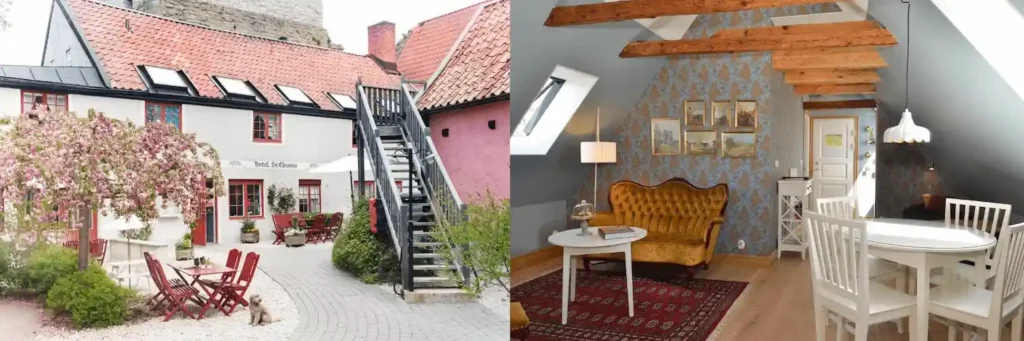
This section represents Visby’s seat of regional governance and its most dramatic ecclesiastical ruin. These properties offer a different expression of historic character—one rooted in administrative authority and direct engagement with the city’s Gothic church ruins.
The experience here is defined by proximity to Wisborg Castle’s remains and integration with medieval religious architecture.
🏛️ Hotell Slottsbacken ★★★★
This property occupies a 19th-century neoclassical building that functioned as the Governor’s residence—the administrative seat of regional power in Gotland.
The soul of the structure is its restored neoclassical proportions and direct sightlines to the ruins of Wisborg Castle, which sits on the hillside above. The building’s placement is strategic: it was positioned to command views over both the medieval fortifications and the inner harbor, reinforcing the governor’s oversight of trade and military defense.
The interiors maintain the formal restraint of 19th-century administrative architecture—high ceilings, symmetrical room layouts, and large windows designed to flood the building with Baltic light. The hotel’s terrace overlooks the castle ruins and the city wall, offering one of the most dramatic vantage points in Visby for sunrise and evening light.
Best for: Guests seeking neoclassical administrative architecture with commanding views of Wisborg Castle and Visby’s fortification system.
Signature Experience: Direct views of Wisborg Castle ruins, 19th-century neoclassical governor’s residence, terrace overlooking city wall and inner harbor, restored administrative interiors with original proportions, proximity to Gotland Museum and medieval fortifications.
“Watching sunrise over the castle ruins from our balcony—worth waking up early for.” — Maria, GothenburgCheck Availability & Rates →
⛪ Hotell St Clemens ★★★
This hotel is physically integrated with the ruins of St. Clemens Church, one of Visby’s most intact Gothic ecclesiastical sites, dating to the 1060s. The hotel building wraps around the church’s remaining Gothic arches and shares its courtyard with the ancient graveyard, where weathered headstones and medieval stonework create a spatial connection between the hotel and the ruin.
The soul here is the direct access—you walk from your room into the church yard through a private gate, meaning early morning or late evening visits to the ruins are yours alone before the site opens to the public.
The architecture of the hotel itself is modest—19th-century townhouse construction—but its value is in proximity and integration, not grandeur. Rooms facing the church yard offer unobstructed views of the Gothic arches and the overgrown graveyard, where medieval stonework is slowly reclaimed by ivy and Baltic weather.
This appeals to travelers who seek immersive engagement with ecclesiastical ruins over formal hotel amenities. Book early for summer stays—the church yard becomes a stage for medieval events and performances during Visby’s Medieval Week, and the hotel fills quickly with guests seeking private access to the site.
Best for: Travelers seeking direct engagement with Gothic church ruins and private access to one of Visby’s most atmospheric ecclesiastical sites.
Signature Experience: Private gate access to St. Clemens Church ruins and medieval graveyard, rooms overlooking Gothic arches, integration with 1060s ecclesiastical architecture, proximity to Visby’s Medieval Week events, intimate scale with historic courtyard views.
“Having the church ruins to ourselves at dawn—completely surreal and peaceful.” — Erik, LundCheck Availability & Rates →
📊 Comparison: Best Hotels in Visby
| Hotel | Location | Wellness & Spa | Dining | Unique Perks | Best For |
|---|---|---|---|---|---|
|
🏛️ Clarion Hotel Wisby ★★★★ |
Medieval core, inner harbor |
Wellness area in merchant cellars |
Rooftop terrace dining, city views |
Internal medieval alleyway Cross-vaulted ceilings |
Architecture purists, warehouse conversions |
|
⛪ Hotel Helgeand Wisby ★★★★ |
Inner city wall, cathedral quarter |
Wellness in former convent cellars |
Courtyard dining, monastic simplicity |
13th-century hospital Knights Room vaults |
Ecclesiastical heritage, monastic architecture |
|
🎭 Hotell Visby Börs ★★★★ |
Harbor district, medieval core edge |
Standard wellness facilities |
Börsen-inspired merchant dining |
19th-century murals Former exchange hall |
Mercantile elegance, harbor proximity |
- Continue with best hotels in Stockholm for Sweden’s capital heritage conversions.
❓ FAQ: Best Hotels in Visby
What makes a hotel in Visby historically significant?
A historically significant hotel in Visby is defined by its documented past-life identity—13th-century warehouses, hospitals, convents, or 19th-century administrative buildings with original masonry, vaulted ceilings, or ecclesiastical architecture. Clarion Hotel Wisby preserves a medieval trade alleyway within its structure, while Hotel Helgeand Wisby operates within a former hospital complex with intact Knights Room vaults.
Which Visby hotel has the best medieval architecture?
Clarion Hotel Wisby offers the most structurally intact medieval conversion, with original cross-vaulted ceilings, a preserved internal alleyway, and 13th-century Hanseatic warehouse masonry. Hotel Helgeand Wisby provides a different medieval experience through its monastic hospital architecture and ecclesiastical corridors.
Are these hotels inside Visby’s UNESCO city walls?
Yes, all five properties are located within or directly adjacent to Visby’s UNESCO-protected medieval ring wall. Clarion Hotel Wisby and Hotel Helgeand Wisby occupy the historic core, while Hotell St Clemens is integrated with Gothic church ruins inside the fortification system.
Which hotel offers direct access to Visby’s church ruins?
Hotell St Clemens provides private gate access to the St. Clemens Church ruins (1060s), allowing guests to explore the Gothic arches and medieval graveyard outside public visiting hours. This is the only hotel in Visby with physical integration into an ecclesiastical ruin site.
What is the best time to book hotels in Visby?
Book early for late spring (May–June) or early autumn (September) to avoid the peak summer crowds and secure rooms with original architectural features—vaulted ceilings, murals, or ruin views. Medieval Week in August drives the highest demand, so reservations should be made months in advance.
Do these hotels require advance booking for specific rooms?
Yes, rooms with original medieval features—cross-vaulted ceilings at Clarion Hotel Wisby, Knights Room at Hotel Helgeand Wisby, and mural suites at Hotell Visby Börs—are limited and allocated on request. Specify architectural preferences at booking to ensure availability.
How do Visby’s hotels compare to Stockholm’s historic properties?
Visby’s hotels focus on medieval Hanseatic and ecclesiastical architecture, while Stockholm’s historic hotels lean toward royal palaces and 19th-century civic grandeur. Visby offers more intact medieval masonry and church ruin integration.
Which Hotel Suits Your Visby Stay?
Booking the right hotel in Visby depends on which historical layer you want to inhabit—medieval trade infrastructure, monastic ecclesiastical architecture, or 19th-century mercantile elegance. The properties above represent the city’s most architecturally verified conversions, filtering out surface-level restorations and generic boutique labels. Rooms with original vaulting, murals, or ruin access are limited and fill quickly once the Baltic season begins.
For contrasting Swedish urban heritage, compare Visby’s medieval scale with Gothenburg’s neoclassical grandeur in best hotels in Gothenburg.
For more curated itineraries and luxury-focused travel insights, visit Your Luxury Guide. For official travel information and destination updates, visit Sweden tourism-info.
Booking your Visby hotel early secures access to the most architecturally intact rooms—cross-vaulted ceilings, medieval alleys, and private church ruin access—before summer allocations close.
Your Luxury Guide — Where Exceptional Travel Begins.