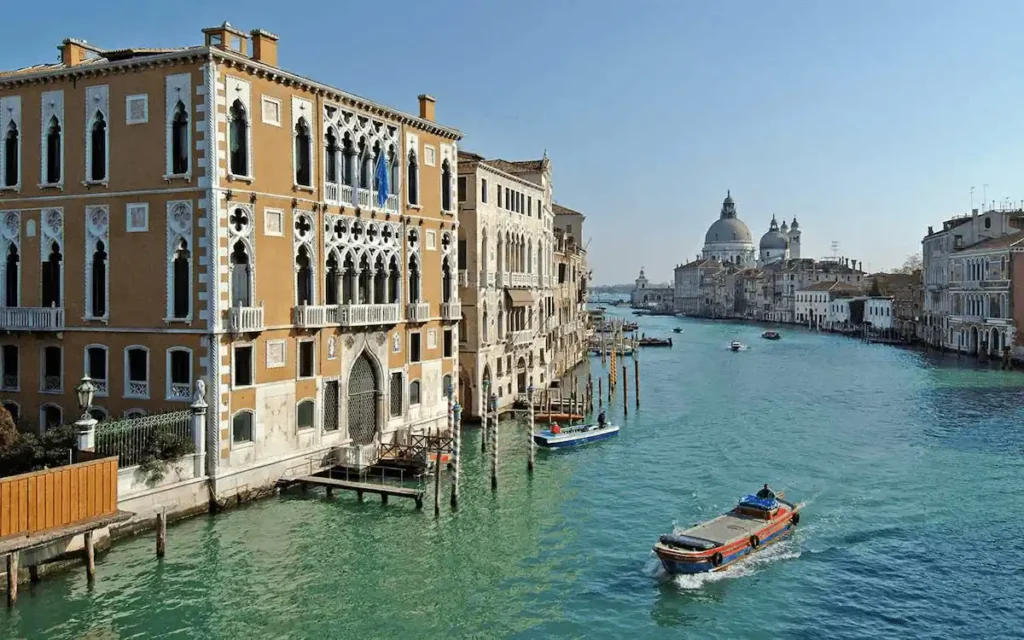
Best hotels in Venice aren’t defined by star ratings—they’re defined by which palazzo you’re sleeping in and whether the building shaped the city’s mercantile soul. Venice rewards travelers who understand that location means waterfront access to the Grand Canal, not proximity to tourist routes, and that heritage here isn’t a design choice but the literal foundation of your stay.
After filtering the city’s most architecturally significant properties, we’ve identified five hotels where the building’s past life—whether as a doge’s residence, a diplomat’s headquarters, or a merchant dynasty’s stronghold—justifies the premium and delivers an experience standard luxury brands can’t replicate.
Below are the stays that matter if you value provenance, craftsmanship, and accommodations that feel like private museums rather than branded franchises.
For a broader view of Italy’s finest properties, explore our curated guide to the best historic hotels across Italy.
Grand Canal Conversions: Where Venetian Power Resided
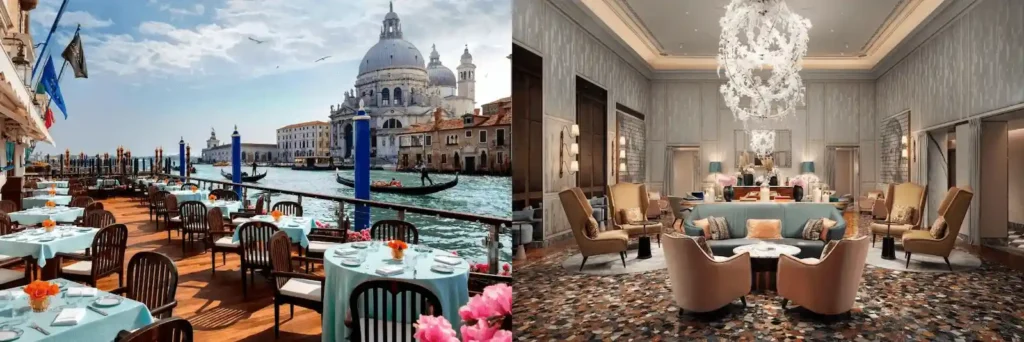
These three properties anchor the Grand Canal’s most coveted bends—each a former seat of political or mercantile influence, now reimagined as waterfront sanctuaries where original frescoes, marble halls, and private boat landings remain intact.
Expect service that mirrors the discretion once afforded to diplomats and doges, interiors that function as living museums, and positioning that places you at the city’s historic heart without the chaos of San Marco.
This is Venice before it became a backdrop—when palazzos defined power, not Instagram angles.
🏛️ The Gritti Palace, a Luxury Collection Hotel, Venice ★★★★★
Housed in the former residence of Doge Andrea Gritti, this Grand Canal landmark transforms 16th-century Venetian nobility into contemporary five-star hospitality without diluting the palazzo’s commanding presence.
The original Gothic facade overlooks Santa Maria della Salute, offering unobstructed water access via private dock—a detail that matters when navigating Venice’s labyrinthine canals.
Interiors retain period frescoes, Murano chandeliers, and Rubelli fabrics that reference the city’s silk-trading legacy, while Riva Lounge delivers canal-view dining that locals still respect.
This property suits travelers who want Venetian grandeur backed by Marriott’s operational polish and a location that places you within walking distance of both La Fenice and the Peggy Guggenheim Collection.
The Gritti doesn’t chase trends—it sets the standard for what a Venetian palace conversion should deliver when heritage and service converge at the city’s most photographed waterfront.
Best for: Discerning couples and solo travelers seeking doge-level waterfront access with contemporary spa amenities and direct Grand Canal positioning that eliminates Venice’s logistical friction.
Signature Experience: Private boat arrivals via palazzo dock, Gritti Epicurean School cooking classes in historic kitchens, terrazza suite balconies overlooking Santa Maria della Salute, Acqua di Parma spa treatments in converted noble chambers.
“Watching the vaporettos glide past from our terrace—that’s when Venice stopped feeling like a tourist city.” — Marcus, ZurichCheck Availability & Rates →
🏛️ The St. Regis Venice ★★★★★
Originally the Grand Hotel Britannia, later the site of the city’s former Royal Customs House, this Neo-Renaissance palazzo near Campo San Vidal channels Venetian splendor through Murano glass, hand-painted ceilings, and a Grand Canal facade that commands one of the waterway’s quietest yet most prestigious stretches.
Unlike properties trapped near San Marco’s crowds, The St. Regis positions you in Dorsoduro—steps from the Accademia and Peggy Guggenheim, with direct boat access that bypasses tourist congestion.
The rooftop Arts Bar offers unobstructed canal views without the theatre of busier properties, while suites retain original stucco work and frescoes that reference the building’s diplomatic past.
This is a hotel for those who want proximity to the city’s art institutions, canal-front elegance without the Instagram hordes, and service that operates with quiet authority rather than theatrical flourish.
Best for: Art collectors and culturally focused travelers who prioritize Dorsoduro’s museum access, discreet Grand Canal positioning, and interiors that balance historical authenticity with modern comfort.
Signature Experience: Grand Canal terrace suites with frescoed ceilings, Arts Bar rooftop overlooking Ca’ Rezzonico, private boat transfers to Biennale sites, St. Regis Butler service for in-suite Bellini rituals and exhibition reservations.
“Finally—a Venice hotel where you’re not fighting crowds to reach your water taxi.” — Elena, MilanCheck Availability & Rates →
🏛️ San Clemente Palace Venice ★★★★★
Occupying an entire private island originally home to a 12th-century monastery, this property delivers what mainland Venice cannot—17 acres of gardens, three swimming pools, and spatial breathing room impossible to achieve within the city’s compressed sestieri.
The former monastery’s cloistered courtyards now frame outdoor dining and wellness areas, while restored chapels and refectories function as event spaces and lounges that retain ecclesiastical grandeur without religious austerity.
Located a 10-minute complimentary boat ride from San Marco, San Clemente suits travelers who want Venetian access without Venice’s density—families, multi-generational groups, or couples seeking resort amenities within striking distance of cultural sites.
The island setting means joggers, cyclists, and wellness-focused guests gain what’s rare in Venice: uninterrupted space.
This is estate-scale luxury that uses historical architecture as the foundation for contemporary resort functionality, complete with spa, golf, and multiple restaurants that eliminate the need to constantly navigate water taxis for dining options.
Best for: Families and wellness travelers seeking private island seclusion with resort amenities, spatial freedom, and complimentary boat transfers that maintain Venice access without mainland congestion.
Signature Experience: Private island access with three pools and gardens, 12th-century monastery cloisters converted to lounges, complimentary shuttle boats to San Marco, Acquaroli Wellness Center with lagoon-view spa suites and golf putting green.
“Our kids ran through monastery gardens while we actually relaxed—impossible on the mainland.” — Olivia, LondonCheck Availability & Rates →
Historic Boutique Sanctuaries: Intimate Venetian Residences
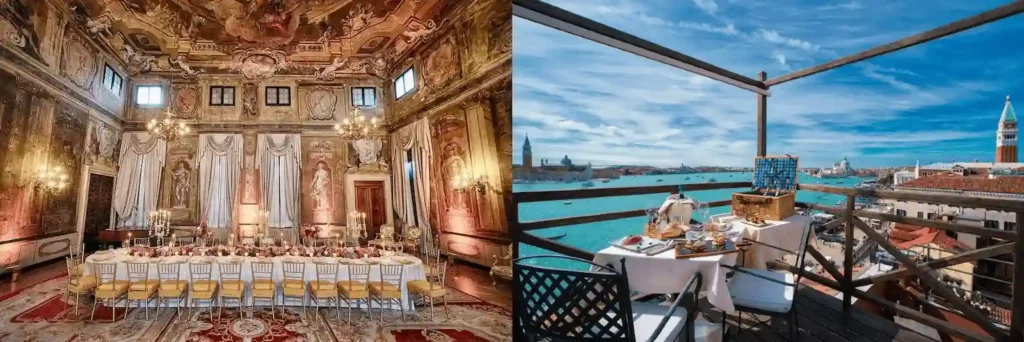
These two properties scale down the palazzo experience without sacrificing heritage—each occupying buildings with verifiable architectural pedigrees and positioning that favors cultural travelers over resort seekers.
Expect smaller footprints, owner-operated attention to detail, and interiors where original elements remain functional rather than decorative.
This is Venice for travelers who value human-scale hospitality and proximity to residential neighborhoods over branded luxury protocols.
🏛️ Ca’ Sagredo Hotel ★★★★
Built in the 15th century for the noble Sagredo family, this Grand Canal palazzo retains one of Venice’s most photographed baroque staircases—a Longhi-frescoed marvel that ascends through three floors of original stucco work and Murano mirrors.
Unlike properties where heritage feels staged, Ca’ Sagredo’s ballroom, music room, and portego function as public spaces where Tiepolo ceiling frescoes and period furniture remain part of the guest experience rather than roped-off museum exhibits.
Positioned near the Rialto Bridge, the hotel offers canal-front access without San Marco’s tourist density, placing you within walking distance of artisan workshops and bacari that locals still frequent.
Service operates with boutique-level attention—staff who remember names, assist with off-menu restaurant bookings, and arrange private gondola departures without corporate upselling.
The rooftop terrace overlooks terracotta rooftops and canal traffic, delivering sunset views that justify the climb. This property suits travelers who want architectural depth, owner-operated care, and a neighborhood feel that larger properties sacrifice for scale.
Best for: Culturally curious travelers and history enthusiasts seeking baroque grandeur with boutique-scale service, Rialto proximity, and original frescoes that function as living museum pieces rather than lobby decoration.
Signature Experience: Longhi-frescoed baroque staircase ascending through three floors, Tiepolo ceiling frescoes in public salons, rooftop terrace with 360-degree canal and rooftop views, private music room available for cocktail receptions.
“That staircase alone—worth booking just to walk it twice a day.” — Thomas, ViennaCheck Availability & Rates →
🏛️ Londra Palace Venezia ★★★★★
Originally serving as the residence for visiting diplomats and merchants during Venice’s maritime dominance, this waterfront palazzo on Riva degli Schiavoni offers unobstructed lagoon views toward San Giorgio Maggiore—one of the city’s most coveted yet surprisingly accessible vantage points.
The property’s neo-Gothic facade dates to the late 19th century, when the building functioned as a refined stopping point for European aristocracy arriving via steamship.
Today, interiors blend Venetian craftsmanship—Murano chandeliers, terrazzo floors, damask fabrics—with contemporary comfort that doesn’t feel sanitized.
Restaurant Terrazza Danieli serves lagoon-view dining without the theatrical crowds of nearby competitors, while suites retain balconies that frame sunrise views across the water—a detail that matters when Venice’s best light appears before tour groups mobilize.
Positioned steps from La Biennale and Arsenale, Londra Palace suits travelers prioritizing cultural access, waterfront positioning without Grand Canal congestion, and a property where staff size allows for genuine recognition rather than scripted hospitality.
Best for: Solo travelers and couples seeking lagoon-front positioning with sunrise balcony access, La Biennale proximity, and neo-Gothic interiors that reference Venice’s 19th-century diplomatic era without sacrificing modern comfort.
Signature Experience: Lagoon-view balconies facing San Giorgio Maggiore, Riva degli Schiavoni waterfront promenade access, Terrazza Danieli restaurant with sunrise dining, original terrazzo floors and Murano glass preserved from diplomatic-era renovations.
“Morning espresso on that balcony—the lagoon completely still, zero crowds, just Venice breathing.” — Sophia, CopenhagenCheck Availability & Rates →
📊 Comparison: Best Hotels in Venice
| Hotel | Location | Wellness & Spa | Dining | Unique Perks | Best For |
|---|---|---|---|---|---|
|
🏛️ The Gritti Palace ★★★★★ |
Grand Canal, Santa Maria della Salute |
Acqua di Parma spa, noble chamber treatments |
Riva Lounge, canal-view dining |
Former doge residence, private boat dock |
Waterfront grandeur, couples |
|
🏛️ The St. Regis Venice ★★★★★ |
Dorsoduro, Grand Canal |
In-suite treatments, wellness concierge |
Arts Bar rooftop, Fortuny interiors |
Former Customs House, Accademia proximity |
Art collectors, cultural access |
|
🏛️ San Clemente Palace ★★★★★ |
Private island, 10-min boat to San Marco |
Acquaroli Wellness, three pools, golf |
Multiple restaurants, monastery courtyards |
12th-century monastery, 17-acre gardens |
Families, resort amenities |
- If Tuscany’s castle estates appeal beyond urban palazzos, our collection of Luxury Castle Hotels in Tuscany extends the experience into countryside estates where vineyards and fortified walls redefine Italian grandeur.
❓ FAQ: Best Hotels in Venice
Which hotel in Venice has the most historic significance?
The Gritti Palace stands out, originally serving as the residence of Doge Andrea Gritti in the 16th century. The property retains its original Gothic Grand Canal facade, period frescoes, and private palazzo dock—making it the definitive choice for travelers seeking a landmark stay rooted in Venetian political history rather than modern luxury branding.
Are Grand Canal hotels worth the premium over properties in quieter sestieri?
Grand Canal positioning justifies the cost if you value private boat access, unobstructed waterfront views, and proximity to Venice’s most architecturally significant palazzos. Properties like The Gritti Palace and The St. Regis Venice eliminate water taxi logistics and place you within walking distance of La Fenice, the Peggy Guggenheim Collection, and Rialto—offsetting higher rates through location efficiency and heritage authenticity that neighborhood hotels cannot replicate.
What makes San Clemente Palace different from mainland Venice hotels?
San Clemente Palace occupies an entire private island with 17 acres of gardens, three pools, and a former 12th-century monastery—delivering resort-scale amenities impossible within Venice’s compressed urban core. Complimentary 10-minute boat shuttles maintain San Marco access while offering families and wellness travelers spatial freedom, jogging paths, and outdoor dining that mainland properties sacrifice for historic preservation requirements.
Which Venice hotel is best for art-focused travelers?
The St. Regis Venice positions you in Dorsoduro—steps from the Accademia, Peggy Guggenheim Collection, and Punta della Dogana—while maintaining Grand Canal waterfront access. The property’s Arts Bar offers rooftop views of Ca’ Rezzonico, and staff coordinate private viewings and Biennale access more effectively than San Marco properties overwhelmed by general tourism.
Do boutique historic hotels in Venice compromise on service compared to five-star brands?
Ca’ Sagredo Hotel demonstrates that boutique scale enhances rather than limits service—staff remember preferences, arrange off-menu restaurant bookings, and provide neighborhood guidance that corporate properties cannot match. The trade-off lies in amenities (no full spa or multiple restaurants) rather than attention, making boutique properties ideal for culturally focused travelers who value personalized care over resort infrastructure.
When is the best time to book historic hotels in Venice?
Early summer (May–June) and early autumn (September–October) offer optimal conditions—mild weather, manageable crowds, and better availability at properties like The Gritti Palace and The St. Regis Venice. Avoid peak Carnival (February), Biennale openings (May, November), and August heat when both rates and tourist density reach annual highs. Booking 4–6 months ahead secures preferred room categories at heritage properties where inventory remains limited.
What should I prioritize when choosing between Venetian palace hotels?
Prioritize waterfront positioning (Grand Canal vs. lagoon), architectural provenance (doge residence vs. monastery conversion), and neighborhood access (cultural Dorsoduro vs. commercial San Marco). Properties like The Gritti Palace excel in doge-era grandeur and central canal positioning, while San Clemente Palace delivers island seclusion with family-friendly resort amenities—neither approach is superior, but matching your travel style to the property’s heritage identity determines satisfaction more than star ratings or brand recognition.
Your Venetian Palace Stay: Final Historic Selections
Booking the best hotel in Venice isn’t about chasing five-star labels—it’s about choosing a palazzo whose architectural soul and waterfront positioning match how you want to experience the city. The properties above represent the most consistently refined conversions for travelers who value provenance, craftsmanship, and accommodations that function as living monuments rather than themed backdrops.
For those considering broader Italian historic stays, continue exploring Florence’s landmark properties in our guide to the best hotels in Florence, or discover our curated selection of the best hotels in Amalfi coast.
For more curated itineraries and luxury-focused travel insights, visit Your Luxury Guide. For official travel information and destination updates, visit Italy tourism-info.
Securing your palace reservation early positions you within Venice’s most coveted historic buildings, where private boat docks, frescoed salons, and Grand Canal terraces deliver an experience standard luxury brands cannot replicate through service alone.
Your Luxury Guide — Where Exceptional Travel Begins.