Best hotels in Sicily aren’t about chasing beachfront views—they’re about occupying buildings that shaped the island’s aristocratic and spiritual legacy. Between Norman conquests, Baroque excess, and Belle Époque grandeur, Sicily’s most refined stays live inside former monasteries, industrial dynasty estates, and 19th-century palazzos that predated modern tourism itself.
After filtering dozens of properties, we’ve isolated five historic conversions that deliver both historical soul and contemporary refinement—spaces where the architecture justifies the rate, and the past life of the building becomes part of the experience. These aren’t hotels that reference history; they are history.
Below are the Sicily stays that matter if you value provenance over pool size and aristocratic restraint over resort theatrics.
For a broader selection of Italy’s most distinguished properties, explore our curated guide to the best historic stays in Italy.
Taormina & Palermo: Sicily’s Imperial Conversions
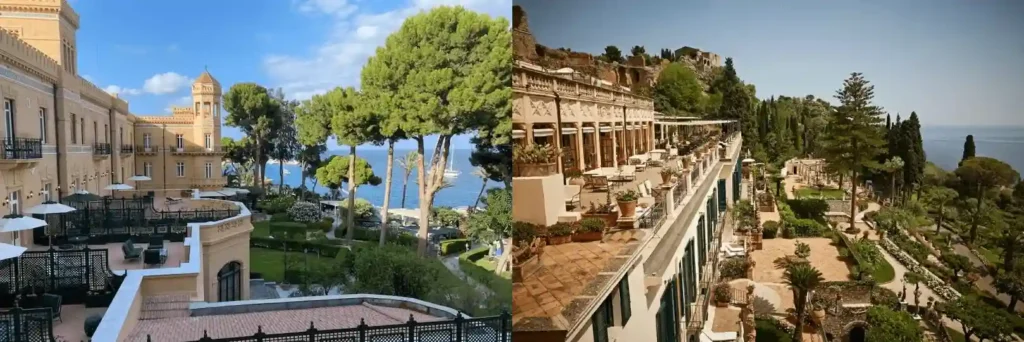
Sicily’s elite hotel geography splits between Taormina’s clifftop drama and Palermo’s urban grandeur. These aren’t competing destinations—they’re complementary stages for the island’s most theatrical architecture.
Taormina offers monastery-turned-resort serenity with Ancient Greek Theatre proximity, while Palermo delivers Belle Époque palazzos where Sicilian nobility once hosted European royalty.
What unifies them: buildings designed for power, now occupied by travelers who understand that location means nothing without legacy.
Expect original cloisters, Liberty-style salons, and terraces where Wagner composed operas.
⛪ San Domenico Palace, Taormina, A Four Seasons Hotel ★★★★★
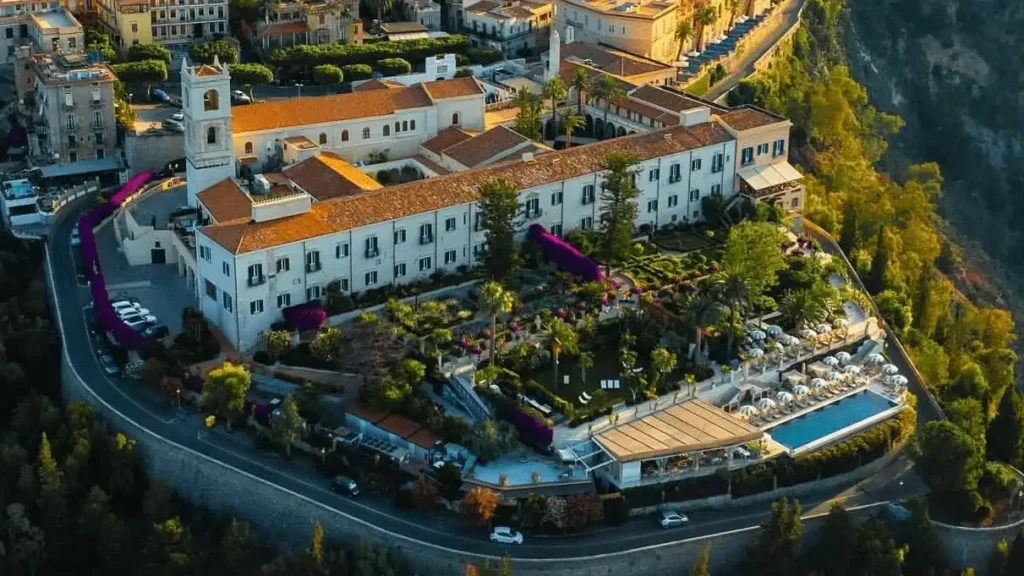
This property suits travelers who view their hotel as a destination equal to the ruins outside. Housed in a 14th-century Dominican monastery established in 1374, the conversion retains original cloisters where monks once meditated, now flanked by infinity pools overlooking Mount Etna.
Former monk cells—where Oscar Wilde and D.H. Lawrence stayed—have been transformed into suites with frescoed ceilings and volcanic stone bathrooms. The spiritual architecture remains intact: vaulted chapels, courtyards framed by Sicilian columns, and gardens planted by the original order.
What sets this apart from Taormina’s clifftop competitors is the weight of 650 years of prayer and contemplation embedded in the limestone. If you’re booking Sicily for culture, not coastline, this monastery conversion delivers provenance that a modern resort can’t replicate. Availability tightens once summer opera season begins.
Best for: Travelers seeking monastic tranquility with Four Seasons service, direct access to the Ancient Greek Theatre, and accommodations where the building’s spiritual history defines the atmosphere.
Signature Experience: Original 14th-century cloisters, Principe Cerami Michelin-starred dining in a former chapel, infinity pools carved into monastery terraces, private gardens with Mount Etna views, spa treatments in converted monk quarters.
“Walking through those cloisters at dawn—no crowds, just stone and silence—worth the entire trip.” — Marcus, LondonCheck Availability & Rates →
🌊 Rocco Forte Villa Igiea ★★★★★
For those who prefer seaside grandeur over clifftop monasteries, this is Palermo’s answer to Taormina’s spiritual conversions. Built in 1900 for the Florio family—Sicily’s most powerful industrial dynasty—the estate was designed as both a sanatorium and a palace for European royalty.
The Liberty-style architecture (Sicily’s Art Nouveau) showcases Ernesto Basile’s signature: floral mosaics, wrought-iron balconies, and frescoed salons where King Edward VII once dined.
The building’s past life as a health retreat now manifests in the Irene Forte Spa, occupying the original wellness pavilions with thalassotherapy pools overlooking the Tyrrhenian Sea. Unlike Palermo’s urban palazzos, Villa Igiea offers private beach access and gardens designed by the same landscape architect who shaped Villa Malfitano.
This isn’t a hotel that mimics Belle Époque luxury—it invented Sicilian Belle Époque luxury. Peak season books months ahead.
Best for: Couples prioritizing seaside Belle Époque elegance, direct Tyrrhenian access, and Liberty-style architecture that represents the pinnacle of early 20th-century Sicilian design.
Signature Experience: Original Basile-designed mosaics and frescoes, Michelin-level dining in a former royal salon, Irene Forte Spa with thalassotherapy, private beach club with 1900s cabanas, rooftop terraces overlooking Palermo harbor.
“That breakfast terrace over the sea—felt like dining in a Visconti film set.” — Elena, MilanCheck Availability & Rates →
🎭 Grand Hotel Et Des Palmes ★★★★★
This 1874 palazzo conversion suits travelers who view hotels as stages for cultural history rather than just luxury backdrops. Originally the private residence of the Ingham-Whitaker family—Sicily’s “Marsala Wine” dynasty—the building became a National Monument where Richard Wagner completed Parsifal in Room 301 and secret Mafia summits shaped post-war Italy.
The aristocratic bones remain: gilded salons with original chandeliers, marble staircases where Palermo’s elite once arrived for private concerts, and suites that retain Neoclassical proportions rarely seen in modern construction.
What differentiates this from Palermo’s other heritage stays is its dual identity—both a Sicilian Baroque palace and a 20th-century political landmark. The restoration preserved Wagner’s piano salon, the “Sala degli Specchi” ballroom, and archives detailing the Whitaker family’s role in Anglo-Sicilian trade.
If your Sicily itinerary includes Teatro Massimo and Quattro Canti, this palazzo places you inside the same social architecture that created those landmarks.
Best for: Culture-focused travelers seeking a National Monument stay in Palermo’s historic center, Wagner enthusiasts, and those who value political and artistic provenance over resort amenities.
Signature Experience: Wagner’s preserved piano salon, original 1874 Sala degli Specchi ballroom, rooftop restaurant overlooking Teatro Massimo, suites with Neoclassical frescoes, wine cellar featuring Marsala vintages from the Ingham-Whitaker estate.
“Standing in Wagner’s room—same view he had finishing Parsifal—chills.” — Thomas, ViennaCheck Availability & Rates →
🏛️ Grand Hotel Timeo, A Belmond Hotel, Taormina ★★★★★
For travelers who want to occupy the birthplace of Sicilian tourism itself, this 1873 property represents the catalyst that transformed Taormina from a fishing village into Europe’s Grand Tour destination. Its “Past Life” isn’t a single building conversion—it’s the invention of Taormina’s luxury identity. Built by Francesco
Floresta as the town’s first hotel, it sits adjacent to the Ancient Greek Theatre, positioning guests within walking distance of 3rd-century BC antiquity while staying in 19th-century aristocratic accommodations.
The architecture blends Belle Époque elegance with Sicilian garden design: original terraces where Truman Capote wrote, infinity pools carved into cliffsides, and suites with Mount Etna views that haven’t changed since the hotel opened.
What separates this from San Domenico Palace’s monastic grandeur is its role as the social hub for 150 years of European aristocracy. If you’re booking Taormina for its Greek ruins and operatic sunsets, staying anywhere but the property that created modern Taormina misses the historical point.
Best for: Grand Tour purists, history-focused travelers seeking direct access to the Ancient Greek Theatre, and those who value being inside the building that invented Sicilian luxury tourism.
Signature Experience: Original 1873 terraces overlooking the Greek Theatre, Timeo Bar where Capote and Wilde drank, infinity pools with Mount Etna and Ionian Sea views, private beach club access, Literary Lounge with first-edition travel journals.
“That terrace at sunset—Greek ruins and Etna glowing—exactly what Grand Tour travelers saw.” — Charlotte, ParisCheck Availability & Rates →
🎼 Grand Hotel Wagner ★★★★★
This Neoclassical palazzo conversion suits travelers who prefer Palermo’s urban grandeur over Taormina’s clifftop drama. Originally a 19th-century baronial residence, the property’s identity is defined by the Gattopardo era—the high-society Sicilian aristocracy immortalized in Lampedusa’s The Leopard.
The restoration retained original chandeliers from the Lercara Friddi theater, marble staircases with wrought-iron banisters, and salons where Palermo’s nobility hosted private opera performances.
Unlike Villa Igiea’s seaside Belle Époque excess, this palazzo offers restrained elegance: Baroque ceilings without gilded overload, intimate courtyards instead of sprawling gardens, and a rooftop terrace overlooking Palermo’s cathedral domes.
What makes this compelling is its role as a residential palace first, hotel second—the proportions and details reflect private aristocratic taste, not public grandeur. If your Sicily itinerary prioritizes Palermo’s street markets, Norman palaces, and Baroque churches, this palazzo places you inside the same architectural language that shaped those landmarks.
Best for: Travelers seeking Palermo’s Gattopardo-era aristocratic restraint, central access to Norman-Arab landmarks, and accommodations where residential palace architecture defines the experience.
Signature Experience: Original Lercara Friddi theater chandeliers, rooftop terrace overlooking Palermo Cathedral, Neoclassical courtyard with period frescoes, intimate piano bar in a former salon, concierge-led Norman palace tours.
“That rooftop view of Palermo’s domes—felt like being inside a Sicilian prince’s private study.” — Giorgio, RomeCheck Availability & Rates →
📊 Comparison: Best Hotels in Sicily
| Hotel | Location | Wellness & Spa | Dining | Unique Perks | Best For |
|---|---|---|---|---|---|
|
⛪ San Domenico Palace ★★★★★ |
Taormina, clifftop monastery |
Spa in monk quarters, infinity pools |
Michelin dining, chapel conversion |
14th C. cloisters, Mount Etna views |
Monastic serenity, spiritual architecture |
|
🌊 Villa Igiea ★★★★★ |
Palermo, private seafront |
Irene Forte Spa, thalassotherapy |
Michelin-level, royal salon |
1900 Florio estate, Liberty architecture |
Belle Époque elegance, seaside grandeur |
|
🎭 Grand Hotel Et Des Palmes ★★★★★ |
Palermo, historic center |
Wellness center, rooftop spa |
Rooftop restaurant, Teatro Massimo views |
Wagner’s piano salon, National Monument |
Cultural provenance, artistic legacy |
❓ FAQ: Best Hotels in Sicily
Which hotel in Sicily has the most historic significance?
San Domenico Palace stands out, originally established as a Dominican monastery in 1374. It retains original cloisters, vaulted chapels, and former monk cells where Oscar Wilde stayed, making it the top choice for travelers seeking a landmark conversion where 650 years of spiritual history define the architecture.
Are Sicily’s heritage hotels worth the premium over modern resorts?
Yes, if you prioritize provenance and architectural soul over amenities. Properties like Villa Igiea and Grand Hotel Et Des Palmes offer Belle Époque and National Monument status that no contemporary resort can replicate—you’re paying for buildings that shaped Sicilian aristocratic and cultural history, not just luxury services.
Which Sicilian hotel offers the best access to ancient landmarks?
Grand Hotel Timeo sits directly adjacent to Taormina’s Ancient Greek Theatre, offering the shortest walking distance to 3rd-century BC ruins. As the first hotel built in Taormina (1873), it’s the only property where staying inside the building that invented Sicilian tourism enhances your cultural experience.
Do these hotels require advance booking?
Peak season (May–October) books 3–6 months ahead, especially for monastery and palazzo conversions. Opera season in Taormina (July–August) tightens availability at San Domenico Palace and Grand Hotel Timeo. Winter months (November–March) offer better rates and room selection.
Which Palermo hotel is best for first-time visitors?
Grand Hotel Et Des Palmes offers the most central location in Palermo’s historic quarter, walking distance to Teatro Massimo, Quattro Canti, and Norman-Arab landmarks. Its National Monument status and Wagner legacy provide immediate cultural context for exploring the city’s Baroque and aristocratic architecture.
Can I experience Sicily’s historic hotels without staying overnight?
Most properties allow non-guests to dine at on-site restaurants or book spa treatments, but access to cloisters, salons, and historical wings is restricted to overnight guests. San Domenico Palace and Grand Hotel Timeo occasionally offer guided architectural tours, but these must be arranged through concierge in advance.
Which hotel best captures Sicily’s Belle Époque era?
Rocco Forte Villa Igiea represents the pinnacle of Sicilian Belle Époque design, built in 1900 for the Florio dynasty. Its Liberty-style architecture—floral mosaics, wrought-iron balconies, and Ernesto Basile frescoes—embodies early 20th-century aristocratic luxury better than any other property on the island.
Choosing the Right Hotel in Sicily
Selecting the best hotel in Sicily isn’t about chasing star ratings—it’s about occupying buildings where the architecture and provenance justify the rate. The properties above represent the island’s most historically significant conversions, where monastery cloisters, Belle Époque palazzos, and National Monument salons deliver experiences modern resorts can’t replicate.
For a deeper selection of Italy’s finest historic properties, continue with our guide to the best hotels in Rome. If you’re expanding your Italian itinerary southward, explore our curated collection of best hotels in Naples for Bourbon palace conversions and seafront grandeur.
For more curated itineraries and luxury-focused travel insights, visit Your Luxury Guide. For official travel information and destination updates, visit Italy tourism-info.
Booking early secures Sicily’s most distinguished estates—where former monasteries, aristocratic palazzos, and Belle Époque landmarks transform your stay into an architectural experience the island’s modern resorts can’t touch.
Your Luxury Guide — Where Exceptional Travel Begins.