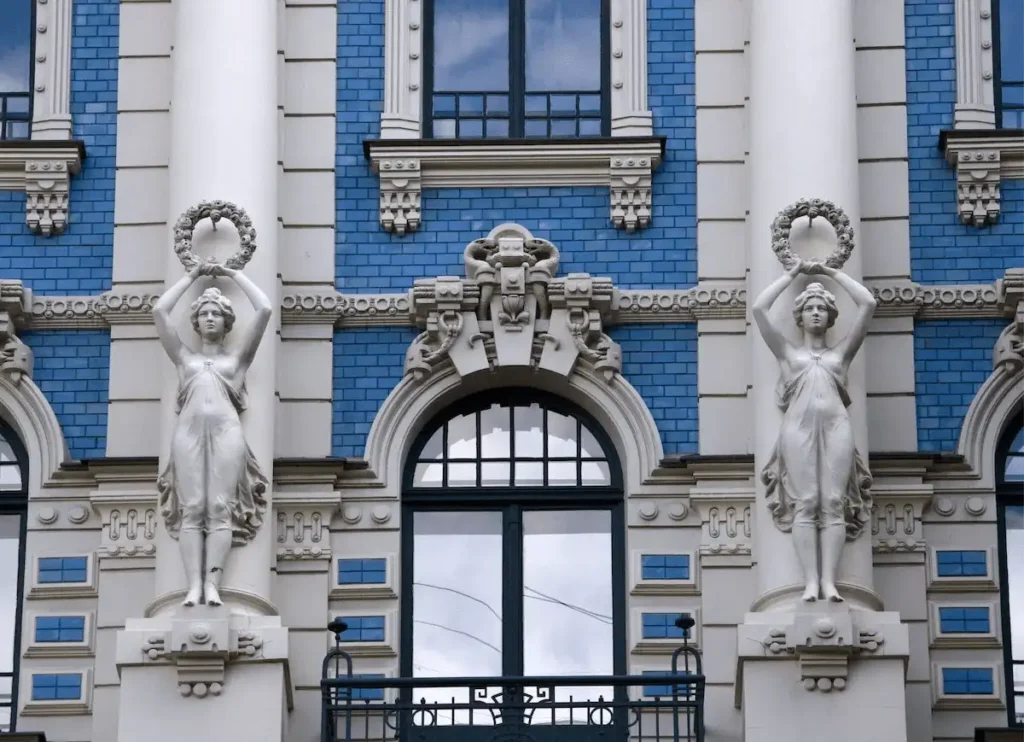
The best hotels in Riga aren’t defined by thread counts or spa menus—they’re defined by the architecture that survived eight centuries of occupation, fire, and reconstruction. This city’s Old Town holds one of Europe’s densest concentrations of medieval commercial infrastructure, and the properties that occupy these shells represent the most intact conversions of guild houses, banking palaces, and monastic compounds still functioning as luxury accommodations.
The problem is that Riga’s hospitality market is saturated with generic “historic-themed” interiors that mimic heritage without offering any.
We audited the inventory to isolate the buildings with verified provenance: properties occupying original 13th-century convents, 17th-century printing houses, and 19th-century state institutions where the physical structure—not the decor—carries the narrative weight. This filter rejects surface renovations and brand-saturated boxes in favor of assets where the past-life identity is architecturally legible and experientially dominant. The result is a selection that guarantees you’re staying inside Riga’s history, not just near it.
For a broader view of Latvia’s most significant architectural conversions, explore our audit of the best historic hotels in Latvia.
Medieval & Merchant Quarter: Guild Houses, Convents & Artisan Workshops
The core of Riga’s Old Town is built atop a medieval commercial grid where guild power, monastic authority, and artisan economy shaped every structure. The best hotels in Riga occupy the original plots and preserve the vertical timber, stone masonry, and vaulted layouts that defined 13th- to 18th-century urban life. They represent the city’s transition from Hanseatic trade hub to Lutheran stronghold, and each property offers direct access to St. Peter’s Church, the Dome Cathedral, and the densest concentration of Art Nouveau facades outside the city center.
⚔️ Konventa Seta Hotel – Keystone Collection ★★★★
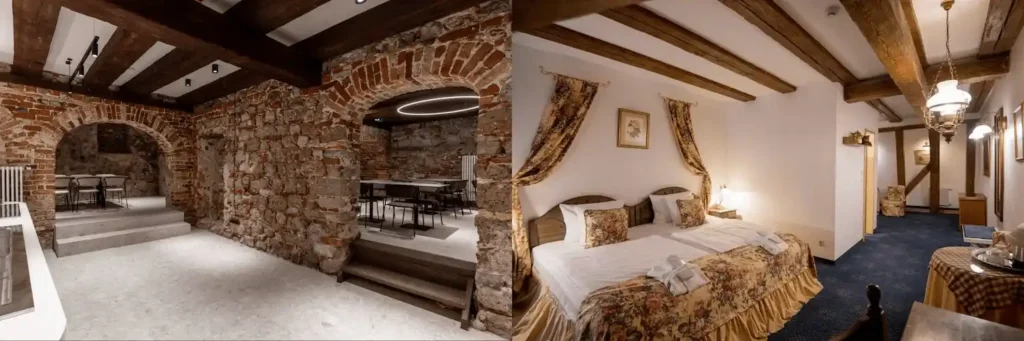
The most architecturally significant hotel in Riga, Konventa Sēta occupies a 13th-century convent complex originally built for the Order of Brothers of the Sword—the military order that governed early Livonia. This is not a converted convent wing; it’s a cluster of six interconnected medieval buildings that defined the oldest urban fabric of the city, complete with original stone wall segments, vaulted cellars, and timber crossbeams that survived every subsequent occupation.
The interiors balance monastic austerity with contemporary luxury: minimalist rooms feature exposed brick, reclaimed oak floors, and rain showers carved into 800-year-old stone partitions. The transition from Kalķu Street into the central courtyard is immediate—stepping through the arched entryway silences the city entirely, replacing it with the scent of old limestone and the acoustic depth of medieval masonry. What no other hotel in Riga can claim is this level of structural continuity: you’re staying inside the oldest residential infrastructure in the Baltic states, where every corridor, staircase, and archway is part of the original convent layout.
Best for: History-focused travelers seeking the most architecturally intact medieval experience in Latvia, with direct access to Old Town’s core monuments.
Signature Experience: Private courtyard entry through 13th-century stone archways, vaulted cellar breakfast hall with exposed medieval foundations, rooftop terrace overlooking Dome Cathedral, guided heritage tour of the convent’s military-order past.
“Standing in that courtyard at dawn—800 years of silence pressed into stone.” — Henrik, StockholmCheck Availability & Rates →
🖨️ Hotel Gutenbergs ★★★★
Hotel Gutenbergs is a restored 17th-century printing house complex where Johannes Gutenberg’s legacy shaped Riga’s polygraphy industry for three centuries. This is a rare example of a merchant house cluster that preserved its original commercial function—the facade still displays a bas-relief of Gutenberg himself, and the interiors retain rare 17th-century wood fixtures, hand-carved ceiling beams, and the vertical layout typical of guild-era workshops.
The rooms are elegant without theatrics: high ceilings, herringbone oak floors, and freestanding tubs positioned beneath original timber joists create a sense of refined permanence rather than boutique trendiness. The ground-floor restaurant occupies the former pressroom, where vaulted brick ceilings and iron chandeliers frame views of Doma Square through floor-to-ceiling windows. The property’s strength is its seamless integration of past and present—a building that has continuously functioned as a cultural hub since the 1600s.
The rooftop terrace offers unobstructed views of the Dome Cathedral and St. Peter’s spire, a rare perspective in a city where most historic buildings don’t allow upper-level access.
Best for: Design-conscious travelers drawn to typographic heritage and central Old Town positioning with refined, unpretentious interiors.
Signature Experience: Rooftop terrace overlooking Dome Square and St. Peter’s Church, in-room herringbone oak flooring and original timber joists, ground-floor restaurant in vaulted 17th-century pressroom, rare Gutenberg facade bas-relief.
“That rooftop view at dusk—three centuries of printing history beneath your feet.” — Clara, MunichCheck Availability & Rates →
🏦 Grand Palace Hotel – Small Luxury Hotels of the World ★★★★★
Originally constructed in 1877 as the administrative palace for the State Bank of Latvia, the Grand Palace is Riga’s most imposing example of 19th-century institutional architecture repurposed for luxury hospitality. This is not a converted office wing—it’s the full banking headquarters, complete with vault-style masonry, grand chandelier-crowned foyers, and the kind of vertical grandeur that defined imperial financial power across Eastern Europe.
The interiors balance neoclassical formality with contemporary comfort: high-ceilinged suites feature original moldings, Carrara marble bathrooms, and floor-to-ceiling windows that flood rooms with Baltic light. The spa occupies the former vault chambers, where original stone walls and arched ceilings create an atmosphere of subterranean calm rather than clinical wellness.
The property’s strength is its ability to maintain the gravitas of a state institution without feeling cold or museum-like—service is discreet, the energy is refined, and the location on Pils Street places you within 100 meters of the Presidential Palace and Riga Castle. This is the property for travelers who want the grandest expression of 19th-century Latvian authority without sacrificing modern luxury standards.
Best for: Travelers seeking the most formal expression of 19th-century institutional grandeur with full-service luxury and central positioning.
Signature Experience: Spa in original bank vault chambers with stone arches, chandelier-lit foyer with 19th-century neoclassical detailing, Carrara marble bathrooms in high-ceilinged suites, direct views of Riga Castle and Presidential Palace.
“That vault spa—lying in silence beneath the same stone that once held the state’s gold.” — Thomas, CopenhagenCheck Availability & Rates →
🏛️ Eurostars Metropole ★★★★
Eurostars Metropole is a restored 1871 grand hotel—one of Riga’s first purpose-built luxury hospitality assets, constructed during the city’s late-19th-century economic boom when it became the Russian Empire’s third-largest port. The Neo-Renaissance facade is intact, complete with original moldings, grand-scale window dimensions, and the kind of vertical elegance that defined imperial-era European hotels.
The interiors preserve this 19th-century elite energy without period costuming: rooms feature high ceilings, parquet floors, and minimalist furnishings that allow the architecture to dominate rather than compete with decoration. The ground-floor restaurant occupies the original grand salon, where chandelier-lit ceilings and floor-to-ceiling windows create the atmosphere of a private club rather than a hotel dining room.
The property’s appeal lies in its authenticity—this isn’t a heritage conversion; it’s a hotel that has continuously operated as a hotel for 150 years, maintaining the rhythms and spatial proportions of late-imperial hospitality. The location on Aspazijas Boulevard places you between Old Town and the Art Nouveau district, within walking distance of the National Opera and Freedom Monument.
Best for: Travelers drawn to late-imperial elegance and Neo-Renaissance architecture with authentic 19th-century hospitality continuity.
Signature Experience: Original Neo-Renaissance facade and grand-scale window proportions, chandelier-lit salon dining in 1871 ballroom, high-ceilinged suites with parquet floors, positioning between Old Town and Art Nouveau district.
“Walking into that salon felt like stepping into a Tolstoy novel—minus the tragedy.” — Anna, PragueCheck Availability & Rates →
🍷 Boutique Hotel Justus ★★★★
Boutique Hotel Justus occupies a medieval plot with a past-life identity spanning seven centuries: originally a 13th-century residential site, it evolved into an 18th-century tavern and artisan workshop cluster before its recent conversion into boutique hospitality.
The interiors preserve this layered history through exposed 18th-century brickwork, original foundation layouts, and the kind of structural authenticity that has made it a location for cinematic period pieces. Rooms are minimalist but texturally rich—reclaimed wood floors, freestanding tubs, and floor-to-ceiling windows that frame views of St. Peter’s Church create a sense of modern comfort within historic containment. The ground-floor restaurant occupies the former tavern hall, where vaulted brick ceilings and candlelit tables maintain the atmospheric weight of the original space.
The property’s appeal is its cinematic authenticity—this is a building where the past is visually and spatially legible without being staged or reconstructed.
The location on Jauniela Street places you in the quietest corner of Old Town, steps from the Swedish Gate and medieval city walls.
Best for: Film and design enthusiasts seeking cinematic authenticity with exposed medieval foundations and artisan-workshop heritage.
Signature Experience: Exposed 18th-century brickwork used in period film productions, ground-floor restaurant in former tavern hall with vaulted ceilings, minimalist rooms with original foundation layouts, proximity to Swedish Gate and medieval walls.
“That brick wall in our room—you could feel the weight of centuries pressed into every seam.” — Julien, ParisCheck Availability & Rates →
🏰 Dome Hotel ★★★★★
Dome Hotel is a meticulously preserved 17th-century patrician townhouse built atop 13th-century foundations, representing one of the most intact examples of Hanseatic domestic architecture still functioning as luxury hospitality. The property’s past-life identity is architecturally legible: a 400-year-old wooden staircase connects all four floors, original frescoes adorn the upper-level ceilings, and authentic tiled fireplaces anchor each suite’s layout.
This is not decorative heritage—it’s structural continuity, where every element from the timber joists to the stone windowsills has survived four centuries of occupation and reconstruction.
The interiors balance this historical weight with understated luxury: herringbone oak floors, freestanding marble tubs, and floor-to-ceiling windows that frame views of the Dome Cathedral create a sense of refined permanence rather than boutique theatrics. The breakfast room occupies the 13th-century cellar, where vaulted stone ceilings and candlelit tables maintain the atmospheric depth of the original medieval foundation.
The property’s strength is its ability to preserve authenticity without compromising comfort—this is a townhouse that functions as a private residence first, hotel second. The location on Miesnieku Street places you within 50 meters of the Dome Cathedral and the densest concentration of Art Nouveau facades in Old Town.
Best for: Travelers seeking the most intact example of Hanseatic domestic architecture with original frescoes, staircases, and tiled fireplaces.
Signature Experience: 400-year-old wooden staircase connecting all four floors, original 17th-century frescoes and tiled fireplaces in suites, breakfast in vaulted 13th-century cellar, direct views of Dome Cathedral from upper-level windows.
“Climbing that wooden staircase each morning—400 years of footsteps worn into the grain.” — Lars, OsloCheck Availability & Rates →
⛪ St. Peter’s Boutique Hotel ★★★★
St. Peter’s Boutique Hotel occupies a 15th-century merchant house standing in the shadow of St. Peter’s Church, one of Riga’s oldest and most iconic Gothic landmarks. This is a rare example of a residential property that preserved its original medieval layout: exposed 15th-century brick walls, heavy timber crossbeams, and vertical spatial proportions that reflect the merchant-class housing standards of pre-Reformation Livonia.
The interiors maintain this structural authenticity without period reconstruction—rooms are minimalist, featuring whitewashed walls, reclaimed oak floors, and freestanding tubs positioned beneath original timber joists. The ground-floor lounge occupies the former merchant hall, where vaulted brick ceilings and floor-to-ceiling windows frame views of St. Peter’s spire just 30 meters away.
This is not a grand hotel experience, but a “living history” immersion where the building’s original function remains spatially and visually legible.
The location on Skārņu Street places you at the eastern edge of Old Town, within walking distance of the Central Market and Latvian National Museum of Art.
Best for: Travelers drawn to Gothic proximity and authentic 15th-century merchant-house architecture with minimalist, intimate interiors.
Signature Experience: Direct views of St. Peter’s Church spire from upper-level rooms, exposed 15th-century brick walls and heavy timber crossbeams, ground-floor lounge in former merchant hall with vaulted ceilings, immediate access to Gothic monuments and Central Market.
“Waking to those church bells—the spire so close you could trace its shadow across the bed.” — Marta, VilniusCheck Availability & Rates →
📊 Comparison: Best Hotels in Riga
| Hotel | Location | Wellness & Spa | Dining | Unique Perks | Best For |
|---|---|---|---|---|---|
|
⚔️ Konventa Sēta ★★★★ |
Old Town, medieval core |
Rooftop terrace, courtyard calm |
Vaulted cellar breakfast hall |
13th-century convent, oldest structure |
Medieval purists, architectural depth |
|
🖨️ Hotel Gutenbergs ★★★★ |
Dome Square, central |
Rooftop views, refined calm |
Vaulted pressroom restaurant |
17th-century printing, Gutenberg facade |
Design lovers, typographic heritage |
|
🏦 Grand Palace ★★★★★ |
Pils Street, castle proximity |
Vault chamber spa, stone arches |
Chandelier salon, neoclassical |
1877 State Bank, imperial grandeur |
Formal luxury, institutional power |
|
🏛️ Eurostars Metropole ★★★★ |
Aspazijas Blvd, Art Nouveau edge |
Classic amenities, no spa |
Grand salon, imperial atmosphere |
1871 Grand Hotel, Neo-Renaissance |
Belle Époque seekers, imperial continuity |
❓ FAQ: Best Hotels in Riga
What makes a hotel in Riga “historic”?
A historic hotel in Riga occupies a verified medieval, Hanseatic, or 19th-century structure with architecturally legible past-life identity—convents, guild houses, state banks, or patrician townhouses where the original masonry, timber joists, or spatial proportions survive as structural elements rather than decorative themes. Properties like Konventa Sēta and Dome Hotel preserve 13th- to 17th-century foundations, staircases, and vaulted cellars that define their authenticity.
Which hotel offers the most authentic medieval experience?
Konventa Sēta Hotel delivers the most intact medieval immersion, occupying a 13th-century convent cluster built for the Order of Brothers of the Sword with six interconnected medieval buildings, original stone wall segments, and vaulted cellars. It’s the oldest continuously occupied residential infrastructure in the Baltic states, offering structural continuity unmatched by any other property in Riga’s Old Town.
Are there luxury hotels in Riga with spa facilities?
Grand Palace Hotel offers the most formal spa experience, located in the original 1877 State Bank vault chambers with stone arches and subterranean calm. Konventa Sēta provides a rooftop terrace for relaxation rather than full wellness facilities, while Hotel Gutenbergs focuses on rooftop views and refined interiors without dedicated spa infrastructure.
Which hotel is closest to Riga’s main attractions?
Hotel Gutenbergs sits directly on Dome Square, placing you within 50 meters of the Dome Cathedral and St. Peter’s Church. St. Peter’s Boutique Hotel offers the closest proximity to St. Peter’s Gothic spire, while Konventa Sēta occupies the medieval core with immediate access to the oldest urban fabric and guild monuments.
Can I stay in a former bank in Riga?
Grand Palace Hotel occupies the 1877 State Bank of Latvia administrative headquarters, preserving the vault-style masonry, chandelier-crowned foyer, and neoclassical institutional grandeur that defined imperial financial power across Eastern Europe. The spa is located in the original vault chambers, offering a rare subterranean wellness experience beneath stone arches.
Which hotel offers the best rooftop views in Riga?
Hotel Gutenbergs provides unobstructed rooftop terrace views of Dome Square, St. Peter’s Church spire, and the medieval skyline. Konventa Sēta offers rooftop terrace views overlooking the Dome Cathedral from within the 13th-century convent courtyard, while Dome Hotel’s upper-level suites frame direct views of the cathedral from floor-to-ceiling windows.
Are there boutique hotels in Riga with film production heritage?
Boutique Hotel Justus occupies a medieval plot turned 18th-century tavern and artisan workshop, preserving exposed brickwork and authentic foundation layouts used as cinematic backdrops for period films. The property maintains visual and spatial authenticity without staged reconstruction, appealing to travelers drawn to cinematic immersion and artisan-workshop heritage.
Which Hotel Is the Right Choice for You?
Choosing from best hotels in Riga isn’t about chasing five-star labels—it’s about selecting a property that matches the historical depth and architectural character you want to experience. The properties above represent the most consistently refined conversions of medieval convents, 19th-century state institutions, and Hanseatic merchant houses where the past-life identity remains structurally legible. Availability at this level shifts quickly during peak cultural and opera season.
For more curated itineraries and luxury-focused travel insights, visit Your Luxury Guide. For official travel information and destination updates, visit Latvia tourism-info.
Booking your hotel in Riga unlocks access to the Baltic’s most concentrated cluster of medieval and Hanseatic architecture, where every property on this list offers a verified “living history” experience rooted in structural authenticity rather than decorative reconstruction.
Your Luxury Guide — Where Exceptional Travel Begins.