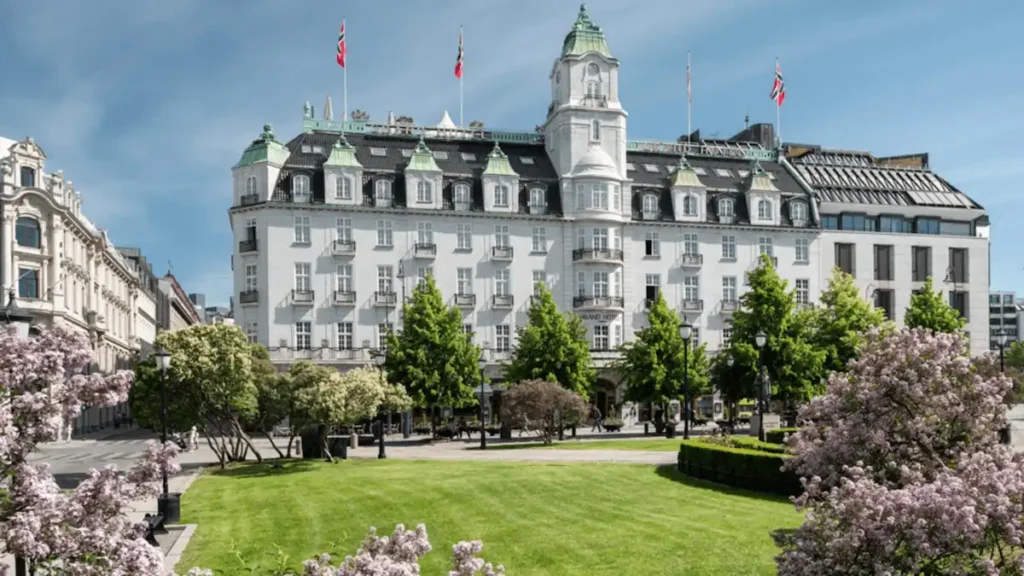
The best hotels in Oslo aren’t designed for tourists—they’re designed for the city’s most significant cultural moments. Choosing where to stay here means choosing between a Nobel Peace Prize balcony, a preserved Art Deco power station, or the lobby where Henrik Ibsen held court.
After auditing the capital’s most architecturally significant conversions, we narrowed the selection to five properties that serve as Oslo’s clearest heritage anchors. Below are the hotels that function as working landmarks—not just accommodation, but direct access to the institutions that shaped Norway’s national identity and urban transformation.
For travelers continuing through Norway’s historic architecture, explore best historic hotels in Norway to compare additional landmark conversions across Bergen and Trondheim.
Grand Civic Monuments & State Hotels
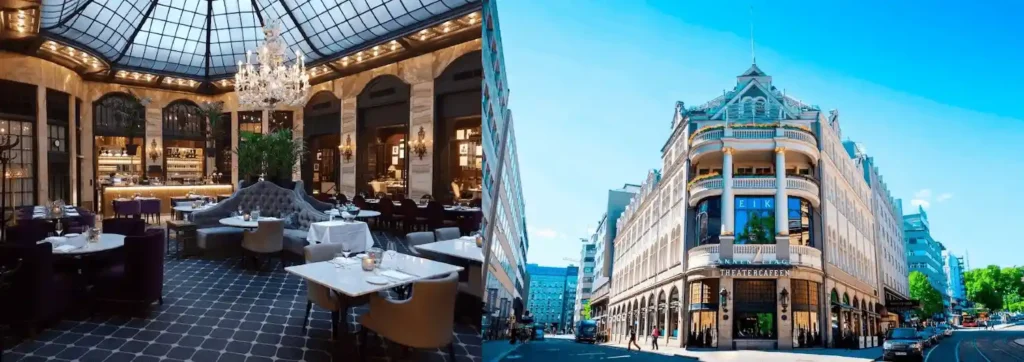
These properties don’t just occupy Oslo’s ceremonial center—they define it. Built to host royalty, diplomats, and Nobel laureates, they remain the capital’s most public-facing heritage assets. What unifies them is their institutional role: these are buildings designed to represent Norway on the world stage, and they still do. Expect grand salons, historic balconies, and interiors that have witnessed over a century of state occasions.
⚜️ Grand Hotel Oslo ★★★★★
This property serves travelers who require direct proximity to the National Theatre, the Royal Palace, and the city’s ceremonial core—and who recognize the significance of staying in Norway’s absolute institutional anchor. Opened in 1874, the Grand remains the only hotel in Oslo with an unbroken tradition of hosting Nobel Peace Prize laureates, royal state banquets, and diplomatic receptions.
Its most defining architectural feature is the clock tower and the street-level balcony overlooking Karl Johans gate, where every December, laureates address the public. Inside, the Grand Café preserves its 19th-century murals and wooden paneling, still functioning as the city’s intellectual salon where Ibsen, Munch, and Hamsun once gathered.
The rooms blend Belle Époque detailing with Nordic restraint—high ceilings, original parquet, and contemporary bathrooms that don’t erase the building’s timeline. Booking here places you inside Oslo’s most visible heritage monument, not adjacent to it.
Best for: Travelers who value proximity to state occasions, Nobel Prize history, and direct access to the capital’s ceremonial district.
Signature Experience: Nobel Suite overlooking the laureate balcony, Grand Café with Henrik Ibsen’s reserved corner table, rooftop terrace facing the Royal Palace, spa housed in the original 1874 vaults.
“Standing on that balcony at sunset, looking down Karl Johans gate toward the palace—you understand why laureates choose this view.” — Henrik, StockholmCheck Availability & Rates →
🎭 Hotel Continental ★★★★★
This hotel appeals to guests who prioritize cultural immediacy over diplomatic grandeur—those drawn to Oslo’s theater district rather than its palace quarter. Built in 1900 and family-owned since inception, the Continental sits directly opposite the National Theatre and Ibsen Museum, functioning as the city’s clearest cultural anchor rather than state symbol.
What makes this property architecturally rare is its preserved neoclassical facade combined with original Art Nouveau interiors—particularly the Theatercaféen, a Belle Époque brasserie where Norwegian playwrights, actors, and composers have gathered for over 120 years.
The rooms retain classical proportions and period moldings while integrating updated bathrooms and Nordic-minimalist furnishings that respect the building’s timeline. Unlike the Grand’s diplomatic formality, the Continental delivers literary intimacy—smaller salons, lower ceilings, and a quieter relationship with the street.
Its value lies in proximity to the Nationaltheatret metro hub and direct pedestrian access to Aker Brygge waterfront. This is where Oslo’s cultural establishment stays, not its visiting dignitaries.
Best for: Culture-focused travelers seeking direct theater access, family-owned heritage hospitality, and literary Oslo without state ceremony.
Signature Experience: Theatercaféen Belle Époque brasserie with original Jugendstil mirrors, underground metro access to National Gallery, classic Continental breakfast in Art Nouveau salon, suites overlooking Ibsen’s former residence.
“The Theatercaféen feels like stepping into a Munch painting—original, preserved, and still full of life.” — Astrid, CopenhagenCheck Availability & Rates →
Art Deco Conversions & Industrial Monuments
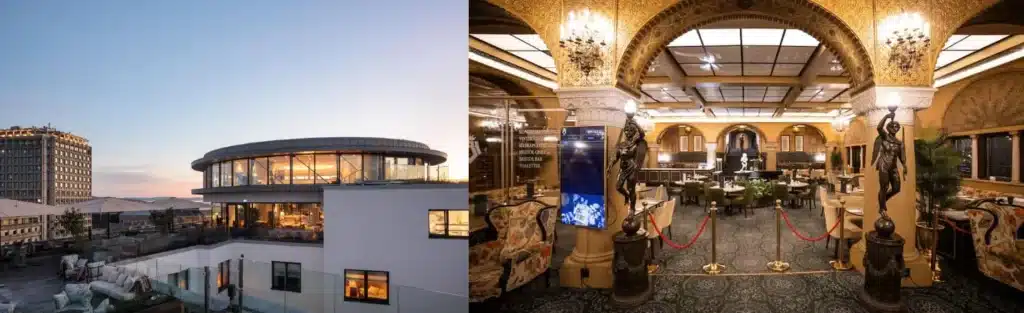
Oslo’s most compelling architectural story isn’t found in palaces—it’s found in the conversion of municipal infrastructure into contemporary luxury. These properties preserve the capital’s early 20th-century industrial and civic expansion, offering guests a direct relationship with the city’s modernist transformation.
What distinguishes them is scale: these are monumental buildings designed for public function, not private hospitality, now repurposed into hotels that retain their original architectural DNA.
⚡ Sommerro ★★★★★
This conversion suits guests who prioritize architectural preservation over traditional hotel luxury—travelers drawn to industrial heritage rather than royal associations. Opened in 1931 as Oslo Lysverker, the city’s primary electric power station, Sommerro now operates as Oslo’s clearest Art Deco monument.
Its most defining feature is the Per Krohg mural cycle covering the former public hall—commissioned to depict the arrival of electric power to Norway, now fully restored and visible throughout the hotel’s public spaces. The original functionalist brickwork, arched windows, and industrial steel framework remain exposed, with guest rooms installed into former administrative offices while preserving ceiling heights and original hardwood floors.
The basement houses the city’s only remaining 1930s public bathhouse, now converted into a Nordic spa with original tile mosaics and thermal pools fed by Oslo fjord water. Unlike palace hotels, Sommerro offers direct access to Oslo’s modernist identity—this is where the capital powered itself into the 20th century.
Best for: Design-conscious travelers drawn to Art Deco preservation, industrial conversions, and Oslo’s electric modernization narrative.
Signature Experience: Per Krohg murals in original power station hall, 1930s public bathhouse now Nordic thermal spa, rooftop terrace overlooking Frogner Park, private dining in former turbine room.
“Those Krohg murals in the breakfast room—you’re eating inside a working piece of Norway’s industrial revolution.” — Lars, BergenCheck Availability & Rates →
📚 Hotel Bristol ★★★★★
This property appeals to guests seeking literary atmosphere over monumental scale—those drawn to intimate intellectual heritage rather than grand state occasions. Opened in 1920, the Bristol established itself as Oslo’s primary literary and artistic salon, distinguished by its Moorish-influenced lobby and the famous library bar that became the de facto meeting point for Norway’s creative class throughout the 20th century.
What sets this hotel apart is its preserved Neo-Renaissance interior—carved wooden panels, stained glass skylights, and original reading lamps—combined with a quieter, more private social function compared to the Grand’s public-facing role.
The rooms retain classical proportions and period moldings, with updated bathrooms and Nordic furnishings that respect the building’s timeline without freezing it. Unlike the Continental’s theater proximity, the Bristol offers deeper seclusion within Oslo’s cultural district, positioned between the National Gallery and the Royal Palace without fronting Karl Johans gate’s ceremonial traffic.
This is where Oslo’s writers, painters, and architects have gathered for over a century—not its diplomats.
Best for: Literary-minded travelers valuing Neo-Renaissance interiors, intellectual heritage, and a quieter alternative to Oslo’s most public grand hotels.
Signature Experience: Moorish lobby with original carved wood detailing, library bar preserving 1920s literary salon atmosphere, proximity to National Gallery and Royal Palace gardens, classic European breakfast in period dining room.
“The library bar at Bristol still feels like a private club from another century—original, undisturbed, perfect.” — Ingrid, TrondheimCheck Availability & Rates →
⚓ Amerikalinjen ★★★★
This hotel serves travelers drawn to maritime heritage over palace grandeur—those who value Oslo’s emigration history and transatlantic connections. Originally constructed in 1919 as the headquarters of the Norwegian America Line, the building served as the administrative center and departure point for thousands of Norwegians emigrating to the United States.
Its defining architectural feature is the grand vaulted ceiling in the former ticketing hall, now the hotel lobby, where original Art Deco brass fixtures and maritime maps remain visible. The guest rooms occupy former shipping offices, preserving tall windows, original hardwood floors, and exposed brick, with contemporary Nordic furnishings that respect the building’s industrial scale.
Unlike Oslo’s theater or diplomatic hotels, Amerikalinjen offers direct access to the city’s working waterfront—positioned at the edge of Tjuvholmen, where the harbor meets modern museum districts. This is where Norway’s Atlantic gateway was headquartered, and the conversion honors that departure narrative rather than erasing it.
Best for: Maritime history enthusiasts, travelers drawn to emigration narratives, and guests prioritizing waterfront access over ceremonial center proximity.
Signature Experience: Former shipping ticketing hall now hotel lobby with vaulted ceilings, original maritime maps and brass fixtures, proximity to Astrup Fearnley Museum and Oslo fjord promenade, rooftop bar overlooking harbor operations.
“Walking through that vaulted lobby knowing my great-grandfather booked his passage here—it connects you to something bigger.” — Anna, New YorkCheck Availability & Rates →
📊 Comparison: Best Hotels in Oslo
| Hotel | Location | Wellness & Spa | Dining | Unique Perks | Best For |
|---|---|---|---|---|---|
|
⚜️ Grand Hotel Oslo ★★★★★ |
Karl Johans gate, ceremonial center |
Spa in 1874 vaults, rooftop terrace |
Grand Café, Belle Époque brasserie |
Nobel balcony, state banquet halls |
Diplomatic history, ceremonial proximity |
|
🎭 Hotel Continental ★★★★★ |
Opposite National Theatre |
Classic wellness, quiet treatment rooms |
Theatercaféen Art Nouveau salon |
Ibsen Museum access, literary heritage |
Theater district, cultural travelers |
|
⚡ Sommerro ★★★★★ |
Frogner, Art Deco district |
1930s public bathhouse, Nordic thermal spa |
Rooftop dining, turbine room bar |
Per Krohg murals, electric station history |
Industrial design, Art Deco purists |
- Continuing through Norway’s preserved coastal cities, compare best hotels in Bergen to discover additional hanseatic merchant conversions and fjord-side heritage estates.
❓ FAQ: Best Hotels in Oslo
What makes a hotel in Oslo historically significant?
Oslo’s most significant hotels preserve their original civic or industrial function—power stations, diplomatic headquarters, or cultural salons. Unlike modern conversions, these properties retain architectural features tied to Norway’s state formation, Nobel Prize history, or early 20th-century urban expansion. The Grand Hotel’s balcony, Sommerro’s Per Krohg murals, and Amerikalinjen’s shipping hall represent irreplaceable heritage assets, not decorative history.
Which Oslo hotel has the strongest connection to Nobel Prize history?
The Grand Hotel Oslo holds the clearest Nobel Prize connection—every Peace Prize laureate since 1901 has stayed here, and the street-level balcony remains the traditional public address point each December. The Nobel Suite preserves original Belle Époque detailing and overlooks Karl Johans gate, offering direct visual access to the ceremonial route between the hotel and Oslo City Hall where the award ceremony occurs.
Are Oslo’s historic hotels located in the city center?
The Grand Hotel and Hotel Continental anchor Karl Johans gate, Oslo’s primary ceremonial boulevard connecting the Royal Palace to the central station. Sommerro occupies Frogner, a 10-minute walk west, within Oslo’s preserved Art Deco residential district. Amerikalinjen sits at Tjuvholmen on the working waterfront, adjacent to the Astrup Fearnley Museum. All properties maintain walkable access to Oslo’s core cultural institutions.
What is the best historic hotel in Oslo for Art Deco architecture?
Sommerro represents Oslo’s clearest Art Deco monument—a fully preserved 1931 electric power station with intact Per Krohg murals, functionalist brickwork, and the city’s last remaining public bathhouse. Unlike palace hotels that layer styles across centuries, Sommerro preserves a single architectural vision tied to Norway’s industrial modernization, offering guests direct immersion in Oslo’s electric transformation.
Do Oslo’s heritage hotels offer modern wellness facilities?
Yes, but integrated into original infrastructure. Sommerro converted its 1930s public bathhouse into a Nordic thermal spa with original tile mosaics. The Grand Hotel built its wellness center within the 1874 basement vaults, preserving brick archways and stone foundations. Hotel Bristol maintains a quieter, more traditional spa approach within its Neo-Renaissance framework. These aren’t standalone luxury add-ons—they’re architecturally embedded into the buildings’ heritage layers.
Which Oslo hotel best represents Norway’s maritime heritage?
Amerikalinjen serves as the capital’s primary maritime anchor—the former headquarters of the Norwegian America Line, where over 200,000 Norwegians booked transatlantic passage to the United States. The hotel preserves the original ticketing hall with vaulted ceilings, brass fixtures, and emigration-era maps. Its Tjuvholmen waterfront location maintains direct visual and pedestrian access to Oslo’s working harbor, unlike interior palace hotels that turned away from the fjord.
Can you walk between Oslo’s best historic hotels?
The Grand Hotel and Hotel Continental sit opposite each other on Karl Johans gate, separated by a two-minute walk. Sommerro lies 12 minutes west in Frogner, accessible via tree-lined boulevards through Oslo’s preserved neoclassical districts. Amerikalinjen requires a 20-minute harbor-side walk from the ceremonial center, though metro access reduces that to under 10 minutes. Oslo’s compact scale and pedestrian infrastructure make hotel-hopping feasible for heritage-focused travelers comparing properties.
Which Oslo Hotel Suits Your Priorities?
The right hotel in Oslo depends on which chapter of the city’s architectural timeline resonates with your travel priorities. The properties above represent Oslo’s most verified heritage conversions—each tied to a specific civic function, cultural moment, or industrial transformation. Availability at Grand Hotel and Sommerro shifts quickly during Nobel Prize season and summer peak, when Oslo’s institutional hotels function as working landmarks rather than passive accommodation.
Travelers drawn to northern Norway’s cathedral cities should explore best hotels in Trondheim for medieval pilgrimage route anchors and timber-framed merchant houses converted into contemporary luxury stays.
For more curated itineraries and luxury-focused travel insights, visit Your Luxury Guide. For official travel information and destination updates, visit Norway tourism-info.
Booking your hotel in Oslo secures direct access to Norway’s most significant state monuments, Art Deco industrial conversions, and Nobel Prize ceremonial infrastructure—properties that function as the capital’s clearest architectural anchors, not decorative backdrops.
Your Luxury Guide — Where Exceptional Travel Begins.