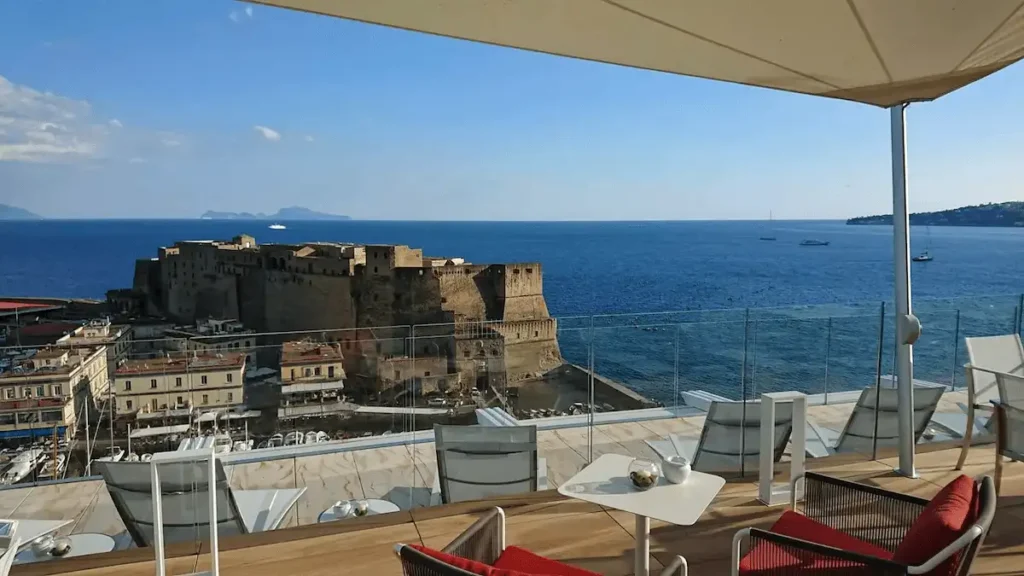
Best hotels in Naples aren’t defined by star ratings—they’re defined by the buildings themselves, where Belle Époque architects designed for Neapolitan aristocracy and Grand Tour travelers who arrived by steamship. The city’s elite accommodations occupy former palaces and historic conversions along Via Partenope and Chiaia, where Gulf of Naples views and architectural pedigree separate true luxury from tourist-district convenience.
After filtering Naples’ most refined properties, we’ve selected five hotels that consistently deliver on heritage, positioning, and the kind of discretion that matters when you’re not looking to be impressed by a lobby chandelier alone. These aren’t generic five-star hotels with Neapolitan themes—they’re properties where the building’s original purpose still informs the experience today.
Below are the stays that make sense if you value cultural proximity, genuine historic architecture, and accommodations that earned their reputation over decades, not marketing budgets.
Explore our complete guide to the best historic stays across Italy for additional heritage properties across the country.
Historic Belle Époque: Naples’ Gulf-Front Grandeur
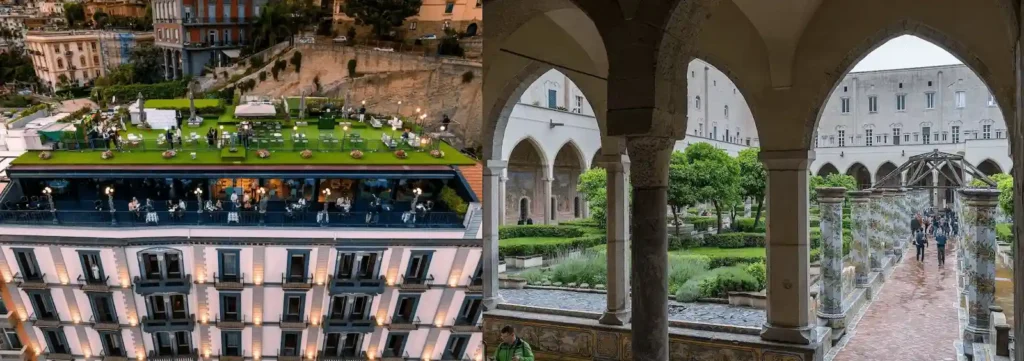
These properties weren’t built as hotels—they were designed as statements of Neapolitan power during the city’s late 19th-century golden age, when European nobility wintered along Via Partenope and architects competed to define the waterfront skyline.
What unites them is positioning: direct Gulf views, proximity to Castel dell’Ovo and Teatro San Carlo, and the kind of Neo-Renaissance or Art Nouveau detailing that signals old-world cachet without requiring restoration theater.
🌅 Grand Hotel Vesuvio ★★★★★
This property anchors the luxury conversation in Naples not through brand affiliation but through its 1882 origins as a Belle Époque palace built for European Grand Tour travelers who considered the city a cultural rival to Florence.
The building retains its Neo-Renaissance marble lobby and terraced Gulf views that position Vesuvius, Capri, and the Castel dell’Ovo waterfront within a single sight line—a composition that justifies premium rates regardless of room size.
Upper-floor suites occupy what were once aristocratic apartments, with original ceiling frescoes and private terraces that feel less like hotel upgrades and more like inherited real estate.
Service here operates with the quiet authority of a property that’s hosted royalty and world leaders for over a century, making it the default choice for travelers who prefer establishments where staff recognize repeat guests by preference, not loyalty program status.
The location eliminates Naples’ logistical challenges—Teatro San Carlo is a three-minute walk, and Spaccanapoli’s historic center requires no taxi navigation.
Best for: Travelers seeking Gulf-front positioning in a verified Belle Époque landmark with rooftop dining and proximity to both waterfront promenades and Naples’ cultural core.
Signature Experience: Rooftop Caruso restaurant with 360-degree Gulf and Vesuvius views, original 1882 marble lobby with Belle Époque architectural detailing, private beach club access at Posillipo, terrace suites with floor-to-ceiling windows framing Castel dell’Ovo and Capri.
“That rooftop view at dawn—Vesuvius glowing pink over the bay—worth the entire trip.” — Giulia, MilanCheck Availability & Rates →
🏛️ Grand Hotel Parker’s ★★★★★
Originally established in 1870 as a private villa for British aristocracy escaping London winters, Parker’s occupies an elevated Corso Vittorio Emanuele position that trades waterfront immediacy for commanding hillside views across the entire Gulf.
The building’s Art Nouveau interiors and terraced gardens retain the feel of a converted residence rather than a purpose-built hotel, with public spaces that reference salon culture and guest rooms scaled like private apartments rather than uniform boxes.
George Restaurant operates under Michelin guidance, making this one of the few Naples hotels where dining becomes a destination rather than a convenience.
What separates Parker’s from waterfront alternatives is its elevation—you’re above the port noise and tourist traffic, positioned instead within walking distance of Certosa di San Martino and Vomero’s residential tranquility.
The trade-off is clear: you gain privacy and territorial views but sacrifice direct beach club access and Via Partenope’s pedestrian energy.
Best for: Guests prioritizing panoramic Gulf views from an elevated Art Nouveau villa with Michelin-caliber dining and residential neighborhood positioning over waterfront convenience.
Signature Experience: George Restaurant with Michelin-recognized Mediterranean cuisine, panoramic Gulf and Vesuvius views from hillside terrace, Art Nouveau architectural detailing from 1870 villa origins, private garden with century-old citrus trees.
“Dinner at George with the entire bay lit up below—you forget you’re in a hotel.” — Thomas, HamburgCheck Availability & Rates →
⛪ Santa Chiara Boutique Hotel ★★★★
This property suits travelers who filter accommodations by cultural proximity rather than waterfront positioning—it occupies a restored 18th-century building steps from the Santa Chiara Monastery complex and Spaccanapoli’s spine, where Naples’ Baroque and Gothic architecture defines the streetscape instead of Gulf views.
The hotel‘s compact scale and residential layout feel more like a private apartment conversion than a traditional boutique property, with just 27 rooms that prioritize design clarity over amenity lists.
What you gain here is logistical efficiency: Gesù Nuovo and San Domenico Maggiore are within two-minute walks, eliminating taxi navigation through Naples’ dense historic center.
The trade-off is intentional—no rooftop pool, no beach club partnerships, no lobby grandeur—just a refined base within the city’s most architecturally significant quarter.
Service operates with boutique hotel precision, where front desk staff function more like local concierges than corporate hospitality professionals, making this the choice for repeat Naples visitors who’ve already photographed Vesuvius from Via Partenope and now prioritize street-level cultural immersion.
Best for: Design-focused travelers seeking Spaccanapoli cultural positioning in a restored 18th-century building with boutique-scale intimacy and walkable access to Naples’ Baroque core.
Signature Experience: Restored 18th-century architecture with original vaulted ceilings, rooftop terrace overlooking Santa Chiara Monastery cloister, immediate access to Spaccanapoli’s Gothic and Baroque landmarks, 27-room boutique scale with personalized service.
“Walking out the door directly into Spaccanapoli—you’re inside Naples’ soul, not observing it.” — Anna, ViennaCheck Availability & Rates →
🏰 Palazzo Alabardieri ★★★★
Built in the early 19th century as a noble residence within the Chiaia district, this palazzo conversion occupies the refined middle ground between waterfront grandeur and historic center density—Via Chiaia’s luxury shopping corridor provides logistical connectivity to both Via Partenope and Spaccanapoli without requiring you to stay on either axis.
The property’s 33 rooms retain palazzo-scale proportions, with high ceilings and Neo-Classical detailing that reference aristocratic origins rather than boutique hotel minimalism.
What makes Alabardieri relevant is its positioning within Naples’ most walkable luxury retail and dining quarter—you’re two minutes from Galleria Umberto I and five minutes from Teatro San Carlo, eliminating the waterfront-to-culture commute that defines Via Partenope stays.
The in-house restaurant operates more as a neighborhood dining room than a hotel amenity, attracting local professionals who treat it as a Chiaia institution rather than tourist convenience.
This isn’t a landmark building in the Vesuvio sense—it’s a verified palazzo that functions as a residential-feel alternative for travelers who value central positioning over Gulf views and prefer boutique discretion to Belle Époque theater.
Best for: Guests prioritizing Chiaia’s central positioning in a 19th-century palazzo with boutique-scale service, luxury retail proximity, and walkable access to both waterfront and historic quarters.
Signature Experience: 19th-century palazzo architecture with Neo-Classical detailing, Via Chiaia luxury shopping corridor access, in-house restaurant favored by Naples’ professional class, private courtyard garden with original palazzo stonework.
“That courtyard breakfast—quiet, local, no tour groups—felt like staying at a friend’s palazzo.” — Marco, FlorenceCheck Availability & Rates →
🌊 Grand Hotel Santa Lucia ★★★★
This waterfront property occupies a Neo-Renaissance building that predates Via Partenope’s Belle Époque hotel boom, originally constructed in 1899 for affluent travelers seeking Castel dell’Ovo proximity without the palazzo formality of Vesuvio or Parker’s.
What defines Santa Lucia today is its understated positioning—it delivers direct Gulf views and waterfront terrace dining without requiring rooftop theater or architectural landmark status.
Guest rooms prioritize functional elegance over design statements, with floor-to-ceiling windows that frame Vesuvius and the Borgo Marinari yacht harbor rather than relying on interior detailing to justify rates.
The property suits travelers who’ve already stayed at Naples’ more theatrical options and now prioritize location efficiency over lobby grandeur—you’re steps from Castel dell’Ovo and the Santa Lucia waterfront promenade, with Teatro San Carlo and Galleria Umberto I within a five-minute walk.
Service operates with four-star reliability rather than five-star spectacle, making this the pragmatic choice for repeat Naples visitors who filter hotels by positioning and view quality rather than heritage pedigree or amenity lists.
Best for: Travelers seeking waterfront positioning with Castel dell’Ovo and Vesuvius views in a functional Neo-Renaissance building prioritizing location over architectural grandeur.
Signature Experience: Direct Via Partenope waterfront access with Castel dell’Ovo views, Borgo Marinari yacht harbor proximity, terrace dining with Gulf and Vesuvius panoramas, Neo-Renaissance building with understated four-star reliability.
“That morning espresso on the terrace—Vesuvius right there—no fuss, just perfection.” — Lucia, RomeCheck Availability & Rates →
📊 Comparison: Best Hotels in Naples
| Hotel | Location | Wellness & Spa | Dining | Unique Perks | Best For |
|---|---|---|---|---|---|
|
🌅 Grand Hotel Vesuvio ★★★★★ |
Via Partenope, Gulf-front |
Private beach club, wellness center |
Rooftop Caruso, 360° Gulf views |
1882 Belle Époque palace Original marble lobby |
Gulf views, landmark heritage |
|
🏛️ Grand Hotel Parker’s ★★★★★ |
Corso Vittorio, hillside elevation |
Spa services, terrace gardens |
Michelin George, panoramic dining |
1870 Art Nouveau villa Elevated Gulf panorama |
Hillside views, Michelin dining |
|
⛪ Santa Chiara Boutique Hotel ★★★★ |
Spaccanapoli, historic center |
Rooftop terrace, wellness packages |
Local Neapolitan, monastery views |
18th-century restoration Baroque quarter access |
Cultural immersion, boutique intimacy |
- For a comparative look at Tuscany’s most distinguished castle conversions, continue with best Luxury Castle Hotels in Tuscany.
❓ FAQ: Best Hotels in Naples
Which hotel in Naples has the most historic significance?
Grand Hotel Vesuvio stands out as the most historically significant property, originally built in 1882 as a Belle Époque palace designed specifically for European Grand Tour aristocracy who considered Naples a cultural rival to Florence. The hotel retains its original Neo-Renaissance marble lobby and architectural detailing that defined waterfront luxury during Naples’ 19th-century golden age, making it the top choice for travelers seeking authentic historic heritage rather than modern interpretations of historical themes.
Where should I stay in Naples for the best Gulf views?
Via Partenope properties deliver the most direct Gulf and Vesuvius views, with Grand Hotel Vesuvio occupying the prime waterfront position where Castel dell’Ovo, Capri, and the entire bay frame every sight line. Grand Hotel Parker’s offers elevated panoramic Gulf views from its hillside Corso Vittorio Emanuele location, trading waterfront immediacy for commanding territorial perspectives across the entire city and coastline.
Are Naples hotels within walking distance of major cultural sites?
Yes—Via Partenope waterfront hotels position Teatro San Carlo, Galleria Umberto I, and the Royal Palace within five to eight minutes on foot, while Spaccanapoli properties like Santa Chiara Boutique Hotel place you directly inside the Baroque historic quarter with Santa Chiara Monastery, Gesù Nuovo, and San Domenico Maggiore accessible within two minutes. Chiaia district hotels split the difference, offering central access to both waterfront landmarks and cultural core attractions without requiring taxi navigation.
Which Naples hotel is best for repeat visitors?
Santa Chiara Boutique Hotel suits repeat visitors who’ve already experienced Via Partenope’s waterfront grandeur and now prioritize Spaccanapoli’s street-level cultural immersion over Gulf views and rooftop dining. The property’s 18th-century restoration and 27-room boutique scale deliver residential-feel accommodations within Naples’ most architecturally dense historic quarter, eliminating logistical planning in favor of spontaneous neighborhood exploration.
Do Naples luxury hotels have beach club access?
Grand Hotel Vesuvio provides private beach club access at Posillipo, approximately 15 minutes by hotel shuttle, while Via Partenope’s waterfront positioning allows walk-up access to public Lungomare promenades and Borgo Marinari yacht harbor. Most Naples heritage hotels prioritize architectural and cultural positioning over resort-style beach facilities, with Gulf views from rooftop terraces serving as the primary water-oriented amenity rather than dedicated beach clubs.
What’s the best time to book hotels in Naples?
Peak season spans April through June and September through October when Gulf weather remains ideal and cultural events like Maggio dei Monumenti activate the city’s heritage sites. Booking 90 to 120 days ahead for spring and early fall secures preferred room categories at properties like Vesuvio and Parker’s, where corner suites and terrace upgrades fill earliest. Winter months (November through February) deliver lower rates but retain full hotel services, appealing to travelers prioritizing Teatro San Carlo opera season over beach weather.
Which Naples hotel has the best restaurant?
Grand Hotel Parker’s George Restaurant operates under Michelin guidance with Chef Domenico Candela’s seasonal Campanian tasting menus that attract local diners, not just hotel guests—it’s the only Naples hotel restaurant where reservations book weeks ahead during peak season. Grand Hotel Vesuvio’s rooftop Caruso balances refined Mediterranean cuisine with 360-degree Gulf and Vesuvius views, prioritizing location and atmosphere over Michelin pursuit.
Which Naples Hotel Matches Your Priorities?
Selecting the right hotel in Naples comes down to positioning—whether you value waterfront Belle Époque grandeur, elevated hillside panoramas, or street-level immersion within the Baroque historic core.
The properties above represent Naples’ most consistently refined accommodations for travelers who filter choices by architectural heritage, cultural proximity, and the kind of discretion that matters when you’re not booking based on brand recognition alone. Availability at properties like Vesuvio and Parker’s shifts quickly once spring season begins—particularly for Gulf-view suites and terrace upgrades that separate standard bookings from optimal stays.
For additional landmark stays across the country, compare these selections with our curated historic hotels in Sicily and legendary heritage stays in Amalfi coast guides.
For more curated itineraries and luxury-focused travel insights, visit Your Luxury Guide. For official travel information and destination updates, visit Italy tourism-info.
Book your Naples historic hotel early for peak season access, confirm specific room numbers for terrace upgrades, and prepare for a city where the building’s 19th-century soul justifies every premium rate over standard luxury alternatives.
Your Luxury Guide — Where Exceptional Travel Begins.