The best hotels in Mallorca aren’t just luxury resorts—they’re fortified estates, monastic sanctuaries, and noble palaces that predate tourism by centuries.
After filtering the island’s most architecturally significant properties, we’ve narrowed the field to seven stays where the building’s past life elevates the entire experience. These aren’t rebranded villas; they’re verified historical conversions—19th-century military strongholds, 13th-century conquest estates, and 17th-century convents—where stone courtyards, original chapels, and aristocratic lineage still define the atmosphere.
Below are the properties that justify premium rates not through amenities, but through soul: the kind of stays that make a week in Mallorca feel like inhabiting a piece of Balearic history rather than passing through it. If you value architectural gravity over Instagram angles, these seven historic stays represent the island’s most refined overnight options.
For a broader view of Spain’s most distinguished heritage conversions, explore our curated collection of the best authentic Historic Hotels in Spain.
Coastal Fortresses & Noble Estates
These properties anchor Mallorca’s most dramatic coastal and hillside locations—sites chosen for defensive power or aristocratic retreat centuries before tourism existed.
What unifies them isn’t proximity to beaches, but architectural permanence: stone walls that absorbed conquest, towers that marked territorial claims, and estates that survived dynastic transitions. Staying here means occupying buildings designed to outlast empires.
🏰 Cap Rocat, a Small Luxury Hotel of the World ★★★★★
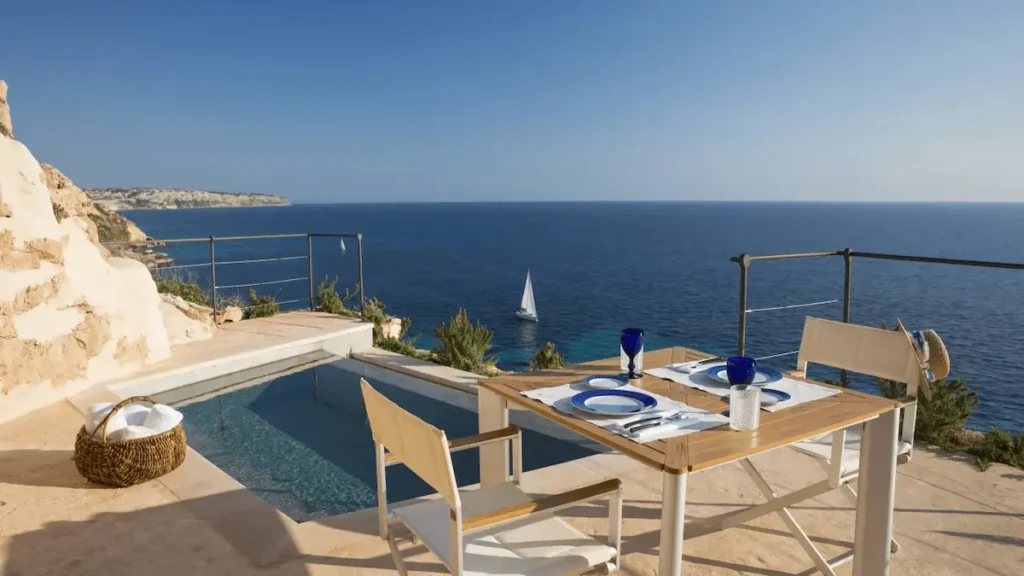
A 19th-century military fortress carved into coastal sandstone, Cap Rocat is the island’s most architecturally audacious conversion—where artillery batteries became pool terraces and gunpowder stores transformed into candle-lit suites.
The property occupies a peninsula fortification commissioned in 1863 to guard Palma Bay from naval invasion; its bastions, barracks, and watchtowers now frame private coves and infinity edges that dissolve into the Mediterranean.
Rooms retain raw stone walls, vaulted ceilings, and narrow garrison windows—no pastels, no beach-resort softness. The spa occupies the original underground ammunition depot. What separates this from coastal resorts is permanence: you’re sleeping inside a defensive structure engineered to withstand sieges, not a villa designed for sunbathers.
Best for: Design-focused travelers seeking a coastal fortress with military-grade architecture and zero resort uniformity.
Signature Experience: Garrison-turned-suites with vaulted stone ceilings, Sea Club beach access via private steps carved into cliff face, infinity pools cantilevered over bastions, candlelit dining in the original Officers’ Mess Hall.
“Dinner in the old fortress hall—candles, stone, sea wind—felt like a film set but completely real.” — Henrik, CopenhagenCheck Availability & Rates →
🏰 Castillo Hotel Son Vida, a Luxury Collection Hotel ★★★★★
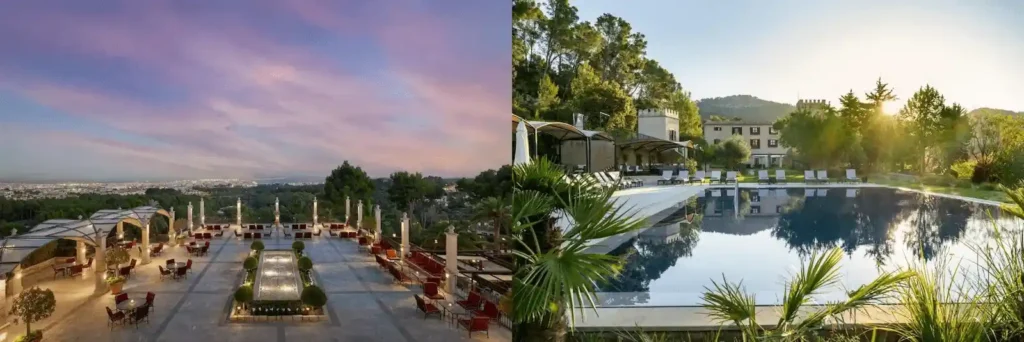
Built on land granted during the 1229 Aragonese conquest, Castillo Hotel Son Vida is Mallorca’s longest continuously documented noble estate—its 16th-century tower still anchors the property like a territorial marker. This isn’t a palace that became a hotel recently; it’s been receiving overnight guests since the 1960s, but its bones stretch back to feudal Mallorca.
The 16th-century tower and original defensive walls remain intact; rooms occupy stone halls that once housed landowning families who controlled thousands of hectares. What matters here isn’t novelty—it’s lineage: staying at Son Vida means occupying a building class that predates modern Spain. The golf course and spa are secondary; the estate’s medieval foundation is the asset.
Best for: Travelers prioritizing verifiable historical continuity over design-forward minimalism—this is bloodline architecture.
Signature Experience: Medieval tower access with Palma Bay views, estate grounds spanning centuries-old olive groves, two 18-hole golf courses on noble land, Arabella Spa with thermal circuit.
“Walking through that 16th-century tower at sunrise—felt like stepping into Mallorca’s actual past.” — Clara, MadridCheck Availability & Rates →
🏰 Castell Son Claret — The Leading Hotels of the World ★★★★★
Dating to 1448, Castell Son Claret is a fortified manor that embodies Mallorca’s agricultural-aristocratic transition—when defensive towers protected harvests and noble families controlled entire valleys. The estate’s “possessió” designation marks it as one of the island’s original landed gentry properties; its stone walls and Renaissance chapel anchor a landscape of olive groves and almond orchards that predates modern road networks.
Rooms occupy restored manor wings with original ceiling beams and terracotta floors—no fake rustic touches. The spa is subterranean, carved into the estate’s foundation. What makes Son Claret elite isn’t luxury amenities; it’s architectural proof of Balearic power structures that lasted five centuries.
Best for: Travelers seeking aristocratic seclusion in the Tramuntana foothills—this is estate-class permanence, not boutique novelty.
Signature Experience: 15th-century stone chapel for private events, Michelin-star dining in the manor hall, spa carved into estate foundations, valley views from Renaissance-era tower.
“That chapel—500 years old, still standing, just for us—worth the entire stay.” — Thomas, ZurichCheck Availability & Rates →
Monastic Sanctuaries & Religious Retreats
Mallorca’s monastic conversions aren’t boutique hotels with spiritual themes—they’re functioning religious buildings repurposed into overnight sanctuaries where silence, stone, and austere beauty remain intact. These properties carry institutional gravity: chapels, cloisters, and meditation gardens designed for contemplation, not commerce. Staying here means inhabiting spaces that prioritized the soul over comfort for centuries.
🏰 Son Brull Hotel & Spa — Relais & Châteaux ★★★★★
An 18th-century Jesuit monastery buried in the Tramuntana foothills, Son Brull preserves the monastic austerity that defined rural Catholic retreat life—thick stone walls, barrel-vaulted ceilings, and a silence unbroken by modern construction.
The original chapel, built in the 1700s for Jesuit contemplation, anchors the estate; rooms occupy former monk cells, expanded but not softened. This isn’t a hotel with religious décor; it’s a sacred building adapted for luxury lodging without erasing its institutional past. The spa occupies what were once meditation chambers.
What separates Son Brull from boutique conversions is authenticity: you’re sleeping in a structure engineered for spiritual discipline, not leisure.
Best for: Travelers seeking monastic tranquility with Relais & Châteaux-level service—this is contemplative architecture, not spa-resort packaging.
Signature Experience: 18th-century Jesuit chapel for private ceremonies, stone-walled suites with vaulted ceilings, Michelin-level dining in the former refectory, spa carved into monastic meditation halls.
“That chapel at dusk—candles, silence, 300 years of prayers still in the walls.” — Astrid, StockholmCheck Availability & Rates →
🏰 Convent de la Missio — Grand Luxury Boutique Hotel ★★★★★
Built in 1644 as a mission convent in Palma’s old town, Convent de la Missio retains the institutional silence and heavy stone construction of a functioning religious center—cloistered courtyards, refectory halls, and prayer chambers that predate Spain’s modern tourism economy by three centuries. This isn’t a palace with a chapel attached; it’s a convent repurposed into an adults-only sanctuary where the original mission structure dictates the layout.
Rooms occupy former nuns’ quarters, expanded but not stripped of their ascetic bones. The rooftop pool occupies the old meditation terrace. What makes this property elite isn’t design innovation; it’s structural honesty—sleeping inside a building that prioritized faith over comfort for 250 years before accepting overnight guests.
Best for: Design-aware travelers seeking urban monastic refuge—this is institutional religious architecture adapted for overnight stays, not boutique minimalism.
Signature Experience: 17th-century cloistered courtyard for private dining, rooftop pool overlooking Palma’s cathedral, suites carved from nuns’ quarters, adults-only sanctuary atmosphere.
“That cloister at midnight—stone, stars, zero noise—felt like a 17th-century secret.” — Javier, ValenciaCheck Availability & Rates →
Palaces & Noble Residences in Palma
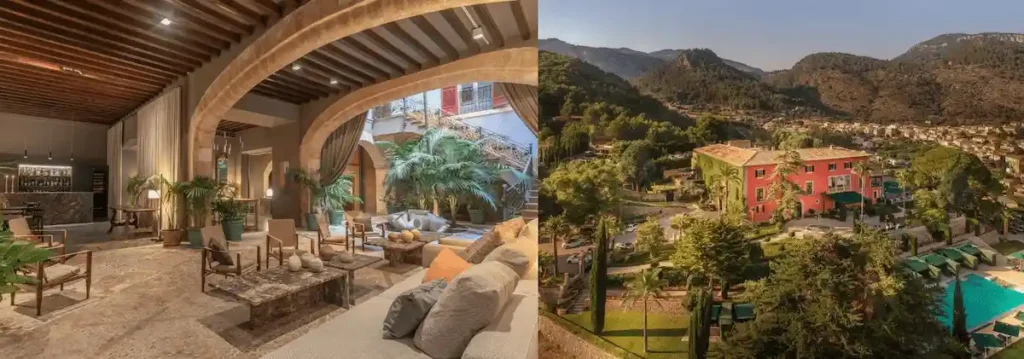
Palma’s historic center houses the island’s most refined noble palaces—”palaus” with interior courtyards, Renaissance façades, and family crests that marked territorial power before Spain unified. These aren’t hotels with palace themes; they’re residential aristocratic buildings repurposed into overnight lodging where original stone staircases, frescoed ceilings, and heraldic symbols remain intact.
Staying here means occupying the urban architecture that defined Balearic nobility for centuries.
🏰 Can Cera Hotel ★★★★★
Originating in the 13th century and expanded in the 1600s, Can Cera is Palma’s finest example of a residential “palau”—a noble palace with an interior courtyard, heraldic stonework, and aristocratic salons that predate modern hotel design by 400 years.
The property occupies the old quarter’s historic core; its Renaissance courtyard, original stone staircase, and family crests mark it as a building class above converted townhouses. Rooms retain ceiling frescoes and wooden beam ceilings from the 17th century.
What separates Can Cera from boutique hotels is pedigree: this isn’t a renovated merchant house; it’s a documented noble residence that housed landowning families for centuries. The rooftop terrace overlooks Palma’s cathedral—territorial views that once signaled power.
Best for: Travelers prioritizing residential aristocratic architecture over contemporary design—this is palace-class lodging in Palma’s historic core.
Signature Experience: 13th-century Renaissance courtyard for private events, rooftop terrace with cathedral views, suites with original 17th-century frescoes, stone staircases carved with family crests.
“That courtyard at breakfast—400 years of stone, zero tourist noise—felt like Palma’s secret.” — Elena, MilanCheck Availability & Rates →
🏰 Grand Hotel Son Net ★★★★★
A 1672 palatial estate in the Tramuntana foothills, Grand Hotel Son Net anchors its prestige on an original 13th-century olive press and private chapel—physical proof of agricultural aristocracy that predates Spain’s modern tourism economy by half a millennium.
The manor’s stone façade, Renaissance windows, and courtyard fountain mark it as peak rural nobility; rooms occupy the original family wings with ceiling beams from the 1600s. The estate spans olive groves still producing oil from trees planted in the 1300s.
What makes Son Net elite isn’t spa amenities; it’s architectural continuity—sleeping in a building whose foundation outlasted empires.
Best for: Travelers seeking palatial rural seclusion with verifiable 17th-century lineage—this is estate-class architecture, not country-house branding.
Signature Experience: 13th-century olive press still operational, private 17th-century chapel for ceremonies, estate vineyards producing Son Net wines, infinity pool overlooking Tramuntana valleys.
“That olive press—600 years old, still grinding—made the entire estate feel alive with history.” — Marcus, BerlinCheck Availability & Rates →
📊 Comparison: Best Hotels in Mallorca
| Hotel | Location | Wellness & Spa | Dining | Unique Perks | Best For |
|---|---|---|---|---|---|
|
🏰 Cap Rocat ★★★★★ |
Coastal fortress, Cala Blava |
Underground spa in ammunition depot |
Officers’ Mess Hall candlelit dining |
19th-century bastions, infinity pools over cliffs |
Military architecture, design purists |
|
🏰 Castillo Son Vida ★★★★★ |
Hilltop estate, Son Vida |
Arabella Spa, thermal circuit |
Estate dining, Mediterranean cuisine |
16th-century tower, Palma Bay views |
Bloodline estates, golf access |
|
🏰 Castell Son Claret ★★★★★ |
Tramuntana foothills, Es Capdellà |
Subterranean spa, estate foundation |
Michelin-star dining, manor hall |
15th-century chapel, valley views |
Aristocratic seclusion, estate heritage |
|
🏰 Son Brull ★★★★★ |
Jesuit monastery, Pollença |
Monastic meditation hall spa |
Refectory dining, Michelin-level |
18th-century chapel, vaulted ceilings |
Monastic tranquility, contemplative stays |
❓ FAQ: Best Hotels in Mallorca
Which hotel in Mallorca has the most historic significance?
Castillo Hotel Son Vida is the standout, built on land granted during the 1229 Aragonese conquest with a 16th-century defensive tower still anchoring the estate. It represents the island’s longest continuously documented noble lineage, making it the top choice for travelers seeking verifiable historical depth rather than recent conversions.
Are Mallorca’s historic hotels only in Palma’s old town?
No—Mallorca’s most architecturally significant properties span coastal fortresses like Cap Rocat, Tramuntana mountain estates such as Castell Son Claret, and rural monasteries like Son Brull. Palma’s old town holds palace conversions like Can Cera and Convent de la Missió, but the island’s estate-class heritage extends far beyond the city center.
Do these historic hotels retain original architectural features?
Yes—properties like Cap Rocat preserve 19th-century artillery bastions, Son Brull maintains its 18th-century Jesuit chapel, and Can Cera retains 13th-century Renaissance courtyards with original family crests. These aren’t hotels with heritage décor; they’re verified historical buildings where the original structure dictates the guest experience.
What’s the difference between a Mallorcan palace and a monastery conversion?
Palaces like Can Cera were residential aristocratic buildings with courtyards and family salons designed for nobility; monasteries like Son Brull and Convent de la Missió were institutional religious structures built for contemplation and communal prayer. Palaces offer urban grandeur; monasteries deliver austere stone architecture with sacred silence still embedded in the walls.
Which Mallorca historic hotel is best for couples seeking seclusion?
Castell Son Claret in the Tramuntana foothills offers the most complete aristocratic seclusion—a 15th-century fortified manor on a private estate with valley views, a Renaissance chapel, and zero neighboring properties. It’s designed for travelers who want to disappear into landed gentry architecture without sacrificing Michelin-level service.
Can you stay in a converted military fortress in Mallorca?
Yes—Cap Rocat is a 19th-century coastal fortress carved into sandstone cliffs, where artillery batteries became pool terraces and garrison barracks transformed into stone-walled suites. It’s the island’s only military-grade conversion available for overnight stays, offering defensive architecture that predates resort tourism by a century.
Do these historic hotels require advance booking?
Yes—properties like Castell Son Claret, Son Brull, and Cap Rocat have limited room inventory due to their historical structures, and peak season (May through October) fills months ahead. If you’re targeting specific suites with original architectural features, confirm directly with the hotel at least 8–12 weeks before arrival to secure the best heritage-focused rooms.
Which Mallorca Hotel Is Right for You?
Choosing the best hotel in Mallorca isn’t about chasing five stars—it’s about selecting a building whose past life justifies the premium. The seven properties above represent the island’s most architecturally significant conversions: verified fortresses, monasteries, and noble estates where history isn’t décor, it’s structure. Availability at this level shifts quickly once peak season begins, and the best heritage rooms—tower suites, chapel-access estates, former garrison quarters—fill first.
For travelers seeking Spain’s broader historic hotel landscape, continue with our curated selections of the finest hotels in Granada and Barcelona, where Moorish palaces and Modernist heritage define overnight luxury beyond standard hospitality.
For more curated itineraries and luxury-focused travel insights, visit Your Luxury Guide. For official travel information and destination updates, visit Spain tourism-info.
Booking your hotel in Mallorca secures access to buildings that predate tourism by centuries—where military fortresses, monastic sanctuaries, and aristocratic estates deliver stays shaped by stone, silence, and lineage rather than amenities alone.
Your Luxury Guide — Where Exceptional Travel Begins.