Finding the best hotels in Maastricht means choosing properties where the building itself justifies the stay—15th-century monastery cloisters, Jugendstil railway palaces, and the only terraced castle in the Netherlands. This city doesn’t trade in generic five-star design; it offers stays inside verified Gothic landmarks where Napoleon stored weapons and Teutonic Knights commanded crusades.
After filtering Maastricht’s most architecturally significant conversions, we narrowed the field to five properties that deliver soul, not just service. Below are the hotels that make sense if you value historical depth, architectural rarity, and accommodations where every stone tells a centuries-old story.
For broader context across the country’s finest conversions, explore best authentic historic stays in the Netherlands.
Monastery Conversions & Gothic Masterworks
Maastricht’s finest stays occupy intact religious structures dating back to the 13th century—properties where vaulted ceilings, original brickwork, and monastic proportions weren’t added during renovations but preserved from centuries of devotion. These aren’t themed hotels; they’re verified landmarks where the architecture dictates the experience.
Expect austere grandeur, soaring stone walls, and the rare privilege of sleeping inside buildings that shaped medieval Europe.
🕍 Kruisherenhotel Maastricht – Oostwegel Collection, member of Design Hotels ★★★★★
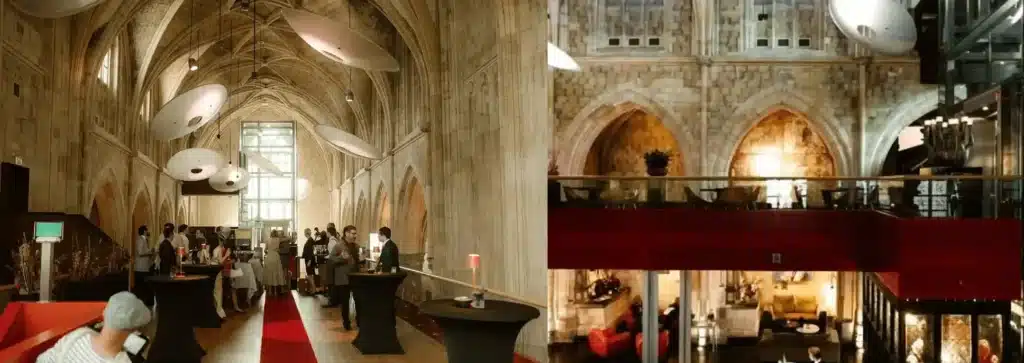
This property occupies a 1440 Gothic monastery built for the Crutched Friars, retaining its original 15-meter-high vaulted nave and triple-arched windows—architectural elements so rare they define Maastricht’s entire medieval quarter.
The former church now functions as the dining hall, where breakfast under ribbed stone ceilings feels less like a hotel amenity and more like a private Mass for design-conscious guests. Napoleon’s army once stored arms in these chambers; today, it’s the most architecturally significant conversion in the Netherlands, blending Henk Vos’s contemporary glass interventions with 580 years of uninterrupted Gothic soul.
Service balances reverence for the building with modern discretion—staff understand you’re here for the monastery first, the luxury second. If you’re choosing Maastricht for its medieval depth, this is the only property where the structure itself outranks every other consideration.
Best for: Design travelers seeking the Netherlands’ most intact Gothic monastery conversion with Michelin-level dining inside a consecrated nave.
Signature Experience: Breakfast beneath 15th-century ribbed vaults in the original church, spa treatments in former monastic cells, rooftop terrace overlooking Maastricht’s historic core, contemporary Dutch cuisine in a Gothic sanctuary.
“Waking up in a monk’s cell with underfloor heating—history done right.” — Lena, BrusselsCheck Availability & Rates →
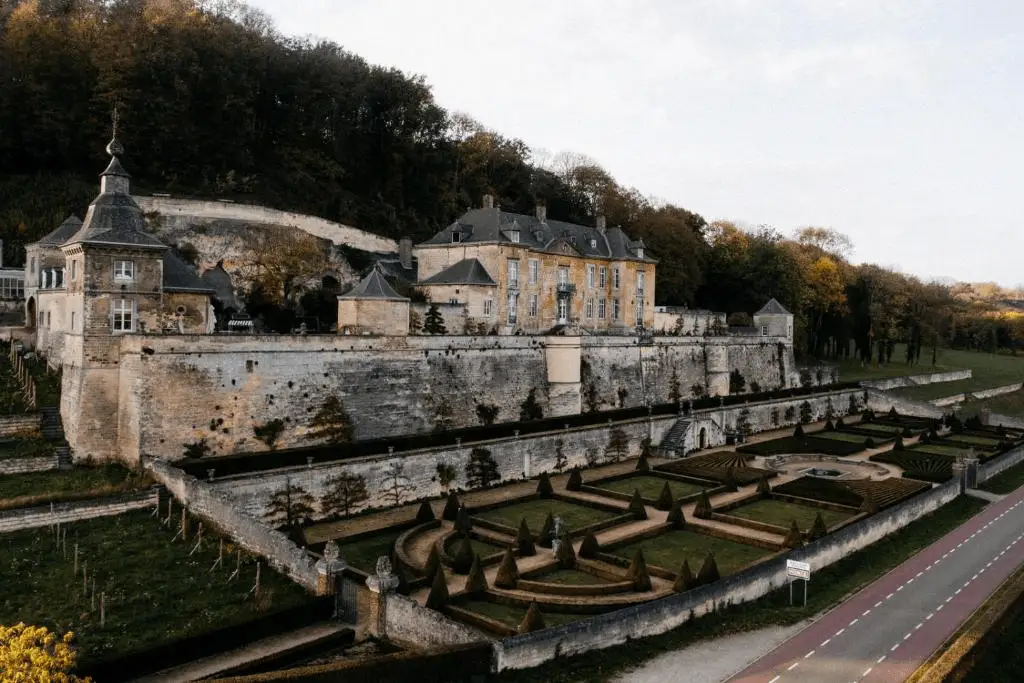
🏰 Château Neercanne – Oostwegel Collection, member of Relais and Châteaux ★★★★★
Built in 1698 on the site of Roman defenses, this hillside fortress remains the only terraced castle in the Netherlands—a one-of-a-kind configuration that allowed Dutch nobility to command the Meuse Valley while cultivating vineyards on military ramparts.
The underground caves still bear signatures of European leaders who dined here during summit negotiations, and the estate’s formal gardens descend in baroque precision toward the Belgian border.
Rooms occupy the original palace chambers, preserving 17th-century proportions without sacrificing modern comfort—expect high ceilings, period furnishings, and windows that frame the same view Dutch generals once used to assess approaching armies.
The two-Michelin-starred restaurant operates inside the castle itself, making this a rare stay where the building, cuisine, and historical weight converge without compromise. Availability here is notoriously tight due to wedding bookings and culinary pilgrimages, so securing a room requires advance planning.
Best for: Travelers seeking the Netherlands’ only terraced castle with two-Michelin-star dining and 700-year-old Roman wine caves.
Signature Experience: Dining in Michelin-starred chambers overlooking terraced vineyards, private tours of signed Roman caves, baroque garden walks along military fortifications, palace rooms with Meuse Valley views.
“The caves alone—worth the drive from Amsterdam just to see where history was negotiated.” — Marcus, LondonCheck Availability & Rates →
⚔️ Teaching Hotel ★★★★
Dating to 1284, this castle served as a commandery for the Teutonic Knights before becoming the private residence of the Regout industrial dynasty—700 years of defensive and elite history compressed into one of Maastricht’s most significant stone structures.
The property now operates as a teaching hotel, which means service comes from hospitality students under professional supervision—a trade-off that delivers attentive care without the polish of a traditional luxury brand.
Rooms occupy the castle’s original chambers, retaining medieval proportions and stone detailing, though modern interventions (bathrooms, heating) feel functional rather than refined.
The appeal here isn’t flawless luxury; it’s the rare opportunity to sleep inside a Teutonic stronghold for a fraction of what Kruisherenhotel or Neercanne command. If you’re comfortable prioritizing historical soul over service consistency, this is Maastricht’s most undervalued architectural stay.
Best for: History-focused travelers willing to trade boutique polish for access to a 13th-century Teutonic Knights’ castle at exceptional value.
Signature Experience: Sleeping in Teutonic Knights’ chambers, castle gardens with 700-year-old fortification walls, dining in the medieval Great Hall, guided tours of knight-era architecture.
“Not boutique, not polished—just an actual castle where knights lived. Loved every rough stone.” — Tom, BerlinCheck Availability & Rates →
🏛️ Amrâth Grand Hotel de l’Empereur ★★★★
This 1911 Jugendstil landmark represents Maastricht’s Belle Époque identity as an international railway hub—a Rijksmonument where Art Nouveau detailing (stained glass, ironwork, sweeping staircases) remains intact from its opening day.
The property sits directly opposite Maastricht’s central station, making it the city’s most logistically convenient heritage stay, though the trade-off is street-facing noise in lower-floor rooms.
Interiors balance period grandeur with modern comfort—high ceilings, original moldings, and contemporary bathrooms that don’t compromise the building’s architectural integrity.
Service feels more grand hotel than boutique, which suits travelers who prefer formality over intimacy. If you’re prioritizing central location and verified Art Nouveau architecture without monastery austerity, this is Maastricht’s most accessible landmark conversion.
Best for: Design-aware travelers valuing central station access and intact Jugendstil architecture with grand hotel service tradition.
Signature Experience: Art Nouveau breakfast hall with original stained glass, Belle Époque grand staircase, rooms with period moldings and railway views, formal bar with 1911 ironwork.
“That staircase alone—felt like stepping into a Klimt painting every morning.” — Anna, ViennaCheck Availability & Rates →
🕊️ Hotel Monastère Maastricht ★★★★
This 14th-century religious complex maintains its original brickwork and monastic proportions without the soaring Gothic drama of Kruisherenhotel—think intimate cloisters rather than cathedral-scale vaults.
The property preserves the austere but refined character of Maastricht’s medieval religious quarter, with rooms that occupy former monk cells (expanded and modernized) and communal spaces that retain the quiet, contemplative atmosphere of a working monastery.
Service is understated and informal, which works if you prefer minimal interference over choreographed luxury. The location places you in the historic Jekerkwartier, steps from Maastricht’s oldest streets and independent galleries, though you’ll sacrifice river views and Michelin dining.
If you’re seeking monastery soul without the premium price of Kruisherenhotel, this delivers verified 14th-century brickwork at a more approachable rate.
Best for: Travelers seeking intimate 14th-century monastic atmosphere in Maastricht’s medieval quarter without Gothic grandeur pricing.
Signature Experience: Breakfast in original monastery cloisters, rooms in former monk cells with preserved brickwork, courtyard garden with medieval stone walls, location in historic Jekerkwartier.
“Smaller than Kruisherenhotel, but that courtyard at sunrise—pure medieval calm.” — Claire, ParisCheck Availability & Rates →
📊 Best Hotels in Maastricht Comparison
| Hotel | Location | Wellness & Spa | Dining | Unique Perks | Best For |
|---|---|---|---|---|---|
|
🕍 Kruisherenhotel Maastricht ★★★★★ |
Historic center, Gothic quarter |
Spa in monastic cells, rooftop terrace |
Michelin-level in consecrated nave |
15th-C. Gothic church, Napoleon’s arsenal |
Design travelers, Gothic architecture |
|
🏰 Château Neercanne ★★★★★ |
Hillside estate, Meuse Valley |
Terraced gardens, Roman cave tours |
Two-Michelin-star palace dining |
Only terraced castle, signed caves |
Culinary pilgrims, fortress grandeur |
|
⚔️ Teaching Hotel ★★★★ |
Historic center, castle grounds |
Castle gardens, medieval walls |
Great Hall dining, student-staffed |
1284 Teutonic castle, knight chambers |
History purists, value seekers |
- Continue your Dutch historical journey with best hotels in Utrecht for more monastery conversions.
❓ FAQ: Best Hotels in Maastricht
What makes Maastricht’s historic hotels different from standard luxury properties?
Maastricht’s finest hotels occupy verified Gothic monasteries, Teutonic castles, and Belle Époque landmarks where the building predates modern luxury by 500–700 years. Properties like Kruisherenhotel and Château Neercanne preserve intact architectural elements—vaulted naves, Roman caves, terraced fortifications—that can’t be replicated in contemporary design. You’re booking the structure as much as the service.
Which Maastricht hotel offers the most significant Gothic architecture?
Kruisherenhotel Maastricht occupies the city’s only intact 15th-century Gothic monastery, retaining its original triple-arched windows, 15-meter vaulted nave, and consecrated church structure. The building served as Napoleon’s military arsenal before its conversion, making it both architecturally supreme and historically layered in a way no other property matches.
Is Château Neercanne worth the distance from central Maastricht?
Château Neercanne sits 3 kilometers south of the city center on the Belgian border, which adds 10 minutes by taxi but justifies the trip with the Netherlands’ only terraced castle and two-Michelin-star dining. The estate’s Roman caves and signed chambers offer historical depth unavailable at urban properties. If you’re visiting Maastricht primarily for the castle and culinary experience, the location is irrelevant—most guests never leave the grounds.
What’s the best value historic hotel in Maastricht?
Teaching Hotel delivers access to a 13th-century Teutonic Knights’ castle at rates 40–50% below Kruisherenhotel, though service comes from hospitality students rather than seasoned professionals. If you prioritize sleeping inside a verified medieval stronghold over boutique polish, it’s Maastricht’s most undervalued architectural stay.
Can you walk between Maastricht’s historic hotels?
Kruisherenhotel, Hotel Monastère, and Amrâth Grand Hotel de l’Empereur all sit within a 15-minute walk in the historic center. Teaching Hotel requires 10 minutes by taxi from the core, while Château Neercanne is 3 kilometers south and best accessed by car or arranged transfer. The monastery hotels cluster in the medieval quarter, making them ideal for walkable itineraries.
Which Maastricht hotel is best for Michelin dining?
Château Neercanne houses a two-Michelin-star restaurant inside the 17th-century palace, making it the only property where world-class cuisine operates within the heritage structure itself. Kruisherenhotel offers Michelin-level dining in its Gothic nave but holds one star. If culinary excellence is your primary driver, Neercanne outranks every other option.
Do Maastricht’s heritage hotels require advance booking?
Properties like Kruisherenhotel and Château Neercanne maintain fewer than 30 rooms each, and wedding bookings (especially at Neercanne) block significant availability from May through September. Securing rooms 8–12 weeks ahead ensures access, particularly if you’re targeting specific architectural features like Kruisherenhotel’s church-view suites or Neercanne’s cave-access chambers.
Choosing Your Maastricht Historic Stay
Booking the best hotels in Maastricht means selecting properties where 700 years of Gothic, Baroque, and Art Nouveau architecture defines the stay—not five-star amenities. The hotels above represent the city’s most architecturally significant conversions for travelers who value verified history over contemporary design.
Compare these selections with best hotels in Rotterdam for a broader look at the Netherlands’ finest urban historic stays.
For more curated itineraries and luxury-focused travel insights, visit Your Luxury Guide. For official travel information and destination updates, visit Netherlands tourism-info.
Booking your Maastricht historic hotel secures access to structures—Gothic monasteries, terraced castles, Jugendstil landmarks—that shaped medieval and Belle Époque Europe, ensuring your stay delivers soul and architectural rarity unavailable in standard luxury chains.
Your Luxury Guide — Where Exceptional Travel Begins.