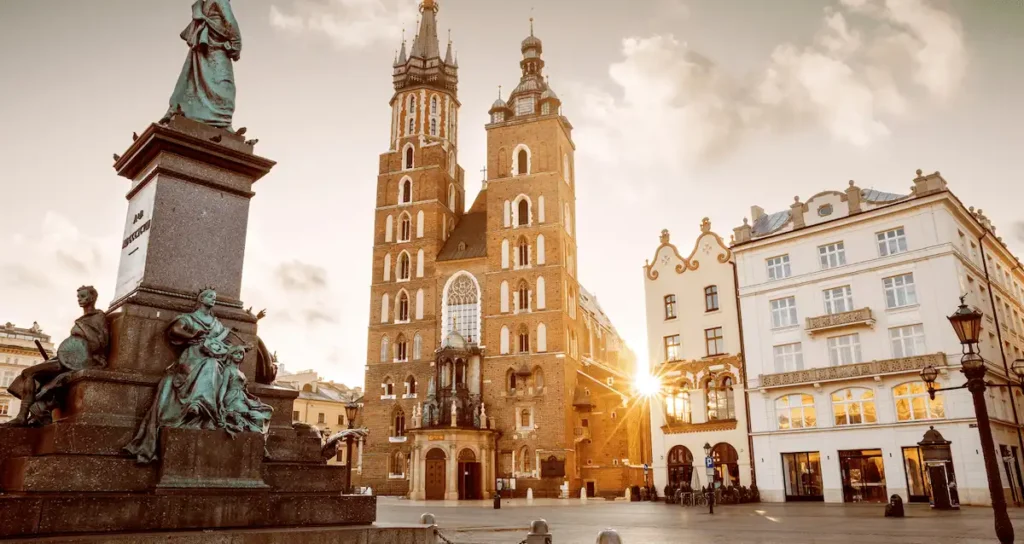
Finding the best hotels in Krakow means choosing properties where the architecture tells the story before you even check in. This city’s Old Town is a UNESCO-protected masterpiece, and the finest hotels occupy buildings that were once noble residences, ecclesiastical complexes, and princely estates.
The problem: Kraków’s luxury market includes properties where “five-star” means generic interiors wrapped in a historic façade—renovations that erase the very soul travelers came to experience. We’ve audited the city’s inventory and filtered out the weak conversions. The selection below focuses exclusively on properties with verified “Past-Life Identity”—14th-century palaces, Renaissance merchant houses, and monastic landmarks where the original stone vaults, Gothic columns, and Baroque frescoes are integrated into the guest experience.
This curation saves you time and guarantees a stay that is living history, not just a room.
For a broader perspective on Poland’s historic hotel landscape, continue with our national audit of the best historic hotels in Poland.
Royal Quarter: UNESCO-Protected Palaces & Renaissance Landmarks
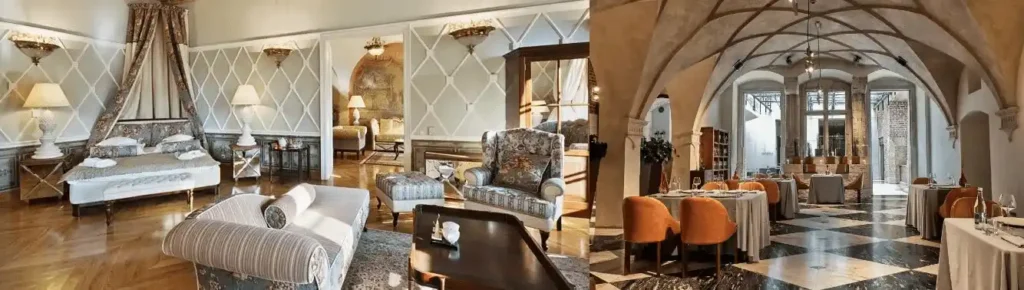
These properties occupy the most architecturally significant addresses in Kraków’s Old Town—buildings that housed Renaissance nobility, cathedral canons, and merchant princes. Original frescoes, Gothic vaults, and 14th-century wooden ceilings define the experience. Each property integrates these historic elements into modern luxury without compromise.
🏰 The Bonerowski Palace Boutique Hotel ★★★★★
This is a UNESCO-protected 14th-century noble residence on the Main Market Square, once home to Renaissance bankers who shaped Kraków’s financial power. Today, it stands as the city’s most visually dramatic conversion, where the world’s longest Swarovski chandelier—22 meters of illuminated crystal—hangs alongside original Renaissance sgraffito and massive Gothic columns.
The experience begins the moment you cross the threshold: the scent of aged stone, the weight of medieval architecture, and the silence that only centuries-old masonry can create. Suites blend period furniture with contemporary comfort, but it’s the preserved details—hand-painted ceilings, exposed brick arches, and carved wooden portals—that anchor the sense of place.
No other property in Kraków offers this level of theatrical grandeur combined with verified 14th-century provenance. This is not a hotel that references history; this is history you sleep inside.
Best for: Travelers seeking the most visually commanding historic interiors in Kraków, with direct access to the Main Market Square and UNESCO-protected Renaissance architecture.
Signature Experience: 22-meter Swarovski chandelier installation, original Gothic columns integrated into guest spaces, Renaissance sgraffito preservation, suites with hand-painted 14th-century ceilings, Main Market Square terrace.
“Standing under that chandelier with those Gothic columns—it felt like stepping into a cathedral, not a hotel lobby.” — Marc, BrusselsCheck Availability & Rates →
⛪ Hotel Copernicus ★★★★★
This UNESCO-listed Renaissance structure served as the residence for Wawel Cathedral canons, positioning clerical power at the foot of the royal castle.
The conversion preserves 14th-century wooden ceilings and Renaissance frescoes that survived centuries of occupation—details that give every corridor and suite the feeling of a private chapel. What sets this property apart is the integration of medieval cellars into the wellness experience: the swimming pool occupies authentic vaulted chambers where stone arches frame the water. Stepping down into these underground spaces is a physical descent into the city’s layered past.
Guest rooms balance original beams and exposed brick with modern luxury, but the fresco-covered walls and carved wooden doors remind you that this was never meant to be a secular space. The rooftop terrace overlooks Wawel Castle, creating a visual connection to the ecclesiastical and royal power this building once served.
Best for: Guests drawn to ecclesiastical heritage, seeking a property where clerical architecture and Renaissance frescoes define the character and wellness facilities occupy medieval vaulted cellars.
Signature Experience: 14th-century wooden ceiling preservation, Renaissance frescoes in guest corridors, swimming pool in medieval vaulted cellars, rooftop terrace with Wawel Castle views, original stone archways integrated throughout.
“Swimming in those vaulted cellars with the stone arches overhead—completely surreal, like bathing in a medieval chapel.” — Elena, MilanCheck Availability & Rates →
🏛️ Hotel Stary ★★★★★
This medieval townhouse belonged to a wealthy merchant family, and the restoration earned recognition for creating the “most beautiful hotel interior in Europe”—a distinction based on how the design team integrated original Gothic beams, 17th-century frescoes, and raw medieval brick vaults without erasing them beneath modern finishes.
The spa occupies these brick-vaulted cellars, where the rough stone texture and low arches create an atmosphere that feels monastic rather than commercial. Upstairs, guest rooms preserve exposed wooden beams and fresco fragments, but the layout maintains the proportions of a merchant residence rather than a grand palace. The lobby’s staircase—an original Gothic structure—serves as the visual centerpiece, connecting the ground-floor public spaces to the upper suites. The property appeals to travelers who want verified medieval architecture but prefer the intimacy of a merchant house over the formality of a noble palace.
Best for: Travelers prioritizing award-winning interior preservation, seeking Gothic and Baroque elements integrated into a medieval merchant residence with spa facilities in raw brick vaults.
Signature Experience: Voted “most beautiful hotel interior in Europe,” original Gothic beams and 17th-century frescoes, spa in medieval brick vaults, Gothic staircase preservation, merchant residence proportions.
“That Gothic staircase and those brick spa vaults—every corner felt like a museum, but we had it to ourselves.” — James, LondonCheck Availability & Rates →
👑 H15 Palace, a Luxury Collection Hotel, Krakow ★★★★★
This complex of four 16th-century buildings became the Lubomirski Palace in the 1800s, housing one of Poland’s most powerful princely families.
The restoration uncovered 18th-century polychrome designs and Baroque stucco that had been hidden beneath layers of later renovations—details now integrated into the grand halls and guest corridors. The original stone gates and courtyard create a ceremonial entrance that reinforces the property’s aristocratic origins.
Interiors balance period furniture with contemporary comfort, but the preserved Baroque ceiling frescoes and carved woodwork dominate the visual experience. The great halls function as public spaces, maintaining the scale and formality of a princely residence rather than a hotel lobby.
This property appeals to travelers seeking a layered narrative: 16th-century merchant buildings that became an aristocratic palace, with 18th-century artistic flourishes preserved throughout.
Best for: Guests seeking a princely residence experience, drawn to 18th-century polychrome and Baroque stucco preservation within a multi-layered 16th-century architectural complex.
Signature Experience: 18th-century polychrome and Baroque stucco restoration, original stone gates and courtyard, great halls with period proportions, Lubomirski Palace provenance, multi-building 16th-century complex.
“Walking through those stone gates into the courtyard—it felt like entering a private palace, not a hotel.” — Anna, ViennaCheck Availability & Rates →
Monastic & Aristocratic Conversions: Medieval Foundations with Layered Histories
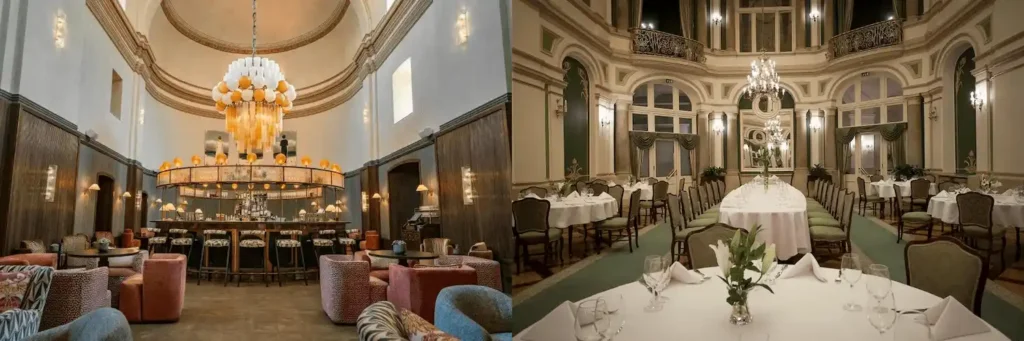
These properties represent buildings that evolved through multiple functions across seven centuries—from ecclesiastical complexes to military hospitals to aristocratic residences. The architecture reflects this layered past, with massive stone walls, vaulted ceilings, and historic fragments spanning Gothic, Renaissance, and Baroque periods.
⛪ Stradom House, Autograph Collection ★★★★★
This 14th-century church and monastery of Saint Hedwig later served as a military hospital and local government building, creating an architectural narrative that spans seven centuries of Kraków’s civic and ecclesiastical power.
The restoration integrated the church structure into the hotel’s common spaces—massive original stone walls, vaulted ceilings, and historic fragments are preserved as the primary design elements rather than decorative references. Walking through the property means navigating spaces that were once consecrated halls, military wards, and administrative chambers.
Guest rooms occupy the upper levels, but the lower floors retain the monumental scale of the original church. The property appeals to travelers drawn to multi-layered provenance: not a single-use building converted into a hotel, but a structure that has evolved through medieval monasticism, military function, and civil administration before becoming a luxury residence.
Best for: Guests seeking multi-layered provenance, drawn to monastic and military heritage where a 14th-century church structure is integrated into modern hospitality spaces.
Signature Experience: 14th-century church and monastery preservation, massive original stone walls and vaulted ceilings, seven centuries of documented history, military hospital and government building provenance, monumental ecclesiastical scale.
“Those vaulted ceilings and stone walls—you could feel the weight of the church history in every room.” — Thomas, CopenhagenCheck Availability & Rates →
🎭 Grand Hotel ★★★★★
This 1887 residence of the Czartoryski Princes was built on medieval foundations, creating a property that blends 19th-century aristocratic grandeur with centuries-old structural bones.
The Mirror Hall—a Belgian glass-roofed ballroom—serves as the visual centerpiece, preserved as it was when the princes hosted imperial guests, including Tsar Alexander I. The lobby and suites retain 19th-century period furniture and authentic marble detailing, but it’s the layered history—medieval foundations supporting 19th-century opulence—that defines the experience.
The property occupies a unique position in Kraków’s luxury market: it offers the formality and scale of an aristocratic palace without the Gothic or Renaissance austerity of older conversions. The Mirror Hall alone justifies the stay for travelers drawn to 19th-century European aristocratic architecture.
No other property in the city offers this combination of imperial provenance and Belle Époque design.
Best for: Travelers seeking 19th-century aristocratic grandeur, drawn to imperial provenance and Belle Époque design with preserved period furniture and original marble detailing.
Signature Experience: Mirror Hall with original Belgian glass roof, 19th-century period furniture preservation, Czartoryski Prince residence, Tsar Alexander I provenance, medieval foundations beneath 1887 architecture.
“That Mirror Hall took our breath away—felt like we’d stepped into a royal ballroom, not a hotel lobby.” — Sophie, ParisCheck Availability & Rates →
🌹 Hotel Pod Różą ★★★★★
This is the oldest operating hotel in Kraków, originally a 14th-century aristocratic palace that hosted Tsar Alexander I during the Congress of Vienna era.
The interior is a labyrinth of Gothic, Renaissance, and Baroque elements—original stone portals, 16th-century wooden ceiling beams, and layered architectural fragments that reveal the building’s evolution across five centuries. Unlike properties that underwent single-period restorations, this hotel preserves the messy, authentic accumulation of styles that comes from continuous use.
Corridors twist through medieval chambers, Renaissance halls, and Baroque additions, creating a spatial experience that feels more like exploring a historic residence than staying in a hotel. The property appeals to travelers who value architectural authenticity over visual cohesion—those who want to see how a building aged and adapted rather than how it was frozen in a single historical moment.
Best for: Guests prioritizing the oldest hotel provenance in Kraków, seeking a labyrinth of Gothic, Renaissance, and Baroque elements with 16th-century wooden beams and original stone portals.
Signature Experience: Oldest operating hotel in Kraków, Tsar Alexander I provenance, labyrinth of Gothic/Renaissance/Baroque elements, 16th-century wooden ceiling beams, original stone portals, five centuries of layered architecture.
“Every hallway revealed a different century—it felt like wandering through five hundred years of history.” — David, AmsterdamCheck Availability & Rates →
📊 Comparison: Best Hotels in Krakow
| Hotel | Location | Wellness & Spa | Dining | Unique Perks | Best For |
|---|---|---|---|---|---|
|
🏰 The Bonerowski Palace ★★★★★ |
Main Market Square |
Historic interiors, wellness services |
Fine dining, terrace views |
22m Swarovski chandelier, Gothic columns |
Visual drama, Renaissance grandeur |
|
⛪ Hotel Copernicus ★★★★★ |
Old Town, near Wawel |
Pool in medieval cellars, spa treatments |
Renaissance dining, rooftop terrace |
14th-century frescoes, vaulted pool |
Ecclesiastical heritage, castle views |
|
🏛️ Hotel Stary ★★★★★ |
Old Town, central location |
Spa in brick vaults, medieval cellars |
Contemporary Polish, Gothic interiors |
Award-winning interiors, merchant residence |
Gothic preservation, intimate scale |
|
👑 H15 Palace Luxury Collection ★★★★★ |
Old Town, historic quarter |
Modern spa, wellness facilities |
Fine dining, great halls |
Baroque stucco, princely provenance |
Aristocratic grandeur, multi-layered history |
- If you’re drawn to another capital’s architectural heritage, compare our curation of the best hotels in Warsaw.
❓ FAQ: Best Hotels in Krakow
Which hotel in Krakow has the most dramatic historic interiors?
The Bonerowski Palace offers the most visually commanding historic interiors in Kraków, featuring the world’s longest Swarovski chandelier—22 meters—hanging alongside original Gothic columns and Renaissance sgraffito. The UNESCO-protected 14th-century palace delivers theatrical grandeur that no other property in the city matches, combined with direct access to the Main Market Square.
Where can I stay in a converted monastery in Krakow?
Stradom House, Autograph Collection occupies a 14th-century church and monastery of Saint Hedwig, later serving as a military hospital and government building. The restoration integrates massive original stone walls, vaulted ceilings, and historic fragments spanning seven centuries into the guest experience, creating a multi-layered narrative that appeals to travelers seeking monastic and military heritage.
What is the oldest hotel in Krakow?
Hotel Pod Różą is the oldest continuously operating hotel in Kraków, originally a 14th-century aristocratic palace that hosted Tsar Alexander I. The interior preserves a labyrinth of Gothic, Renaissance, and Baroque elements—original stone portals, 16th-century wooden ceiling beams, and five centuries of accumulated architectural layers.
Which Krakow hotel has a pool in medieval cellars?
Hotel Copernicus features a swimming pool located in authentic medieval vaulted cellars, where original stone arches frame the water. This UNESCO-listed Renaissance property served as the residence for Wawel Cathedral canons and preserves 14th-century wooden ceilings and Renaissance frescoes throughout the guest spaces.
What is the best hotel in Krakow for 19th-century aristocratic architecture?
Grand Hotel occupies the 1887 residence of the Czartoryski Princes and is famous for its Mirror Hall—a Belgian glass-roofed ballroom preserved from the imperial era. The property retains 19th-century period furniture, authentic marble detailing, and medieval foundations, offering Belle Époque grandeur combined with centuries-old structural provenance.
Which Krakow hotel has the best rooftop views of Wawel Castle?
Hotel Copernicus offers a rooftop terrace with direct views of Wawel Castle, creating a visual connection to the ecclesiastical and royal power the building once served. The UNESCO-listed property occupies a Renaissance structure that housed cathedral canons, positioning it at the foot of the royal castle complex.
Are these historic hotels in Krakow within walking distance of the Old Town?
All properties audited here occupy addresses within Kraków’s UNESCO-protected Old Town or immediately adjacent to it, ensuring direct access to the Main Market Square, Wawel Castle, and major historic landmarks. The Bonerowski Palace sits directly on the Main Market Square, while Hotel Copernicus is positioned near Wawel Castle.
Final Verdict: Choosing Your Historic Stay in Krakow
Booking the right hotel in Kraków isn’t about chasing stars—it’s about matching your architectural preferences to the building’s verified provenance. The properties above represent the city’s most consistently significant historic conversions, spanning 14th-century ecclesiastical complexes, Renaissance merchant houses, and 19th-century aristocratic palaces. Each offers a different expression of Kraków’s layered past, from Gothic vaults and Baroque frescoes to monastic stone walls and Belle Époque grandeur. Availability at this level shifts quickly once high season begins.
Travelers seeking smaller-scale medieval preservation should explore our audit of the best hotels in Toruń, where Gothic townhouses and Hanseatic merchant residences define the experience.
For more curated itineraries and luxury-focused travel insights, visit Your Luxury Guide. For official travel information and destination updates, visit Poland tourism-info.
Booking your hotel in Kraków secures access to some of Europe’s most meticulously preserved medieval and Renaissance architecture—properties where the building’s past-life identity is the primary luxury, not an aesthetic reference.
Your Luxury Guide — Where Exceptional Travel Begins.