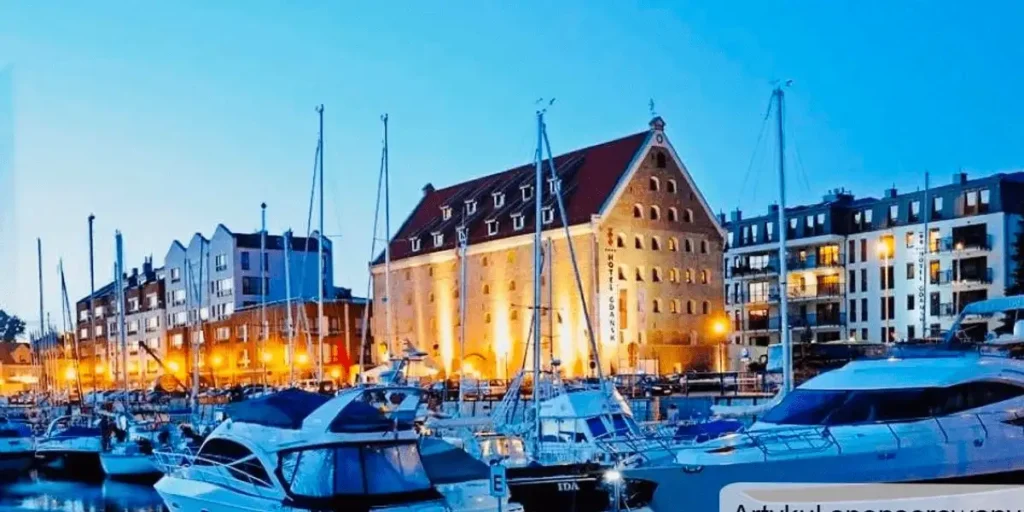
Gdansk’s Old Town is a reconstruction miracle—90% destroyed in 1945, then meticulously rebuilt using original architectural blueprints and salvaged fragments. The best hotels in Gdansk are not the waterfront chains or anonymous glass towers; they are the verified survivors and faithful reconstructions of the city’s Hanseatic Golden Age. The problem: Gdansk’s “luxury” inventory is cluttered with modern boutique brands that mimic historic aesthetics without actual provenance.
We’ve audited the city’s entire portfolio to reject weak renovations and brand-saturated boxes. The six properties below represent the most architecturally significant conversions: original 17th-century granaries with intact timber structures, a 1451 Gothic tenement that survived the war, and Baroque mansions that preserve the proportions and craftsmanship of Gdansk’s merchant aristocracy. This is living history—not just a room with exposed brick and a plaque.
These hotels offer an immersive experience of Gdansk’s maritime soul, where every structural detail is traceable to the city’s past-life identity as northern Europe’s wealthiest port.
For travelers seeking an authentic encounter with Poland’s architectural heritage, explore our complete audit of the country’s finest historic conversions in best historic hotels in Poland.
Długi Targ & Royal Route: The Heart of Hanseatic Gdansk
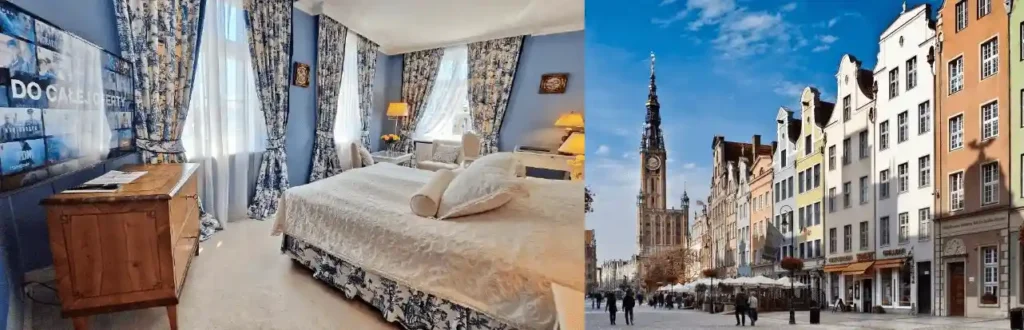
This is the city’s ceremonial spine—a 500-meter corridor of merchant palaces, guild houses, and civic landmarks. Długi Targ (Long Market) was the stage for royal processions and the nerve center of Baltic trade power. The hotels here occupy the most prestigious addresses in Old Town, where architectural status was a visible declaration of wealth.
Expect original Dutch Mannerist facades, period tile work, and interiors that preserve the proportions of 17th- and 18th-century aristocratic residences. These are not simply “centrally located”—they are monuments to Gdansk’s identity as a self-governing merchant republic.
🏛️ Hotel Gdańsk Boutique ★★★★★
This is Gdansk’s most architecturally profound conversion—a 1710 Baroque granary that spent three centuries as a Baltic grain warehouse before its transformation into the city’s most design-forward luxury property. The “Góra” granary is one of the few port structures to survive 1945 intact, and the restoration preserves the original 300-year-old wooden beam structure.
The rooms blend this industrial soul with contemporary Polish design—concrete floors, minimalist furniture, and floor-to-ceiling windows that frame the Motława River. The wellness center is built into the original vaults, where stone walls 80 centimeters thick create a subterranean spa experience unlike any modern facility. The rooftop terrace is the city’s most dramatic perch—a 360-degree view across the port, where you can trace the entire arc of Gdansk’s destruction and rebirth. No other hotel in Poland integrates this level of authentic maritime architecture with five-star service.
Best for: Design-conscious travelers seeking the most architecturally bold conversion in Gdansk, with wellness amenities housed in original 18th-century vaults and unmatched river views.
Signature Experience: Rooftop terrace overlooking the Motława port, subterranean spa in original grain vaults, rooms with exposed 300-year-old timber beams, direct river access for waterfront dining.
“The granary structure is the room—sleeping inside 300-year-old timber felt like staying in a museum.” — Marek, KrakowCheck Availability & Rates →
🏰 Podewils Old Town Gdansk ★★★★★
Built in 1728 by master stonemason Krzysztof Strzycki, this Baroque mansion on Długi Targ is one of the street’s most ornate survivors—famously known as the “House of the Black Boy” for its decorative portal figure.
The entrance alone is a masterclass in 18th-century craftsmanship. Inside, the proportions are pure aristocratic luxury—high ceilings, wide corridors, and rooms designed to the scale of merchant princes.
The suites occupy the piano nobile, where triple-height windows overlook Długi Targ’s procession of Mannerist facades. The spa is a modern insertion that doesn’t compete with the architecture—discreetly tucked into the cellar, where barrel vaults create an intimate wellness retreat. The breakfast salon is staged in the former ballroom, under a restored coffered ceiling that dates to the house’s construction.
This is Gdansk’s most historically consistent interior—no exposed brick for effect, no industrial chic, just faithful Baroque luxury.
Best for: Travelers drawn to authentic Baroque interiors with documented architectural provenance and a prime position on Gdansk’s most ceremonial street.
Signature Experience: Original 1728 portal with master stonemason’s coat of arms, piano nobile suites with triple-height windows, cellar spa in Baroque vaults, ballroom breakfast salon.
“That portal stopped me mid-walk—staying inside it was even better than photographing it from the street.” — Anna, WarsawCheck Availability & Rates →
🇳🇱 Hotel Holland House Old Town ★★★★★
This is Gdansk’s Dutch Mannerist icon—a 17th-century merchant’s residence on Długi Targ that represents the city’s Golden Age connection to Amsterdam and the Hanseatic League. The facade is a documented masterpiece: stepped gables, ornate pilasters, and decorative stonework that mirror the townhouses of Amsterdam’s canal belt. The reception features a historic tile panel gifted by Queen Beatrix of the Netherlands, referencing the 17th-century tile painting tradition.
Rooms retain the original ceiling heights and window proportions, but are furnished with clean lines and neutral tones that let the architecture speak. The highlight is the mezzanine lounge, where a glass floor exposes the original 17th-century stone foundation and water drainage system—a rare glimpse into Hanseatic engineering.
The location is unbeatable—steps from Neptune Fountain and the Royal Route, yet tucked into a quieter corner of Długi Targ that avoids the tourist surge.
Best for: Travelers fascinated by Hanseatic trade history and Dutch architectural influence, seeking a boutique stay with royal-gifted artifacts and prime Old Town access.
Signature Experience: Dutch Mannerist facade with stepped gables, Queen Beatrix tile panel in reception, glass-floor mezzanine exposing 17th-century foundations, cellar breakfast in original cargo vaults.
“The tile panel from the Queen felt like a secret only we knew about—made the whole stay feel exclusive.” — Pieter, UtrechtCheck Availability & Rates →
Ołowianka Island & Motława Riverfront: Maritime Gdansk
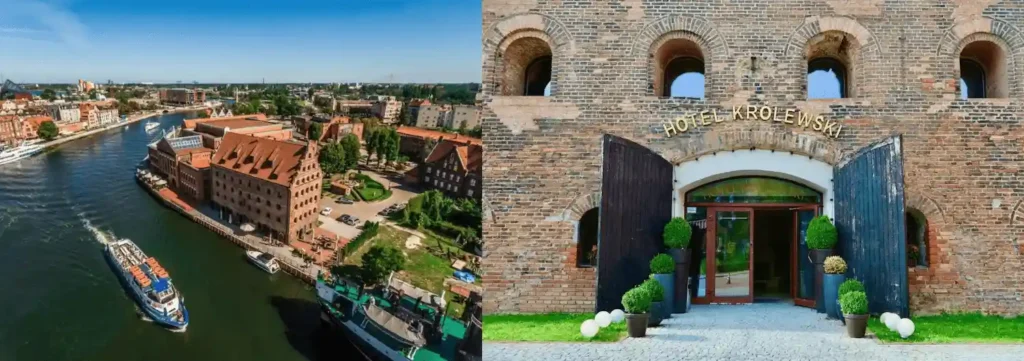
Ołowianka Island was the functional heart of Gdansk’s port—a dense cluster of granaries, warehouses, and maritime guilds that handled the grain and timber that made the city rich. The island’s architecture is industrial Hanseatic: thick stone walls, timber joists, and riverside loading docks.
This is where you stay to understand Gdansk as a maritime power, not just a reconstructed showpiece.
🏚️ Jess Krolewski Gdansk Old Town ★★★
This 1621 Hanseatic granary is the best-preserved warehouse conversion on Ołowianka Island—a massive stone and brick structure that once stored Baltic grain bound for Western Europe. The building survived 1945 with its structural integrity intact, and the restoration respects that maritime toughness: original exposed brick walls, massive wooden ceiling joists, and the proportions of a working storehouse.
The rooms are compact but architecturally honest—no fake luxury, no gilded details, just clean lines that let the 400-year-old bones dominate. The highlight is the riverside terrace, where you can sit at water level and watch the Motława’s boat traffic pass beneath Długi Targ’s skyline.
The breakfast room occupies the original loading dock, with iron cargo hooks still embedded in the ceiling beams. This is Gdansk’s most authentic budget-heritage option—three stars in service, five stars in architectural soul. The location is slightly removed from the Royal Route’s tourist density, which gives it a quieter, more residential feel while remaining fully walkable to all major sites.
Best for: Budget-conscious travelers seeking authentic Hanseatic warehouse character with original 17th-century brick and timber, plus riverside access without luxury pricing.
Signature Experience: Riverside terrace at water level, breakfast in original loading dock with cargo hooks, exposed 1621 brick walls and timber joists, quiet Ołowianka Island location.
“The brick walls felt more authentic than any five-star lobby—this is what a real granary looks like.” — Jakub, PoznanCheck Availability & Rates →
Medieval Core: Gothic Gdansk & Copernicus Legacy
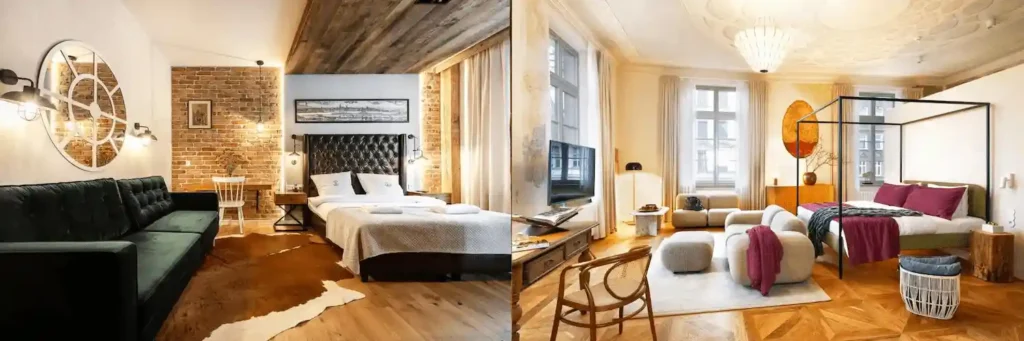
Św. Ducha and the streets behind Długi Targ form Gdansk’s oldest architectural layer—medieval tenements, Gothic churches, and the narrow lanes that predate the Hanseatic boom. The hotels here occupy buildings with 15th- and 16th-century foundations, some with direct links to Gdansk’s most famous residents.
This is where you stay to access the city’s deepest historical roots—before the Baroque grandeur, before the Dutch merchants, when Gdansk was a fortress town on the edge of Teutonic Prussia.
🕰️ Gotyk House ★★★★
This is the oldest residential building in Gdansk—a 1451 Late Gothic tenement that survived the 1945 destruction with its structural core intact. The preservation is exceptional: original 15th-century arched stone doorways, massive timber ceiling joists, and a 1539 inscribed chest discovered in the foundations during restoration.
The rooms are styled with Gothic simplicity—exposed stone, dark wood furniture, and minimal ornamentation that honors the medieval proportions. The building’s layout retains the narrow, vertical structure of Gothic tenements, with steep staircases and small landings that force you to move slowly through history. The ground floor houses a small exhibition space dedicated to Copernicus and his connection to Gdansk’s merchant class. The location on Św. Ducha is quieter than Długi Targ but still within two minutes’ walk of all major landmarks. This is the right choice for travelers who prioritize documented medieval architecture over modern amenities—the hotel offers charm and provenance, not luxury service.
Best for: History enthusiasts drawn to Gothic architecture and Copernicus heritage, seeking the city’s oldest surviving residential structure with original 15th-century stonework.
Signature Experience: 1451 Gothic arched doorways, 1539 inscribed chest on display, narrow medieval staircase with original proportions, Copernicus exhibition on ground floor.
“Climbing those medieval stairs felt like stepping into Copernicus’s daily life—the building teaches you history.” — Ewa, GdyniaCheck Availability & Rates →
🏥 ARCHE Dwór Uphagena Gdańsk ★★★★
This 1800 Neoclassical manor on the edge of Old Town represents a different chapter in Gdansk’s architectural history—the city’s 19th-century transformation from Hanseatic port to Prussian industrial center. Originally the summer residence of the Uphagen family (Gdansk’s most famous merchant dynasty), the building later served as a hospital.
The restoration preserves this layered history: 19th-century ceramic mosaic flooring in the lobby, original barrel vaults, and industrial relics like an antique gas stove and a massive historic mangle displayed as sculptural objects. The rooms blend Neoclassical proportions with contemporary Polish design—high ceilings, understated furnishings, and large windows that frame views of the manor’s garden courtyard. The breakfast room occupies the former hospital chapel, where vaulted ceilings and stained glass create an unexpectedly sacred dining experience.
The location is slightly removed from the tourist core, which gives the property a residential calm while remaining a 10-minute walk to Długi Targ.
Best for: Travelers drawn to Neoclassical manor architecture and layered history, seeking a quieter location with eclectic 19th-century artifacts and garden courtyard access.
Signature Experience: 1800 ceramic mosaic flooring, breakfast in former hospital chapel, antique gas stove and mangle as design objects, secluded garden courtyard.
“The chapel breakfast felt like a private ceremony—completely unexpected and absolutely memorable.” — Tomasz, WroclawCheck Availability & Rates →
📊 Comparison: Best Hotels in Gdansk
| Hotel | Location | Wellness & Spa | Dining | Unique Perks | Best For |
|---|---|---|---|---|---|
|
🏛️ Hotel Gdańsk Boutique ★★★★★ |
Ołowianka Island, riverfront |
Subterranean spa in grain vaults |
Rooftop terrace, waterfront dining |
1710 granary structure, exposed timber beams |
Design lovers, architectural immersion |
|
🏰 Podewils Old Town Gdansk ★★★★★ |
Długi Targ, Royal Route |
Cellar spa, Baroque vaults |
Ballroom breakfast, period salon |
1728 master stonemason portal, piano nobile suites |
Baroque authenticity, ceremonial street |
|
🇳🇱 Hotel Holland House Old Town ★★★★★ |
Długi Targ, quieter corner |
Wellness lounge, glass-floor mezzanine |
Cellar breakfast, cargo vault setting |
Dutch Mannerist facade, Queen Beatrix tile panel |
Hanseatic heritage, royal artifacts |
|
🏚️ Jess Krolewski Gdansk Old Town ★★★ |
Ołowianka Island, riverside |
None | Loading dock breakfast, cargo hook decor |
1621 granary, exposed brick walls |
Budget heritage, warehouse authenticity |
- Compare Gdansk’s maritime architecture with inland palace conversions and mountain manor estates in best hotels in Wroclaw.
❓ FAQ: Best Hotels in Gdansk
Which Gdansk hotel has the most authentic Hanseatic architecture?
Hotel Gdańsk Boutique occupies the 1710 “Góra” granary—one of the few Baltic port structures to survive 1945 with its original 300-year-old timber frame intact. The restoration preserves massive wooden beam pillars and authentic 18th-century masonry, creating the most structurally honest maritime conversion in the city. The Old Granary wing maintains the raw proportions and industrial soul of a working Hanseatic storehouse.
What is the best historic hotel on Długi Targ?
Podewils Old Town Gdansk holds the most architecturally significant position on Gdansk’s Royal Route. Built in 1728 by master stonemason Krzysztof Strzycki, it features the street’s most ornate Baroque portal—crowned with the builder’s coat of arms and allegorical sculptures. The interior maintains period proportions with piano nobile suites overlooking the ceremonial procession route that defined Hanseatic merchant power.
Which Gdansk hotel is connected to Nicolaus Copernicus?
Gotyk House is the city’s oldest residential tenement (1451) and was famously inhabited by Anna Schilling, companion of Nicolaus Copernicus, during the 16th century when the astronomer was stationed in nearby Frombork. The building preserves original 15th-century Gothic stonework, including arched doorways and massive timber joists. A 1539 inscribed chest found in the foundations is displayed on-site, and the ground floor features a Copernicus exhibition.
Are there budget-friendly historic hotels in Gdansk’s Old Town?
Jess Krolewski Gdansk Old Town is the best value for authentic Hanseatic warehouse architecture. This 1621 granary on Ołowianka Island retains its original exposed brick walls, massive wooden ceiling joists, and riverside loading dock—now the breakfast room with iron cargo hooks still embedded in the beams. It offers three-star service but five-star architectural soul, with direct views across the Motława to Długi Targ.
Which best hotel in Gdansk has a spa in historic vaults?
Hotel Gdańsk Boutique houses its wellness center in the original grain storage vaults of the 1710 granary, where stone walls 80 centimeters thick create a subterranean spa experience unlike any modern facility. Podewils Old Town Gdansk offers a more intimate cellar spa tucked into 18th-century Baroque vaults beneath the mansion, designed to complement rather than compete with the architecture above.
What is the best hotel near the Motława River?
Both Hotel Gdańsk Boutique and Jess Krolewski are positioned directly on the Motława waterfront, offering the most immersive connection to Gdansk’s maritime identity. Hotel Gdańsk Boutique provides five-star riverfront dining and a rooftop terrace with 360-degree port views, while Jess Krolewski offers a water-level terrace where you can watch boat traffic pass beneath Długi Targ’s skyline—both experiences trace Gdansk’s historic trade routes.
Which Gdansk hotel appeals to design-conscious travelers?
Hotel Gdańsk Boutique is the city’s most architecturally bold conversion, blending the raw industrial soul of a 1710 granary with contemporary Polish design—concrete floors, minimalist furniture, and floor-to-ceiling windows that frame the Motława River. The restoration preserves 300-year-old timber pillars with brutal honesty, creating a museum-quality interior where the building’s past-life identity remains the dominant design feature.
Your Gdansk Stay: Choosing the Right Historic Asset
The six properties above represent the city’s most architecturally significant conversions—verified Hanseatic granaries, documented Baroque mansions, and medieval landmarks with traceable provenance. Gdansk’s appeal lies in its layered reconstruction: a city that rebuilt itself using original blueprints and salvaged fragments, creating a living archive of Baltic trade power. Your choice depends on whether you prioritize waterfront granary architecture, ceremonial Baroque interiors, or Gothic tenements with direct links to Copernicus. Availability at this level shifts quickly during summer and festival seasons.
To explore another meticulously reconstructed Polish city with Gothic and Renaissance roots, discover the curated selection in best hotels in Torun.
For more curated itineraries and luxury-focused travel insights, visit Your Luxury Guide. For official travel information and destination updates, visit Poland tourism-info.
Booking your Gdansk hotel secures access to northern Poland’s most historically significant conversions, where every structural detail traces back to the city’s identity as the wealthiest port in the Baltic League—a heritage you can’t replicate in modern waterfront developments.
Your Luxury Guide — Where Exceptional Travel Begins.