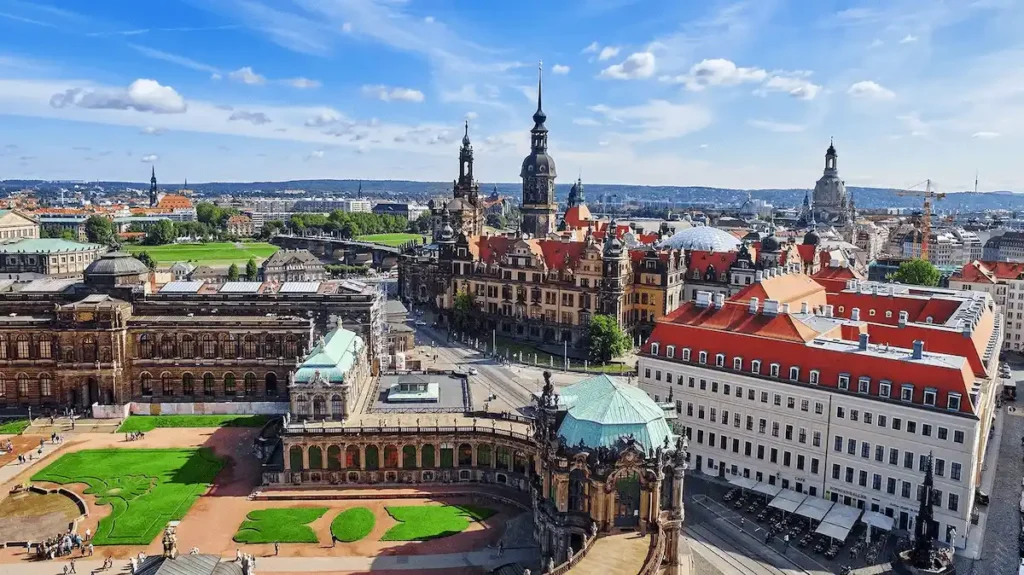
The best hotels in Dresden aren’t marked by chain recognition—they’re defined by the weight of their walls. This is a city where staying in a former royal palace or riverside aristocratic estate isn’t an upgrade; it’s the point.
After filtering Dresden’s most refined accommodations, we narrowed the field to five properties that deliver more than polished service—they offer verified historical soul, architectural gravity, and direct proximity to the city’s cultural axis.
Below are the stays that make sense if you value legacy over logos and prefer your luxury grounded in Saxon sovereignty rather than corporate consistency.
For a broader perspective on Germany’s finest historical conversions, explore iconic historic hotels in Germany.
Royal Palaces & State Power
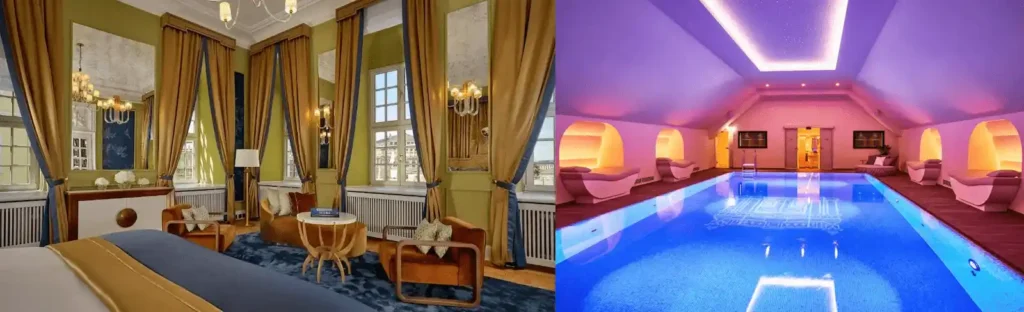
This is the tier where the building itself holds sovereign authority. These aren’t just “historic hotels”—they’re structures that once housed royal families, served as official seats of power, and defined the political landscape of 18th-century Saxony.
Expect restored throne-room-level interiors, direct architectural ties to Dresden’s royal complex, and the kind of spatial grandeur that reminds you why nobility needed entire wings for summer entertaining.
🏛️ Hotel Taschenbergpalais Kempinski ★★★★★
Built in 1705 as a gift from Augustus the Strong to Countess Cosel, this property occupies the single most significant non-castle royal structure in Dresden. It sits connected to the Residenzschloss via a historic bridge—a literal extension of the Saxon royal court.
The interiors balance high Baroque detailing with contemporary luxury: vaulted ceilings, marble floors, and gold-leaf accents exist alongside a rooftop pool and Michelin-caliber dining.
Service feels institutional in the best sense—precise, multilingual, deeply experienced with high-net-worth European and Asian clientele. This isn’t a romantic hideaway; it’s a power stay for travelers who understand that proximity to the Semperoper and Zwinger isn’t convenience, it’s confirmation of taste.
The building’s soul—royal intimacy wrapped in state-level architecture—justifies the premium over any standard five-star in the Altmarkt.
Best for: Travelers seeking the most historically significant palace conversion in Dresden with Baroque grandeur, rooftop wellness, and direct access to the royal cultural quarter.
Signature Experience: Rooftop infinity pool overlooking the Zwinger Palace, Palais Bistro serving Saxon-French haute cuisine, full-service spa with Royal Saxon treatments, private bridge view toward the Residenzschloss.
“Standing in that lobby feels like you’ve been granted access to something that wasn’t meant for public admission.” — Henrik, CopenhagenCheck Availability & Rates →
Riverside Estates & Noble Territories
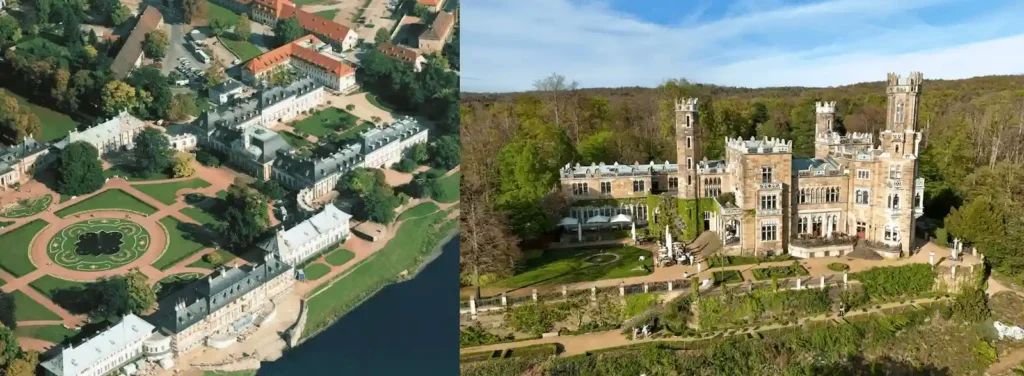
These properties represent the second tier of Saxon power—royal summer residences and aristocratic estates built for extended stays, territorial dominance, and seasonal court relocations.
Expect riverside settings, sprawling grounds, and architecture that prioritized leisure, privacy, and panoramic control over the Elbe valley.
The experience here is less about urban proximity and more about estate immersion.
🌅 Schloss Hotel Dresden Pillnitz ★★★★
This property sits within the Pillnitz Palace complex—the official summer residence of the Saxon royal family from 1765 onward. The main building occupies a former wing of the palace grounds, offering direct garden access to the same terraces where the House of Wettin entertained European nobility.
Rooms blend period furniture with restrained modern updates: parquet floors, high ceilings, antique desks, clean linens. The restaurant sources from the palace’s own vineyards and orchards, delivering hyper-local Saxon cuisine with Elbe views. It’s quieter and more pastoral than the city-center palaces—service feels residential rather than hotel-corporate.
This suits travelers who want royal pedigree without downtown density, and who value morning walks through UNESCO-protected palace gardens over immediate Semperoper proximity. The estate grounds alone—15 hectares of baroque landscaping—justify the stay for anyone seeking restorative luxury rooted in seasonal royal tradition.
Best for: Couples and heritage enthusiasts seeking royal summer residence immersion with riverside tranquility, palace gardens, and Saxon vineyard-to-table dining away from urban density.
Signature Experience: Morning access to Pillnitz Palace Gardens before public opening, Saxon wine-pairing dinners sourced from estate vineyards, riverside terrace overlooking Elbe steamboat routes, period-furnished suites within former royal wings.
“We had breakfast on the terrace where Saxon kings used to approve garden designs—that context changes everything.” — Claudia, ViennaCheck Availability & Rates →
🏰 Hotel Schloss Eckberg ★★★★
Built in 1859 as a private Tudor-style castle for a high-ranking merchant-noble, this property dominates a 15-hectare estate on an elevated promontory overlooking the Elbe. The architecture is romantic historicism at its peak—turrets, bay windows, parkland vistas—designed to project territorial wealth and aristocratic permanence.
Interiors lean into the 19th-century aesthetic: wood-paneled libraries, oil portraits, candelabra lighting, plush fabrics. Rooms vary in size and period detail, but corner suites with river-facing turret views deliver the full estate-lord experience. The restaurant focuses on game and river fish, served in a vaulted dining hall that feels like a private banquet rather than hotel dining.
This property suits travelers who want castle immersion without medieval austerity, and who value sprawling grounds and panoramic control over proximity to Dresden’s museum quarter. It’s the most secluded option on this list—privacy here is spatial, not just service-based.
Best for: Travelers seeking 19th-century castle estate immersion with turret suites, riverside panoramas, and territorial privacy on 15 hectares of parkland overlooking the Elbe.
Signature Experience: Turret suites with 180-degree Elbe views, wood-paneled library lounge with open fireplace, estate parkland walks through English-style gardens, game-focused dining in vaulted banquet hall.
“It’s not a hotel experience—it’s living in someone’s castle while they’re away, and they had exceptional taste.” — Thomas, MunichCheck Availability & Rates →
Grand Hotels & Merchant Landmarks
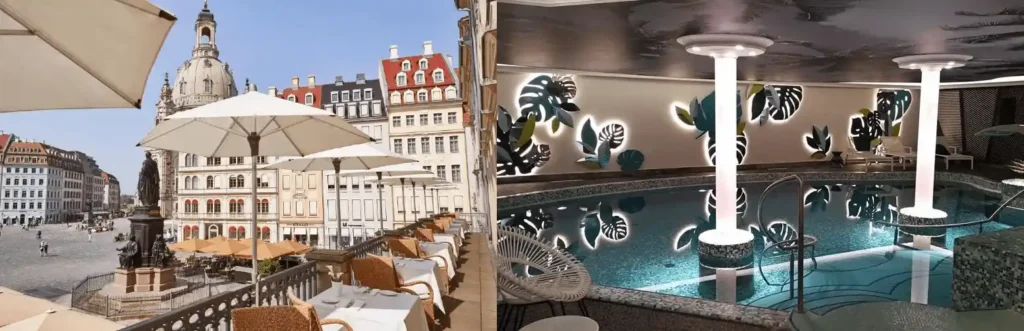
These properties represent Dresden’s civic and commercial soul—buildings that served as cultural gathering points, guild headquarters, and economic powerhouses during the city’s Baroque and Enlightenment peak.
Expect central Neumarkt or Altstadt locations, interiors that balance mercantile gravitas with urban sophistication, and service calibrated for culturally engaged, museum-going travelers who value proximity to the Frauenkirche and opera district.
🎻 Steigenberger Hotel de Saxe ★★★★★
Reconstructed on its original 1797 foundation at the Neumarkt, this property occupies the exact site where European composers, diplomats, and nobility gathered during Dresden’s golden age as a cultural capital. The building’s soul isn’t royal—it’s civic. This was the social hinge of the city, the place where musical legends stayed between Semperoper performances and where political negotiations happened over late-night dinners.
Today’s interiors honor that legacy with restrained neoclassical elegance: marble lobbies, crystal chandeliers, high ceilings, muted color palettes. Rooms prioritize view hierarchy—upper floors facing the Frauenkirche deliver the visual confirmation that you’re at the city’s gravitational center.
Service feels European in the classical sense: multilingual, discreet, experienced with culturally literate clientele.
This suits travelers who want urban immersion without sacrificing architectural weight, and who value being steps from the reconstructed Frauenkirche over riverside estate isolation. The location alone—direct Neumarkt access—makes this the logical choice for opera, museum, and gallery-focused itineraries.
Best for: Culturally focused travelers seeking neoclassical urban elegance with Frauenkirche proximity, reconstructed civic heritage, and direct access to Dresden’s opera and museum quarter.
Signature Experience: Frauenkirche-facing suites with dome views, neoclassical lobby with Murano chandeliers, rooftop terrace overlooking Neumarkt reconstruction, full-service spa with Saxon herbal treatments.
“We walked to the Semperoper in four minutes—staying here isn’t proximity, it’s cultural residency.” — Natalia, PragueCheck Availability & Rates →
🏛️ Gewandhaus Dresden, Autograph Collection ★★★★★
Originally built in 1770 as the headquarters for Dresden’s cloth merchants’ guild, this property represents the absolute peak of the city’s mercantile power. The Gewandhaus wasn’t just a commercial building—it was the economic soul of Saxon trade, a warehouse-turned-civic-monument where textile fortunes were made and guild authority was exercised.
The restoration honors that gravitas: exposed wooden beams, vaulted brick ceilings, iron structural elements, and industrial-chic interiors that feel more Berlin gallery than traditional luxury hotel. Rooms vary in layout due to the building’s original warehouse footprint, but corner units with dual exposures deliver the most light and spatial volume. The restaurant emphasizes Saxon-regional ingredients with modern plating, served in a former guild assembly hall.
This suits travelers who want architectural authenticity over decorative opulence, and who value being in a building that defined Dresden’s economic identity during its Baroque zenith. It’s the most design-forward option on this list—less about royal nostalgia, more about mercantile soul rendered in contemporary luxury language.
Best for: Design-conscious travelers seeking guild-warehouse authenticity with industrial-chic interiors, Saxon mercantile heritage, and central Altstadt positioning within the economic heart of Baroque Dresden.
Signature Experience: Exposed-beam suites within former guild assembly spaces, Saxon-regional tasting menus in vaulted merchant hall, rooftop terrace with Elbe and Altstadt views, curated art installations honoring textile trade history.
“This building feels like it earned its luxury status through centuries of commerce, not a recent renovation budget.” — Lars, StockholmCheck Availability & Rates →
📊 Comparison: Best Hotels in Dresden
| Hotel | Location | Wellness & Spa | Dining | Unique Perks | Best For |
|---|---|---|---|---|---|
|
Hotel Taschenbergpalais ★★★★★ |
Altstadt, Zwinger proximity |
Rooftop infinity pool, Royal Saxon spa |
Palais Bistro, Saxon-French haute |
1705 royal palace, private Residenzschloss bridge |
Royal power stays, Baroque grandeur |
|
Schloss Hotel Dresden ★★★★ |
Pillnitz Palace, riverside estate |
Garden spa, wellness terrace |
Estate vineyard cuisine, Elbe terrace dining |
Royal summer residence, 15-hectare palace grounds |
Pastoral royal retreat, garden immersion |
|
Steigenberger Hotel ★★★★★ |
Neumarkt, Frauenkirche view |
Full-service spa, Saxon herbal treatments |
Neoclassical dining, rooftop terrace |
1797 civic grand hotel, cultural social landmark |
Opera proximity, museum-focused stays |
- For those exploring Germany’s broader historical landscape, continue with the best historic hotels in Cologne.
❓ FAQ: Best Hotels in Dresden
What makes a hotel in Dresden a true historic property?
Authentic historic hotels in Dresden occupy verified historical structures—royal palaces, guild halls, aristocratic estates—with documented architectural and political significance. Look for properties built before 1860 with confirmed royal, state, or mercantile pedigrees, not modern constructions with decorative historical themes. Buildings like Hotel Taschenbergpalais Kempinski (1705 royal palace) and Gewandhaus Dresden (1770 guild headquarters) offer tangible historical soul, not aesthetic imitation.
Which Dresden hotel offers the most significant royal connection?
Hotel Taschenbergpalais Kempinski holds the strongest royal pedigree—it was built in 1705 by Augustus the Strong as a palace for Countess Cosel and physically connects to the Residenzschloss (Royal Castle) via a historic bridge. This makes it a direct extension of the Saxon royal court, not just a nearby luxury hotel. Schloss Hotel Dresden Pillnitz also offers verified royal lineage as part of the summer residence complex used by the House of Wettin from 1765 onward.
Are Dresden’s best hotels located in the Altstadt or along the Elbe?
Both locations serve different priorities. Altstadt properties like Steigenberger Hotel de Saxe and Gewandhaus Dresden offer immediate access to the Semperoper, Zwinger, and Frauenkirche—ideal for culture-focused itineraries. Riverside estates like Schloss Hotel Dresden Pillnitz and Hotel Schloss Eckberg provide parkland immersion and panoramic Elbe views with more territorial privacy. Choose based on whether you prioritize museum proximity or estate-level seclusion.
Do Dresden historic hotels require advance booking during peak season?
Yes—properties with verified royal or guild pedigrees (especially Hotel Taschenbergpalais Kempinski and Steigenberger Hotel de Saxe) see elevated demand during Christmas market season (late November through December) and opera festival periods (spring and early summer). Book 60–90 days ahead for preferred room categories and Frauenkirche-facing views. Riverside estates like Pillnitz and Eckberg offer slightly more flexibility due to their distance from central Altstadt.
Which Dresden hotel best suits travelers prioritizing architectural authenticity over modern luxury?
Gewandhaus Dresden delivers the most uncompromised historical architecture—exposed wooden beams, vaulted brick ceilings, and iron structural elements from its 1770 guild warehouse origins remain intact. The design leans industrial-chic rather than decorative Baroque, prioritizing mercantile authenticity over royal opulence. This suits travelers who value buildings that earned their luxury status through centuries of economic significance rather than recent renovations.
Can you walk to Dresden’s main cultural sites from these historic hotels?
Altstadt properties offer immediate pedestrian access—Hotel Taschenbergpalais Kempinski sits 200 meters from the Zwinger and Semperoper, while Steigenberger Hotel de Saxe and Gewandhaus Dresden position you within 300 meters of the Frauenkirche. Riverside estates like Pillnitz and Eckberg require 20–30 minute drives or tram connections to central museums but compensate with palace grounds and estate parkland unavailable in urban locations.
What differentiates Dresden’s palace hotels from standard five-star properties?
Dresden’s historic palace hotels occupy buildings with sovereign, royal, or civic authority—structures that once housed ruling families, defined economic power, or served as official state seats. Hotel Taschenbergpalais Kempinski and Schloss Hotel Dresden Pillnitz offer verified royal pedigrees with architectural connections to Saxon monarchy. Standard five-star chains deliver polished service but lack the historical soul and territorial gravitas that define Dresden’s landmark conversions.
Choosing the Right Heritage Stay in Dresden
Booking the right hotel in Dresden isn’t about chasing five-star ratings—it’s about matching your priorities to a building with genuine historical authority. The properties above represent the most architecturally significant and service-consistent options for travelers who value royal pedigree, mercantile soul, or civic landmark status over brand recognition.
Travelers drawn to capital-city palace conversions should also explore iconic historic hotels in Berlin.
For more curated itineraries and luxury-focused travel insights, visit Your Luxury Guide. For official travel information and destination updates, visit Germany tourism-info.
Booking your heritage hotel in Dresden secures access to properties where Saxon Baroque power, royal summer estates, and guild-era mercantile dominance remain embedded in every vaulted ceiling and riverside terrace—not just referenced in marketing copy.
Your Luxury Guide — Where Exceptional Travel Begins.