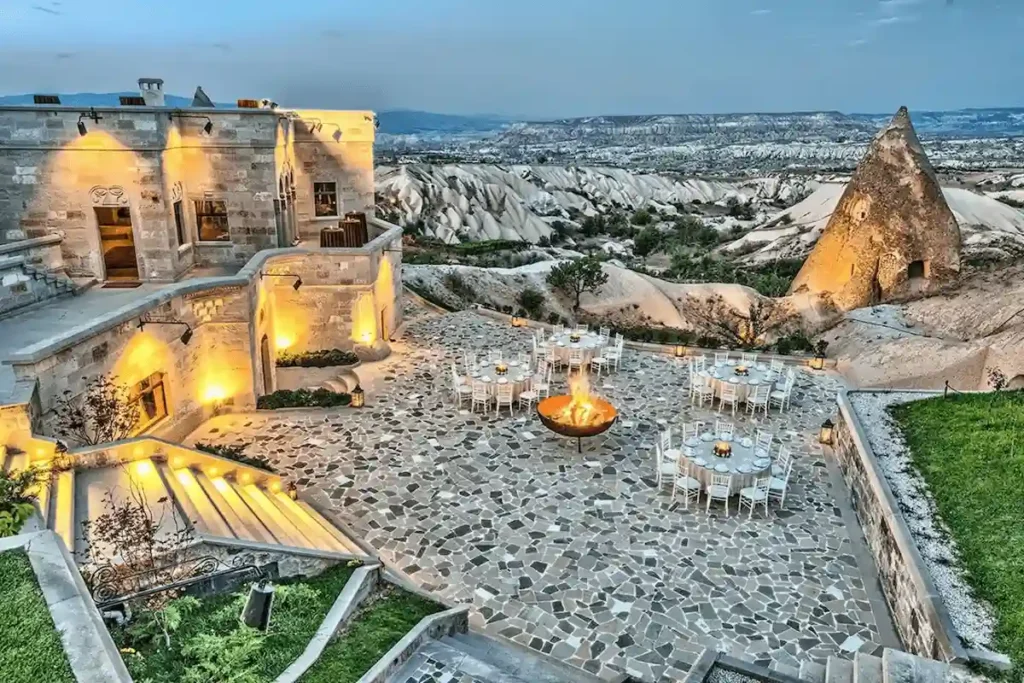
The best hotels in Cappadocia are not rooms—they are registered archaeological sites. This is Turkey’s most extreme convergence of geology and history: a volcanic landscape where Byzantine monks, Silk Road merchants, and Greek aristocrats carved entire civilizations into stone. The problem: most travelers book generic “cave hotels” that are modern fabrications with weak provenance and Instagram staging.
We audited Cappadocia’s historic hotels to filter those properties. This selection includes only verified heritage conversions—1,000-year-old monasteries, documented Greek mansions, and structures registered with the Nevşehir Museum. Each property maintains its original stone masonry, underground tunnel systems, or Byzantine frescoes. You are booking a stay inside a protected historical monument where the physical structure itself is the primary luxury. This is the architectural soul of Cappadocia filtered through institutional verification, not marketing language.
For broader context on Turkey’s heritage hotel ecosystem, see our audit of best historic hotels in Turkey.
Uçhisar Cliffside: Museum-Grade Conversions
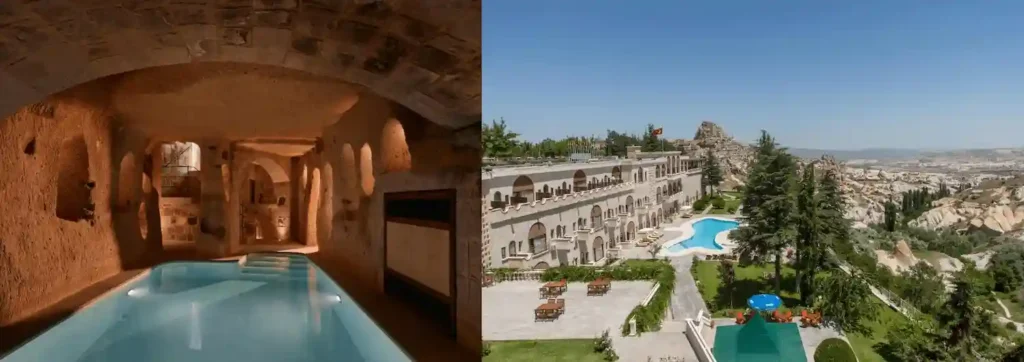
Uçhisar Castle rises 200 feet above the valley—the highest point in Cappadocia. The hotels at its base are not accommodations; they are conservation projects. These properties were built on or inside verified Byzantine, Roman, and Hittite ruins. Expect original tunnel networks, registered artifacts displayed in-room, and architecture that required decades of archaeological approval.
This is where Cappadocia’s “living museum” concept was born—where sleeping in a cave means sleeping inside a catalogued historical site.
🏺 Museum Hotel – Relais & Châteaux
Museum Hotel is the world’s first registered “living museum” hotel—every room is catalogued with the Nevşehir Museum and houses authenticated Hittite, Roman, and Ottoman artifacts. Built directly on the site of thousand-year-old ruins, the property preserves original stone foundations, hand-carved niches, and ancient grain storage chambers now repurposed as private suites.
The physical soul is overwhelming: terracotta pottery embedded in walls, Byzantine masonry exposed under glass floors, and fireplaces carved from volcanic rock that were used by Silk Road caravans. The transition from the chaotic Göreme highway into this compound feels like entering an archaeological dig that happens to serve wine.
Relais & Châteaux membership ensures flawless service, but the real differentiator is the provenance: you are sleeping inside a protected excavation site where every stone has been verified, documented, and preserved under Turkish Ministry of Culture regulations.
Best for: Collectors and history scholars seeking museum-grade provenance with five-star refinement and direct artifact access.
Signature Experience: Private terraces overlooking Pigeon Valley, in-room display of authenticated antiquities, UNESCO-zone sunrise balloon views, Ottoman-style hammam carved from original cave chambers.
“Waking up surrounded by 2,000-year-old pottery—this isn’t a hotel, it’s a private excavation.” — Elena, AthensCheck Availability & Rates →
⛪ Argos in Cappadocia
Argos is a 2,000-year-old Byzantine monastery complex and former Silk Road caravan station—restored over 25 years to preserve 5.5 miles of underground tunnels and a vaulted linseed oil factory called the Bezirhane. The physical structure is monumental: original stone archways span 40 feet, hand-carved staircases descend six levels into the rock, and the monastery’s private chapel retains fragments of Byzantine frescoes.
The rooms occupy former monk cells and merchant storage chambers, now fitted with copper bathtubs and antique kilims, but the stone and mortar remain untouched. The transition is cinematic—you descend from the modern reception into torch-lit tunnels that feel like a cross between a medieval fortress and an Ottoman palace.
The differentiator: Argos controls the largest preserved tunnel network in Cappadocia, sections of which are still being excavated. Dining occurs in the Bezirhane under vaulted ceilings where olive oil was pressed 400 years ago.
Best for: Architecture purists seeking the most ambitious heritage restoration in Cappadocia with labyrinthine tunnel exploration and monastic silence.
Signature Experience: 5.5-mile underground tunnel system, private stone-carved spa, dining in the 17th-century Bezirhane oil factory, guided historical tours of the monastery complex.
“Walking those tunnels at night with a lantern—felt like we discovered it ourselves.” — Marcus, BerlinCheck Availability & Rates →
🪶 Uchisar Kaya Hotel
Uchisar Kaya is the world’s first rock-carved hotel—hand-carved directly into the Pigeon Valley cliffside in the 1960s by a local family who followed the natural geological veins of the stone. This is not restoration; it is original rock architecture preserved exactly as it was carved. The rooms have no straight lines—every wall, archway, and window follows the organic flow of the volcanic tuff.
The physical soul is raw: exposed rock ceilings, hand-chiseled niches for oil lamps, and floors that slope with the cliff’s natural gradient. The terrace overlooks Pigeon Valley’s fairy chimneys with zero obstruction—no glass, no railings, just 200 feet of open air. The transition from the modern village into this hand-carved compound is abrupt and immersive.
The differentiator: Uchisar Kaya is the pioneer—the property that proved rock-carved hotels could be comfortable, not just atmospheric.
Best for: Minimalists and architectural romantics seeking the most authentic rock-carved experience with unfiltered Pigeon Valley views and heritage simplicity.
Signature Experience: Cliffside terrace with 180-degree fairy chimney views, original 1960s hand-carved architecture, breakfast served in stone-carved alcoves, direct access to Pigeon Valley hiking trails.
“That terrace at sunrise—no hotel in Cappadocia comes close to this raw, unedited exposure.” — Liam, DublinCheck Availability & Rates →
Ürgüp Historic District: Greek Mansions & Orthodox Churches
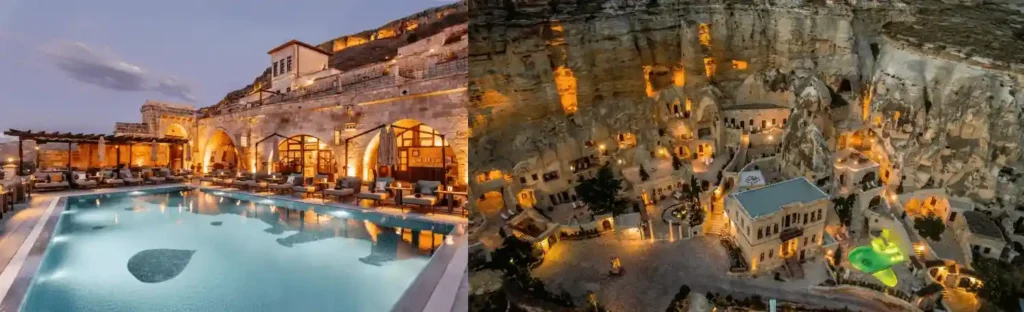
Ürgüp was the aristocratic heart of Cappadocia’s 18th-century Greek Christian community. The mansions here are not cave hotels—they are verified Ottoman-era residences with high stone facades, private chapels, and documented ownership records. Expect original frescoed ceilings, Greek Orthodox iconography, and architecture that required municipal heritage permits to convert.
This is where Cappadocia’s urban restoration projects reached their highest level of historical accuracy.
🕌 Kayakapi Premium Caves Cappadocia
Kayakapi is a verified urban restoration of the entire Kayakapi district—an 18th-century Greek Orthodox neighborhood that includes the 10th-century St. John the Baptist Cave Church, multiple Ottoman fountains, and 30+ verified stone mansions. The property occupies an entire hillside, with each suite housed in a separate historical building connected by original cobblestone pathways.
The physical soul is overwhelming: hand-painted Orthodox frescoes in the church, stone-carved municipal fountains still functioning as originally designed, and Ottoman facades with Greek inscriptions intact. The rooms blend 18th-century stonework with modern comfort, but the architecture dominates—vaulted ceilings, arched doorways, and hand-carved wooden doors. The transition from Ürgüp’s main square into this district feels like stepping into a preserved 1800s village.
The differentiator: Kayakapi is the only hotel in Cappadocia that restored an entire registered neighborhood, not just a single building.
Best for: Heritage travelers seeking the most comprehensive urban restoration in Cappadocia with verified church access and neighborhood-scale preservation.
Signature Experience: 10th-century Orthodox church with original frescoes, private Ottoman fountains, neighborhood-scale cobblestone pathways, rooftop terraces overlooking Ürgüp valley.
“Walking through those stone streets at dawn—it’s a village frozen in the 1800s, not a hotel.” — Anastasia, ThessalonikiCheck Availability & Rates →
⛪ Sacred House
Sacred House is a 250-year-old Greek aristocratic mansion with a private chapel carved directly into the rock—the “Old Chapel” suite occupies the original 18th-century Orthodox prayer room complete with stone altar and frescoed walls. The main structure is a verified Ottoman-era residence with high-arched stone masonry, hand-painted wooden ceilings, and a central courtyard that once served as the family’s private garden.
The physical soul is theatrical: crystal chandeliers hang from 20-foot ceilings, antique kilims cover stone floors, and the spa occupies the mansion’s original wine cellar with vaulted stone ceilings intact. The transition from Ürgüp’s modern streets into this mansion is immediate and transporting—stone gates close behind you, and the city vanishes.
The differentiator: Sacred House is the only hotel in Cappadocia where you can sleep inside a consecrated Orthodox chapel with original religious iconography.
Best for: Couples and design-focused travelers seeking theatrical Ottoman luxury with private chapel access and high-ceiling grandeur.
Signature Experience: Private chapel suite with original altar and frescoes, Ottoman hammam in 18th-century wine cellar, fine dining under crystal chandeliers, rooftop terrace with panoramic valley views.
“Sleeping in that chapel suite felt sacred—stone walls, flickering candles, complete silence.” — Camille, ParisCheck Availability & Rates →
🏛️ Yunak Evleri Cappadocia
Yunak Evleri combines a 19th-century Greek stone mansion with 5th-century cave dwellings—creating a vertical compound where Ottoman aristocracy and Byzantine monks once coexisted. The mansion preserves the original Greek-style facade with high arched windows and stone-carved balconies, while the cave suites descend six levels into the rock, following the original “inner-city” cave network typical of Ürgüp’s elite families.
The physical soul is layered: mansion rooms feature hand-painted wooden ceilings and antique Ottoman furniture, while cave suites retain their original stone-carved niches and fireplaces. The courtyard connects both structures with original cobblestones and a stone fountain that has operated continuously since 1850. The transition from the mansion’s grand entrance into the cave network is dramatic—you descend through torch-lit stone staircases into 1,500-year-old chambers.
Best for: Travelers seeking the most layered historical experience in Cappadocia with mansion elegance and deep cave immersion in a single property.
Signature Experience: Dual architecture of Greek mansion and Byzantine caves, original 19th-century stone balconies, six-level cave descent, courtyard dining under 150-year-old fountain.
“The mansion felt like a noble’s residence, then we descended into caves—two worlds, one property.” — Sofia, MadridCheck Availability & Rates →
Ayvali Village: Monastic Retreats & Orthodox Heritage
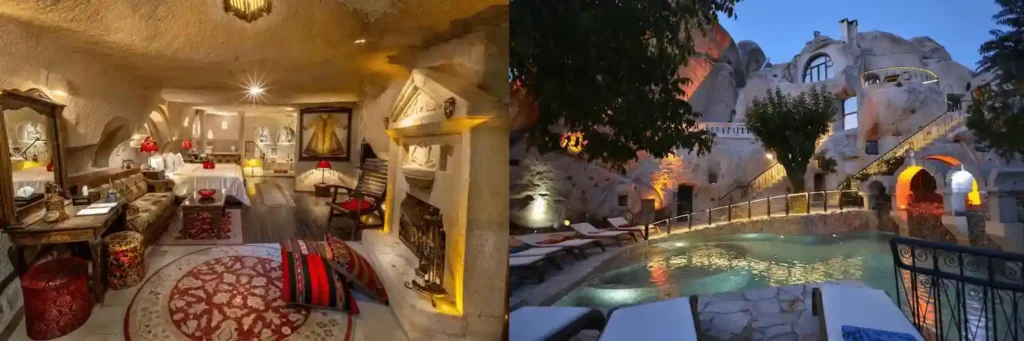
Ayvali is Cappadocia’s most remote spiritual quarter—a valley where Byzantine monks established mountain retreats far from the main settlements. The hotel here occupies a verified 1,000-year-old monastery with original frescoes and the authentic layout of a Christian pilgrimage site. This is where Cappadocia’s religious architecture reaches its most preserved and undisturbed form.
⛪ Cappadocia Gamirasu Cave Hotel
Gamirasu is a 1,000-year-old Byzantine monastery used as a Christian retreat during the height of the Orthodox Church’s influence in Cappadocia. The property includes a 12th-century Orthodox church with original frescoes depicting saints and biblical scenes, still preserved under protective glass.
The rooms occupy former monk cells carved into the rock, maintaining the monastery’s original layout—narrow stone corridors, low-arched doorways, and small windows designed for meditation, not views. The physical soul is monastic: exposed rock walls, simple stone benches, and the scent of burning incense that lingers from the church.
The transition from the modern road into this compound is stark—the chaos of tourism vanishes, replaced by the silence of a spiritual mountain retreat. The differentiator: Gamirasu is the only hotel in Cappadocia where the original religious function is still palpable in every room.
Best for: Solitude seekers and spiritual travelers seeking authentic monastic architecture with original Byzantine frescoes and mountain retreat isolation.
Signature Experience: 12th-century Orthodox church with preserved frescoes, former monk cell accommodations, mountain hiking trails to ancient hermit caves, traditional Turkish breakfast in stone-carved refectory.
“Standing in that chapel with 900-year-old frescoes—this is what we came to Cappadocia to find.” — Ivan, PragueCheck Availability & Rates →
📊 Comparison: Best Hotels in Cappadocia
| Hotel | Location | Wellness & Spa | Dining | Unique Perks | Best For |
|---|---|---|---|---|---|
|
🏺 Museum Hotel |
Uçhisar, cliffside |
Ottoman hammam, cave spa |
Valley-view fine dining |
Museum-registered rooms, authenticated artifacts |
Collectors, provenance seekers |
|
⛪ Argos Capadocia |
Uçhisar, monastery complex |
Stone-carved spa, tunnel treatments |
Bezirhane vaulted dining |
5.5-mile tunnel network, Byzantine monastery |
Architecture purists, tunnel explorers |
|
🕌 Kayakapi Premium Caves |
Ürgüp, historic district |
Ottoman hammam, wellness center |
Fine dining, rooftop terrace |
Entire restored neighborhood, 10th-century church |
Heritage travelers, urban restoration |
|
⛪ Sacred House |
Ürgüp, mansion district |
Wine cellar spa, Ottoman hammam |
Chandelier dining, Ottoman cuisine |
Private chapel suite, theatrical luxury |
Couples, design romantics |
|
🏛️ Yunak Evleri |
Ürgüp, mansion & caves |
Traditional hammam, courtyard spa |
Courtyard dining, Ottoman menu |
Dual mansion-cave architecture, six-level descent |
Layered experience, vertical exploration |
|
⛪ Gamirasu Cave Hotel |
Ayvali, mountain retreat |
Traditional spa, monastic quiet |
Refectory dining, regional cuisine |
1,000-year monastery, original frescoes |
Solitude seekers, spiritual retreats |
|
🪶 Uchisar Kaya Hotel |
Uçhisar, Pigeon Valley |
Traditional hammam, cliffside relaxation |
Terrace dining, valley views |
First rock-carved hotel, raw authenticity |
Minimalists, unfiltered views |
- For a wider view of Turkey’s most significant historical hotels beyond Cappadocia, explore our complete audit of heritage properties preserved across the country’s most historically layered cities at best hotels in Mardin.
❓ FAQ: Best Hotels in Cappadocia
What makes Cappadocia hotels historically significant?
Cappadocia’s best hotels occupy verified Byzantine monasteries, Greek Orthodox mansions, and Silk Road caravan stations carved into volcanic rock. Properties like Museum Hotel and Argos preserve original tunnel systems, frescoed chapels, and authenticated artifacts registered with Turkish cultural authorities. The physical structures—not the brand names—define the luxury here.
Which area in Cappadocia has the best historic hotels?
Uçhisar offers the most museum-grade conversions with properties built on verified Roman and Byzantine ruins. Ürgüp preserves the highest concentration of restored Greek mansions and Orthodox churches. Ayvali provides the most isolated monastic retreats. Each district represents a different historical layer—choose based on whether you prioritize archaeological provenance, urban restoration, or spiritual architecture.
Are cave hotels in Cappadocia authentic historical structures?
Only a minority. Properties like Argos, Gamirasu, and Uchisar Kaya occupy genuine hand-carved caves used by Byzantine monks or 5th-century settlers. Most modern “cave hotels” are new construction styled to look historic. Verify the property’s past-life identity—original monasteries, Greek mansions, or documented Silk Road stations—before booking.
What is the best time to book hotels in Cappadocia?
April-May and September-October offer the most stable weather and operational hot air balloon flights. Heritage hotels with limited inventory—especially properties like Museum Hotel and Kayakapi—fill 3-4 months in advance during peak season. Winter offers solitude and lower rates but reduced balloon activity.
Do Cappadocia’s historic hotels include modern amenities?
Yes, but integrated into the original architecture. Museum Hotel and Sacred House offer five-star service while preserving Byzantine stone walls and Ottoman vaulted ceilings. Gamirasu prioritizes monastic simplicity over luxury amenities. Argos combines modern spa facilities with 2,000-year-old tunnel networks. Expect heated floors, quality bedding, and refined dining—but the stone, not the technology, dominates.
Which Cappadocia hotel has the best balloon views?
Museum Hotel’s terraces overlook the primary UNESCO balloon launch zone with unobstructed valley views. Uchisar Kaya offers the most raw, elevated exposure from its cliffside position. Argos provides internal courtyard views framed by monastery walls. All properties arrange private balloon flights, but Museum Hotel and Uchisar Kaya offer the most cinematic morning spectacle from your terrace.
Are Cappadocia’s historic hotels family-friendly?
Selectively. Kayakapi and Yunak Evleri accommodate families with multiple-room suites in restored mansions. Argos and Gamirasu suit couples and solo travelers seeking monastic silence—narrow cave corridors and spiritual architecture make them less practical for children. Museum Hotel balances both with family suites that maintain historical integrity while offering modern comfort.
Booking Verified Heritage, Not Generic Caves
Choosing best hotels in Cappadocia isn’t about finding a room with cave walls—it’s about verifying the building’s documented past and ensuring the architecture hasn’t been diluted by modern renovations. The properties above represent the region’s most significant conversions: monasteries with original frescoes, Greek mansions with municipal heritage status, and tunnel systems that required decades of archaeological approval. These are not styled accommodations; they are protected monuments that happen to accept overnight guests. Availability at this level contracts quickly once balloon season begins.
Continue mapping Turkey’s most distinguished heritage hotels through our curated survey of Istanbul’s imperial conversions, where Ottoman palaces and Bosphorus mansions define the nation’s highest standard of historically grounded luxury at best hotels in Istanbul.
For more curated itineraries and luxury-focused travel insights, visit Your Luxury Guide. For official travel information and destination updates, visit Turkey tourism-info.
Booking your stay in Cappadocia secures access to Turkey’s most architecturally extreme heritage conversions—where sleeping inside a verified Byzantine monastery or Greek Orthodox chapel isn’t a marketing claim, but a documented fact registered with cultural preservation authorities.
Your Luxury Guide — Where Exceptional Travel Begins.