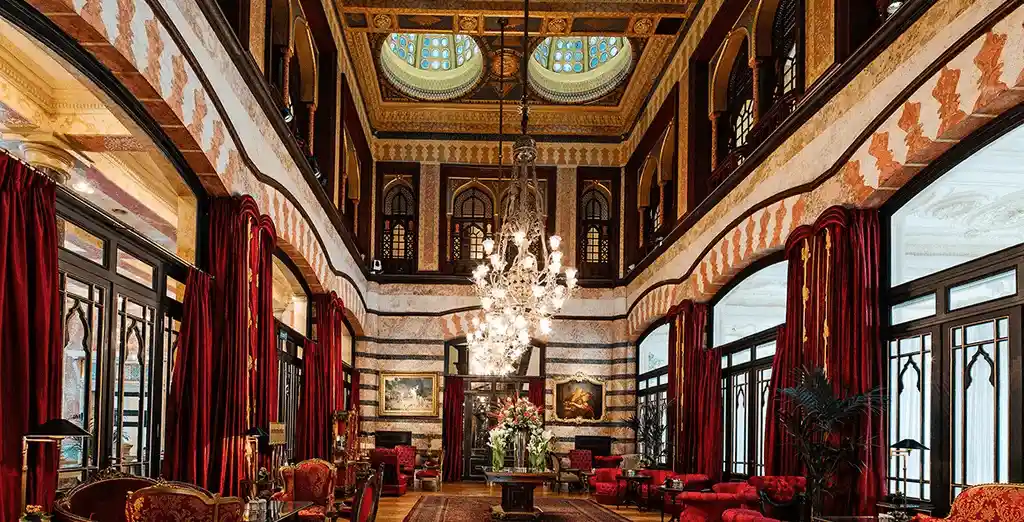
The best hotels in Beyoğlu Istanbul sit inside the district’s architectural spine—19th-century palaces, Ottoman bathhouses, and Renaissance banking headquarters that built modern Turkey. Beyoğlu’s Pera and Galata neighborhoods contain Europe’s last intact Belle Époque quarter in the East, where Grand Rue de Péra once rivaled Paris for cultural density. The problem: Most visitors get trapped in modern Taksim towers that could be anywhere, missing the tactile history compressed into these stone walls.
We’ve audited Beyoğlu’s historic hotel inventory and rejected every property that couldn’t prove a verified past-life identity—no boutique recreations, no branded retrofits. What remains are seven conversions where the original 1860s–1920s structure dictates the guest experience: operational Turkish baths, preserved bank vaults, Orient Express ballrooms. This selection guarantees you’re staying inside Istanbul’s architectural turning point, not just near it.
The Belle Époque Icons: Orient Express Legacy & Imperial Salons
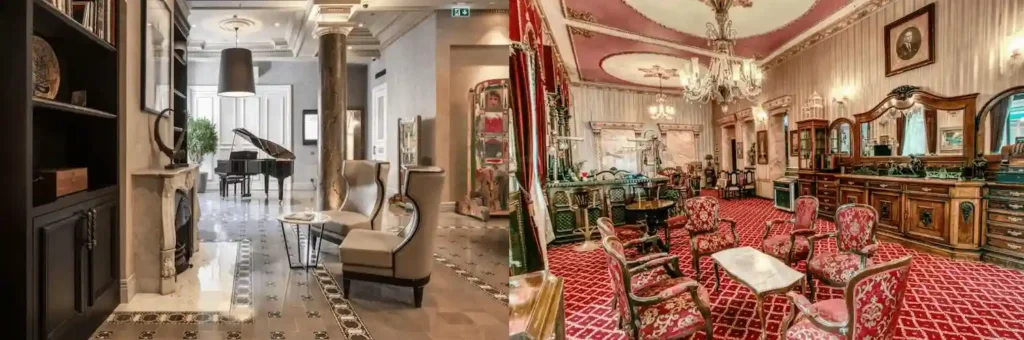
These properties weren’t built for tourism—they were constructed as diplomatic infrastructure for the late Ottoman Empire’s integration into European trade networks. The Orient Express terminus made Pera the continent’s eastern edge, and these hotels housed the passengers: bankers, spies, opera singers, revolutionaries. What sets them apart today isn’t nostalgia but preservation density—original elevators, hand-painted ceilings, the physical systems that made 1890s luxury functional.
🚂 Pera Palace Hotel ★★★★★
The Pera Palace wasn’t a hotel—it was the Orient Express’s eastern embassy, built by Compagnie Internationale des Wagons-Lits in 1892 to match their Paris terminals. The structure functioned as a transition zone where European aristocracy could step off the train into an Art Nouveau palace without confronting Ottoman Istanbul’s density.
Today, the preservation is forensic: Turkey’s first Otis elevator still operates on its original brass cable system, the Agatha Christie Suite (411) maintains her exact writing desk placement, and the Patisserie de Pera occupies the 1895 ballroom with its hand-gilded ceiling intact. Rooms blend original wood-paneling with modernized plumbing—you sleep surrounded by the same mahogany that framed diplomatic conspiracies.
The rooftop terrace overlooks the Golden Horn with the same sightline that Atatürk used when planning the Republic from Room 101, now preserved as a museum within the hotel.
Best for: History obsessives seeking verifiable 19th-century interiors with museum-grade preservation and direct Orient Express lineage.
Signature Experience: Atatürk Museum Room 101 with original furnishings, working 1892 hydraulic elevator, Belle Époque ballroom with gilded ceiling, Agatha Christie-themed afternoon tea in period salon, Golden Horn-view rooftop.
“That elevator—hand-operated brass cage from 1892—worth the stay just for the mechanical theater of it.” — Marcus, ViennaCheck Availability & Rates →
🏦 The Bank Hotel Istanbul, a Member of Design Hotels ★★★★★
This Renaissance palazzo served as the Ottoman Empire’s financial gateway—Credit General Ottoman Bank headquarters from 1863, where European capital entered Anatolia through Ottoman-guaranteed loans. The conversion retains the core banking architecture: massive underground vaults now house a dimly-lit cocktail library where original steel doors frame the entrance, radiator systems snake along marble hallways, and teller windows frame the lobby bar.
Suites occupy former executive offices with 15-foot ceilings and original parquet floors that creak with authentic 1860s weight distribution. The rooftop restaurant sits atop the vault structure with unobstructed Bosphorus views—the same panorama bankers used to watch incoming trade ships. What makes this property singular is the tension between financial severity and hospitality luxury: you’re sleeping inside the mechanism that funded Ottoman modernization, surrounded by the original infrastructure of empire-scale transactions.
Best for: Finance professionals and design-focused travelers wanting Renaissance bank architecture merged with contemporary hospitality innovation.
Signature Experience: Underground vault cocktail library with original steel doors, rooftop Bosphorus-view dining, preserved 1863 marble flooring, radiator-system aesthetics, former executive suites with period parquet.
“Drinking gin in a bank vault that once held Ottoman gold reserves—surreal and utterly Istanbul.” — Elena, LondonCheck Availability & Rates →
🍸 Grand Hotel de Londres
Built in 1892 as the Pera Palace’s sister property, Grand Hotel de Londres targeted the same Orient Express clientele but with a more intimate Victorian club atmosphere—think private salons over grand ballrooms. The preservation here feels domestic rather than institutional: the 1890s wooden bar still serves drinks on its original counter, antique furniture crowds the lobby like a collector’s estate, and the manual elevator requires an attendant to operate the hand-crank between floors.
Rooms maintain period wallpaper and brass fixtures that haven’t been “restored” so much as continuously maintained through 130 years of operation. The terrace overlooks the same Pera streetscape that hosted Belle Époque café culture—you’re positioned inside the social geography of late Ottoman cosmopolitanism. What distinguishes Londres from its grander sibling is the unfiltered authenticity: this feels like a hotel that never stopped operating since Victoria’s reign.
Best for: Purists seeking unpolished Belle Époque atmosphere with Victorian furnishings in original operational state and intimate scale.
Signature Experience: Hand-operated 1890s elevator with brass controls, original wooden bar with period fixtures, antique furniture throughout public spaces, Belle Époque terrace overlooking Pera, Victorian-era wallpapers and brass detailing.
“The hand-crank elevator felt like time travel—genuine Victorian mechanics, no modern safety theater.” — Oliver, EdinburghCheck Availability & Rates →
Ottoman Infrastructure Conversions: Bathhouses & Banking Palaces
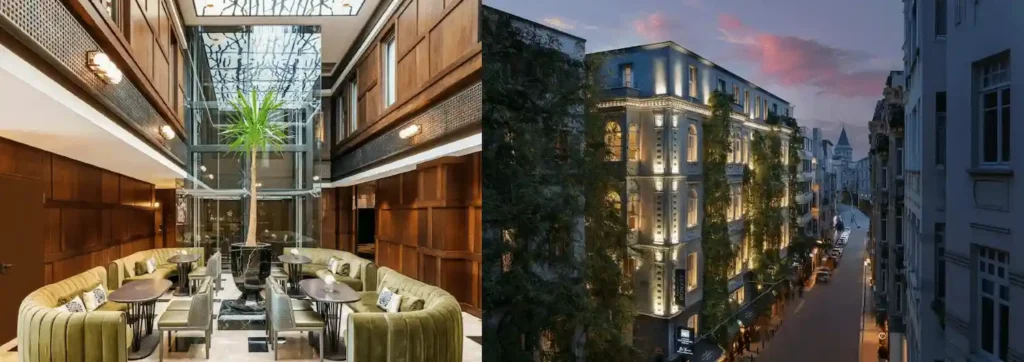
These properties weren’t leisure spaces—they were civic and commercial infrastructure that shaped daily life in Ottoman Galata. A hammam wasn’t a spa; it was mandatory public hygiene architecture. A mansion wasn’t a residence; it was a dynasty’s banking headquarters.
The conversions preserve operational systems: working Turkish baths with 18th-century plumbing, monumental staircases designed for merchant processions, stone facades that declared financial power. You’re not staying in a hotel themed around Ottoman history—you’re occupying the literal structures that built it.
🛁 The Galata Hotel Istanbul – MGallery Collection ★★★★★
This property fuses two separate historic structures: the 1720 Çeşme Hammam (Turkish bathhouse) and an 1836 banking wing added during the Tanzimat reforms. The hammam remains fully operational—original marble platforms, domed ceiling with star-shaped light holes, and the same hypocaust heating system that warmed 18th-century bathers. The banking facade retains its Baroque severity: thick stone walls, arched windows, and the monumental entrance designed to signal financial authority.
Rooms split between the hammam’s intimate stone chambers and the bank’s high-ceilinged executive suites, creating two distinct architectural experiences under one roof. The rooftop restaurant overlooks Galata Tower with the same dramatic verticality that defined Ottoman skyline politics. What makes this conversion exceptional is the dual identity—you can trace 300 years of urban evolution between breakfast in a bank and evening steam in a hammam.
Best for: Architecture enthusiasts wanting dual Ottoman-era conversions with operational 1720s Turkish bath and preserved banking infrastructure.
Signature Experience: Working 18th-century Turkish bath with original marble and hypocaust heating, 1836 Baroque bank facade, rooftop Galata Tower views, dual-structure architectural narrative, stone chambers and high-ceiling suites.
“The hammam’s star-domed ceiling at dawn—300-year-old light geometry that no modern spa could replicate.” — Leyla, CairoCheck Availability & Rates →
🏛️ Adahan DeCamondo Pera, Autograph Collection ★★★★★
The DeCamondo family built this 1874 Neoclassical mansion as their Istanbul banking headquarters—Sephardic financiers who rivaled the Rothschilds in Ottoman commercial influence. The facade declares dynastic permanence: hand-carved stone reliefs depicting maritime trade, rusticated ground floor suggesting vault security, and a monumental entrance designed for carriage arrivals.
Inside, the original stone staircase dominates the vertical core—each step carved from single Marmara marble blocks, rising three floors without structural supports beyond cantilever engineering. Suites occupy former family apartments with 14-foot ceilings, original crown molding, and windows scaled for pre-electric natural light dependency.
The rooftop terrace overlooks the exact trade routes the DeCamondos financed: Golden Horn to the Black Sea. What separates this property from generic mansion conversions is the banking precision—every architectural choice was capital allocation strategy made visible.
Best for: Design-conscious guests seeking Neoclassical banking dynasty architecture with monumental stonework and Sephardic commercial heritage.
Signature Experience: Cantilever marble staircase spanning three floors, hand-carved stone facade reliefs, 14-foot ceilings in former family suites, rooftop Golden Horn trade-route views, Neoclassical crown molding throughout.
“That staircase—pure structural theater, no supports, just 19th-century engineering confidence made marble.” — Ari, New YorkCheck Availability & Rates →
Diplomatic & Institutional Conversions: Embassy Palaces & French Monasteries
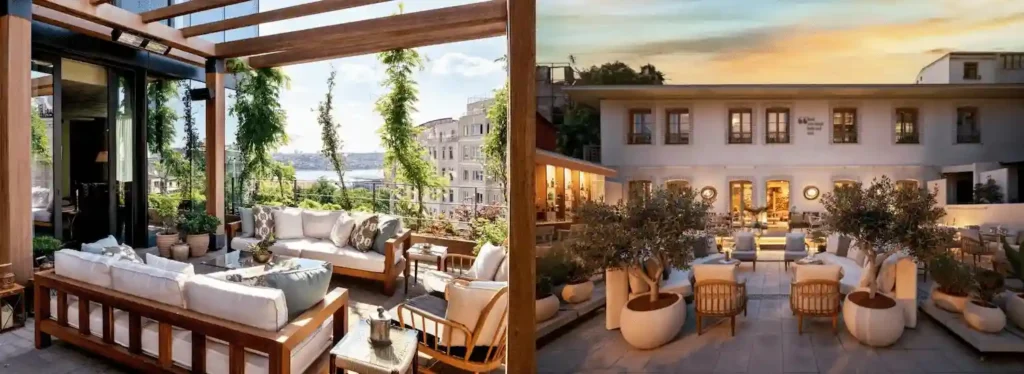
These properties weren’t commercial—they were sovereign territory and religious infrastructure grafted onto Ottoman soil. An embassy palazzo represented extraterritorial European power; a monastery was Catholic missionary architecture in an Islamic capital. You’re not staying in a boutique hotel—you’re occupying the physical mechanisms of 19th-century soft power.
🏛️ Soho House Istanbul ★★★★★
Palazzo Corpi started as Italian merchant Ignazio Corpi’s 1873 residence, later serving as the U.S. Embassy during Turkey’s Republican transition—the building witnessed both Ottoman collapse and Kemalist nation-building from its Pera hilltop position. The Neoclassical architecture preserves diplomatic grandeur: frescoed ceilings in what were embassy reception halls, Carrara marble floors imported from Italian quarries, and 19th-century woodwork in the original library where consular officers drafted treaty language.
The Soho House conversion maintains this institutional severity while adding members-club exclusivity: the rooftop pool overlooks the Bosphorus with the same strategic sightline diplomats used to monitor naval traffic, the Alla Turca restaurant occupies the former ballroom, and the screening room sits in the basement vault. What makes this property essential is the layered geopolitical narrative—you’re sleeping in rooms where American foreign policy toward the Ottoman collapse was literally written.
Best for: Members-club regulars and diplomatic history enthusiasts wanting embassy-grade Neoclassical interiors with exclusive rooftop Bosphorus access.
Signature Experience: Frescoed embassy reception ceilings, imported Carrara marble throughout, rooftop pool with naval-traffic Bosphorus views, 19th-century library woodwork, former ballroom dining with original architecture.
“Swimming where diplomats once negotiated empire collapse—the rooftop’s historical vertigo is unmatched.” — James, WashingtonCheck Availability & Rates →
⛪ Ecole St. Pierre Hotel
This 1841 complex functioned as a French Catholic school and monastery—missionary education infrastructure designed to extend French cultural influence through Ottoman tolerance of Christian minorities. The preservation centers on the monastic courtyard: 19th-century stone walls create a sound-isolated pocket within chaotic Galata, original arched corridors connect former classrooms (now guest rooms), and the chapel facade remains visible in the lobby’s religious architectural vocabulary.
Rooms occupy converted dormitories and teaching halls—simple, stone-heavy spaces with minimal ornamentation, reflecting monastic austerity rather than luxury excess. The terrace overlooks layered Galata rooflines with the same contemplative remove the original French monks maintained. What distinguishes this conversion is the atmospheric authenticity—there’s no spa, no rooftop pool, just the unadorned architectural fact of a monastery that still feels like one.
Best for: Budget-conscious heritage travelers wanting monastic atmosphere with authentic 19th-century institutional architecture and courtyard tranquility.
Signature Experience: Stone monastic courtyard with sound isolation, arched corridors connecting former classrooms, preserved chapel facade in lobby, dormitory-converted rooms with minimal ornamentation, contemplative Galata terrace views.
“The courtyard’s stone silence after Galata’s chaos—stepping into 1841 France without leaving Istanbul.” — Sophie, LyonCheck Availability & Rates →
📊 Comparison: Best Hotels in Beyoğlu Istanbul
| Hotel | Location | Wellness & Spa | Dining | Unique Perks | Best For |
|---|---|---|---|---|---|
|
🚂 Pera Palace Hotel ★★★★★ |
Pera district, Orient Express quarter |
Heritage spa, period interiors |
Patisserie de Pera, ballroom setting |
1892 hydraulic elevator, Atatürk Museum Room |
History purists, Orient Express legacy |
|
🏦 The Bank Hotel Istanbul ★★★★★ |
Karaköy financial district |
Rooftop wellness, vault aesthetics |
Bosphorus-view rooftop restaurant |
Underground vault bar, 1863 marble floors |
Design travelers, banking architecture |
|
🍸 Grand Hotel de Londres |
Pera district, Belle Époque core |
Period authenticity, no modern spa |
1890s wooden bar, Victorian atmosphere |
Hand-crank elevator, antique furnishings |
Authenticity seekers, Victorian interiors |
|
🛁 The Galata Hotel ★★★★★ |
Galata Tower vicinity |
1720s Turkish bath, hypocaust heating |
Rooftop dining, Tower views |
Operational hammam, dual-era architecture |
Architecture fans, Ottoman bathing ritual |
- For travelers prioritizing Ottoman residential architecture over European institutional grandeur, our audit of best hotels in Sultanahmet covers the city’s palace and mansion conversions.
❓ FAQ: Best Hotels in Beyoğlu Istanbul
What makes Beyoğlu’s historic hotels different from Sultanahmet properties?
Beyoğlu’s hotels occupy 19th-century European diplomatic and commercial infrastructure—Orient Express palaces, bank headquarters, embassy buildings. Sultanahmet properties sit in older Ottoman residential conversions. Beyoğlu offers Belle Époque and Neoclassical architecture with verifiable institutional histories (banking vaults, diplomatic frescoes), while Sultanahmet delivers traditional Ottoman domestic spaces. The distinction is European modernity versus Ottoman tradition, both historically authentic but architecturally opposite.
Which hotel has the most intact original features?
Pera Palace maintains the highest density of operational heritage: the 1892 Otis elevator still runs on its original cable system, Room 101 is preserved as an Atatürk museum with period furnishings, and the ballroom ceiling retains hand-applied gold leaf from opening year. Grand Hotel de Londres offers comparable authenticity but with Victorian domestic scale rather than institutional grandeur. Both avoid modern reconstruction—these are continuous-operation properties, not restored museums.
Are these hotels accessible for first-time Istanbul visitors?
All seven properties sit within walkable distance of Taksim Square and İstiklal Avenue—Beyoğlu’s main transit hub and pedestrian corridor. The Pera Palace and Grand Hotel de Londres are on the historic Grand Rue de Péra (now İstiklal), offering immediate access to tram lines and Funicular connections. Galata properties require minor hill navigation but reward with fewer crowds. Unlike Sultanahmet’s tourist density, Beyoğlu maintains functional urban rhythm—you’re in a working neighborhood, not a heritage park.
Do these hotels require advance booking during high season?
Pera Palace and Soho House Istanbul fill months ahead for April–October and December holiday periods due to limited room inventory and institutional reputation. The Bank Hotel and Galata Hotel follow similar patterns but with slightly more flexibility. Grand Hotel de Londres and Ecole St. Pierre maintain smaller footprints with boutique-level availability—expect 4–6 week advance booking during peak. Off-season (January–March, November) allows shorter windows but risks missing specific room categories with best heritage features.
Which property offers the best rooftop Bosphorus views?
Soho House Istanbul’s rooftop pool delivers unobstructed Bosphorus panoramas from the former U.S. Embassy hilltop position—members-only exclusivity limits crowding. The Bank Hotel’s rooftop restaurant provides comparable sightlines with public access and full-service dining. Pera Palace’s terrace offers Golden Horn views rather than direct Bosphorus but includes historic context (Atatürk’s exact vantage point). For pure visual drama, Soho House wins; for integrated heritage experience, Pera Palace connects view to narrative.
Can I experience Ottoman architecture without staying in Sultanahmet?
The Galata Hotel’s 1720 hammam provides authentic Ottoman civic architecture—this is an operational Turkish bath predating most Sultanahmet tourist conversions, with original hypocaust heating and marble platforms. Beyoğlu’s Ottoman layer is infrastructure (bathhouses, early banking) rather than residential palaces. For Ottoman domestic architecture, Sultanahmet remains primary; for Ottoman urban systems (hygiene, commerce), Beyoğlu’s conversions are functionally superior and less tourist-saturated.
What’s the price-to-heritage ratio advantage in Beyoğlu?
Ecole St. Pierre delivers monastic 1841 architecture at budget boutique rates—you’re paying for authentic stone structure and courtyard tranquility without luxury amenities inflation. Grand Hotel de Londres offers Belle Époque interiors below five-star pricing due to its “unrestored” authenticity (period furniture, manual elevator). For pure heritage density per dollar, these two outperform luxury-tier properties while maintaining verified historical provenance. Beyoğlu’s institutional buildings converted to hospitality create better value than Sultanahmet’s residential palace conversions.
The Final Filter: Why These Seven Properties Define Beyoğlu’s Architectural Authority
Choosing the best hotels in Beyoğlu Istanbul means selecting based on documented past-life identity rather than star ratings or boutique aesthetics. The properties above represent Beyoğlu’s core architectural narrative: European modernity grafted onto Ottoman infrastructure between 1720 and 1892, preserved through continuous operation rather than museum restoration. Each conversion maintains operational heritage—working elevators, functional hammams, original bank vaults—that proves architectural authenticity beyond surface decoration.
Those seeking waterfront estate properties should explore best hotels on Bosphorus for yalı (mansion) heritage along the strait.
For more curated itineraries and luxury-focused travel insights, visit Your Luxury Guide. For official travel information and destination updates, visit Turkey tourism-info.
Booking your Beyoğlu hotel secures access to Istanbul’s most concentrated Belle Époque quarter, where every property on this list maintains verifiable 19th-century infrastructure that no modern construction can replicate—the physical evidence of empires in transition.
Your Luxury Guide — Where Exceptional Travel Begins.