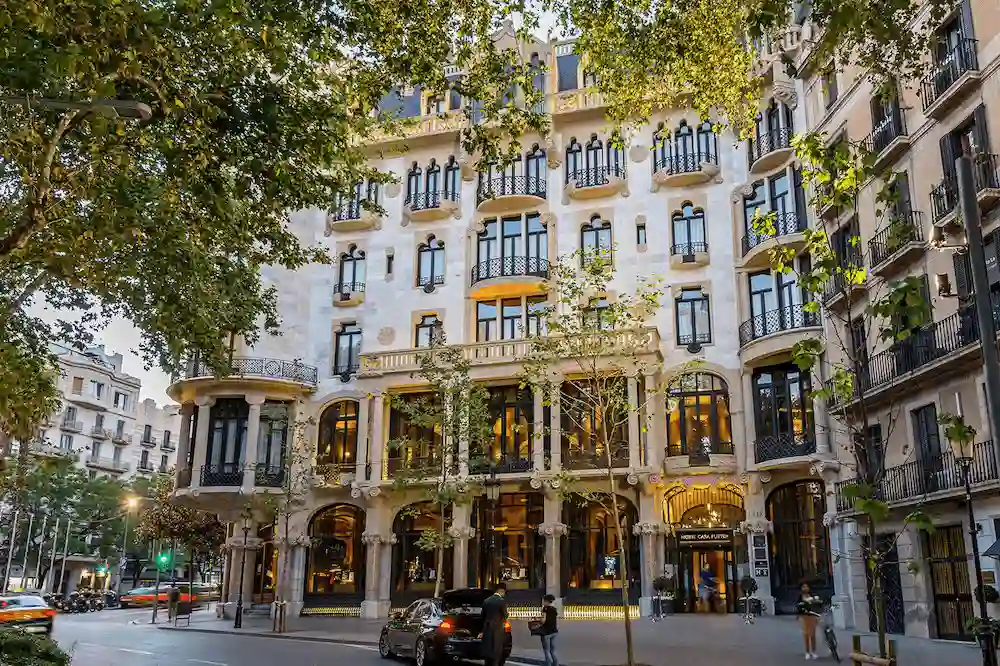
Best hotels in Barcelona landscape is saturated with polished chains and design-forward newcomers, but only a handful occupy buildings that carry centuries of architectural weight. Choosing the right stay here isn’t about stars—it’s about whether the property itself justifies the rate through historical significance and structural rarity.
After filtering the city’s top-tier options, we’ve narrowed the selection to six heritage conversions: a UNESCO-protected Modernisme masterpiece, a Gothic palace built into Roman walls, and a Belle Époque Ritz legacy that predates most of the city’s luxury market. These aren’t just refined accommodations—they’re verified historical assets where the building’s past life adds value to your stay.
Below are the properties that make sense if you prioritize architectural soul, cultural access, and accommodations that feel curated rather than replicated.
For a broader view of Spain’s most distinguished stays, explore our guide to the best authentic historic stays across Spain.
Eixample & Modernist Masterpieces
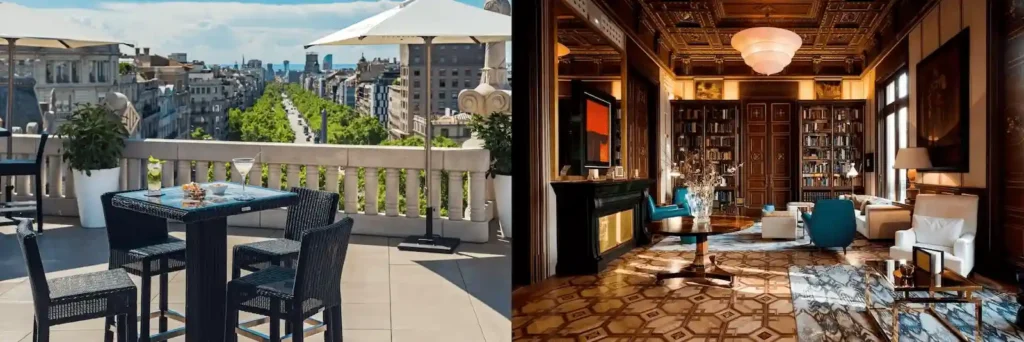
These two properties define Barcelona’s architectural golden age. One is a UNESCO-protected icon designed by a master of Catalan Modernisme; the other transformed an industrial empire’s headquarters into a Neo-Classical monument. Both deliver scale, grandeur, and historical weight that no contemporary build can replicate.
🏛️ Hotel Casa Fuster G.L Monumento ★★★★★
This property suits travelers who understand that staying inside a UNESCO-protected Lluís Domènech i Montaner building (1908) is a different category of experience entirely. The structure itself—an Art Nouveau landmark commissioned by the Fuster family—carries the same architectural authority as Gaudí’s Casa Batlló, but here you’re sleeping inside the monument rather than photographing it.
Interiors retain original coffered ceilings, mosaic floors, and wrought-iron detailing that signal the peak of Catalonia’s industrial wealth. The rooftop Café Vienés offers unobstructed views of Gràcia and the Sagrada Família, while the ground-floor jazz club operates in what was once the building’s grand salon.
Service operates with quiet efficiency—no showiness, just anticipation. This isn’t a hotel that needs to explain its value; the building does that work before you unpack.
Best for: Design-literate travelers seeking Barcelona’s definitive Modernisme stay with UNESCO-level architectural significance.
Signature Experience: Original 1908 mosaic floors and coffered ceilings, rooftop terrace overlooking Sagrada Família, live jazz in the historic salon, Michelin-level Catalan dining in a landmarked space.
“Walking through those original wrought-iron doors every evening felt like entering a private museum.” — Laurent, ParisCheck Availability & Rates →
🏛️ Cotton House Hotel, Autograph Collection ★★★★★
Built as the headquarters of the Fundación Textil Algodonera (1879), this former cotton exchange now serves the same affluent class that once controlled Barcelona’s textile empire. The lobby retains the original marble columns, vaulted ceilings, and Neoclassical proportions that signaled industrial power in the late 19th century—architectural language designed to impress bankers, not tourists.
Rooms feel refined rather than theatrical, with parquet floors, high ceilings, and a material palette that respects the building’s origins without making you feel like you’re sleeping in a museum.
The rooftop pool overlooks Passeig de Gràcia’s canopy, and the library lounge—lined with textile-era books—functions as a de facto clubhouse for guests who prefer quieter evenings.
This property delivers grandeur without the palace hotel formality, making it ideal for travelers who value historical weight but want contemporary comfort.
Best for: Professionals and design-conscious travelers seeking industrial-era grandeur with modern polish in central Eixample.
Signature Experience: Original 1879 Neoclassical lobby with marble columns, rooftop pool overlooking Passeig de Gràcia, textile-era library lounge, Batuar Restaurant serving Mediterranean in a landmarked salon.
“That library lounge became my nightly ritual—felt more like a private club than a hotel.” — Henrik, CopenhagenCheck Availability & Rates →
Gothic Quarter & Medieval Foundations
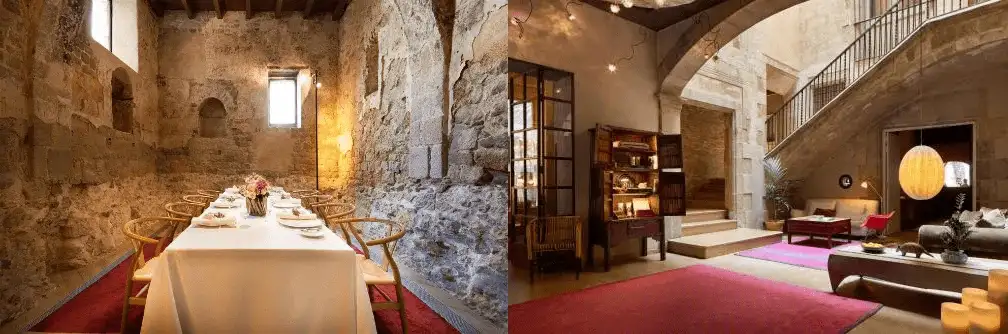
These properties occupy the oldest physical structures in Barcelona’s hotel market—one literally embedded in the Roman walls of Barcino, the other a 12th-century palace that survived centuries of urban transformation. Both deliver authenticity that no design hotel can replicate, where stone arches and medieval courtyards aren’t decorative—they’re structural.
🏛️ Mercer Hotel Barcelona ★★★★★
This hotel occupies a 12th-century Gothic palace built directly into the Roman walls of Barcino, making it the oldest standing structure in Barcelona’s luxury hotel market. Portions of the original Roman fortifications are visible in the subterranean spa, where exposed stone arches and archaeological remains create a spatial experience no contemporary build can replicate.
Upstairs, rooms blend medieval stone walls with modern minimalism—high ceilings, vaulted arches, and floor-to-ceiling windows that frame the Gothic Quarter’s narrow streets.
The rooftop terrace overlooks the Cathedral, and service operates with the discretion you’d expect from a property that attracts repeat guests who value historical gravity over brand recognition. This isn’t a hotel that markets itself aggressively; its client base already understands why staying inside Roman walls justifies the premium over generic five-star options.
Best for: History-focused travelers seeking Barcelona’s most authentic medieval stay with Roman archaeological integration.
Signature Experience: 12th-century Gothic palace built into Roman walls, subterranean spa with exposed Barcino ruins, rooftop terrace overlooking the Cathedral, Le Bouchon French bistro in a vaulted Gothic cellar.
“Breakfast in a Roman cellar with 2,000-year-old walls visible through glass panels—surreal.” — Natalia, MilanCheck Availability & Rates →
🏛️ Hotel Neri – Relais & Châteaux ★★★★★
Housed in a 12th-century palace on Plaça Sant Felip Neri, this Relais & Châteaux property delivers medieval authenticity in 22 rooms, each with original stone walls, vaulted ceilings, and spatial proportions that reflect Gothic-era construction.
The courtyard opens directly onto the cobblestone square—one of the Gothic Quarter’s quietest pockets, shielded from tourist traffic. Interiors lean minimalist, letting the stone architecture and arched doorways dominate rather than competing with décor.
The rooftop terrace overlooks medieval rooftops and the Cathedral spire, and the restaurant operates in a former chapel with exposed stone and candlelit tables.
This property suits travelers who prioritize architectural soul over spa amenities and prefer 22-room intimacy to 100-room efficiency.
Best for: Design-conscious couples seeking intimate medieval luxury in the Gothic Quarter’s quietest corner.
Signature Experience: 12th-century palace with original Gothic stone walls, private terrace overlooking Plaça Sant Felip Neri, candlelit dining in a former chapel, rooftop terrace with Cathedral views.
“That courtyard square felt like a private medieval enclave—no noise, no crowds, just stone and silence.” — Oliver, LondonCheck Availability & Rates →
Belle Époque Grandeur & Colonial Legacy
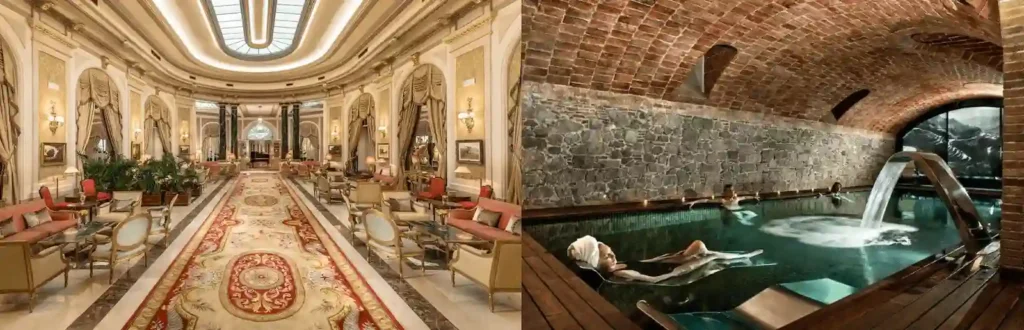
These properties represent Barcelona’s turn-of-the-century wealth—one built by César Ritz himself in 1919, the other the former headquarters of a colonial tobacco empire. Both deliver scale, social history, and the kind of lobby grandeur that signals old-world prestige.
🏛️ Hotel El Palace Barcelona ★★★★★
Built by César Ritz in 1919, this property remains Barcelona’s oldest continuously operating five-star hotel and the city’s definitive Belle Époque landmark. The lobby retains its original marble staircase, coffered ceilings, and crystal chandeliers—spatial grandeur designed to impress Barcelona’s industrial elite and European aristocracy.
Rooms balance period details with contemporary comfort: high ceilings, herringbone floors, and oversized windows overlooking Eixample’s boulevards. The rooftop pool and terrace deliver unobstructed views of Montjuïc and the Mediterranean, while Amar serves Michelin-level Mediterranean in a chandelier-lit dining room.
This property suits travelers who understand that a Ritz-built hotel carries a different kind of authority than newer luxury entrants—its client base includes repeat guests who’ve been booking the same suite for decades.
Best for: Travelers seeking Barcelona’s most prestigious Belle Époque stay with Ritz-era legacy and old-world service standards.
Signature Experience: César Ritz–designed 1919 landmark, original marble staircase and coffered ceilings, rooftop pool overlooking Montjuïc, Michelin-level dining in chandelier-lit salon, Mayan Luxury Spa with hydrotherapy.
“That lobby staircase alone justifies the rate—pure Belle Époque theater every time you walk through.” — Sophia, New YorkCheck Availability & Rates →
🏛️ Hotel 1898 ★★★★
This property occupies the former headquarters of the Philippines Tobacco Company (1881)—a colonial-era landmark that once controlled Spain’s largest overseas tobacco monopoly. The façade retains its original Neo-Classical proportions, while the lobby preserves the marble columns and coffered ceilings that signaled imperial wealth in the late 19th century.
Rooms deliver four-star comfort with high ceilings and period detailing, and the rooftop terrace overlooks La Rambla and the Mediterranean. Despite carrying a four-star rating, the building’s historical weight and central location (directly on La Rambla) rival five-star alternatives that lack this level of architectural pedigree. This property suits travelers who prioritize heritage significance and prime access over spa amenities.
Best for: Travelers seeking colonial-era grandeur and La Rambla access with landmark architecture at competitive four-star rates.
Signature Experience: Former 1881 Philippines Tobacco Company headquarters, original Neo-Classical lobby with marble columns, rooftop terrace overlooking La Rambla and the Mediterranean, central location for cultural access.
“That rooftop view—La Rambla stretching to the port, mountains behind—worth every minute up there.” — Elena, ValenciaCheck Availability & Rates →
📊 Comparison: Best Hotels in Barcelona
| Hotel | Location | Wellness & Spa | Dining | Unique Perks | Best For |
|---|---|---|---|---|---|
|
🏛️ Hotel Casa Fuster G.L Monument ★★★★★ |
Eixample, Gràcia border |
Wellness facilities, spa treatments |
Michelin-level Catalan, rooftop Café Vienés |
UNESCO-protected 1908 Modernisme icon |
Design travelers, architectural focus |
|
🏛️ Mercer Hotel Barcelona ★★★★★ |
Gothic Quarter, Roman walls |
Roman cellar spa, archaeological ruins |
Le Bouchon French in vaulted cellar |
12th-century palace, Roman wall integration |
History purists, medieval authenticity |
|
🏛️ Cotton House Hotel ★★★★★ |
Eixample, Passeig de Gràcia |
Rooftop pool, wellness facilities |
Batuar Mediterranean in landmarked salon |
1879 textile HQ, Neoclassical grandeur |
Professionals, industrial-era elegance |
- For a broader Spanish historic immersion, discover our curated selection of best Luxury Castle Hotels in Andalusia.
❓ FAQ: Best Hotels in Barcelona
Which hotel in Barcelona has the most historic significance?
Mercer Hotel Barcelona is the standout, built into the 1st-century Roman walls of Barcino and a 12th-century Gothic palace. It retains the oldest physical structure in the city’s luxury hotel market, with exposed Roman fortifications visible in the subterranean spa—making it the definitive choice for travelers seeking archaeological authenticity over modern luxury replicas.
What makes Hotel Casa Fuster different from other Barcelona luxury hotels?
It’s the only UNESCO-protected hotel in Barcelona, designed by Lluís Domènech i Montaner in 1908 during Catalonia’s Modernisme golden age. The building itself carries the same architectural authority as Gaudí’s Casa Batlló, but here you’re staying inside the landmark rather than photographing it from the street.
Is Hotel El Palace Barcelona worth the premium over newer five-star options?
If you value Belle Époque prestige and social history, yes. Built by César Ritz in 1919, it’s Barcelona’s oldest continuously operating five-star hotel and the definitive landmark stay for travelers who prioritize architectural legacy over contemporary design trends. Its client base includes multi-generational repeat guests who’ve been booking the same suites for decades.
Which Barcelona hotel offers the best rooftop experience?
Cotton House Hotel delivers the most refined rooftop pool and terrace, overlooking Passeig de Gràcia’s canopy with unobstructed sightlines to Montjuïc. Unlike rooftop bars catering to day-trippers, this space functions as a de facto private club for hotel guests—quiet, curated, and designed for extended afternoon sessions rather than Instagram moments.
What’s the quietest luxury hotel in Barcelona’s Gothic Quarter?
Hotel Neri occupies Plaça Sant Felip Neri, one of the Gothic Quarter’s most secluded squares—shielded from La Rambla foot traffic yet steps from the Cathedral. The 22-room property operates with minimal lobby activity, and the courtyard terrace opens directly onto cobblestones rather than a main thoroughfare, creating a medieval enclave feel that larger Gothic Quarter hotels can’t replicate.
Are four-star historic hotels in Barcelona worth considering over five-star options?
Hotel 1898—the former Philippines Tobacco Company headquarters—carries significant colonial-era architectural weight despite its four-star rating. The building’s 1881 Neo-Classical façade and marble lobby rival five-star competitors that lack this level of historical pedigree, and its La Rambla location offers superior cultural access. For travelers prioritizing landmark significance over spa amenities, it’s a smarter choice than generic five-star chains.
Which Barcelona hotel is best for design-focused travelers?
Hotel Casa Fuster G.L Monumento. The UNESCO-protected Modernisme interiors—original mosaic floors, coffered ceilings, wrought-iron detailing—represent the peak of Catalan architectural craft. Unlike design hotels that curate aesthetics, this property preserves them structurally, making it the definitive stay for travelers who understand the difference between styled interiors and landmark architecture.
Choosing the Right Stay in Barcelona
Booking the best hotel in Barcelona isn’t about chasing five-star ratings—it’s about choosing a building whose architectural soul and historical weight justify the premium over generic luxury chains. The properties above represent the most consistently refined options for travelers who value Roman ruins, Modernisme icons, and Belle Époque grandeur over standard amenities. Availability at this level shifts quickly once spring and autumn peak seasons begin.
For Madrid’s definitive historic stays, explore our curated guide to best hotels in Madrid. If Basque culinary culture and coastal elegance appeal, continue with best hotels in San Sebastián.
For more curated itineraries and luxury-focused travel insights, visit Your Luxury Guide. For official travel information and destination updates, visit Spain tourism-info.
Book your Barcelona hotel to secure Gothic Quarter access, UNESCO-protected Modernisme interiors, and historic stays where the building’s past life elevates every moment of your stay.
Your Luxury Guide — Where Exceptional Travel Begins.