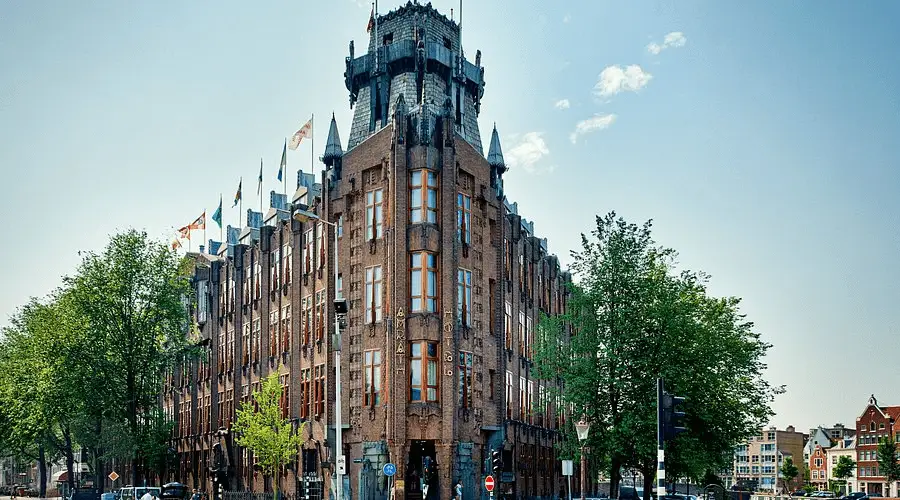
Best hotels in Amsterdam aren’t just places to sleep—they’re former convents, palaces, and civic headquarters where every hallway carries centuries of authority. Choosing the right property here means bypassing bland waterfront towers in favor of buildings that once governed trade routes, housed royalty, or safeguarded the city’s militia.
After filtering Amsterdam’s most architecturally significant conversions, we’ve narrowed the field to seven properties that deliver on location, service, and the kind of soul you can’t replicate with marble lobbies alone. Below are the stays that make sense if you value discretion, cultural access, and accommodations where the building’s past life is as compelling as its present service.
For a broader selection across the Netherlands, explore best authentic historic stays in the Netherlands.
Canal-Side Power Houses
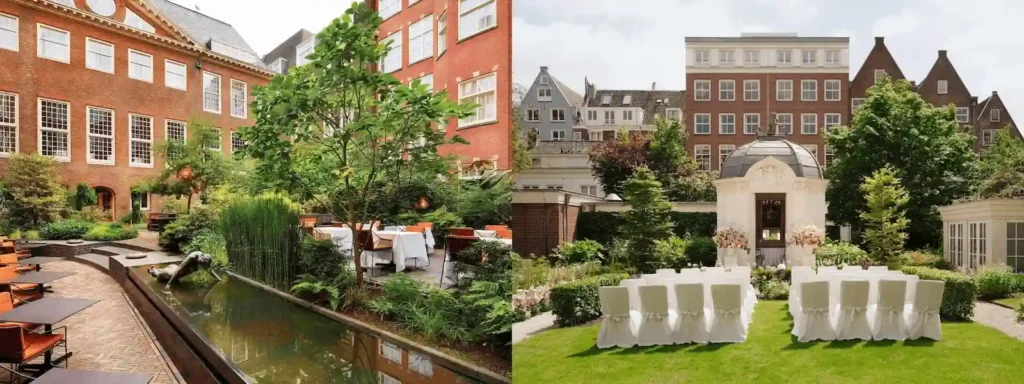
The properties along Amsterdam’s historic canals aren’t just well-located—they’re the former seats of civic and financial power. These conversions occupy buildings that once controlled shipping empires, managed national finances, or served as noble residences for merchant dynasties.
What unifies them is architectural authority: soaring ceilings, original vaults, and façades that still command attention from the waterline.
Expect interiors where 17th-century craftsmanship meets contemporary luxury without losing the weight of history.
🏛️ Sofitel Legend The Grand Amsterdam ★★★★★
This property sits on the literal foundation of Amsterdam’s civic identity—a 15th-century convent that evolved into the Royal Admiralty headquarters and later the City Hall before becoming a hotel.
Staying here means sleeping in rooms where naval strategy was debated and municipal authority exercised for centuries. The building’s Renaissance façade and internal courtyards preserve that institutional gravitas, while Sofitel’s service layer adds contemporary polish without sanitizing the heritage.
The canal-facing suites occupy spaces that once housed Amsterdam’s decision-makers, and the feeling of occupying a seat of historical power remains palpable. If you’re drawn to properties where the architecture carries cultural weight beyond aesthetic appeal, this is Amsterdam’s most significant conversion.
Best for: Travelers who prioritize historical magnitude over boutique intimacy and want accommodations where the building’s civic legacy justifies premium positioning.
Signature Experience: Original Renaissance courtyards with 15th-century brickwork, spa occupying former Admiralty chambers, Michelin-level dining in frescoed halls, suites overlooking Oudezijds Voorburgwal canal with sight lines unchanged since the 1600s.
“Walking through those former Admiralty halls before breakfast—you feel the weight of centuries in every corridor.” — Marcus, BerlinCheck Availability & Rates →
🏛️ Waldorf Astoria Amsterdam ★★★★★
Six monumental 17th-century canal palaces—each originally owned by separate noble families—merged into a single property that preserves the Herengracht’s most ornate Rococo staircases and original bank vaults from its 20th-century financial tenure.
The architectural layering here is exceptional: golden-age craftsmanship meets post-war banking infrastructure, all reimagined as canal-facing suites with double-width proportions.
Waldorf Astoria’s service protocol suits the building’s scale—discreet, anticipatory, calibrated for guests who expect palace-level hospitality without theater. The canal-facing rooms occupy spaces where Amsterdam’s merchant elite once entertained, and the feeling of inherited grandeur remains intact.
If you want a property where the building’s aristocratic bones haven’t been softened by contemporary redesign, this delivers Amsterdam’s most refined canal palace experience.
Best for: Couples and solo travelers seeking 17th-century canal palace architecture with Waldorf Astoria’s global service standards and direct Museum Quarter access.
Signature Experience: Original Rococo staircases with gilded banisters, Guerlain spa in former bank vaults, canal-facing suites with triple-height windows, Michelin-caliber dining in mirrored salons overlooking Herengracht.
“Those original Rococo staircases connecting the palaces—worth the canal view premium just to experience them daily.” — Elisabeth, ZürichCheck Availability & Rates →
🏛️ Grand Hotel Amrâth Amsterdam ★★★★★
Amsterdam School architecture doesn’t get more theatrical than the Scheepvaarthuis—a 1916 shipping headquarters built as a literal “Cathedral of Commerce” with maritime symbolism carved into every surface. Six major shipping companies jointly commissioned this building, and its stained glass, wrought-iron detailing, and angular brick façade represent the apex of Dutch expressionism.
Amrâth preserved the building’s original grandeur while converting the upper floors into suites that overlook the IJ waterfront with the same commanding presence the building projected a century ago.
The public spaces feel like walking through an Art Deco ocean liner, and the rooftop bar occupies the former executive boardroom where shipping routes were negotiated. If you’re drawn to properties where architectural audacity trumps conventional luxury codes, this is Amsterdam’s most visually distinctive landmark conversion.
Best for: Design-focused travelers who value architectural spectacle and want a property where the building’s original purpose remains visually dominant.
Signature Experience: Original stained glass Maritime Hall with soaring ceilings, rooftop Sky Lounge in former shipping boardroom, waterfront suites with panoramic IJ views, Art Deco brasserie in anchor-motif dining room.
“That maritime stained glass at dawn—the entire building becomes a floating cathedral of light and history.” — Pieter, RotterdamCheck Availability & Rates →
🏛️ Conservatorium Hotel ★★★★★
The former Rijkspostspaarbank—a Neo-Gothic postal savings institution built in 1897—now operates under Mandarin Oriental’s curatorial eye as a Museum Quarter anchor with preserved banking halls and soaring brick atriums.
The building’s original function as a financial fortress translates into grand public spaces: vaulted ceilings, original teller windows reimagined as private dining alcoves, and a central courtyard where light floods through steel-and-glass modernist insertions.
The hotel occupies a rare position where 19th-century Dutch institutional architecture meets contemporary Asian hospitality standards without aesthetic compromise.
Suites overlook either the Museumplein or the building’s internal courtyard, and the feeling of occupying a civic monument remains intact.
If you want Amsterdam’s most seamless blend of historical gravitas and modern luxury execution, this is the Museum Quarter’s most refined conversion.
Best for: Art-focused travelers who want Museum Quarter proximity with Neo-Gothic architecture and Mandarin Oriental’s service caliber.
Signature Experience: Original bank hall reimagined as dining brasserie, spa occupying former vault chambers, courtyard suites with steel-glass skylights, rooftop terrace overlooking Rijksmuseum.
“The underground spa beneath those Neo-Gothic vaults—three hours vanished before I even noticed the time.” — Sophia, MilanCheck Availability & Rates →
River-Facing Monuments & Civic Guardhouses
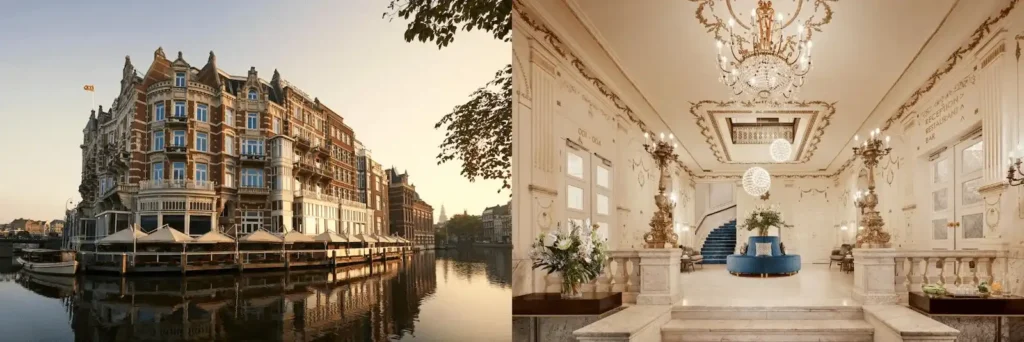
These properties occupy Amsterdam’s most storied riverfront positions—buildings that once defended the city, housed civic militia, or served as the capital’s first true “Palace Hotel.”
What unifies them is their relationship to Amsterdam’s waterways: they weren’t built for commerce but for authority, defense, or cultural prestige.
Expect interiors where civic history meets riverside elegance, and where the building’s original purpose remains architecturally legible.
🏛️ De L’Europe Amsterdam ★★★★★
Built on the site of the medieval Hulft defense tower, the current 1896 Late-Renaissance Revival structure has anchored the Amstel River’s cultural life for over a century. The building’s High-Victorian façade and riverside terrace position it as Amsterdam’s first true “Palace Hotel”—a designation it earned through decades of hosting European royalty and artistic elite.
The interiors preserve that Belle Époque grandeur without period costuming: high ceilings, river-facing suites with juliet balconies, and a formal dining room that still feels like the city’s drawing room.
The hotel occupies position where 19th-century hospitality codes meet contemporary service standards without losing architectural authority.
If you want a property where the building’s cultural pedigree is as important as its amenities, this delivers Amsterdam’s most historically layered riverside experience.
Best for: Travelers who value Belle Époque architecture with direct Amstel River access and a property where European cultural history remains palpable.
Signature Experience: Riverside terrace overlooking Munt Tower, suites with original plasterwork and river views, Michelin-level dining in chandeliered salon, spa with marble hammam.
“Breakfast overlooking the Amstel from those 1896 windows—the city unfolds exactly as it did for royalty a century ago.” — Charlotte, BrusselsCheck Availability & Rates →
🏛️ Tivoli Doelen Amsterdam Hotel ★★★★★
Amsterdam’s oldest hotel occupies the 16th-century Kloveniersdoelen—the civic guard headquarters where Rembrandt painted The Night Watch specifically for the Great Hall.
The building’s Renaissance façade and internal layout preserve that civic militia heritage, and staying here means sleeping in a structure that once safeguarded the city’s defense and cultural identity. Tivoli’s renovation respected the building’s bones while adding contemporary service layers, and the result is a property where 17th-century institutional architecture meets modern hospitality without losing historical gravitas. The Great Hall—now reimagined as a public lounge—still carries the weight of its Rembrandt connection, and the feeling of occupying a civic monument remains intact.
If you’re drawn to properties where the building’s cultural significance eclipses star ratings, this is Amsterdam’s most storied conversion.
Best for: History-focused travelers who want a property where Rembrandt’s presence is architecturally embedded and civic heritage drives the experience.
Signature Experience: Great Hall where The Night Watch originally hung, suites with original Renaissance brickwork, canal-facing rooms overlooking Amstel River, dining in vaulted guard chambers.
“Standing where Rembrandt’s Night Watch once hung—that alone justifies choosing this over any modern canal hotel.” — Thomas, CopenhagenCheck Availability & Rates →
🏛️ InterContinental Amstel Amsterdam ★★★★★
Amsterdam’s first purpose-built Palace Hotel—erected in 1867 as a High-Victorian monument to the city’s 19th-century resurgence—remains the capital’s most recognizable riverside landmark. The building’s neo-Renaissance façade and formal interiors preserve that original grandeur: marble staircases, crystal chandeliers, and river-facing suites that still command the Amstel with unchanged authority.
InterContinental‘s global service protocol suits the building’s scale, and the property operates as Amsterdam’s most traditional “Grand Hotel” without period affectation.
The riverside terrace and Michelin-starred restaurant occupy spaces designed to reflect European hospitality codes that predate modern luxury branding.
If you want a property where 19th-century Palace Hotel conventions remain architecturally intact, this is Amsterdam’s most enduring institutional conversion.
Best for: Travelers seeking traditional Palace Hotel grandeur with InterContinental service standards and unmatched Amstel River positioning.
Signature Experience: Riverside terrace overlooking royal concert hall, Michelin-starred dining in chandeliered salon, suites with original marble bathrooms and river views, spa with historic indoor pool.
“That Victorian terrace at twilight—the entire Amstel glows gold, and you understand why royalty still books here first.” — Isabella, ParisCheck Availability & Rates →
📊 Amsterdam Best Historic Hotels Comparison
| Hotel | Location | Wellness & Spa | Dining | Unique Perks | Best For |
|---|---|---|---|---|---|
|
🏛️ Sofitel Legend The Grand ★★★★★ |
Oudezijds Voorburgwal, historic center |
Spa in former Admiralty chambers |
Michelin-level in frescoed halls |
15th-C. convent turned City Hall |
Historical magnitude, civic legacy |
|
🏛️ Waldorf Astoria Amsterdam ★★★★★ |
Herengracht, Museum Quarter |
Guerlain spa in bank vaults |
Michelin-caliber mirrored salons |
Six noble palaces, Rococo staircases |
Canal palace refinement |
|
🏛️ Grand Hotel Amrâth ★★★★★ |
IJ waterfront, Prins Hendrikkade |
Sky Lounge, rooftop wellness |
Art Deco brasserie, maritime motifs |
1916 shipping HQ, stained glass halls |
Architectural spectacle |
|
🏛️ Conservatorium Hotel ★★★★★ |
Museumplein, Museum Quarter |
Spa in vault chambers |
Brasserie in bank hall |
Neo-Gothic postal bank, courtyard suites |
Art-focused travelers |
- For coastal landmark conversions, continue with the best historic hotels in the Hague.
❓ FAQ: Best Hotels in Amsterdam
What makes Amsterdam’s historic hotels worth the premium over modern luxury chains?
Amsterdam’s landmark conversions occupy former convents, palaces, and civic headquarters where the architecture itself justifies elevated positioning. Properties like Sofitel Legend The Grand or Waldorf Astoria Amsterdam deliver experiences rooted in 17th-century canal palace grandeur or institutional authority that modern builds cannot replicate. The buildings’ historical significance—Rembrandt connections, shipping empire headquarters, royal residences—adds cultural weight beyond standard five-star amenities.
Which Amsterdam hotel offers the most significant historical architecture?
Sofitel Legend The Grand Amsterdam occupies the city’s most historically layered site—a 15th-century convent that became the Royal Admiralty headquarters and later City Hall. The building’s civic importance and preserved Renaissance courtyards make it Amsterdam’s most architecturally consequential hotel conversion, surpassing other properties in historical magnitude.
Are canal-facing rooms worth the rate difference in Amsterdam’s historic hotels?
Canal-facing suites at properties like Waldorf Astoria Amsterdam or De L’Europe Amsterdam provide more than views—they occupy the same spaces where 17th-century nobility entertained and 19th-century cultural elites held court. The architectural proportions, original windows, and waterline perspectives justify the premium if you’re seeking Amsterdam’s most authentic heritage experience rather than generic luxury accommodations.
Which Amsterdam hotel best preserves its original architectural purpose?
Grand Hotel Amrâth Amsterdam retains the most visually dominant connection to its past life as the Scheepvaarthuis—a 1916 shipping headquarters. The stained glass Maritime Hall, wrought-iron maritime symbolism, and Art Deco detailing remain architecturally intact, making it the clearest example of a building where the original civic purpose is still visually legible.
Do Amsterdam’s historic hotels require advance booking during peak season?
Properties like Conservatorium Hotel and Sofitel Legend The Grand fill months ahead during April tulip season and September cultural events. Heritage hotels maintain limited inventory due to protected architecture, and canal-facing suites at Waldorf Astoria or De L’Europe sell out first. Booking 90-120 days ahead secures optimal room categories.
What’s the best Amsterdam historic hotel for Museum Quarter access?
Conservatorium Hotel delivers unmatched Museum Quarter positioning—the former Rijkspostspaarbank sits directly on Museumplein with walking access to Rijksmuseum, Van Gogh Museum, and Stedelijk. The Neo-Gothic architecture and courtyard suites offer cultural immersion beyond location convenience alone.
Which Amsterdam hotel combines the strongest heritage architecture with modern luxury execution?
Waldorf Astoria Amsterdam balances 17th-century canal palace bones—six noble residences with Rococo staircases and original bank vaults—with Waldorf Astoria’s global service protocols. The property preserves historical integrity while delivering contemporary luxury caliber, making it Amsterdam’s most refined architectural-meets-operational conversion.
Choosing the Right Historic Stay in Amsterdam
Selecting best hotels in Amsterdam means prioritizing the building’s soul over generic luxury markers—these conversions occupy civic monuments, canal palaces, and shipping headquarters where history remains architecturally embedded. The properties above represent Amsterdam’s most significant landmark transformations for travelers who value cultural authority, canal-facing grandeur, and accommodations where the past life justifies every euro spent. Inventory at this level shifts quickly once tulip season and cultural events begin.
Explore the best hotels in Rotterdam for additional Dutch historic options beyond the capital.
For more curated itineraries and luxury-focused travel insights, visit Your Luxury Guide. For official travel information and destination updates, visit Netherlands tourism-info.
Booking your Amsterdam historic hotel secures access to properties where 17th-century canal palace architecture or civic institutional grandeur delivers experiences modern luxury chains cannot replicate—availability at landmark conversions tightens substantially once European travel season accelerates.
Your Luxury Guide — Where Exceptional Travel Begins.