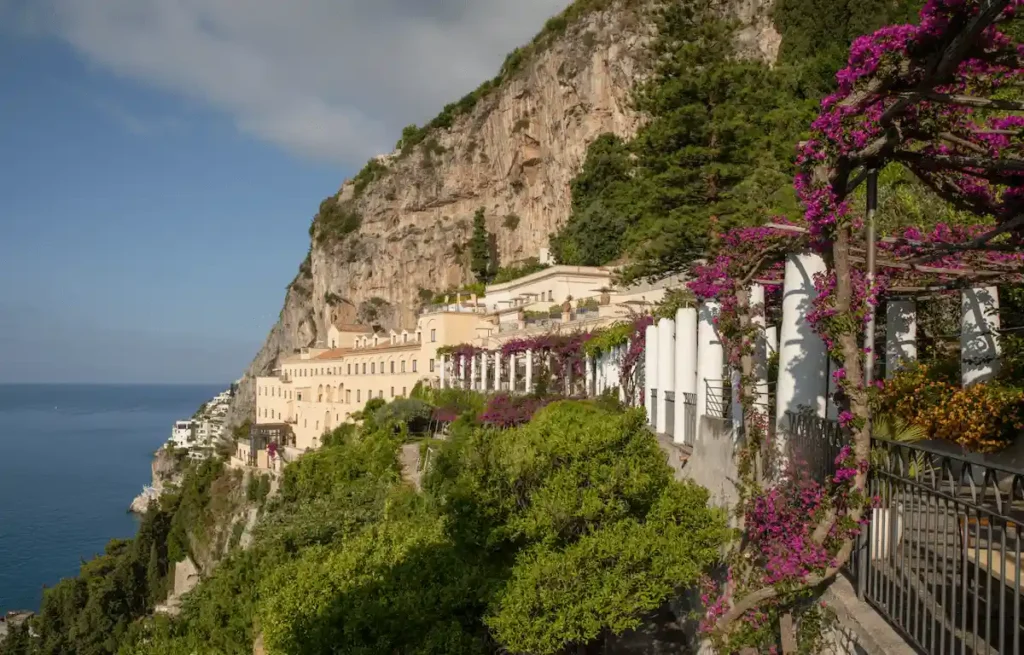
Best Hotels in Amalfi Coast aren’t about balconies or Michelin stars—they’re about sleeping inside the architectural soul of medieval Italy. This coastline transformed convents, noble palazzi, and Dominican monasteries into the world’s most vertigo-inducing luxury stays, where 11th-century cloisters and confessional windows now frame infinity pools.
After filtering through the region’s properties, we’ve isolated five conversions that justify their rates through verified historical pedigree—not brand marketing.
Below are the stays that matter if you prioritize architectural gravity over generic Riviera glamour. These aren’t hotels that happen to be old—they’re buildings where the past life is the amenity.
For travelers seeking outstanding properties beyond the Amalfi Coast, explore best historc stays across Italy for finest palace and monastery conversions.
Clifftop Monastery & Palace Conversions
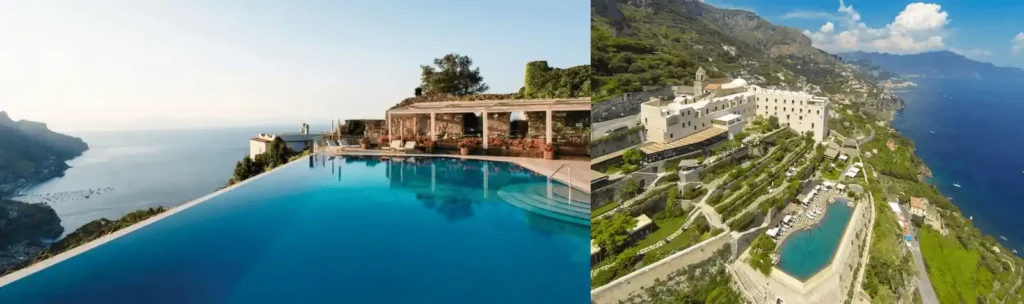
The Amalfi Coast’s elite stays occupy buildings originally constructed for spiritual seclusion or aristocratic refuge—structures engineered to cling to vertical limestone and command Mediterranean trade routes.
What unifies these five properties is their rejection of coastal resort formulas in favor of preserving the medieval silence, stone corridors, and gravitational drama of their original architecture.
Expect stays where the building’s history delivers the emotional weight, not contemporary design overlays.
⛪ Anantara Convento di Amalfi Grand Hotel ★★★★★
This 13th-century Capuchin monastery conversion is the Amalfi Coast’s most architecturally significant stay, built in 1212 with Arab-Norman cloisters still intact.
The property retains the Monks’ Walk—a stone corridor carved into the cliff—and original meditation alcoves now repurposed as private terraces.
Travelers seeking spiritual-grade silence paired with Anantara’s Asian-inflected service standards find the combination unmatched along this coastline. The building’s medieval soul filters guests who want coastal drama without Positano’s cruise-ship energy.
Rooms occupy former cells, maintaining stone archways and frescoed ceilings that signal monastic austerity refined into contemporary luxury.
Availability at this level of historical conversion is limited year-round—this isn’t a property you find last-minute.
Best for: Couples seeking a spiritually rooted cliffside escape where 13th-century monastery architecture defines the atmosphere, not contemporary design.
Signature Experience: Arab-Norman cloisters with original stone columns, the Monks’ Walk carved into limestone, frescoed meditation alcoves converted to private terraces, infinity pool overlooking the Gulf of Salerno.
“Walking those cloisters at dawn—no other hotel on this coast offers that kind of architectural silence.” — Marco, MilanCheck Availability & Rates →
🏰 Caruso, A Belmond Hotel, Amalfi Coast ★★★★★
Carved from the 11th-century Palazzo d’Afflitto, Caruso occupies a perched position in Ravello where medieval noble families ruled maritime trade routes from clifftop fortresses. The palazzo retains original 11th-century walls and Byzantine frescoes, offering a rare example of Amalfi’s ducal architecture preserved without resort-style dilution.
Belmond’s restoration maintained the building’s aristocratic gravity—vaulted stone halls, terraced gardens engineered into vertical limestone, and a dramatic infinity pool that feels suspended between cliff and sky.
This is the stay for travelers who want Amalfi’s history delivered through architectural pedigree, not boutique charm. Service operates at Belmond’s signature level—unobtrusive, precise, European in execution.
The property books heavily during summer, when that infinity pool becomes the coast’s most photographed asset.
Best for: Travelers prioritizing 11th-century palazzo architecture and Ravello’s high-altitude serenity over Positano’s crowded waterfront energy.
Signature Experience: Byzantine frescoes in original stone halls, infinity pool cantilevered over the coastline, terraced gardens with sweeping Gulf views, Belmond-level service precision.
“That palazzo feels like you’ve stepped into a ducal family’s private cliff estate—no other hotel pulls that off.” — Elena, FlorenceCheck Availability & Rates →
🌹 Monastero Santa Rosa Hotel & Spa ★★★★★
This 17th-century Dominican convent is where the sfogliatella pastry was invented—an architectural claim that positions the property as both culinary and spiritual landmark.
The building clings to the cliffside above Conca dei Marini, maintaining the original confessional windows and stone corridors designed for contemplative isolation.
The conversion preserved the monastery’s rigorous simplicity—whitewashed walls, vaulted ceilings, and terraced gardens that cascade toward the Tyrrhenian Sea. The infinity pool occupies a former meditation terrace, delivering what feels like gravitational suspension over open water.
Couples seeking an adult-only escape where the building’s past life creates the atmosphere—not contemporary spa branding—find this the most emotionally resonant option on the coast. Service is Italian-run, discreet, attentive to privacy. Peak season books months ahead.
Best for: Adult couples seeking a secluded cliffside monastery conversion with award-winning spa facilities and zero coastal resort energy.
Signature Experience: Infinity pool on a former meditation terrace, award-winning spa in original convent quarters, the birthplace of sfogliatella pastry, terraced gardens descending to the sea.
“The silence in those stone corridors at night—this is what a real monastery conversion should feel like.” — Chiara, NaplesCheck Availability & Rates →
🏛️ Palazzo Avino ★★★★★
Built in the 12th century as the private palazzo of the Sasso family, Palazzo Avino represents Ravello’s golden age when noble families engineered residential architecture into vertical cliffs.
The building retains its medieval layout—stone archways, frescoed salons, and terraced gardens that frame the coastline like a Renaissance painting.
What distinguishes this property is its refusal to modernize aggressively—rooms maintain period furniture, tiled floors, and shuttered windows that open to Ravello’s silent hillside streets.
The Michelin-starred Rossellinis occupies the original family dining hall, delivering one of Italy’s most architecturally dramatic culinary experiences.
Service skews formal, European, attentive to guests who prioritize historical atmosphere over contemporary amenities. Summer availability tightens quickly once the season begins.
Best for: Discerning travelers seeking a 12th-century noble palazzo with Michelin dining and Ravello’s high-altitude cultural refinement.
Signature Experience: Rossellinis Michelin-starred dining in the original family hall, terraced gardens overlooking the Gulf, period-furnished rooms with frescoed ceilings, private beach club access.
“Dining in that frescoed hall felt like being a guest at a medieval noble’s private table—unforgettable.” — Luca, RomeCheck Availability & Rates →
🌊 Hotel Santa Caterina ★★★★★
This late-19th-century Liberty-style villa captures the moment when Amalfi transitioned from forgotten maritime republic to global luxury landmark.
The building represents early Mediterranean travel—a Belle Époque villa engineered for European aristocrats seeking winter sun and coastal refinement.
What makes Santa Caterina relevant today is its family-run continuity—the same proprietors have maintained the estate since 1904, preserving original tilework, period furniture, and terraced gardens that cascade down the cliff to a private beach.
The property delivers old-world Italian hospitality without corporate polish, attracting guests who value generational continuity over brand standardization. Service is warm, personal, deeply rooted in local knowledge. The beachfront elevator carved into the cliff remains a signature engineering feature from the villa’s original construction.
Best for: Travelers seeking family-run Belle Époque elegance with private beach access and generational Italian hospitality over corporate luxury branding.
Signature Experience: Cliff elevator descending to private beach, terraced lemon gardens with coastal views, original Liberty-style tilework and period furnishings, family-run hospitality since 1904.
“That cliff elevator down to the private beach—pure Belle Époque engineering magic you won’t find anywhere else.” — Giulia, TurinCheck Availability & Rates →
📊 Comparison: Best Hotels in Amalfi Coast
| Hotel | Location | Wellness & Spa | Dining | Unique Perks | Best For |
|---|---|---|---|---|---|
|
⛪ Anantara Convento di Amalfi ★★★★★ |
Amalfi town, cliffside monastery |
Spa in medieval stone chambers |
Mediterranean, cloister courtyard |
13th C. Capuchin monastery Arab-Norman cloisters |
Spiritual architecture, monastic silence |
|
🏰 Caruso, A Belmond Hotel ★★★★★ |
Ravello, palazzo perch |
Infinity pool, cliffside treatments |
Belmond dining, terrace views |
11th C. Palazzo d’Afflitto Byzantine frescoes |
Ducal architecture, high-altitude serenity |
|
🌹 Monastero Santa Rosa ★★★★★ |
Conca dei Marini, cliffside |
Award-winning spa, infinity pool terrace |
Michelin-level, sea-view dining |
17th C. Dominican convent Birthplace of sfogliatella |
Adult-only escape, contemplative luxury |
❓ FAQ: Best Hotels in Amalfi Coast
Which hotel on the Amalfi Coast has the most historic significance?
Anantara Convento di Amalfi Grand Hotel is the standout, originally serving as a Capuchin monastery built in 1212. It retains the Arab-Norman cloisters and the Monks’ Walk carved directly into the cliffside, making it the top choice for travelers seeking a landmark stay where medieval architecture defines the experience. The building’s spiritual conversion history remains unmatched along this coastline.
Are these hotels suitable for families with children?
Monastero Santa Rosa operates as an adult-only property, while Anantara Convento, Caruso, and Palazzo Avino welcome families but maintain a refined atmosphere that naturally attracts couples and adult travelers. Hotel Santa Caterina is the most family-friendly option, with private beach access and generational hospitality that accommodates younger guests without compromising its Belle Époque elegance.
What’s the best time to book a historic hotel on the Amalfi Coast?
May through October is peak season, with June and September offering the best balance of weather and availability. Properties like Caruso and Monastero Santa Rosa book three to six months ahead for summer, especially for rooms with the most significant architectural features. Shoulder season (April, late October) delivers lower rates and easier access to best suites.
Do these hotels offer private beach access?
Hotel Santa Caterina provides direct private beach access via its historic cliff elevator, while Palazzo Avino operates a separate beach club in nearby Marmorata. Monastero Santa Rosa and Anantara Convento focus on infinity pools and clifftop terraces rather than beach facilities. Caruso offers a private beach club partnership but prioritizes its perched palazzo position over waterfront proximity.
Which Amalfi Coast hotel has the best spa facilities?
Monastero Santa Rosa holds the strongest spa reputation, with its award-winning treatments set in the original Dominican convent chambers. Anantara Convento offers Asian-inflected spa services within medieval monastery quarters, while Caruso provides Belmond-standard treatments with dramatic coastal views. All three integrate their building’s historical architecture into the wellness experience rather than creating separate modern spa wings.
How do I choose between Ravello and Amalfi town for my stay?
Ravello (Caruso, Palazzo Avino) delivers high-altitude serenity, cultural events at Villa Cimbrone and Villa Rufolo, and distance from coastal crowds—ideal for travelers prioritizing architectural immersion over beach access. Amalfi town (Anantara Convento, Santa Caterina) offers direct waterfront proximity, ferry connections, and the Duomo di Amalfi steps away. Conca dei Marini (Monastero Santa Rosa) splits the difference with complete seclusion and adult-only focus.
Are these properties accessible by car, or do I need boat transfers?
All five hotels are accessible by car via the Amalfi Coast Road (SS163), though Caruso and Palazzo Avino require navigating Ravello’s steep hillside streets. Hotel Santa Caterina and Anantara Convento offer the easiest road access in Amalfi town proper. Private boat transfers are available but not required—most guests prefer driving for flexibility, despite the narrow coastal route.
Which Amalfi Coast Hotel Is Right for You?
Choosing the best hotel on the Amalfi Coast isn’t about chasing views—it’s about selecting a building whose architectural soul justifies the premium over standard coastal resorts. The five properties above represent the most historically significant conversions for travelers who prioritize verified medieval pedigree over contemporary design narratives.
For travelers seeking historic properties beyond the Amalfi Coast, compare best hotels in Naples for Baroque palace conversions in the region’s cultural capital. Further south, explore best hotels in Sicily for legendary stays across Italy’s largest island.
For more curated itineraries and luxury-focused travel insights, visit Your Luxury Guide. For official travel information and destination updates, visit Italy tourism-info.
Book early for clifftop monastery conversions—buildings with 13th-century Arab-Norman cloisters and infinity pools suspended over the Tyrrhenian Sea don’t stay available once summer arrives.
Your Luxury Guide — Where Exceptional Travel Begins.