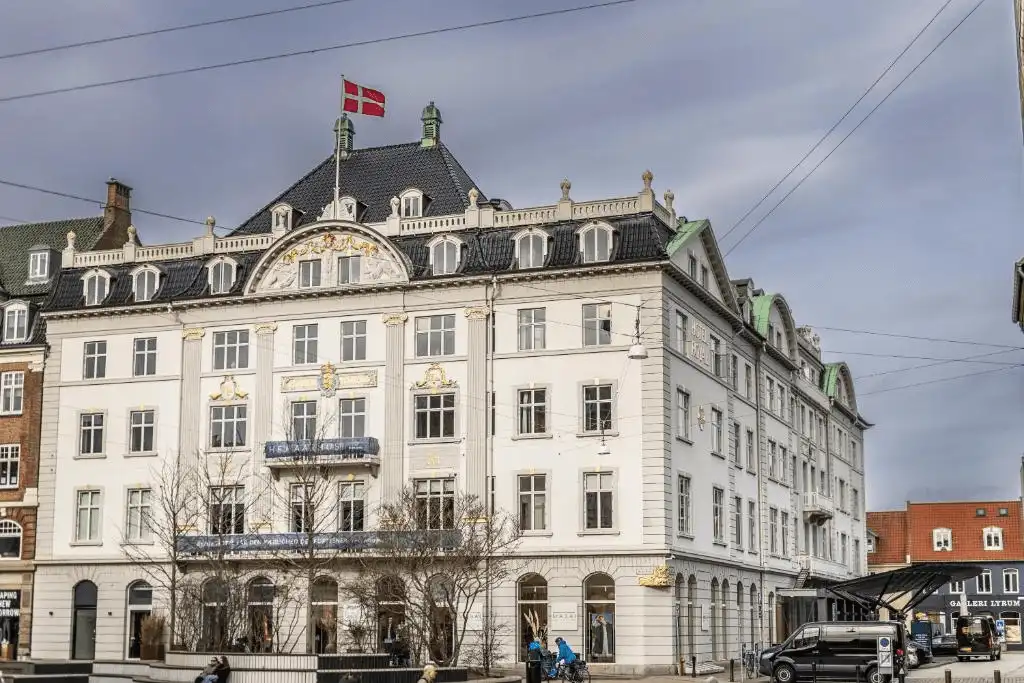
Choosing the best hotels in Aarhus means understanding that Denmark’s second city operates on architectural restraint, not theatrical display—your hotel choice either connects you to the city’s preserved industrial and royal heritage, or it places you in anonymous comfort without historical context.
After auditing Aarhus’ most significant properties, we filtered the field to three hotels where the building is a documented chapter of the city’s evolution—not just a renovated shell with historic marketing. Below are the stays that deliver on heritage authenticity, preservation quality, and cultural positioning for travelers who value architectural integrity over brand recognition.
As the definitive selection of the city’s architectural soul, these landmarks form a vital part of the best historic hotels in Denmark, joining an elite register of royal palaces, naval granaries, and noble estates across the country.
Historic Core: Neoclassical Foundations & Grand Station Era
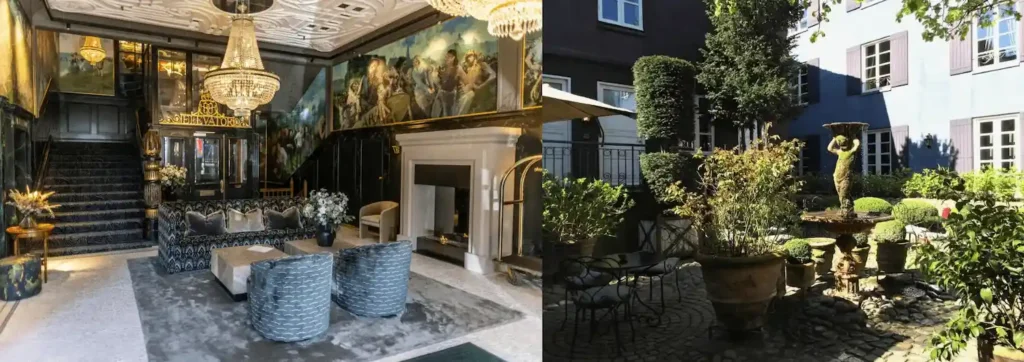
Aarhus’ most significant hotels occupy buildings from the city’s 19th-century expansion and early-20th-century transit boom—properties where royal neoclassicism and Danish functionalism aren’t design themes but preserved structural realities. These aren’t hotels pretending to be historic; they are verified conversions of buildings that defined Aarhus’ rise as Denmark’s cultural and commercial anchor beyond Copenhagen.
👑 Hotel Royal ★★★★★
This property anchors travelers in the physical center of 1838 neoclassical Aarhus—the only hotel where original stained glass, hand-painted murals, and a preserved grand staircase remain intact from its royal-era construction.
Walking through the lobby isn’t about modern luxury wrapped in historic trim; it’s about occupying one of the few buildings in Denmark where 19th-century aristocratic proportions and decorative craftsmanship survived without major reconstruction.
The Royal suits travelers seeking authentic connection to Denmark’s golden age without compromising on five-star service standards. Booking Royal secures access to Aarhus’ most architecturally significant hotel before summer availability tightens.
Best for: Travelers prioritizing verified neoclassical preservation, royal-era interiors, and high-service luxury in Aarhus’ most historically intact hotel.
Signature Experience: Original 1838 stained glass windows, hand-painted ceiling murals, preserved grand staircase with wrought-iron detailing, formal dining in rooms with period architectural elements.
“Standing under those original murals felt like stepping into royal Denmark—no other hotel in Aarhus comes close to this level of historic soul.” — Henrik, StockholmCheck Availability & Rates →
🏛️ Milling Hotel Ritz Aarhus City ★★★
This conversion represents Denmark’s interwar functionalist movement frozen in 1932 form—preserved exterior masonry, an iconic internal winding staircase, and the original “Grand Station Hotel” floorplan that defined early-20th-century Danish transit architecture.
Staying here means occupying a documented example of Danish Functionalism without the polished anonymity of modern renovations that erase structural character.
The Ritz appeals to architecture-focused travelers who value preserved functionalist sobriety and historical transit-era positioning over contemporary five-star amenities. Availability at properties with this level of structural authenticity remains limited during Aarhus’ cultural season.
Best for: Architecture enthusiasts seeking preserved Danish Functionalism, interwar design integrity, and authentic grand station hotel experience.
Signature Experience: Original 1932 winding staircase, preserved functionalist facade, transit-era floorplan, location steps from Aarhus Central Station with period urban context.
“That staircase alone is worth the stay—pure 1930s Danish design, completely untouched and perfectly maintained.” — Anna, BerlinCheck Availability & Rates →
🏡 Villa Provence ★★★★
This estate conversion maintains its turn-of-the-century proportions and historicist facade—the building that marks Aarhus’ 1900s noble expansion beyond medieval boundaries. The physical heritage lives in the original cobblestone courtyard and the exterior architectural detailing that defined early-20th-century Danish urban manor construction.
Villa Provence suits travelers drawn to intimate estate atmosphere and preserved historicist character rather than grand hotel scale or modern boutique anonymity. Securing a stay here places you in one of Aarhus’ few properties where the 1900s urban expansion remains architecturally legible.
Best for: Travelers seeking intimate estate atmosphere, turn-of-the-century historicist preservation, and quiet residential positioning near Aarhus’ cultural center.
Signature Experience: Original cobblestone courtyard, preserved 1900s historicist facade, intimate estate proportions, boutique service in historic noble expansion setting.
“The courtyard at sunrise, coffee in hand, felt like discovering a hidden piece of old Aarhus most visitors never find.” — Marie, CopenhagenCheck Availability & Rates →
📊 Comparison: Best Hotels in Aarhus
| Hotel | Location | Historic Era | Preservation Highlights | Unique Character | Best For |
|---|---|---|---|---|---|
|
👑 Hotel Royal ★★★★★ |
City center, historic core |
1838 Neoclassical Royal Era |
Stained glass, murals, grand staircase |
Most intact royal interiors |
Neoclassical luxury, royal heritage |
|
🏛️ Milling Hotel Ritz ★★★ |
Near Central Station, transit district |
1932 Danish Functionalism |
Winding staircase, original floorplan |
Preserved transit-era architecture |
Functionalist design, architectural focus |
|
🏡 Villa Provence ★★★★ |
Residential quarter, near museums |
1900s Historicist Estate |
Cobblestone courtyard, historicist facade |
Intimate urban manor atmosphere |
Estate character, quiet positioning |
- For travelers continuing through Denmark’s cultural cities, compare best hotels in Copenhagen to discover additional neoclassical and modernist conversions in the capital’s most preserved districts.
❓ FAQ: Best Hotels in Aarhus
Which hotel in Aarhus has the most preserved historic interiors?
Hotel Royal maintains the most intact 1838 neoclassical interiors in Aarhus, including original stained glass windows, hand-painted murals, and the grand staircase with wrought-iron detailing. No other property in the city offers this level of royal-era architectural preservation combined with five-star service standards. Travelers prioritizing authentic historic atmosphere choose Royal for its verified neoclassical integrity.
Is Milling Hotel Ritz considered a historic hotel?
Yes—Milling Hotel Ritz Aarhus City is a preserved 1932 Danish Functionalist building with documented architectural significance from Denmark’s interwar transit era. The original winding staircase, exterior masonry, and grand station hotel floorplan remain structurally intact. It appeals to travelers seeking authentic functionalist design rather than modern boutique conversions.
What makes Villa Provence different from other Aarhus hotels?
Villa Provence occupies a turn-of-the-century historicist estate with preserved cobblestone courtyard and original facade detailing from Aarhus’ 1900s noble expansion. Unlike larger hotels, it offers intimate estate proportions and residential quarter positioning. Travelers drawn to quiet manor atmosphere and early-20th-century architectural character find this property compelling.
Are these hotels located in Aarhus’ historic center?
Hotel Royal sits directly in Aarhus’ historic core with immediate access to the Latin Quarter and cathedral district. Milling Hotel Ritz occupies the transit district near Central Station, maintaining its original grand station hotel context. Villa Provence is positioned in a quieter residential quarter near cultural institutions. Each offers different expressions of historic Aarhus.
Do these hotels offer modern amenities alongside historic architecture?
All three properties balance preservation with contemporary comfort—Hotel Royal delivers five-star service within neoclassical interiors, Milling Hotel Ritz maintains functionalist sobriety with updated guest facilities, and Villa Provence combines estate character with boutique-level amenities. The difference lies in how each property integrates modern standards without erasing architectural heritage.
Which Aarhus hotel is best for architecture enthusiasts?
Milling Hotel Ritz appeals strongly to architecture-focused travelers due to its verified Danish Functionalist preservation and intact 1932 structural elements. Hotel Royal attracts those prioritizing neoclassical grandeur and royal-era decorative arts. Villa Provence suits visitors drawn to turn-of-the-century historicist estates. Each represents a distinct chapter of Danish architectural history.
When is the best time to book historic hotels in Aarhus?
Properties with verified heritage and preserved interiors see highest demand during Aarhus’ cultural season from May through September, particularly around ARoS museum exhibitions and festival periods. Booking several months ahead secures availability at hotels where architectural integrity and historic character limit total room inventory compared to modern chain properties.
Your Historic Stay in Aarhus Awaits
Selecting the best hotel in Aarhus isn’t about chasing star ratings—it’s about choosing a property where the building itself connects you to Denmark’s architectural evolution. The three hotels above represent Aarhus’ most consistently preserved historic conversions for travelers who value neoclassical grandeur, functionalist integrity, and estate character over generic luxury.
Before finalizing your Aarhus plans, review best hotels in Odense to explore Denmark’s third city’s preserved half-timbered estates and Renaissance-era conversions for a complete historic Danish hotel experience.
For more curated itineraries and luxury-focused travel insights, visit Your Luxury Guide. For official travel information and destination updates, visit Denmark tourism-info.
Booking your best hotel in Aarhus places you in properties where 19th-century royal interiors, 1930s functionalist design, and turn-of-the-century estate architecture remain structurally intact—heritage that defines Denmark’s second city beyond modern hotel anonymity.
Your Luxury Guide — Where Exceptional Travel Begins.