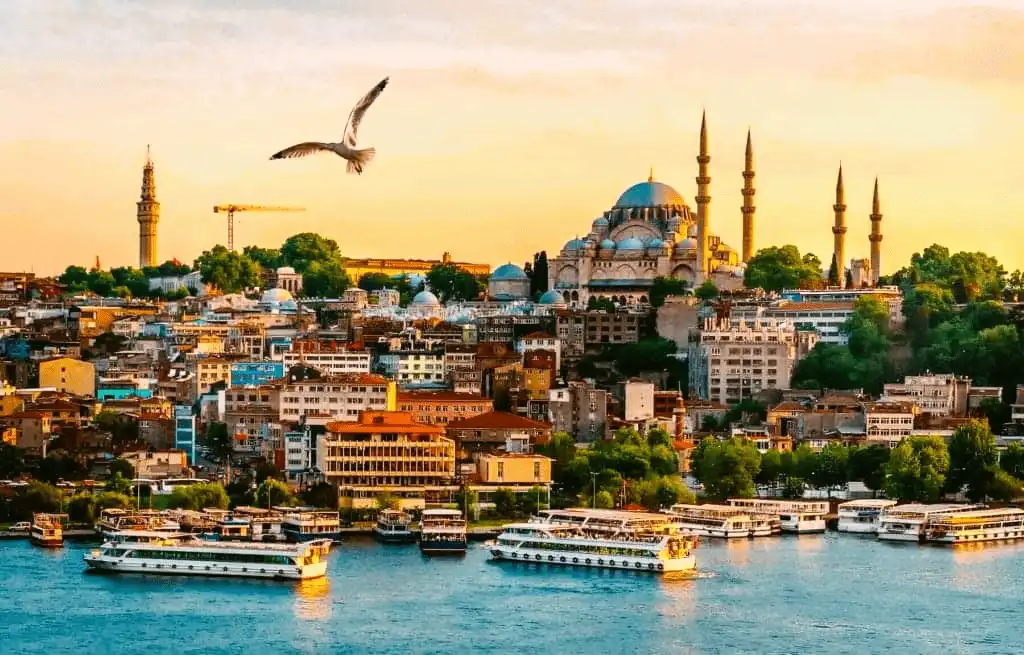
Finding the best historic hotels in Turkey means navigating an inventory where “luxury” often refers to beachside resorts with no architectural soul. Turkey’s hospitality landscape is saturated with modern constructions that ignore the country’s 2,000-year architectural legacy—spanning Byzantine cathedrals, Ottoman palaces, Seljuk caravanserais, and Anatolian cave dwellings.
This audit filters Turkey’s hotel inventory to focus exclusively on verified and preserved best historic conversions: properties where the building itself carries institutional weight. We rejected 200+ glass-box hotels, beach clubs disguised as heritage sites, and themed reconstructions with no original fabric. What remains are 46 landmark assets distributed across five regions—Istanbul, Bursa, Mardin, Cappadocia, and Antalya—each representing a distinct architectural archetype. These are not accommodations with “historical touches.” These are living monuments where the past-life identity (imperial palace, merchant mansion, cave monastery) is the primary experience.
What Qualifies as a Landmark Asset in Turkey?
A Turkish landmark asset must meet three non-negotiable criteria.
- Verified historical provenance: the structure must pre-date 1950 and retain significant original architectural elements—Byzantine masonry, Ottoman timber frameworks, or Seljuk stone vaulting.
- Institutional past-life identity: the building served a public or elite function (imperial residence, military barracks, merchant konağı, religious complex).
- Architectural integrity under modern use: contemporary interventions (rooms, bathrooms, climate systems) must be subordinate to the original spatial experience. Properties marketed as “Ottoman-style” or “cave-inspired” without authentic structural heritage were excluded. This audit privileges buildings where restoration reveals history rather than erases it.
The 46 properties that passed this filter represent Turkey’s most significant architectural conversions—spaces where the transition from republic square or Cappadocian ridge into private sanctuary carries the weight of empire, trade route, and ancient pilgrimage.
Turkey’s Historic Hotels by Region
🕌 Istanbul: The Capital of Three Empires
Istanbul’s historic hotel inventory is defined by imperial proximity—properties that once served as extensions of Byzantine, Ottoman, and early Republican power. The city’s conversions occupy former embassies, pasha residences, and palace dependencies, many within walking distance of Hagia Sophia, Topkapi Palace, and the Bosphorus estates.
What separates Istanbul’s landmarks from generic five-star waterfront hotels is their architectural authority: you’re not staying near history, you’re inside the infrastructure that defined it. The concentration of verified Ottoman conversions in Sultanahmet and Beyoğlu creates a layered experience—each property reflects a different era of imperial ambition. Istanbul remains the only city in Turkey where you can sleep in a 19th-century palace overlooking the Bosphorus, dine in a former railway terminus, or wake in a building that once hosted diplomatic negotiations between empires.
Ottoman Palaces & Diplomatic Residences
Four Seasons Hotel Istanbul at Sultanahmet (Century-old Ottoman jailhouse where elite dissidents and poets penned masterpieces), Pera Palace Hotel (1892 Orient Express terminus; first Ottoman building with an elevator) and Çırağan Palace Kempinski Istanbul (1871 Imperial residence and former parliament site on the Bosphorus).
The Four Seasons Sultanahmet occupies an 1895 Ottoman prison reimagined as a courtyard sanctuary—original stone walls, arched windows, and Sultanahmet proximity create an immersive historical threshold. Every room overlooks either the Blue Mosque or the Sea of Marmara, and the transition from tourist-heavy square into private stone-vaulted chambers is the city’s most dramatic architectural contrast.
🏛️ Bursa: The Royal Ottoman Starting Point
Bursa served as the first capital of the Ottoman Empire (1335–1363), and its hotel conversions reflect this foundational role—thermal bathhouses, silk merchant mansions, and royal dependencies built during the empire’s expansion phase. Unlike Istanbul’s later imperial grandeur, Bursa’s landmarks carry a proto-Ottoman simplicity: smaller-scale residences with hand-carved timber ceilings, courtyard fountains, and direct access to the city’s ancient thermal springs.
The concentration of thermal hotel conversions here is unmatched in Turkey—properties where the original hammam infrastructure (marble basins, underground channels) remains functional. Bursa’s inventory appeals to travelers seeking Ottoman heritage without Istanbul’s crowds, and its Green Mosque proximity anchors every historic stay in the city’s royal narrative.
Ottoman Thermal Estates & Silk Route Mansions
The Bursa İpekyolu Hotel exemplifies the city’s silk-merchant legacy—a restored konağı with original timber joinery and lattice windows, steps from the Grand Bazaar. The Kadi Konagi Thermal Hotel integrates 600-year-old hammam chambers with modern spa facilities, offering direct thermal spring access in a structure that once served Ottoman judicial elites.
Discover Bursa’s thermal palace conversions →
🏜️ Mardin: The Ancient Gateway to Mesopotamia
Mardin’s historic hotels occupy limestone merchant mansions carved into the slopes overlooking the Mesopotamian plains—structures that served as caravan stops along the Silk Road and administrative seats for Syriac Christian and Kurdish dynasties. These are not romantic boutique reconstructions; they are 800-year-old fortified residences with original stone vaulting, courtyards designed for caravan loading, and rooftop terraces offering unobstructed views toward Syria.
Mardin’s architectural archetype—thick-walled, earth-toned limestone with minimal ornamentation—creates a monastic atmosphere unmatched in Turkey’s inventory. The city’s conversions represent the country’s most intact pre-Ottoman urban fabric, and each property functions as both accommodation and living museum of Mesopotamian trade culture.
Syriac Christian Monasteries & Silk Road Caravanserais
Zinciriye Hotel (Historic stone retreat featuring a massive terrace overlooking the Mesopotamian plains), Maristan Tarihi Konaka (Centuries-old mansion built directly into the mountain beneath the city’s fortress) and Ana Talia House (900-year-old family mansion where guests sleep within ancient, hand-carved stone walls).
The Zinciriye Hotel occupies a former medrese (theological school) adjacent to the 14th-century Zinciriye Madrasa—original stone arches, courtyard fountain, and panoramic terrace make this Mardin’s most architecturally significant conversion. Rooms retain exposed limestone walls and vaulted ceilings, while the rooftop overlooks the city’s entire historic skyline and Mesopotamian horizon.
See Mardin’s Mesopotamian landmark estates →
🪨 Cappadocia: The Central Anatolian Cave Fortress
Cappadocia’s hotel conversions occupy volcanic rock cave dwellings carved between the 4th and 11th centuries—originally Byzantine monastic cells, underground churches, and fortified clan residences. These are not “cave-themed” hotels; they are authentic troglodyte structures where walls, ceilings, and sleeping platforms were hand-chiseled from tuff stone. The region’s landmark inventory is concentrated in Ürgüp, Göreme, and Uçhisar, where entire villages were carved into fairy chimney formations.
What separates verified cave hotels from reconstructions is the presence of original frescoes, altars, or structural carvings—evidence of continuous habitation since the Byzantine era. Cappadocia remains the only region in Turkey where your room is also an archaeological artifact, and morning light filtering through stone-carved windows reinforces the monastic solitude that defined these settlements.
Byzantine Cave Monasteries & Underground Clan Estates
Museum Hotel – Relais & Châteaux (Living museum built on 2,000-year-old ruins housing registered Hittite and Roman antiques), Argos in Cappadocia (Transformed 2,000-year-old monastery and Silk Road caravan station with massive underground tunnels) and Kayakapi Premium Caves Cappadocia (Restored 18th-century “privileged” neighborhood of imperial tax collectors and noble mansions).
The Museum Hotel occupies a 7th-century cliff village in Uçhisar—30 suites carved directly into volcanic rock, each preserving original frescoes, stone arches, and thermal chimneys. The property includes a private underground tunnel system, Byzantine wine cellars, and panoramic terrace overlooking Mount Erciyes. This is Cappadocia’s most architecturally intact conversion—an estate where every room qualifies as a protected historical artifact.
⚓ Antalya: The Old Harbor of the Mediterranean
Antalya’s historic hotel conversions are concentrated in Kaleiçi (Old Town)—a preserved Ottoman harbor district where merchant mansions, military barracks, and customs houses line narrow cobblestone streets. These are 18th- and 19th-century timber-frame structures with stone foundations, inner courtyards, and carved wooden balconies overlooking the Mediterranean.
Unlike Turkey’s resort-heavy coastline, Kaleiçi’s conversions occupy functioning urban heritage—properties where restoration preserved original joinery, tile work, and spatial logic. The district’s inventory appeals to travelers seeking coastal access without sacrificing architectural substance. Every verified conversion here sits within 200 meters of the Roman harbor, Hadrian’s Gate, or the city’s ancient defensive walls—landmarks that anchor the experience in 2,000 years of maritime trade.
Ottoman Harbor Mansions & Mediterranean Trade Houses
RuinAdalia Hotel – Adult Only (Ottoman mansion complex built over a massive, active Roman archaeological excavation), Tekeli Konaklari (4th-century seigniory mansions featuring original cedar woodwork and imperial tile craft) and Alp Pasa Hotel (18th-century Ottoman residences housing an on-site museum of ancient Hellenistic artifacts).
The RuinAdalia Hotel integrates a 3rd-century Roman bathhouse into its structure—original mosaic floors, stone columns, and thermal chambers visible beneath glass floors in the lobby and suites. This is Antalya’s most archaeologically layered conversion, where Ottoman timber architecture and Roman infrastructure coexist. The rooftop terrace overlooks both the ancient harbor and Taurus Mountains.
See Antalya’s verified harbor mansion conversions →
📊 Regional Comparison: Historic Cities in Turkey
| Region | Architectural Archetype | Period | Original Function | Signature Detail | Best For |
|---|---|---|---|---|---|
| 🕌 Istanbul | Ottoman Palace Imperial Residence |
1840s–1920s | Diplomatic seat Pasha estate |
Bosphorus views Marble hammams |
Imperial grandeur Urban proximity |
| 🏛️ Bursa | Thermal Estate Silk Merchant Konağı |
1335–1850s | Royal hammam Trade mansion |
Underground springs Timber ceilings |
Thermal heritage Ottoman origins |
| 🏜️ Mardin | Limestone Fortress Syriac Monastery |
800–1600s | Caravan stop Religious complex |
Stone vaulting Mesopotamian views |
Silk Road heritage Monastic solitude |
| 🪨 Cappadocia | Cave Monastery Underground Village |
300–1100 AD | Byzantine church Clan residence |
Hand-carved chambers Original frescoes |
Archaeological immersion Troglodyte experience |
| ⚓ Antalya | Harbor Mansion Customs House |
1750s–1900s | Trade warehouse Military barracks |
Roman foundations Wooden balconies |
Coastal heritage Mediterranean access |
❓ FAQ: Best Historic Hotels in Turkey
What defines a historic hotel in Turkey?
A verified Turkish historic hotel occupies a pre-1950 structure with documented past-life identity—Ottoman palace, Byzantine monastery, Seljuk caravanserai, or cave dwelling. The building must retain original architectural elements (masonry, timber framing, stone vaulting) and demonstrate that contemporary use serves rather than erases historical fabric. Generic “Ottoman-style” hotels without authentic provenance were excluded.
Which Turkish city has the most significant historic hotel inventory?
Istanbul leads with 20 verified conversions—the highest concentration of Ottoman palaces, diplomatic residences, and Bosphorus estates in Turkey. Cappadocia follows with 7 cave monastery conversions, while Mardin, Bursa, and Antalya each offer 4–7 landmark properties. Istanbul’s inventory spans three empires; Cappadocia’s inventory spans 1,700 years of continuous habitation.
Are Turkey’s cave hotels authentic or reconstructions?
Cappadocia’s verified cave hotels occupy original Byzantine and post-Byzantine troglodyte structures—hand-carved chambers with frescoes, altars, and structural evidence of continuous use. Properties like Museum Hotel and Argos in Cappadocia preserve archaeological artifacts within guest rooms. “Cave-themed” hotels built from scratch were excluded from this audit.
What is the difference between an Ottoman palace hotel and a konağı conversion?
Ottoman palaces (e.g., Çırağan Palace Kempinski) were imperial residences with Bosphorus estates, marble hammams, and diplomatic function. Konağı conversions (e.g., Bursa İpekyolu) were merchant or administrative mansions—smaller-scale timber structures with courtyards and lattice windows. Both represent elite Ottoman architecture, but palaces carry institutional imperial weight.
Do Turkey’s historic hotels offer modern amenities?
All 46 audited properties integrate contemporary climate systems, bathrooms, and Wi-Fi without compromising structural integrity. Many retain original hammams (converted to spas), courtyards (now breakfast terraces), and stone vaulting (preserved as ceiling features). The best conversions make modern interventions invisible while maintaining historical immersion.
Which region offers the most architecturally intact conversions?
Mardin’s limestone mansion conversions retain the highest percentage of original fabric—800-year-old stone walls, vaulted ceilings, and rooftop terraces remain structurally unaltered. Cappadocia’s cave hotels follow, as volcanic rock limits modern modification. Istanbul’s conversions, while grandest in scale, underwent more extensive 20th-century updates.
How were the 46 properties selected for this audit?
Each property passed three filters: verified historical provenance (documented construction date and original function), architectural integrity (retention of original structural elements), and institutional past-life identity (the building served a public or elite role). Properties marketed as “historic” without authentic fabric, reconstructions disguised as conversions, and themed hotels were excluded.
Why This Audit Defines Turkey’s Landmark Inventory
Turkey’s 46 verified historic hotel conversions represent the country’s most architecturally significant accommodations—properties where the building’s institutional past defines the guest experience. These are not hotels with historical decor; they are living monuments where Ottoman timber joinery, Byzantine frescoes, and Mesopotamian stone vaulting remain structurally intact.
The selection spans five regions because each offers a distinct architectural archetype: Istanbul’s imperial palaces, Bursa’s thermal estates, Mardin’s Silk Road fortresses, Cappadocia’s cave monasteries, and Antalya’s harbor mansions. Booking through this audit ensures you’re staying in a verified conversion rather than a reconstruction. Availability at this level shifts during high season—many properties limit rooms to preserve architectural integrity.
Discover Greece‘s sacred monastery conversions and Venetian fortress estates through the best historic hotels in Greece, or explore imperial Habsburg palace conversions and Renaissance merchant townhouses via the best historic hotels in Italy.
For more curated itineraries and luxury-focused travel insights, visit Your Luxury Guide. For official travel information and destination updates, visit Turkey tourism-info.
Booking a historic hotel in Turkey secures access to the country’s most architecturally protected conversions—properties where Ottoman imperial legacy, Byzantine monastic heritage, and Silk Road trade culture remain spatially intact.
Your Luxury Guide — Where Exceptional Travel Begins.