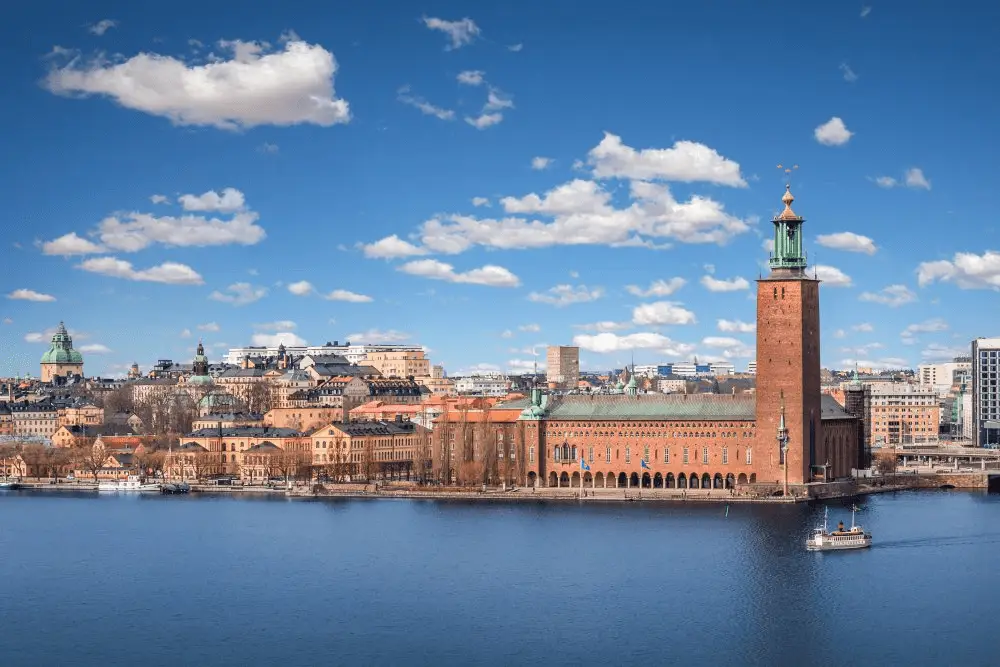
Best historic hotels in Sweden occupy a unique position in European heritage architecture—properties where maritime trade power, royal administrative infrastructure, and early industrial capital created buildings that outlasted their original purpose and now serve as institutional-grade stays. This is not about “charming old buildings.” Sweden’s most significant conversions include: 13th-century Hanseatic warehouses in Visby’s walled medieval quarter, 19th-century insurance company headquarters in Gothenburg’s financial core, and royal naval academy structures in Stockholm’s island districts.
The challenge: Sweden’s luxury hotel market is dominated by modern Nordic minimalism branded as “design,” where glass-and-timber constructions claim heritage value through Scandinavian aesthetics alone.
We audited Sweden’s inventory and rejected generic retrofits and brand-saturated boxes to focus exclusively on properties with verified Past-Life Identity—former royal residences, merchant guild halls, national bank headquarters, and military barracks. This selection guarantees stays where the building’s original function and architecture remain the primary experience.
What Qualifies as an Absolute Historical Asset in Sweden?
Sweden’s most valuable heritage conversions meet three non-negotiable criteria:
- Original Function Authenticity: the building served a documented institutional, commercial, or royal purpose before hotel conversion—national bank vaults, merchant guild halls, naval academies, or royal guesthouses.
- Preserved Architectural Continuity: the property retains original façades, load-bearing masonry, grand staircases, or vaulted ceilings that cannot be replicated in modern construction.
- Institutional Recognition: the structure appears in municipal heritage registries, architectural conservation records, or UNESCO documentation as a building of cultural significance.
This eliminates “historic-inspired” boutique hotels built in traditional styles, modern constructions on historic sites, and chain properties occupying retrofitted office blocks.
Sweden’s strongest conversions concentrate in four cities: Stockholm‘s royal and naval infrastructure, Visby‘s Hanseatic medieval quarter, Gothenburg‘s 19th-century insurance district, and Uppsala‘s academic institutional buildings. The classification system prioritizes architectural rarity over luxury amenities—because Sweden’s truly irreplaceable assets are those where the building’s past life remains visible and defining.
Swedish Historic Hotels by Region
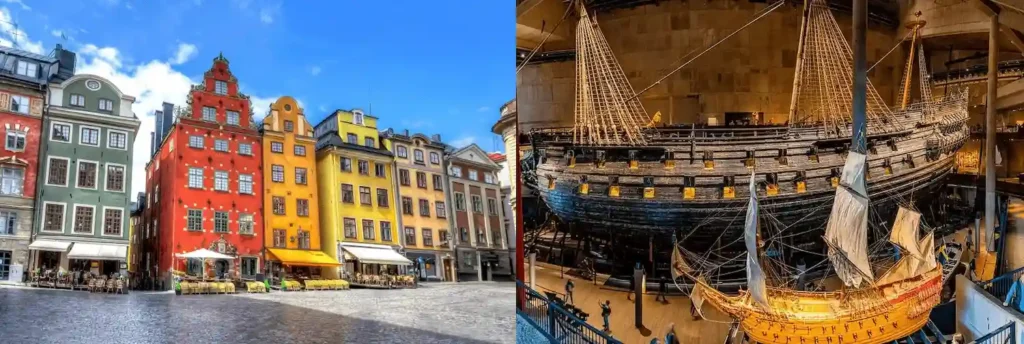
🏛️ Stockholm: Royal & Naval Heritage Capital
Stockholm’s most significant heritage conversions occupy three distinct architectural typologies: royal residential infrastructure from the Swedish Empire period, naval academy structures from the 18th-century maritime expansion, and early 20th-century grand hotels built for visiting European aristocracy.
The city’s hotel inventory is heavily saturated with modern “design” properties claiming Scandinavian heritage through minimalist interiors, but Stockholm’s absolute historical assets are those that served institutional functions—properties where Swedish royalty maintained quarters, where naval officers trained, or where European diplomats lodged during state visits.
Palace Hotels & Grand Royal Lodges
Grand Hôtel Stockholm (1874 palatial icon situated opposite the Royal Palace; considered Sweden’s first true luxury hotel with original Carrara marble pillars and the historic Cadier Bar), Bank Hotel a Member of Small Luxury Hotels (1910 former Bankaktiebolaget Södra Sverige headquarters; a Renaissance-style palace featuring massive bronze doors, original bank-vault motifs, and a six-meter glass-ceiling dining hall), and Hotel Skeppsholmen Stockholm a Member of Design Hotels (1699 “Långa Raden” naval barracks built for King Karl XII’s Royal Marines; a minimalist conversion of a historic military base on a protected island oasis).
Grand Hôtel Stockholm stands as Stockholm’s most institutionally significant palace-style conversion—the city’s first purpose-built luxury hotel to accommodate European royalty and diplomats during Sweden’s Belle Époque era. This is not a renovated merchant house—it is Stockholm’s ceremonial hospitality landmark, where Nobel Prize laureates lodge during annual ceremonies and where Swedish state dinners occur when the Royal Palace requires overflow capacity.
For travelers seeking Stockholm’s most architecturally validated heritage stay, explore the full selection in best hotels Stockholm.
⚔️ Visby: Hanseatic Medieval Quarter
Visby holds UNESCO World Heritage designation for its intact medieval town walls and Hanseatic merchant infrastructure—making it one of Northern Europe’s most architecturally preserved trading posts from the 13th–14th centuries.
The city’s hotel inventory includes three conversions that occupy buildings with documented Hanseatic guild origins, medieval vault structures, and limestone masonry that predate Swedish unification. Visby’s significance lies in its role as the Baltic Sea’s primary Hanseatic trade hub during the late medieval period, and the buildings that now house luxury hotels were the operational centers of that commerce: grain warehouses, merchant guild halls, and fortified storage vaults. The concentration of preserved medieval architecture within Visby’s walled quarter creates a rare immersion into Northern European trading history that modern construction cannot approximate.
Hanseatic Vaults & Medieval Guild Halls
Clarion Hotel Wisby (13th-century Hanseatic trade complex and medieval warehouse cluster; features original Gothic cross-vaults, a restored medieval alleyway, and 14th-century stone columns, Hotel Helgeand Wisby (13th-century former hospital and almshouse; a designated building monument with thick limestone walls and original medieval architecture in the heart of the UNESCO old town), and Hotell Visby Börs (17th-century historic complex incorporating three interconnected heritage buildings; features unique period-styled suites and the preserved machinery room of the former “Röda Kvarn” cinema).
Clarion Hotel Wisby is Visby’s most architecturally significant conversion—originally built by Hanseatic merchants to store grain and timber during Visby’s peak as the Baltic’s dominant trading port. The property’s limestone walls, vaulted ceilings, and preserved stone archways are original medieval masonry—structural elements that define the building’s proportions and cannot be replicated in contemporary construction. The hotel’s location is within the UNESCO-protected medieval quarter.
For travelers seeking Visby’s most historically validated medieval stays, explore the full selection in best hotels in Visby.
🏦 Gothenburg: Industrial & Financial Landmark District
Gothenburg’s most valuable heritage conversions occupy the city’s late 19th-century insurance and banking district—properties where Swedish industrial capital consolidated before World War I. Unlike Stockholm’s royal infrastructure, Gothenburg’s absolute historical assets are former corporate headquarters: national insurance offices, postal service buildings, and merchant bank palaces that reflect Sweden’s transition from agrarian economy to industrial power.
The city’s hotel inventory includes three conversions that retain original neoclassical façades, marble banking halls, and executive suite interiors that defined Swedish financial architecture during the late imperial period.
Insurance Palaces & Postal Headquarters
Elite Plaza Hotel (1889 former Svea Insurance Company headquarters; a Neo-Renaissance palace featuring original mosaic floors, elaborate stucco ceilings, and a period-preserved marble staircase), Clarion Hotel Post (1925 neoclassical Central Post Office headquarters; designed by Ernst Torulf with a preserved “Kassahallen” cash hall and a facade clad in traditional copper and slate), and Hotel Eggers(1859 historic railway hotel, one of Sweden’s oldest operating stays; features original 19th-century Belle Époque interiors and is built atop the remains of Gothenburg’s 17th-century city walls).
Elite Plaza Hotel is Gothenburg’s most architecturally significant insurance palace—occupies the former headquarters of Skånska Brandförsäkringsbolaget, a regional insurance company that built this neoclassical palace in 1889 to signal financial stability and institutional permanence. The property’s façade, grand staircase, and preserved executive suites reflect the architectural ambition of Sweden’s industrial boom period, when insurance companies constructed headquarters to rival royal palaces in scale and ornamentation.
For travelers seeking Gothenburg’s most institutionally important heritage stay, explore the full selection in best hotels in Gothenburg.
🎓 Uppsala: Academic & Ecclesiastical Estates
Uppsala’s hotel inventory reflects the city’s dual identity as Sweden’s ecclesiastical capital and academic center—properties where the Swedish Church and Uppsala University maintained guest quarters for visiting scholars and clergy.
The most significant conversions occupy 18th-century estates originally built as university professor residences, church-owned manor houses, and administrative buildings that served Uppsala’s academic infrastructure. Unlike Stockholm’s royal architecture or Gothenburg’s industrial palaces, Uppsala’s absolute historical assets are intimate estates where Sweden’s intellectual and religious elite lived and worked during the Enlightenment period.
Academic Estates & Church Manors
Hotel Villa Anna(1874 Bishop’s residence and former cathedral parish hall; a personal boutique icon in the clerical district featuring an original 19th-century vaulted stone wine cellar), Grand Hotell Hörnan(1907 Jugendstil landmark overlooking the Fyris River; featuring the original 1907 Otis elevator and wood-paneled lobby bar frequented by the city’s academic elite for over a century), and Akademihotellet (1930 “Gubbhyllan” student dormitory and 1698 Clasonska Gården post office; includes 18th-century Chinoiserie suites and original functionalist architecture in Uppsala’s academic heart).
Hotel Villa Anna is Uppsala’s most architecturally significant academic estate conversion—a property where Swedish intellectual history remains structurally defining rather than decoratively referenced. Occupies an 1883 private villa originally built as a residence for Uppsala University faculty during Sweden’s late 19th-century academic expansion. The property’s wooden façade, preserved parlor rooms, and original staircase reflect the architectural style of Swedish academic estates—intimate proportions designed for scholarly gatherings rather than grand state functions.
For travelers seeking Uppsala’s most academically validated heritage stay, explore the full selection in best hotels in Uppsala.
Historic Manor Estates and Royal Residences
📊 Regional Comparison: Historic Cities in Sweden
| Region | Architectural Archetype | Period | Original Function | Signature Detail | Best For |
|---|---|---|---|---|---|
| Stockholm | Royal palaces, naval academies, grand hotels |
1700s–1900s | Royal quarters, diplomatic lodges, military training |
Neoclassical façades, mirrored ballrooms, harbor views |
Travelers seeking Swedish royal heritage |
| Visby | Hanseatic warehouses, medieval guild halls |
1200s–1400s | Grain storage, merchant quarters, trade vaults |
Limestone vaults, medieval masonry, UNESCO walls |
Medieval maritime heritage seekers |
| Gothenburg | Insurance palaces, postal headquarters, bank buildings |
1800s–1900s | Financial headquarters, corporate offices, postal service |
Neoclassical banking halls, marble staircases, executive suites |
Industrial heritage architecture enthusiasts |
| Uppsala | Academic estates, church manors, professor residences |
1700s–1800s | University quarters, ecclesiastical estates, scholarly lodges |
Wooden façades, parlor rooms, academic interiors |
Travelers drawn to intellectual heritage |
❓ FAQ: Best Historic Hotels in Sweden
What defines a historic hotel in Sweden versus a modern design hotel?
A historic hotel in Sweden occupies a building with documented institutional, commercial, or royal function before conversion—former naval academies, Hanseatic warehouses, insurance palaces, or royal guesthouses with preserved original architecture. Modern design hotels may reference Scandinavian aesthetics but lack structural continuity with Sweden’s administrative or maritime past. Grand Hôtel Stockholm and Clarion Hotel Wisby exemplify verified heritage conversions where the building’s original purpose remains architecturally defining.
Which Swedish city has the most concentrated medieval hotel architecture?
Visby holds the highest concentration of medieval hotel conversions in Sweden due to its UNESCO-protected Hanseatic quarter—properties like Clarion Hotel Wisby, Hotel Helgeand Wisby, and Hotell Visby Börs occupy 13th–14th century merchant warehouses and guild halls with preserved limestone vaults and medieval masonry. Stockholm’s hotel inventory predates this period with royal structures, but Visby’s medieval commercial architecture remains the most intact in Scandinavia.
Are Sweden’s historic hotels more expensive than modern luxury properties?
Not necessarily—Sweden’s heritage conversions often price competitively with modern luxury brands because preservation costs offset brand premiums. Elite Plaza Hotel in Gothenburg and Hotel Skeppsholmen in Stockholm offer institutional-grade heritage at rates comparable to glass-and-timber “design” properties, but with irreplaceable architectural continuity. The value proposition shifts from contemporary amenities to documented historical significance.
Which Swedish historic hotel offers the strongest royal connection?
Grand Hôtel Stockholm maintains the most direct royal lineage—built in 1874 as Stockholm’s ceremonial hospitality landmark for visiting European aristocracy, it faces the Royal Palace and hosts Nobel Prize laureates during annual ceremonies. The property’s neoclassical architecture and mirrored ballroom reflect Sweden’s late imperial ambitions, making it the most institutionally significant royal-adjacent stay in the country.
Can you stay inside Visby’s medieval town walls?
Yes—Visby’s UNESCO-protected medieval quarter contains multiple hotel conversions inside the 13th-century fortification walls, including Clarion Hotel Wisby and Hotel Helgeand Wisby. These properties occupy former Hanseatic merchant warehouses and guild halls, placing guests within the operational core of Baltic trade networks from the 1200s–1400s. This is not proximity to medieval architecture—it is immersion within structurally preserved trading infrastructure.
What makes Gothenburg’s hotel conversions architecturally significant?
Gothenburg’s most valuable heritage stays occupy former 19th-century insurance and banking headquarters—Elite Plaza Hotel and Clarion Hotel Post exemplify Swedish industrial capital architecture, where neoclassical façades, marble banking halls, and executive suites reflect the country’s economic transformation from agrarian to industrial power. These are not renovated residential buildings; they are purpose-built corporate palaces that defined Swedish financial ambition during the late imperial period.
Which Swedish historic hotel is best for travelers avoiding tourist crowds?
Uppsala’s academic estate conversions—particularly Hotel Villa Anna and Akademihotellet—offer the most intimate heritage experience outside Sweden’s primary tourist circuits. These properties occupy 18th–19th century professor residences and church manors, providing access to Swedish intellectual and ecclesiastical history without Stockholm’s royal tourism density or Visby’s medieval quarter crowds.
Choosing the Right Historic Stay in Sweden
Sweden’s most architecturally significant hotel conversions require matching your heritage priorities with the right regional expression—royal and naval infrastructure in Stockholm, medieval Hanseatic commerce in Visby, industrial financial palaces in Gothenburg, or academic estates in Uppsala.
The selection above represents the country’s most institutionally validated conversions, where the building’s original function and preserved architecture remain primary rather than decorative. Availability at Sweden’s top heritage properties shifts quickly during summer sailing season and Nobel Prize weeks.
For neighboring Scandinavian heritage architecture, continue with best historic hotels in Norway. To explore Swedish design within a Danish royal context, compare best historic hotels in Denmark.
For more curated itineraries and luxury-focused travel insights, visit Your Luxury Guide. For official travel information and destination updates, visit Sweden tourism-info.
Booking a historic hotel in Sweden secures access to Northern Europe’s most preserved institutional architecture—properties where Swedish maritime power, royal administration, and industrial capital created buildings that outlasted their original purpose and now define the country’s most valuable heritage stays.
Your Luxury Guide — Where Exceptional Travel Begins.