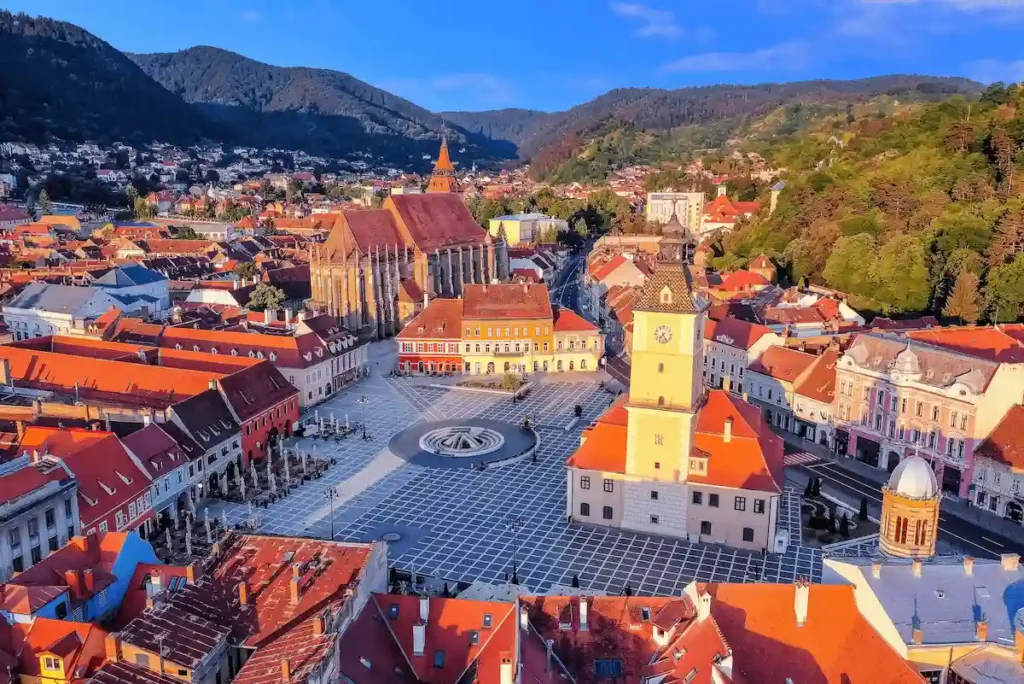
The best historic hotels in Romania are not found in glass towers or modern resort chains—they occupy ironwork commissioned by Gustave Eiffel, 18th-century Baroque summer residences, and medieval tax halls with stone walls from 1324. Romania’s inventory of heritage conversions offers something increasingly rare in European luxury: authentic architectural soul that predates the invention of the “grand hotel” itself. The problem is overchoice: generic booking platforms bury these conversions beneath branded properties with weak provenance and renovated façades that destroy original spatial integrity.
We have audited Romania’s inventory to filter out modern compromises and focus exclusively on properties with a verifiable “Past-Life Identity”—buildings where the original ironwork, vaulted ceilings, or fortress walls remain structurally intact. This is a curated selection that saves you time and guarantees a stay that is a living archive, not just a room.
Bucharest: The Capital’s Landmark Conversions
Before heading to Romania’s regional heritage hubs, Bucharest offers three of the country’s most significant urban conversions—properties where early 20th-century banking palaces, Parisian-era luxury, and Communist-turned-capitalist architecture create a distinct historical layering. These are not provincial retreats; they are the institutional anchors of Romania’s capital luxury market.
The Marmorosch occupies the former National Bank headquarters with preserved vaults and 1912 financial grandeur. The Athénée Palace represents the city’s interwar Parisian ambitions, originally built to mirror Vienna’s grand hotel culture. The Corinthia Grand Hotel du Boulevard repurposes a Communist-era landmark into contemporary elegance with original Brutalist bones. These properties are the city’s most architecturally defensible options—spaces where Romania’s political and economic transitions are embedded in the walls, not just the décor.
Featured Conversions:
- The Marmorosch Bucharest, Autograph Collection – 1912 National Bank vault conversion
- InterContinental Athénée Palace Bucharest – 1914 Parisian-era palace
- Corinthia Grand Hotel du Boulevard – 1970s Brutalist landmark
Iași & Transylvania’s Imperial Foundations
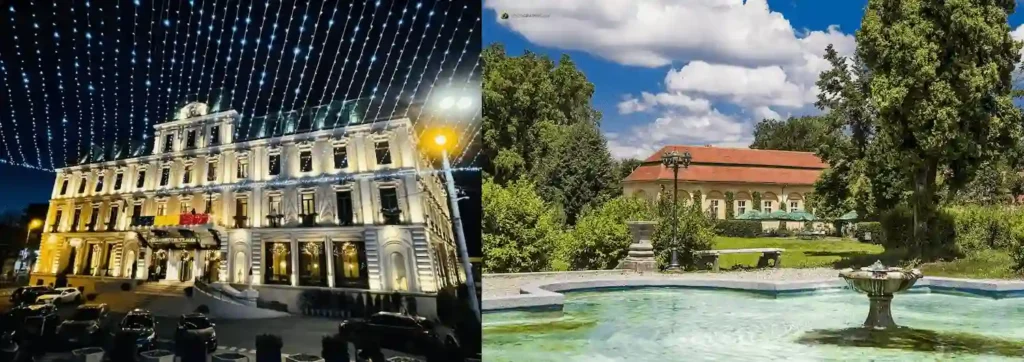
These are Romania’s most structurally significant heritage conversions outside Bucharest—properties where Austrian imperial engineering, Baroque aristocratic estates, and medieval fortress infrastructure create the country’s deepest historical layering. These are not provincial retreats—they are the architectural proof that Romania’s luxury infrastructure predates its modern borders, offering spatial continuity with Central Europe’s grand hotel tradition.
🏗️ Grand Hotel Traian ★★★★
This is the only hotel in Romania built on Gustave Eiffel’s original cast-iron framework—commissioned in 1882 as a national theater project before its 1884 conversion into Iași’s premier luxury address. The structure preserves the original metal platforms and load-bearing ironwork, visible in the grand lobby and primary circulation spaces.
The interior maintains turn-of-the-century furniture and spatial proportions that reflect the property’s dual identity: theatrical grandeur repurposed for hospitality without losing its monumental scale. Rooms occupy the upper floors where the original 1900s layout creates ceiling heights and window proportions foreign to modern hotel architecture. The transition from the city’s chaotic boulevards into this iron-framed sanctuary is immediate—the lobby’s metalwork and preserved staircase signal a different engineering era. The one thing no other Romanian hotel can claim: verified Eiffel ironwork still functioning as primary structure.
Best for: Travelers seeking Eiffel-engineered industrial heritage with turn-of-the-century interiors and direct access to Iași’s cultural institutions.
Signature Experience: Original 1882 cast-iron framework visible in lobby spaces, preserved 1900s furniture collection, grand staircase with Eiffel metalwork, monumental ceiling heights in public areas.
“Standing in that iron-framed lobby—you realize you’re inside an Eiffel structure that predates the Paris Tower.” — Daniel, BucharestCheck Availability & Rates →
🌿 Palatul Brukenthal Avrig ★★★
This is Transylvania’s only preserved Baroque “Orangerie” estate—originally the 1788 summer residence of Baron Samuel von Brukenthal, Governor of Transylvania under Habsburg rule. The property maintains the original 18th-century structural volumes and late-Baroque façade, offering spatial continuity with Austria’s aristocratic estate architecture.
The interior preserves the period’s formal layout: high-ceilinged salons, original plasterwork, and enfilade circulation that connects the primary reception rooms. The surrounding Baroque park is the only surviving 1780s garden complex in Transylvania, functioning as both historical artifact and active landscape.
Rooms occupy the former residential wings where original proportions and ceiling heights remain intact, creating a domestic scale foreign to modern luxury hotels. The one thing no other Transylvanian property can claim: verified Habsburg-era governance residence with intact landscape architecture.
Best for: Couples seeking Baroque estate immersion with original 18th-century park access and Habsburg-era aristocratic spatial integrity.
Signature Experience: Only preserved 1780s Baroque park in Transylvania, original late-Baroque façade and structural volumes, high-ceilinged salons with period plasterwork, Habsburg governance estate authenticity.
“Walking those Baroque gardens at dawn—it’s the closest you’ll get to Habsburg Transylvania without a time machine.” — Elena, Cluj-NapocaCheck Availability & Rates →
Sinaia & Sibiu: Royal Court & Medieval Fortress Layers
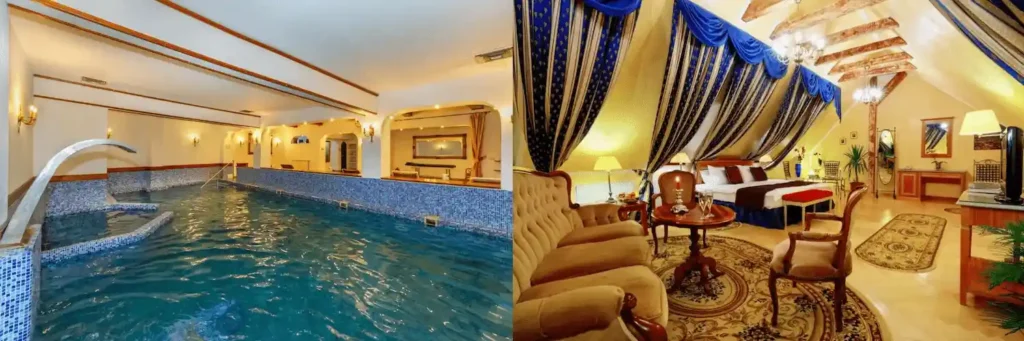
These properties represent Romania’s dual heritage: the 1911 eclectic luxury built for the Royal Court’s social circle, and the medieval fortress infrastructure that predates the Romanian state itself. These are not provincial guesthouses; they are the structural proof of Romania’s medieval commercial and administrative power, now functioning as hospitality without compromising original stonework or spatial logic.
👑 Hotel Palace ★★★★
This is Sinaia’s original luxury hub—built in 1911 as the premier social address for the Romanian Royal Court’s European aristocracy. The property preserves the grand eclectic façade and the monumental high-ceilinged lobby that defined interwar mountain resort luxury. The interior maintains the original spatial layout: formal reception areas, wide corridors with period detailing, and ceiling heights designed to accommodate ball gowns and diplomatic formality.
Rooms occupy the upper floors where the 1911 proportions create natural light and window scales foreign to modern ski hotels. The transition from Sinaia’s contemporary resort traffic into this preserved interwar sanctuary is immediate—the lobby’s original grandeur and preserved spatial logic signal a different hospitality era. The one thing no other Carpathian property can claim: verified Royal Court social infrastructure with intact 1911 architectural integrity.
Best for: Travelers seeking Royal Court-era mountain luxury with monumental interwar interiors and direct Carpathian access.
Signature Experience: Original 1911 grand façade and high-ceilinged lobby, preserved interwar spatial layout, monumental public areas designed for aristocratic social rituals, Royal Court historical continuity.
“That lobby ceiling—it was built for crowns and fur coats, not ski jackets. You feel the Royal Court immediately.” — Andrei, BrașovCheck Availability & Rates →
🍷 Hotel Imparatul Romanilor Hotel & SPA ★★★★
This is Romania’s oldest continuously operating hotel—originally the “Waywode of Transylvania” inn, first recorded in 1555 with major neoclassical expansion in 1895. The property preserves the 19th-century grand restaurant with its original sliding glass roof—a rare mechanical artifact from the interwar period still functioning as primary architectural drama.
The interior maintains the authentic “Hall of Fame” corridor, lined with historical photographs and memorabilia that document Sibiu’s evolution from medieval trade hub to Habsburg garrison town. Rooms occupy the upper floors where the original 19th-century layout creates ceiling heights and spatial proportions foreign to modern boutique hotels. The transition from Sibiu’s medieval squares into this 16th-century hospitality lineage is immediate—the preserved sliding roof and historical corridor signal continuous operation across five centuries. The one thing no other Romanian hotel can claim: verified 1555 hospitality origins with intact 19th-century mechanical architecture.
Best for: Travelers seeking Romania’s oldest hotel lineage with 19th-century mechanical architecture and interwar historical documentation.
Signature Experience: Original sliding glass roof in grand restaurant, authentic interwar “Hall of Fame” corridor, 1555 hospitality origins with continuous operation, 19th-century neoclassical spatial integrity.
“When they opened that sliding roof during dinner—five centuries of hospitality innovation in one mechanical gesture.” — Mihai, SibiuCheck Availability & Rates →
🏰 Hotel The Council ★★★
This is Sibiu’s deepest medieval conversion—originally the city’s tax collection office and first City Hall, functioning inside the fortress walls from 1324 to 1494. The property preserves the original massive stone walls and 14th-century wooden ceiling columns and beams, offering structural continuity with medieval Transylvania’s administrative infrastructure.
The interior maintains the fortress-era spatial logic: low doorways, thick masonry that creates natural sound insulation, and ceiling heights designed for candles, not chandeliers. Rooms occupy the former administrative chambers where the original stonework and wooden structural elements remain exposed, creating a monastic simplicity foreign to modern luxury hotels. The one thing no other Sibiu property can claim: verified 14th-century City Hall origins with intact fortress-era structural masonry.
Best for: Solo travelers and couples seeking medieval fortress immersion with original 14th-century stonework and monastic spatial purity.
Signature Experience: Original 1324 massive stone fortress walls, preserved 14th-century wooden ceiling columns and beams, medieval City Hall administrative chambers, monastic simplicity with structural authenticity.
“Sleeping inside those medieval stone walls—you hear nothing. The fortress silence is worth the entire trip.” — Cristina, TimișoaraCheck Availability & Rates →
🏛️ Hotel Am Ring ★★★
This is Sibiu’s Grand Square nobleman conversion—a 15th-century Gothic residence with foundations from the 1400s, later transformed through 19th-century bourgeois expansion. The property preserves the original Gothic structural foundations and the period’s formal domestic layout, offering spatial continuity with Transylvania’s medieval urban aristocracy.
The interior maintains the 19th-century bourgeois proportions: high-ceilinged rooms, original plasterwork details, and enfilade circulation that connects the primary living spaces. Rooms occupy the upper floors where the Gothic foundations create ceiling heights and window scales foreign to modern boutique hotels.
The location is unmatched—direct Grand Square access with views of the medieval fortress and Council Tower. The transition from the square’s tourist traffic into this Gothic-bourgeois lineage is immediate—the preserved foundations and 19th-century spatial logic signal five centuries of continuous residential occupation. The one thing no other Sibiu property can claim: verified 15th-century Gothic nobleman origins with intact Grand Square positioning.
Best for: Travelers seeking Gothic nobleman heritage with Grand Square views and 19th-century bourgeois spatial refinement.
Signature Experience: Original 15th-century Gothic structural foundations, preserved 19th-century bourgeois layout and plasterwork, direct Grand Square positioning, medieval-bourgeois lineage continuity.
“Waking up to the Grand Square through those Gothic windows—it’s the city’s best view without modern hotel interference.” — Radu, BucharestCheck Availability & Rates →
Vatra Dornei: The Austrian Spa Empire Frontier
This is Romania’s northernmost imperial spa conversion—a property that represents the final reach of Austrian-Hungarian resort infrastructure into the Carpathian wilderness. This is not a provincial guesthouse; it is the architectural proof that the Habsburg Empire’s luxury infrastructure extended beyond its urban centers, creating wilderness retreats with the same formal grandeur as Vienna’s palace hotels.
🏔️ Hotel Carol ★★★★
This is Vatra Dornei’s original Austrian-era spa landmark—built in 1896 as a grand imperial residence during the resort’s Habsburg-driven development. The property preserves the original 19th-century structural brickwork and high-vaulted ceiling layout that defined Austrian spa hotel architecture. The interior maintains the period’s formal spatial logic: wide corridors with period detailing, high-ceilinged public areas, and ceiling proportions designed to accommodate the therapeutic rituals of imperial wellness culture.
Rooms occupy the upper floors where the original 1896 layout creates natural light and ceiling heights foreign to modern ski hotels. The transition from contemporary Vatra Dornei into this preserved Austrian sanctuary is immediate—the vaulted ceilings and structural brickwork signal a different hospitality era. The one thing no other Carpathian spa property can claim: verified 1896 Austrian imperial wellness infrastructure with intact structural authenticity.
Best for: Travelers seeking Austrian spa empire heritage with high-vaulted 19th-century interiors and Carpathian thermal wellness access.
Signature Experience: Original 1896 structural brickwork and high-vaulted ceiling layout, Austrian imperial spa hotel spatial logic, Carpathian thermal wellness heritage, Habsburg-era resort infrastructure.
“Those vaulted ceilings—built for imperial wellness rituals. You feel Vienna’s spa culture in the Carpathian wilderness.” — Ioana, BrașovCheck Availability & Rates →
Stay in Romania’s Castle Hotels
📊 Comparison: Best Historic Hotels in Romania
| Hotel | Location | Wellness & Spa | Dining | Unique Perks | Best For |
|---|---|---|---|---|---|
|
🏗️ Grand Hotel Traian ★★★★ |
Iași, city center |
Wellness facilities, spa treatments |
Grand restaurant, turn-of-century ambiance |
Eiffel ironwork, 1882 framework |
Industrial heritage, engineering enthusiasts |
|
🌿 Palatul Brukenthal Avrig ★★★ |
Avrig, Transylvania |
Spa services, wellness treatments |
Baroque dining, estate atmosphere |
1780s Baroque park, Habsburg residence |
Baroque estate seekers, aristocratic immersion |
|
👑 Hotel Palace ★★★★ |
Sinaia, Carpathian Mountains |
Mountain spa, wellness center |
Grand dining room, Royal Court ambiance |
1911 Royal Court hub, monumental lobby |
Royal heritage, mountain luxury |
|
🍷 Imparatul Romanilor ★★★★ |
Sibiu, medieval center |
Full spa facilities, thermal treatments |
Glass-roofed restaurant, historic ambiance |
1555 origins, sliding roof mechanism |
Oldest hotel lineage, mechanical heritage |
❓ FAQ: Best Historic Hotels in Romania
What makes Romania’s historic hotels different from modern luxury properties?
Romania’s historic hotels occupy verified architectural conversions—Eiffel ironwork from 1882, Baroque palaces from 1788, and medieval fortress walls from 1324. Unlike modern luxury hotels that simulate heritage through décor, these properties preserve original structural elements: cast-iron frameworks, sliding glass roofs, and 14th-century wooden ceiling beams. The historical authenticity is embedded in the architecture, not the styling.
Which Romanian city offers the deepest medieval hotel conversions?
Sibiu offers Romania’s most significant medieval conversions. Hotel The Council occupies the city’s original 1324 tax collection office and first City Hall with intact fortress walls and 14th-century wooden columns. Hotel Am Ring preserves 15th-century Gothic nobleman foundations with direct Grand Square positioning. These are not renovated medieval buildings—they are active medieval infrastructure repurposed for hospitality without compromising original stonework.
Is the Grand Hotel Traian really built with Gustave Eiffel’s ironwork?
Yes. The Grand Hotel Traian in Iași was commissioned in 1882 using Eiffel’s original cast-iron framework, initially designed as a national theater project before its 1884 hotel conversion. The structure preserves the original metal platforms and load-bearing ironwork, visible in the lobby and primary circulation spaces. It is the only Romanian hotel with verified Eiffel-engineered structural elements still functioning as primary architecture.
What is the oldest continuously operating hotel in Romania?
Hotel Imparatul Romanilor in Sibiu holds Romania’s oldest hotel lineage, originally recorded as the “Waywode of Transylvania” inn in 1555. The property underwent major neoclassical expansion in 1895 but has maintained continuous hospitality operations for nearly five centuries. It preserves the original 19th-century sliding glass roof in the grand restaurant and the authentic interwar “Hall of Fame” corridor documenting Sibiu’s evolution.
Which Romanian historic hotel offers the most authentic Royal Court heritage?
Hotel Palace in Sinaia was built in 1911 as the premier luxury address for the Romanian Royal Court’s European aristocracy. The property preserves the original eclectic façade and monumental high-ceilinged lobby designed to accommodate diplomatic formality and aristocratic social rituals. It maintains the intact interwar spatial layout, offering direct continuity with the Carpathian royal retreat era.
Do Romania’s historic hotels preserve original Baroque architecture?
Palatul Brukenthal Avrig is Transylvania’s only preserved Baroque “Orangerie” estate, originally the 1788 summer residence of Baron Samuel von Brukenthal, Habsburg Governor of Transylvania. The property maintains the original 18th-century structural volumes, late-Baroque façade, and the region’s only surviving 1780s Baroque park. The interior preserves period plasterwork and enfilade circulation, offering spatial continuity with Austria’s aristocratic estate architecture.
Are Romania’s historic hotels suitable for spa and wellness stays?
Several Romanian historic hotels integrate wellness facilities within their original architecture. Hotel Imparatul Romanilor offers full spa services with thermal treatments in its 1555/1895 neoclassical structure. Hotel Carol in Vatra Dornei preserves 1896 Austrian imperial spa hotel architecture with high-vaulted ceilings designed for therapeutic wellness rituals. These are not modern spa additions—they represent Romania’s authentic thermal wellness heritage infrastructure.
Choosing Romania’s Historic Hotels: The Verified Conversion Standard
Booking the best historic hotels in Romania isn’t about chasing star ratings—it’s about selecting properties where the building’s past-life identity is structurally intact and architecturally verifiable. The conversions above represent Romania’s most defensible heritage options: Eiffel ironwork that predates the Paris Tower, Baroque estates with the only surviving 18th-century park in Transylvania, and medieval fortress walls that have functioned continuously since 1324. These are not simulated heritage hotels with “historic touches”—they are verified architectural lineages where the original masonry, mechanical systems, and spatial proportions remain active.
For travelers expanding their Central European heritage audit, continue with the verified conversions in the best historic hotels in Hungary, where Habsburg palace conversions and Ottoman-era thermal infrastructure create a parallel architectural narrative. Those exploring the Balkans’ deepest medieval layers should examine the best historic hotels in Bulgaria, where Byzantine fortress conversions and Ottoman-era caravanserais offer structural continuity with Romania’s frontier heritage.
For more curated itineraries and luxury-focused travel insights, visit Your Luxury Guide. For official travel information and destination updates, visit Romania tourism-info.
Booking your stay in Romania’s historic hotels secures access to the country’s most architecturally significant conversions—properties where Eiffel engineering, Baroque aristocratic estates, and medieval administrative infrastructure create a heritage lineage that modern luxury cannot replicate.
Your Luxury Guide — Where Exceptional Travel Begins.