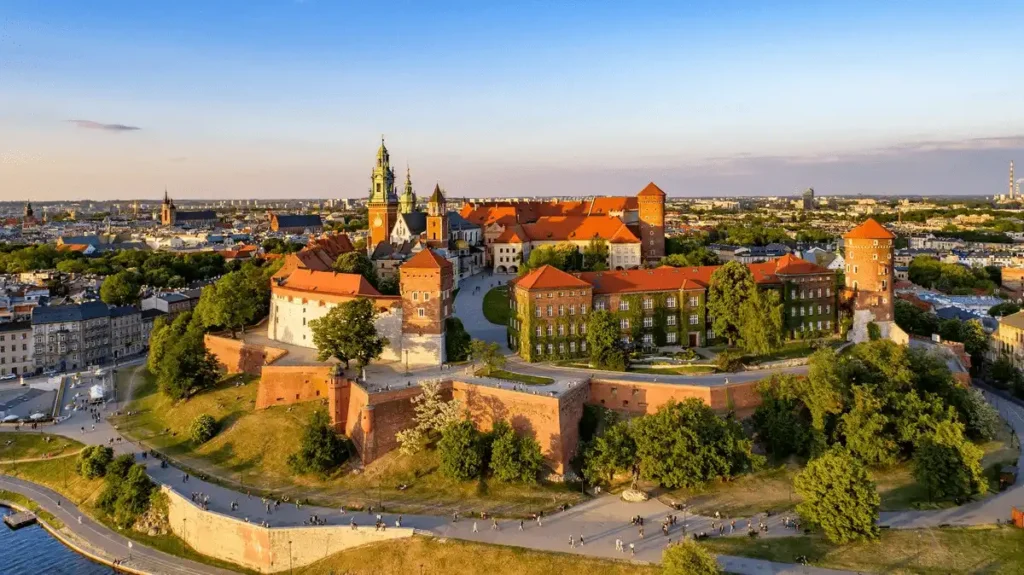
Best historic hotels in Poland occupy the country’s most architecturally significant conversions—buildings that survived partition, occupation, and reconstruction to emerge as Europe’s most emotionally charged heritage accommodations. From Warsaw’s Belle Époque grand hotels that hosted heads of state, to Kraków’s Renaissance merchant palaces within UNESCO-protected Old Town walls, to Gdańsk’s Hanseatic granaries along the Motława River—Poland’s historic hotel inventory represents the physical continuity of Central European power, trade, and cultural survival.
The challenge lies in the Luxury Paradox: high price tags and “five-star” labels often mask generic renovations that strip away original plasterwork, vaulted ceilings, and Gothic brick detailing. We have audited the national inventory and rejected properties where modern brand saturation erased the architectural soul.
This selection guarantees verified provenance—former royal palaces, 19th-century opera houses, medieval granaries, and Habsburg-era banking halls—where the building itself is the destination. You are not booking a room; you are entering a living archive of Polish resilience and grandeur, preserved through stone, timber, and ironwork that no contemporary construction can replicate.
What Qualifies as a Landmark Asset in Poland?
Poland’s historic hotel classification follows a provenance-first methodology developed to filter authentic architectural conversions from cosmetic renovations. A Landmark Asset must meet three non-negotiable criteria: Documented Original Function (verified as a royal palace, merchant house, industrial granary, or institutional building with archival evidence), Preserved Structural Identity (original façades, load-bearing walls, Gothic vaulting, frescoes, or Renaissance courtyards retained through restoration), and Cultural Continuity (the property’s current use must honor its historical narrative—a palace must retain ceremonial grandeur, a granary must acknowledge its mercantile past).
Properties failing these standards—modern hotels in “old-style” buildings with gutted interiors, reconstructed façades without structural authenticity, or brand-saturated spaces where heritage becomes decoration—are excluded. This audit prioritizes buildings where the architecture defines the experience, not the amenities. Poland’s qualification threshold is higher than most European markets: post-war reconstruction means many “historic” hotels are skillful recreations, not original survivors. The properties below passed verification for material authenticity, not just aesthetic nostalgia.
Poland’s Historic Hotels by Region
🏛️ Warsaw: Phoenix Capital of Reconstructed Grandeur
Warsaw’s historic hotel inventory tells the story of a city rebuilt from rubble with institutional determination—where every Belle Époque façade, neoclassical column, and art nouveau detail was meticulously reconstructed from archival drawings and salvaged fragments. The capital’s most significant conversions occupy buildings that defined pre-war Warsaw’s role as the “Paris of the East”: grand hotels that hosted diplomats, opera houses that premiered Chopin, and banking palaces that financed Central Europe’s industrial revolution.
Warsaw’s heritage assets carry the weight of cultural resurrection—their value lies not just in architectural beauty, but in the symbolic act of restoration itself. The most authentic experiences cluster along the Royal Route, where original foundations and salvaged materials ground the reconstruction narrative in physical truth.
Belle Époque Grand Hotels & Reconstructed Palaces
Raffles Europejski Warsaw (1877 grand hotel, Warsaw’s diplomatic headquarters with reconstructed neoclassical façades and original ballroom foundations), Hotel Bristol, A Luxury Collection Hotel (1901 art nouveau landmark adjacent to the Presidential Palace with restored stained glass and period furnishings), and Hotel Verte, Warsaw, Autograph Collection (former 19th-century townhouse conversion near Saxon Garden with preserved courtyard structure).
Raffles Europejski holds Warsaw’s most historically layered identity—originally opened in 1877 as the city’s first grand hotel, it served as the diplomatic nerve center for a century before meticulous post-war reconstruction resurrected its neoclassical ballrooms, marble staircases, and original foundation walls from archival blueprints. The property’s significance extends beyond luxury: this is where Paderewski performed, where interwar Poland’s political elite negotiated, and where the physical act of restoration became a statement of cultural survival. The rooftop terrace overlooks the reconstructed Royal Castle—both buildings standing as twin monuments to Warsaw’s refusal to be erased.
For travelers seeking Warsaw’s most institutionally significant reconstructed palace, explore the full selection in best hotels in Warsaw.
👑 Kraków: Medieval Walls & Renaissance Merchant Power
Kraków escaped the devastation that leveled Warsaw, preserving an unbroken medieval and Renaissance architectural continuity that makes it Poland’s most authentic historic hotel destination. The city’s UNESCO-protected Old Town contains Europe’s largest medieval market square, encircled by burgher houses, royal palaces, and Gothic churches that survived partition, occupation, and modernity without reconstruction.
Kraków’s historic hotels occupy the buildings that defined Central European mercantile power: Renaissance palaces built by Italian architects for Polish nobility, Gothic townhouses where Hanseatic traders stored Baltic amber, and 14th-century fortifications converted into luxury retreats. The best properties sit within the medieval defensive walls—where original stone, timber beams, and vaulted cellars create an immersion impossible to replicate in newer cities. Unlike Warsaw’s symbolic reconstruction, Kraków offers material authenticity: you sleep in rooms where kings negotiated, where scholars debated, where the physical past remains unbroken.
Renaissance Palaces & Gothic Conversions
The Bonerowski Palace Boutique Hotel (15th-century merchant palace on Main Market Square with original Renaissance frescoes and Gothic foundations), Hotel Copernicus (1370 Gothic residence near Wawel Castle with preserved vaulted cellars and astronomical tower), and Hotel Stary (16th-century burgher house conversion with exposed brick interiors and medieval courtyard).
The Bonerowski Palace represents Kraków’s most significant Renaissance preservation—built in the 15th century for one of the city’s wealthiest merchant families, it retains original ceiling frescoes, Gothic stone portals, and a façade overlooking the medieval Cloth Hall. The property’s location on Rynek Główny (Europe’s largest medieval market square) grants direct access to architectural continuity unmatched in Central Europe.
For travelers seeking Kraków’s most architecturally intact medieval and Renaissance stays, explore the full selection in best hotels in Kraków.
🏭 Wrocław: Silesian Industrial Conversions & Prussian Grandeur
Wrocław’s historic hotel inventory reflects its layered identity as a Silesian crossroads—buildings that served Prussian imperial power, Habsburg administration, and Polish reclamation now converted into heritage accommodations that honor Germanic craftsmanship, industrial innovation, and Central European eclecticism. The city’s most significant conversions occupy 19th-century structures along the Oder River: granaries that stored Silesian grain bound for Baltic ports, bourgeois hotels that hosted Leipzig Fair merchants, and art nouveau townhouses built during Breslau’s industrial golden age.
Industrial Granaries & Prussian Hotels
Hotel Monopol (1892 Prussian grand hotel in Wrocław’s cultural district with original art nouveau façades and period salon interiors), Great Polonia The Granary – La Suite Hotel (converted 18th-century riverside granary with exposed brick and original timber beams), and Platinum Palace Boutique Hotel & SPA (19th-century townhouse near Market Square with eclectic Silesian detailing).
Hotel Monopol anchors Wrocław’s Prussian-era grandeur—opened in 1892 during Breslau’s peak as a Silesian cultural capital, it hosted Marlene Dietrich, Pablo Picasso, and interwar Europe’s intellectual elite within its art nouveau salons. The property’s significance lies in preservation across regime changes: original stuccowork, grand staircase, and façade detailing survived both world wars and socialist neglect, emerging as Wrocław’s most intact 19th-century hotel. The location opposite the Opera House reinforces the building’s cultural legacy.
For travelers seeking Wrocław’s most authentic Prussian-era and industrial conversions, explore the full selection in best hotels in Wrocław.
⚓ Gdańsk: Hanseatic Granaries & Baltic Mercantile Heritage
Gdańsk’s historic hotels occupy the architectural remnants of the city’s 500-year reign as the Baltic’s wealthiest Hanseatic port—granaries, merchant houses, and guild halls built by Dutch engineers and German traders to control the amber, grain, and timber routes connecting Scandinavia to Central Europe.
The Old Town’s reconstruction after WWII followed archival precision: Gothic brick façades, stepped gables, and riverside warehouses rebuilt to match 17th-century engravings. The most authentic heritage stays cluster along the Motława River and within the Main Town fortifications, where reconstructed exteriors house interiors with salvaged timber, original foundation walls, and design continuity honoring Gdańsk’s mercantile golden age.
Hanseatic Granaries & Guild House Conversions
Hotel Gdańsk Boutique (reconstructed 16th-century merchant house within the Main Town fortifications with Gothic-inspired interiors), Podewils Old Town Gdansk (former granary conversion near the Green Gate with exposed brick and amber-themed detailing), and Hotel Holland House Old Town (17th-century Dutch-style townhouse with stepped gable façade and period furnishings).
Hotel Gdańsk Boutique represents the city’s most successful post-war heritage reconstruction—occupying the site of a destroyed 16th-century merchant house, it incorporates salvaged Gothic brick, original foundation stones, and design elements verified through Hanseatic League archives. The property’s location within the Main Town walls grants access to Gdańsk’s densest concentration of reconstructed Gothic architecture: Long Market, Artus Court, and St. Mary’s Church all within walking distance.
For travelers seeking Gdańsk’s most architecturally faithful Hanseatic conversions, explore the full selection in best hotels in Gdańsk.
🏰 Toruń: Gothic Brick Fortress & Teutonic Order Legacy
Toruń escaped the destruction that leveled most Polish medieval cities, preserving Central Europe’s most intact Gothic brick architecture—defensive walls, merchant houses, and Teutonic Order fortifications built between the 13th and 15th centuries. The city’s UNESCO World Heritage status protects buildings that remain functionally unchanged: Gothic granaries still anchored by original brick vaulting, patrician houses retaining medieval floor plans, and fortification towers converted into heritage accommodations without structural compromise.
Gothic Granaries & Medieval Conversions
Hotel 1231 (converted medieval fortification tower within the Old Town defensive walls with original brick vaulting), Gotyk (13th-century Gothic granary near the Vistula River with exposed timber framing and period detailing), and Hotel Spichrz (reconstructed Hanseatic warehouse with Gothic-inspired interiors and riverside location).
Hotel 1231 holds Toruń’s most architecturally pure Gothic identity—converted from a medieval defensive tower integrated into the city’s 13th-century fortifications, it retains original brick vaulting, arrow slits, and structural elements unchanged since the Teutonic Order controlled this stretch of the Vistula. The rooftop terrace overlooks Toruń’s UNESCO-protected skyline, a rare panorama of unbroken medieval continuity.
For travelers seeking Toruń’s most authentic Gothic fortress conversions, explore the full selection in best hotels in Toruń.
Stay in Poland’s Castle Hotels
📊 Regional Comparison: Historic Cities in Poland
| Region | Architectural Archetype | Period | Original Function | Signature Detail | Best For |
|---|---|---|---|---|---|
| 🏛️ Warsaw | Belle Époque Grand Hotels |
1870s–1920s | Diplomatic headquarters, banking palaces |
Reconstructed neoclassical ballrooms & art nouveau |
Symbolic heritage, cultural resurrection |
| 👑 Kraków | Renaissance Palaces & Gothic Houses |
14th–16th centuries |
Merchant residences, noble palaces |
Original frescoes, vaulted cellars |
Unbroken medieval authenticity |
| 🏭 Wrocław | Prussian Hotels & Industrial Granaries |
1890s–1920s | Bourgeois hotels, grain storage |
Art nouveau façades, Silesian eclecticism |
Germanic craftsmanship, industrial heritage |
| ⚓ Gdańsk | Hanseatic Granaries & Merchant Houses |
16th–17th centuries |
Baltic trade warehouses, guild headquarters |
Stepped gables, Gothic brick reconstruction |
Maritime heritage, Hanseatic mercantile power |
| 🏰 Toruń | Gothic Fortifications & Teutonic Granaries |
13th–15th centuries |
Defensive towers, grain storage |
Original brick vaulting, medieval floor plans |
Pure Gothic continuity, unaltered spatial logic |
❓ FAQ: Best Historic Hotels in Poland
What defines a historic hotel in Poland as “Landmark” quality?
A Landmark historic hotel in Poland must occupy a building with documented original function (royal palace, merchant house, granary, or institutional structure), retain preserved structural identity (original façades, vaulting, frescoes, or timber framing verified through restoration records), and maintain cultural continuity where current use honors historical narrative. Properties like Raffles Europejski Warsaw and The Bonerowski Palace meet this standard through archival verification, not just aesthetic nostalgia.
How does Poland’s post-war reconstruction affect historic hotel authenticity?
Poland’s post-WWII reconstruction creates a dual authenticity standard: cities like Warsaw offer meticulously reconstructed heritage based on archival drawings and salvaged materials (symbolic authenticity), while cities like Kraków and Toruń provide unbroken material continuity (structural authenticity). Both qualify as Landmark assets when reconstruction follows documented evidence and original foundations remain intact—authenticity lies in cultural commitment, not just survival.
Which Polish city offers the most architecturally intact medieval hotels?
Kraków and Toruń provide Poland’s purest medieval continuity—Kraków’s Renaissance palaces and Gothic houses within UNESCO-protected walls retain original frescoes, vaulting, and spatial proportions unchanged since the 15th century, while Toruń’s Gothic fortifications and Hanseatic granaries offer unbroken brick architecture from the Teutonic Order period. Both escaped large-scale wartime destruction, preserving material authenticity unavailable in reconstructed cities.
Are Warsaw’s reconstructed Belle Époque hotels considered authentic heritage?
Yes—Warsaw’s post-war reconstructions qualify as authentic heritage when they follow archival precision and incorporate salvaged materials. Properties like Raffles Europejski and Hotel Bristol were rebuilt using original foundations, period blueprints, and recovered architectural fragments, making them monuments to cultural survival rather than new construction. Their value lies in the deliberate act of restoration, not accidental preservation.
What distinguishes Hanseatic hotels in Gdańsk from royal palaces in Kraków?
Gdańsk’s Hanseatic conversions (granaries, merchant houses, guild halls) reflect maritime mercantile power—thick walls built for cargo storage, Gothic brick designed for Baltic trade, and spatial proportions prioritizing function over ceremony. Kraków’s Renaissance palaces serve noble and ecclesiastical heritage—frescoed salons, ceremonial courtyards, and architectural grandeur designed for diplomatic display. Both represent distinct expressions of Central European power.
Do Poland’s historic hotels require advance booking during peak season?
Yes—Poland’s most architecturally significant conversions (particularly properties within UNESCO-protected Old Towns in Kraków, Toruń, and Gdańsk’s Main Town) maintain limited room inventory due to preservation constraints on structural alterations. Peak season (May–September) and cultural event periods (Christmas markets, Easter, Jewish Culture Festival) see availability narrow significantly, especially for properties with original Gothic vaulting or Renaissance frescoes that cannot accommodate modern expansion.
How do Wrocław’s Silesian hotels differ from Warsaw’s reconstructed grandeur?
Wrocław’s Silesian inventory reflects Germanic-Polish architectural hybridity—Prussian neoclassicism, Habsburg eclecticism, and Polish restoration layered across industrial granaries and bourgeois hotels that survived regime changes with structural integrity intact. Warsaw’s reconstructed Belle Époque hotels represent symbolic resurrection through archival precision and cultural determination. Wrocław offers material continuity across empires; Warsaw offers deliberate cultural rebirth from archival memory.
Your Polish Heritage Stay Awaits
Choosing the right historic hotel in Poland means matching your architectural preference to the city’s preservation narrative—whether you’re drawn to Warsaw’s reconstructed Belle Époque grandeur, Kraków’s unbroken Renaissance continuity, or Gdańsk’s Hanseatic maritime heritage. The properties above represent Poland’s most institutionally significant conversions, filtered for documented provenance and structural authenticity.
For complementary Central European heritage audits, explore best historic hotels in Czech Republic and Slovakia.
For more curated itineraries and luxury-focused travel insights, visit Your Luxury Guide. For official travel information and destination updates, visit Poland tourism-info.
Booking your historic hotel in Poland secures access to Europe’s most emotionally charged architectural conversions—buildings that survived partition, occupation, and deliberate erasure to emerge as monuments of cultural survival and material resilience.
Your Luxury Guide — Where Exceptional Travel Begins.