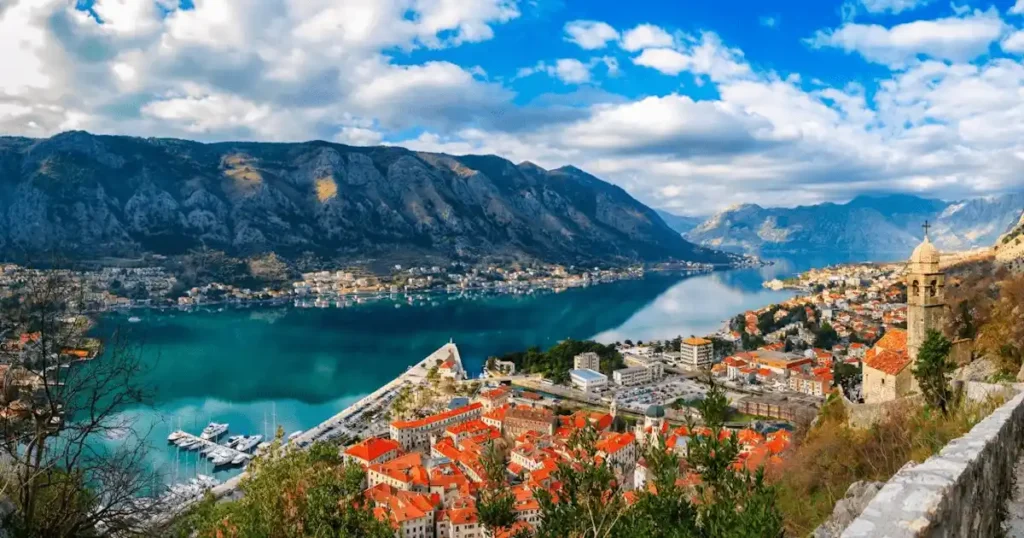
The best historic hotels in Montenegro occupy the architectural remnants of the Adriatic’s most exclusive maritime republic—a narrow coastline where Venetian merchant families built trading palazzi and fortress-protected estates between 1623 and 1810. This is not about mountain resorts or beachfront towers. It is about sleeping inside UNESCO-protected stone structures where naval captains once stored silk and spices, where Baroque ballrooms overlooked galley harbors, and where fortress walls still guard the original medieval street grid.
The problem: Montenegro’s “luxury” label has been diluted by modern marina hotels and anonymous beachfront properties that ignore the region’s profound architectural soul. We audited Montenegro’s entire heritage inventory—rejecting weak renovations, corporate retrofits, and properties without documented provenance. What remains is a collection of four verified conversions: 18th-century Venetian palazzi, a 17th-century captain’s manor, and a hotel embedded within 2,500-year-old fortress walls. This selection guarantees you access to living history, not fabricated atmosphere.
Venetian Palazzi of the Bay of Kotor
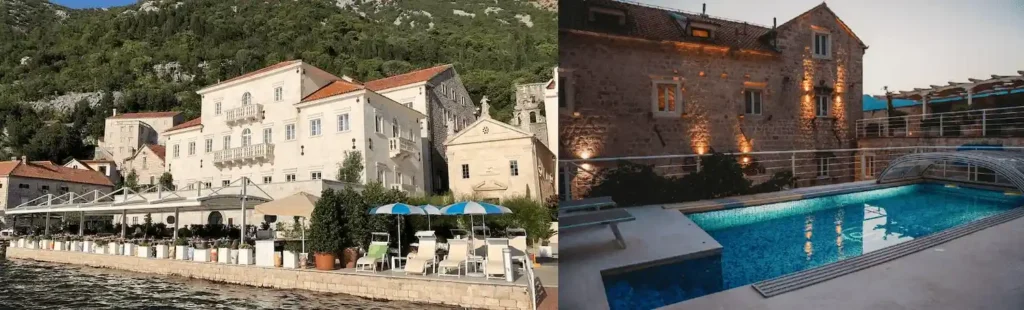
The Bay of Kotor functioned as Venice’s southernmost fortified harbor—a protected inlet where merchant families built multi-story stone palazzi to manage trade routes between the Adriatic and Ottoman territories. These are not boutique conversions of anonymous buildings. They are documented 18th-century residences with original Baroque facades, maritime jetties, and stone ballrooms that still face the water. The two properties below represent the bay’s most architecturally intact palazzo conversions, both within UNESCO World Heritage zones.
🏛️ Heritage Grand Perast ★★★★★
This is the Smekja Palace—a 1764 Venetian trading headquarters built by one of Perast’s wealthiest maritime families during the apex of the Republic’s naval dominance. The five-story Baroque stone facade rises directly from the waterfront, its original arched windows and carved balconies preserved through meticulous restoration that honors the structural language of 18th-century Adriatic aristocracy.
Inside, the grand stone staircases and vaulted reception halls maintain the scale and proportion of a merchant dynasty’s seat of power, while the suites incorporate antique furnishings and Murano glass that reflect the family’s Venetian trading connections. The transition from the narrow cobblestone alley into the palazzo’s stone-columned entrance hall recreates the sensory shift experienced by 18th-century dignitaries arriving by gondola.
No other hotel in Montenegro offers direct waterfront access from a verified 1764 palace with intact Baroque stonework and original maritime infrastructure.
Best for: Discerning travelers seeking immersion in Venetian-era maritime architecture with five-star service inside a documented 18th-century trading dynasty headquarters.
Signature Experience: Private waterfront terrace overlooking the Bay of Kotor, restored Baroque ballroom for intimate dining, rooftop sundeck with panoramic views of Perast’s island churches, spa treatments in stone-vaulted chambers, access to the palace’s original maritime jetty.
“Watching sunrise from that palazzo balcony—I felt like I’d stepped into a Canaletto painting.” — James, LondonCheck Availability & Rates →
🌊 Palazzo Radomiri Heritage Boutique Hotel ★★★★
The Palazzo Radomiri was constructed in 1700 as a fortified maritime residence for affluent traders who required both luxury accommodation and defensive capability along Kotor’s exposed waterfront. The building preserves its original exposed stone walls—massive limestone blocks that form the structural core—and the antique-filled interiors maintain the intimate scale of an 18th-century merchant’s private chambers rather than a converted public building.
The hotel’s defining asset is its historic waterfront jetty, an original stone pier where trading vessels once moored to unload cargo directly into the palazzo’s ground-floor storage vaults. Stepping from the jetty through the arched stone entrance recreates the arrival sequence of Venetian merchants, a tactile connection to the building’s commercial past that no landlocked hotel can replicate.
This is the only Kotor waterfront palazzo that maintains both its original 1700 structural geometry and an operational maritime access point.
Best for: Couples and solo travelers valuing authentic 18th-century architecture with direct bay access and preserved maritime infrastructure over corporate luxury amenities.
Signature Experience: Private stone jetty for kayaking and swimming, sunset aperitivos on the original waterfront terrace, dining in the vaulted ground-floor hall where merchants once stored Venetian silk, antique-furnished suites with exposed limestone walls and Adriatic views.
“Diving off that ancient jetty into clear water—it’s the Montenegro no one else finds.” — Elena, MilanCheck Availability & Rates →
17th-Century Noble Estates & Fortress Conversions
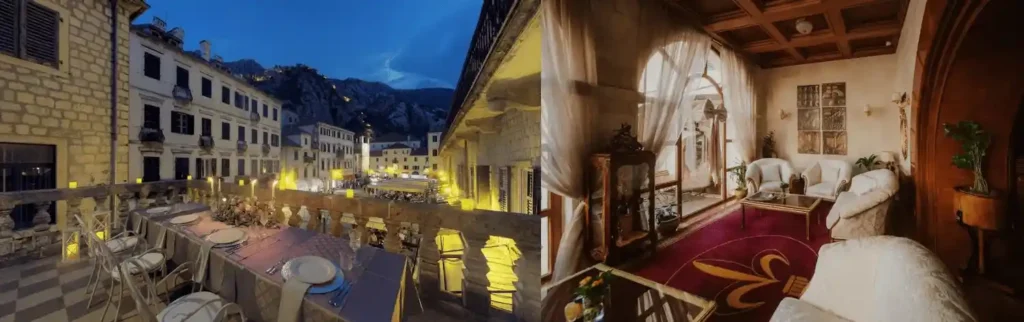
Beyond the merchant palazzi, Montenegro’s heritage inventory includes two exceptional conversions: a UNESCO-protected 17th-century captain’s manor in Perast and a hotel embedded within Budva’s 2,500-year-old fortress walls. These properties represent the earliest verified architectural layers of Montenegrin coastal settlement—the 1623 estate predates even the Venetian palazzo boom, while the Budva fortress occupation spans Illyrian, Roman, and medieval construction phases. Both maintain original stone masonry and structural volumes that cannot be replicated in modern builds.
⚓ Heritage Hotel Leon Coronato ★★★★
This is a 1623 stone estate—one of Perast’s oldest documented noble residences, built for a naval captain during the transition from independent city-state to Venetian protectorate. The building is a UNESCO World Heritage site, which mandates the preservation of its original 17th-century stone masonry, wooden ceiling beams, and the authentic scale of a seafaring family’s private manor.
Unlike the grander palazzi, Leon Coronato maintains the intimate proportions of a captain’s residence: low stone arches, narrow hallways, and compact chambers that reflect the functional needs of a working naval officer rather than a merchant aristocrat. The restoration preserves the tactile reality of 17th-century construction—rough-hewn limestone walls, hand-carved wooden lintels, and irregularly shaped windows that predate standardized Baroque design.
Stepping through the heavy wooden door into the stone-vaulted entrance hall recreates the sensory compression of entering a fortified noble house. This is the only Perast hotel that predates the 18th-century palazzo era and maintains full UNESCO structural protection.
Best for: History-focused travelers seeking the oldest verified residential architecture in Perast with full UNESCO heritage status and unaltered 17th-century structural character.
Signature Experience: Stone-walled suites with preserved wooden beam ceilings, private courtyard garden enclosed by original 1623 walls, dining terrace overlooking the Bay of Kotor, proximity to Perast’s island churches accessible by private boat, authentic maritime manor atmosphere without corporate luxury intrusion.
“Those wooden beams above the bed—knowing they’ve been there since 1623 changes everything.” — Marcus, BerlinCheck Availability & Rates →
🏰 Historic Boutique Hotel Cattaro ★★★★
Hotel Cattaro occupies a portion of Kotor’s UNESCO-protected Old Town walls, including the site of Napoleon’s Theater, built in 1810 during the brief French occupation of the Adriatic coast. This is not a standalone building converted into a hotel—it is a section of the medieval defensive perimeter, where the hotel’s rooms are literally embedded within the monumental stone fortifications that have protected Kotor for over a millennium.
The restoration preserves the original 19th-century interior volumes of the theater space and maintains the authentic exterior stonework of the fortress walls, creating a rare hybrid where guests sleep inside a functioning defensive structure. The transition from Kotor’s busy Old Town squares into the hotel’s stone-vaulted lobby recreates the sensory shift of passing through a fortress gate—thick walls absorb noise, narrow corridors amplify the sense of enclosure, and the cool stone interiors provide immediate refuge from the Mediterranean heat.
No other Kotor hotel offers accommodation within the actual fortress walls with preserved theatrical architecture.
Best for: Travelers seeking fortress-embedded accommodation with documented Napoleonic-era theatrical heritage and direct immersion in Kotor’s UNESCO-protected medieval defensive architecture.
Signature Experience: Suites within the original fortress walls with medieval stone window frames, dining in the restored theater space with vaulted stone ceilings, rooftop terrace overlooking the Old Town’s terracotta roofs, access to hidden fortress passageways, walking distance to the city walls hiking trail.
“Sleeping inside those fortress walls—it’s like occupying history instead of just visiting it.” — Anna, StockholmCheck Availability & Rates →
🗿 Hotel Astoria ★★★★
Hotel Astoria occupies a traditional noble house within Budva’s Stari Grad—the 2,500-year-old fortified old town whose defensive walls were first erected by Illyrian tribes, then reinforced by Romans, Byzantines, and Venetians across successive occupation periods. The hotel preserves the original exterior stone structure of a typical Budva noble residence, maintaining the medieval window frames and the compact street-facing facade that characterizes the old town’s dense urban fabric.
Unlike properties that gut interiors for modern amenities, Astoria’s restoration highlights the original architectural elements through minimalist design that draws attention to the limestone walls and ancient window geometry rather than concealing them behind contemporary finishes. The hotel’s location within the fortress perimeter means guests are embedded within the oldest continuously inhabited defensive structure on the Montenegrin coast. Entering from Budva’s narrow cobblestone lanes into the stone-vaulted reception area recreates the transition medieval residents experienced daily—stepping from public street life into private stone sanctuary.
Best for: Solo travelers and couples seeking minimalist accommodation that emphasizes authentic medieval architecture within Budva’s oldest fortified quarter without luxury embellishment.
Signature Experience: Stone-walled rooms with preserved medieval window frames, rooftop terrace overlooking the Adriatic and Stari Grad’s fortress towers, walking access to the old town’s hidden passages and fortress ramparts, proximity to ancient citadel and Budva’s archaeological museum, integration into the town’s 2,500-year urban continuity.
“That fortress view from the rooftop—centuries of defense architecture in one panoramic sweep.” — David, PragueCheck Availability & Rates →
📊 Comparison: Best Historic Hotels in Montenegro
| Hotel | Location | Wellness & Spa | Dining | Unique Perks | Best For |
|---|---|---|---|---|---|
|
🏛️ Heritage Grand Perast ★★★★★ |
Perast, Bay of Kotor |
Spa in stone vaults, rooftop sundeck |
Baroque ballroom, waterfront terrace |
1764 Venetian palazzo Original maritime jetty |
Five-star immersion, trading dynasty HQ |
|
🌊 Palazzo Radomiri Heritage Boutique ★★★★ |
Kotor, waterfront |
Waterfront jetty, bay swimming |
Vaulted merchant hall, jetty aperitivos |
1700 stone palazzo Operational pier access |
Maritime authenticity, direct bay access |
|
⚓ Heritage Hotel Leon Coronato ★★★★ |
Perast, UNESCO site |
Courtyard garden, quiet retreat |
Bay-view terrace, intimate dining |
1623 captain’s manor Oldest Perast estate |
History purists, UNESCO protection |
|
🏰 Historic Boutique Hotel Cattaro ★★★★ |
Kotor, Old Town walls |
Rooftop terrace, fortress rampart access |
Theater-space dining, vaulted stone ceilings |
Napoleon’s Theater (1810) Fortress-embedded rooms |
Fortress immersion, theatrical heritage |
❓ FAQ: Best Historic Hotels in Montenegro
What makes Montenegro’s historic hotels different from standard Adriatic luxury properties?
Montenegro’s historic hotels occupy verified architectural conversions—18th-century Venetian palazzi, 17th-century naval estates, and fortress structures—rather than purpose-built modern resorts. These properties maintain original stone masonry, Baroque facades, and maritime infrastructure like waterfront jetties and fortress walls. The value proposition is architectural authenticity: sleeping inside documented buildings where merchant dynasties stored silk, naval captains planned voyages, and defensive garrisons protected the coast. Standard luxury properties offer amenities; historic hotels offer immersion in preserved architectural narratives that cannot be replicated in new construction.
Are these hotels actually inside UNESCO World Heritage sites?
Yes. Heritage Grand Perast, Palazzo Radomiri, Heritage Hotel Leon Coronato, and Historic Boutique Hotel Cattaro are all located within UNESCO-protected zones—specifically the Natural and Culturo-Historical Region of Kotor and Budva’s fortified old town. UNESCO designation mandates preservation of original structural elements, which means these hotels cannot alter exterior facades or remove historic interior features. Hotel Astoria occupies Budva’s 2,500-year-old fortress walls, which are part of the town’s protected archaeological perimeter. This is not marketing language; it is enforceable heritage protection that guarantees architectural integrity.
Which hotel offers the most authentic Venetian palazzo experience?
Heritage Grand Perast. It occupies the Smekja Palace, a documented 1764 trading headquarters built by one of Perast’s wealthiest Venetian merchant families. The property preserves the original five-story Baroque stone facade, grand interior staircases, vaulted reception halls, and the maritime jetty where trading vessels once docked. This is the only five-star conversion of a verified Venetian merchant dynasty headquarters in Montenegro. Palazzo Radomiri offers a similar but slightly less grand 1700 palazzo experience with more intimate proportions and direct waterfront access from its operational stone jetty.
Can I stay inside an actual fortress in Montenegro?
Yes. Historic Boutique Hotel Cattaro is embedded within Kotor’s UNESCO-protected medieval fortress walls, with rooms occupying sections of the defensive perimeter. The hotel includes Napoleon’s Theater, built in 1810 during French occupation. Hotel Astoria in Budva sits within the Stari Grad fortress walls, which date back 2,500 years across Illyrian, Roman, and Venetian construction phases. Both properties allow guests to sleep inside functioning defensive architecture rather than adjacent to it. This is not a thematic hotel near a fortress; it is accommodation within the actual stone fortifications.
What is the oldest documented building among these hotels?
Heritage Hotel Leon Coronato, dating to 1623. It is a UNESCO-protected naval captain’s manor that predates Perast’s 18th-century Venetian palazzo boom. The building maintains its original 17th-century stone masonry, wooden beam ceilings, and the compact proportions of an early maritime residence. This is Montenegro’s oldest verified hotel conversion with intact structural elements from the 1620s. Hotel Astoria occupies fortress walls with 2,500 years of layered construction, but the specific noble house it inhabits is from the medieval period rather than a single documented construction year.
Do these hotels require advance booking during summer season?
Yes. Montenegro’s verified heritage properties number fewer than ten total, and the four listed here represent the highest-quality conversions with documented provenance. Summer occupancy (June–September) approaches full capacity, particularly for waterfront palazzo rooms with bay views and fortress-embedded suites. Heritage Grand Perast and Palazzo Radomiri book out earliest due to their five-star and four-star status combined with operational maritime jetties. Booking 90–120 days ahead secures preferred room categories. Off-season (October–May) offers greater availability but reduced dining and spa services in some properties.
Are these hotels suitable for travelers who prioritize modern amenities over history?
No. These properties are architecture-first conversions where the building’s heritage value is the primary amenity. While Heritage Grand Perast offers five-star service and spa facilities, the room design emphasizes preservation of 18th-century volumes and stone features over contemporary luxury finishes. Palazzo Radomiri and Leon Coronato maintain exposed limestone walls and antique furnishings that reflect historical authenticity rather than modernist comfort. Travelers prioritizing cutting-edge technology, uniform room dimensions, or minimalist contemporary design should book purpose-built luxury hotels in Budva’s marina district instead. These heritage properties reward guests who value architectural narrative over standardized amenity packages.
Selecting Your Montenegrin Heritage Asset
Booking a historic hotel in Montenegro is not about chasing star ratings—it is about selecting the architectural conversion that aligns with your definition of immersion. The properties above represent best heritage assets on the Montenegrin coast with documented provenance, preserved structural integrity, and enforceable UNESCO protection. Availability within this category shifts rapidly once Mediterranean travelers begin securing summer bookings.
Explore Croatia’s equally rigorous palazzo in best historic hotels in Croatia, or compare Montenegro’s Adriatic heritage against Serbia’s landlocked fortress towns through best historic hotels in Serbia.
For more curated itineraries and luxury-focused travel insights, visit Your Luxury Guide. For official travel information and destination updates, visit Montenegro tourism-info.
Booking your Montenegro hotel reserves direct access to the Adriatic’s most architecturally significant Venetian trading infrastructure—the palazzi, jetties, and fortress walls that shaped Mediterranean commerce for three centuries.
Your Luxury Guide — Where Exceptional Travel Begins.