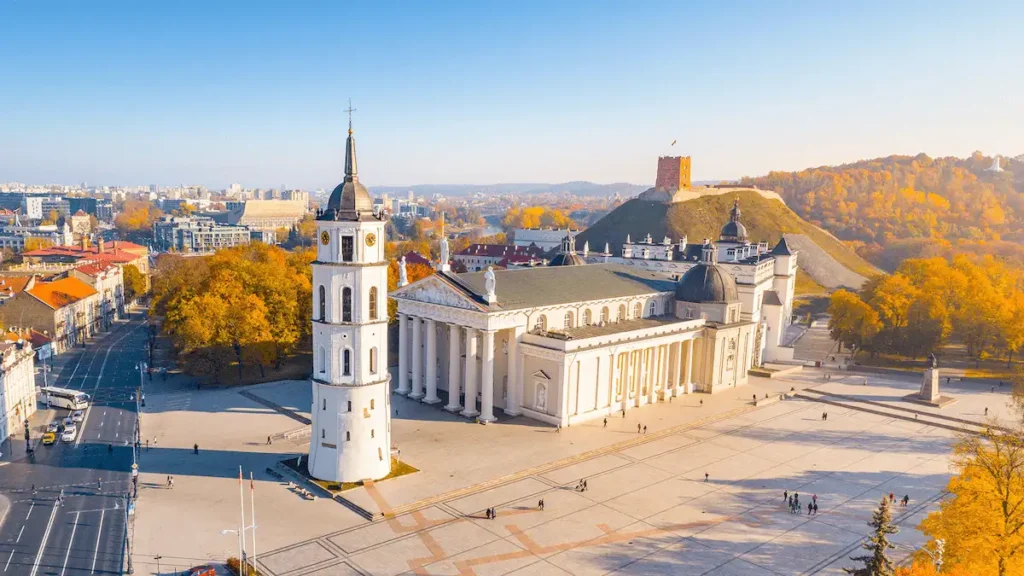
Best historic hotels in Lithuania occupy a singular position within the Baltic architectural landscape—this is not a country of preserved palace chains or reconstructed castle networks. Lithuania’s historic hotel inventory is defined by extreme scarcity. The Soviet occupation systematically stripped interiors from merchant houses, warehouses, and residential landmarks. What remains today are buildings where original Gothic masonry, 18th-century wooden beams, and interwar structural elements survived demolition orders and modernization pressures.
The “Luxury Paradox” is acute here: high ratings and boutique branding often conceal properties where only facades remain protected, with interiors rebuilt in generic contemporary aesthetics. We audited Lithuania’s entire documented inventory. Our filtering criteria excluded properties where preservation ended at street level. The hotels listed below represent the only verified examples where original 16th-century vaulted ceilings, 19th-century red-brick archways, and 18th-century port warehouse beams are structurally integrated into guest spaces.
This audit delivers a stay where the building itself—not the bed thread count—is the primary luxury asset.
Vilnius: Capital’s Preserved Merchant and Diplomatic Heritage
Vilnius represents Lithuania’s most concentrated collection of historically preserved hotels. The capital’s UNESCO-protected Old Town shelters merchant houses dating to the 16th century and diplomatic buildings from the interwar period. These properties maintained their original spatial layouts, decorative vaulted ceilings, and structural masonry through multiple occupations.
Unlike modernized conversions, Vilnius hotels offer rare access to authentic Gothic and Baroque interiors where historical architecture defines the guest experience. The curated selection includes merchant palaces, riverside conversions, and former bank headquarters—each representing a different chapter of Vilnius’s commercial and diplomatic past.
Featured Properties:
The capital’s premier examples of architectural preservation integrated with contemporary luxury. Hotel PACAI, a Member of Design Hotels (1677 Baroque mansion of the Grand Duchy’s most powerful noble family, featuring restored 17th-century frescoes and a preserved aristocratic courtyard), NARUTIS Hotel – Small Luxury Hotels of The World (1581 landmark guest house and former University residential mansions with authentic 16th-century Gothic vaulted cellars), and Grand Hotel Vilnius, Curio Collection by Hilton (1900 Neo-Classical landmark and former National Treasury and Central Telegraph Office with a meticulously restored white-marbled lobby)
For the complete Vilnius audit, including detailed provenance and spatial analysis, explore the best hotels in Vilnius.
Kaunas: 16th-Century Gothic Vaults and Interwar Diplomatic Power
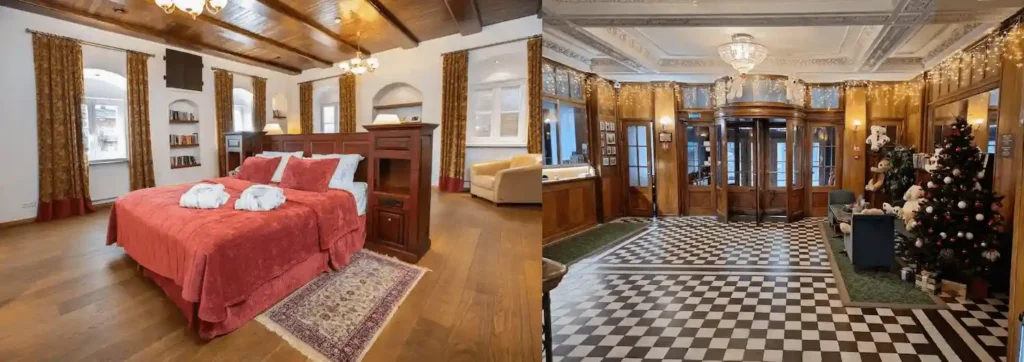
Kaunas holds Lithuania’s rarest architectural asset class—16th-century merchant complexes with intact Gothic substructures and buildings that served as the diplomatic epicenter during the nation’s “Temporary Capital” era (1919-1939). These are not reconstructions or facade-only projects.
The properties listed here preserved original hand-pinned stone walls, Gothic arched brickwork, and interwar Neo-Renaissance spatial layouts that most Lithuanian hotels lost to Soviet-era demolitions. Kaunas offers travelers a physical connection to medieval trade networks and the anxious optimism of Lithuania’s first independence period—architectural narratives absent from the country’s larger cities.
⚔️ Daugirdas Old City Hotel ★★★★
Daugirdas Old City Hotel occupies a complex of four interconnected buildings dating to the 1500s, making it one of Lithuania’s oldest continuously used merchant structures.
The Gothic Room and restaurant preserve authentic 16th-century arched brickwork—massive hand-pinned stone walls that were never covered by modern materials. These subterranean frescoes and original masonry remain structurally integrated into the guest experience, not merely decorative references. The rooms blend contemporary comfort with original limestone and exposed medieval foundations visible through glass floor panels.
You transition from Kaunas’s pedestrian Old Town directly into vaulted stone chambers where merchants stored grain and negotiated trade agreements five centuries ago. The hotel’s positioning as a “living monument” isn’t marketing language—it holds national architectural protection status, and its Gothic structural elements are irreplaceable. No other property in Kaunas offers this depth of medieval preservation accessible to overnight guests.
Best for: History-focused travelers who prioritize authentic medieval architecture over modern amenities and seek rare access to 16th-century merchant infrastructure.
Signature Experience: Gothic Room dining beneath original arched stone vaults, glass-paneled floors revealing medieval foundations, limestone walls hand-pinned in the 1500s, Old Town location within walking distance of Kaunas Castle ruins.
“Sleeping above rooms that stored grain when Columbus sailed—that’s real travel, not just a hotel stay.” — Henrik, CopenhagenCheck Availability & Rates →
🏛️ Hotel Metropolis ★★★
Hotel Metropolis served as the diplomatic nerve center during Lithuania’s interwar independence (1919-1939), when Kaunas functioned as the nation’s temporary capital.
Built in 1899, this Neo-Renaissance structure hosted foreign ministers, trade delegations, and cultural elites during one of the most politically volatile periods in Baltic history. The building preserves its original grand staircase—a sweeping architectural statement designed to impress visiting diplomats. High-ceilinged corridors maintain their interwar spatial proportions, and decorative structural elements from the 1920s remain visible throughout common areas.
While guest rooms incorporate modern updates, the hotel’s architectural bones communicate the optimism and fragility of Lithuania’s first independence. You sleep in the same building where critical diplomatic negotiations shaped the nation’s borders and alliances. The Metropolis represents a specific historical moment that cannot be replicated—the brief window when Kaunas was the center of Lithuanian power, before Vilnius’s return in 1939.
Best for: Travelers drawn to interwar European history and those seeking accommodations that witnessed Lithuania’s diplomatic struggles during its first independence.
Signature Experience: Original Neo-Renaissance grand staircase, high-ceilinged interwar corridor layouts, preserved 1920s decorative elements, location in Kaunas’s former diplomatic quarter near the Presidential Palace.
“The staircase alone tells you this building mattered—ambassadors walked these exact steps.” — Laura, BerlinCheck Availability & Rates →
🧱 BEST WESTERN Santakos Hotel ★★★★
BEST WESTERN Santakos Hotel preserves one of Kaunas’s most visually distinctive 19th-century residential landmarks—a nationally protected red-brick monument built in 1895.
The property maintains its original heavy masonry walls and late-Victorian structural footprint, architectural elements that many “modernized” hotels conceal behind drywall and synthetic finishes. The interior red-brick arches remain exposed throughout common areas and select guest rooms, offering a tactile connection to the building’s residential past. This is not a reconstructed aesthetic—the brickwork you see was hand-laid in the 1890s and has survived multiple ownership changes and political regimes.
The hotel’s location at the confluence of the Neris and Nemunas rivers positions guests within Kaunas’s historic river trade network. The Santakos represents a different preservation approach than Gothic or diplomatic properties—it showcases late-19th-century industrial construction techniques and residential luxury standards from Lithuania’s pre-Soviet era. The specific red-brick interior archways and Victorian spatial logic are increasingly rare in Lithuania’s hotel inventory.
Best for: Architecture enthusiasts who appreciate exposed 19th-century masonry and travelers seeking nationally protected landmark status combined with modern brand reliability.
Signature Experience: Exposed red-brick interior arches from 1895, heavy Victorian masonry walls, riverside location at Nemunas and Neris confluence, protected architectural monument designation with integrated contemporary amenities.
“Those brick arches aren’t decoration—they’re holding up the actual building. That’s preservation you can trust.” — Jonas, StockholmCheck Availability & Rates →
Klaipėda: 18th-Century Port Warehouse with Venetian Timber Structure
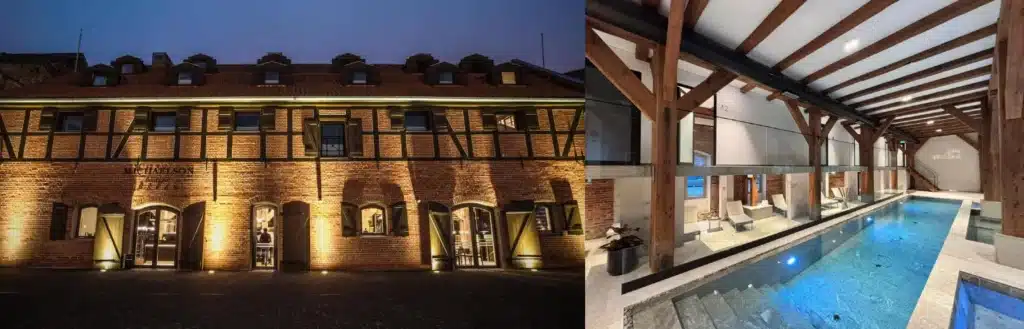
Klaipėda represents Lithuania’s only surviving example of an 18th-century “Venetian” warehouse conversion—a specific architectural typology that dominated Baltic port cities before industrialization. The property listed here preserved its massive hand-hewn wooden beams and original brick masonry, structural elements that define the hotel’s spatial character. Unlike waterfront conversions that retain only facades, this warehouse maintains its internal maritime infrastructure within guest suites. Klaipėda offers travelers access to Lithuania’s seafaring past through architecture that most port cities demolished for modern development.
⚓ Michaelson Boutique Hotel & SPA Brícoła ★★★★
Michaelson Boutique Hotel & SPA Brícoła occupies an 18th-century warehouse originally owned by merchant Epraheim Michaelson, one of the few authentic “Venetian” timber-and-brick port structures remaining in Lithuania.
The building‘s massive hand-hewn wooden beams—visible and functional throughout guest rooms and suites—were sourced from Baltic forests in the 1700s and served as load-bearing infrastructure for maritime cargo storage. The exposed original brick masonry maintains the industrial port atmosphere inside living spaces, preserving spatial logic from when this building processed grain, textiles, and timber for Northern European trade.
The spa incorporates maritime wellness traditions, using seaweed and Baltic amber treatments that reference Klaipėda’s coastal heritage. You sleep beneath the same timber beams that sheltered merchant goods during the height of Baltic maritime commerce. This is Lithuania’s rarest hotel typology—a warehouse where original 18th-century construction defines the guest experience.
Best for: Travelers seeking authentic maritime heritage combined with spa amenities and those drawn to raw industrial architecture preserved within luxury accommodations.
Signature Experience: Massive 18th-century hand-hewn wooden beams integrated into guest suites, exposed original brick masonry from the 1700s, Brícoła spa with Baltic seaweed and amber treatments, Klaipėda Old Town waterfront location.
“Those beams above the bed carried actual ship cargo—you feel the port’s history just lying there.” — Marta, HamburgCheck Availability & Rates →
📊 Comparison: Best Historic Hotels in Lithuania
| Hotel | Location | Wellness & Spa | Dining | Unique Perks | Best For |
|---|---|---|---|---|---|
|
⚔️ Daugirdas Old City Hotel ★★★★ |
Kaunas, Old Town |
Standard wellness |
Gothic Room with vaulted ceilings |
16th-century merchant complex |
Medieval architecture focus |
|
🏛️ Hotel Metropolis ★★★ |
Kaunas, diplomatic quarter |
Basic amenities |
Interwar-era dining hall |
1919-1939 diplomatic epicenter |
Interwar history seekers |
|
⚓ Michaelson Boutique Hotel ★★★★ |
Klaipėda, Old Town waterfront |
Brícoła spa, Baltic treatments |
Contemporary, maritime influence |
18th-century Venetian warehouse |
Maritime heritage + spa seekers |
❓ FAQ: Best Historic Hotels in Lithuania
What makes a hotel “historic” in Lithuania?
In Lithuania, a historic hotel must preserve original structural elements—16th-century Gothic vaults, 18th-century timber beams, or interwar Neo-Renaissance architecture—integrated into guest spaces. Facade-only preservation does not qualify. Properties like Daugirdas Old City Hotel maintain 16th-century arched brickwork structurally supporting the building, not merely decorative. Lithuania’s extreme scarcity of preserved interiors makes these hotels architectural rarities.
Why are there so few historic hotels in Lithuania?
Soviet occupation systematically stripped interiors from merchant houses, warehouses, and residential landmarks, leaving only facades intact. Most Lithuanian buildings with protected exterior status received generic modern interiors during post-independence renovations. The hotels listed here represent the rare exceptions where original Gothic masonry, Victorian brickwork, or 18th-century wooden beams survived demolition orders and modernization pressures.
Are Lithuania’s historic hotels suitable for luxury travelers?
Lithuania’s historic hotel inventory prioritizes architectural authenticity over five-star amenities. Properties like Michaelson Boutique Hotel combine 18th-century warehouse beams with contemporary spa facilities, but guest rooms emphasize spatial character over modern luxury standards. Travelers seeking palatial accommodations will find more options in neighboring Poland or Latvia. Lithuania’s appeal lies in extreme architectural scarcity and verified preservation.
What’s the best historic hotel in Kaunas?
Daugirdas Old City Hotel offers the deepest historical continuity—a 16th-century merchant complex with intact Gothic vaults and subterranean frescoes. Hotel Metropolis appeals to travelers drawn to Lithuania’s interwar independence period, preserving the Neo-Renaissance architecture that hosted diplomatic negotiations during Kaunas’s role as temporary capital. BEST WESTERN Santakos Hotel showcases exposed 19th-century red-brick masonry within a nationally protected monument.
Is Vilnius better than Kaunas for historic hotels?
Vilnius offers a broader selection of preserved merchant palaces and diplomatic buildings within its UNESCO-protected Old Town, including Hotel Pacai and NARUTIS Hotel. Kaunas provides rarer access to 16th-century Gothic merchant infrastructure and interwar diplomatic architecture unavailable in the capital. Travelers seeking medieval preservation choose Kaunas; those prioritizing refined merchant palace aesthetics prefer Vilnius.
What should I expect from Michaelson Boutique Hotel’s warehouse conversion?
Michaelson preserves massive 18th-century hand-hewn wooden beams and original brick masonry throughout guest suites, maintaining the industrial port atmosphere. This is not a polished conversion—exposed structural elements dominate the aesthetic. The Brícoła spa incorporates Baltic seaweed and amber treatments. Travelers seeking raw maritime architecture integrated with wellness amenities will find this Lithuania’s most distinctive waterfront property.
Do Lithuania’s historic hotels require advance booking?
Lithuania’s extreme scarcity of authentic historic preservation—only four properties with verified original interiors outside Vilnius—means advance booking is essential during summer months and cultural festivals. Properties like Daugirdas Old City Hotel and Michaelson Boutique Hotel operate with limited room inventory due to protected monument restrictions. Booking 3-4 months ahead secures access to Lithuania’s rarest architectural assets during peak periods.
Final Selection: Lithuania’s Verified Historic Assets
Choosing a historic hotel in Lithuania means accepting extreme architectural scarcity—this is not a country with preserved palace chains or reconstructed castle networks. The properties above represent the only verified examples where original 16th-century Gothic vaults, 18th-century timber beams, and interwar Neo-Renaissance architecture remain structurally integrated into guest spaces. These are buildings where preservation extends beyond facades into the rooms where you sleep. Availability shifts quickly once verified historic assets gain recognition among architecture-focused travelers.
Compare Lithuania’s historic inventory against neighboring Baltic preservation standards in best historic hotels in Latvia, or explore the shared heritage of grand aristocratic estates and medieval urban architecture in best historic hotels in Poland.
For more curated itineraries and luxury-focused travel insights, visit Your Luxury Guide. For official travel information and destination updates, visit Lithuania tourism-info.
Booking a stay at Lithuania’s historic hotels secures access to the nation’s rarest architectural survivors—Gothic merchant vaults, diplomatic interwar landmarks, and 18th-century maritime warehouses that most Baltic cities demolished for modern development.
Your Luxury Guide — Where Exceptional Travel Begins.